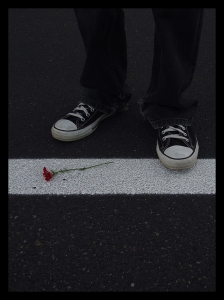
Sweet Freedom

freedom in redAlison Dotson, president of OCD Twin Cities, and I were emailing recently about how sometimes we feel as if we say the same thing post after post, article after article, especially since they usually involve our own stories with OCD, and history doesn’t change.

But I reminded her that even if we’ve heard our stories over and over, someone else might be hearing it for the first time. Not to mention that sometimes those of us with OCD need to hear the truth multiple times before it is finally able to sink into our heads and hearts.

So here it is again:

I was in bondage to obsessive-compulsive disorder for twenty hellish years. I was plagued by ugly, intrusive thoughts that caused me intense anxiety and even terror. Many days I felt completely out of control of my own thoughts, and I hated the ugliness that polluted my mind. I was sad, lonely, depressed, lost, engaged in an ongoing war where the battlefield was my own brain.

And then an amazing psychiatrist named Dr. Suck Won Kim gave me not only a prescription but also the phone number to a cognitive-behavioral therapist in the area, along with the warning that ERP therapy “will be hell” and the encouragement that I had to do it anyway.

And I did. For twelve grueling weeks, I practiced the exposure therapy assignments set out by Dr. Christopher Donahue, and after twelve weeks of hell … I was free. Free for the first time since I was seven years old. I could barely even remember what freedom felt like, what it felt like to be master of my own thoughts, to rule over my OCD instead of having it rule me, and so it was actually a little scary at first.

But let me tell you: you get used to freedom, joy, and light pretty darn fast.

The last five years have been magnificent.

Please, please ask me questions if you have them.

For (lots!) more about OCD and ERP, go to jackieleasommers.com/OCD

Image credit: Jesus Solana

THINGS WILL NEVER BE OKAY AGAIN [& other lies I sometimes still believe]

It’s been about five years now since I underwent the Exposure and Response Prevention therapy that changed my whole life, and those five years have been amazing: I have so much freedom, so much joy.

But 20 years in slavery to OCD does leave behind some residue, and I’m only now beginning to recognize those areas of my life where that’s true.

One thing that I’m sure most OCD sufferers will understand is the obsessive thought that things will never be okay again, which sometimes has a tail of until I do X on it, so often resulting in a compulsion. It’s actually kind of hard to explain this feeling to someone who doesn’t have OCD because it’s difficult to express how in that moment, you can sometimes see no way out. The fear is crippling, the anxiety so intense that we shatter beneath it and either cave in to a compulsion to temporarily alleviate the ugliness of that moment or else fall into a stupor of depression.

Things will always be like this.
I will never feel comfortable again.
I’m going to always think of X now when Y happens.

It’s such a black and white way to look at things– and so terribly short-sighted! If we can learn to push through the discomfort without performing a compulsion, we are legitimately shocked on the other side when that “truth” we so adamantly believed 24 hours ago is no longer true.

Even though OCD is no longer my master, there is fallout from years stacked upon years of thinking this way. 

Just the other week when I was writing in Duluth, I saw myself play through this entire scenario. I got frustrated with a scene I was trying to re-write, and I decided, I absolutely cannot do this; I will never be able to do this right. Then I succumbed to compulsive behavior (all without realizing it!) by emailing my editor and asking for more details. The next morning, I had an email from her: “Let’s talk this morning. We can find a solution. You should be comfortable and happy with what you write.”

And so we sent back and forth a few emails, and things were better.  You know, those same things that would never be better. Yeah, those ones.

All this panic that I have been experiencing is because I feel like control is being taken away from me. What does a person with OCD hate the most? Uncertainty.

So, while in some ways this anxiety that I’ve been experiencing is quite different from my OCD (in fact, I would go so far as to say that it is not OCD; it does feel different), I guess I’d have to classify it as a repercussion or consequence of years of obsessive-compulsive thinking and behavior.

Now that I have recognized that, I am hopeful that I will be more mindful of that thinking. I want to be able to say to myself that my reaction is programmed behavior from years of reacting thus, and that– just like so many things connected to OCD– it too is a lie.

For (lots!) more about OCD and ERP, go to jackieleasommers.com/OCD.

not ok but it's ok

Image credit: unknown

The Long Journey … to the Starting Line

"Cross That Line" by xLadyDaisyx on deviantArt

“Cross That Line” by xLadyDaisyx on deviantArt

It is SO HARD for OCD sufferers to be correctly diagnosed and then find the right treatment and a good cognitive-behavioral therapist.  In fact, it takes an average of 14-17 years for someone to access effective treatment.

That stat stings my heart.  I feel it deeply because of my own personal struggle.

I developed a sudden onset of OCD at the age of 7.  I wasn’t diagnosed with OCD until I was 22.  I started ERP (exposure and response prevention) therapy at 27.  That’s twenty years, folks– fifteen just till diagnosis alone.

Growing up, I just assumed that I “thought too much”– was an “overthinker” and especially sensitive to issues of morality. I didn’t understand that other people were also undergoing the same doubts as I was but were able to move past them with ease.  I, on the other hand, would get trapped.  The exit door to my brain was stuck shut, so all my thoughts just milled and churned and generated intense anxiety.  I didn’t know that others even had the same thoughts as I did, nor did I realize how it would be possible to let such thoughts come and go.

In childhood, I cried all the time.  In fact, I cried every single night for three years in a row.  I never told my parents about this.  I was so scared that they wouldn’t be able to “fix” me that I preferred to just rest in my own sadness, still clinging to the hope that *someday* I could be fixed.  As long as no one told me it was impossible, it still felt possible, and even thought I was terrifically sad, I kept that hope as my lifeline.

High school was a beast.  I got straight A’s (OCD drove me to perfectionism) and graduated at the top of my class.  I was a class clown, and I had some amazing friends.  But I battled intense spiritual doubts and lived in great fear.  My tenth grade year was one of the hardest of my whole life.  Only those closest to me knew it.

My doubts intensified in college.  They escalated to a whole new level.  Thankfully, I had a solid support system in my new friends (people who remain my support system to this day!).  And though they couldn’t understand what I was going through, they loved me.

After undergrad, things fell apart.  In a nutshell, I lost my grip on reality– my doubts had grown so large and out of control that I no longer knew if I could trust my friends or my own human experience.  Finally, for the first time in my lifesomeone used the words mental illness with me.  It felt shocking.

I was encouraged to meet with a therapist (unfortunately, a talk therapist– not effective for OCD), who also got me in to meet with a psychiatrist, and I was finally diagnosed with obsessive-compulsive disorder.  A diagnosis fifteen years in the making.

I spent about a year with that first talk therapist, and it was more damaging than anything else.  I finally “escaped” and never again set foot in that clinic.  Meanwhile, I was an SSRI lab rat, trying out a slew of various medications to treat my OCD.  I eventually went back to talk therapy– this time to a much better therapist, who was a true blessing, although she still didn’t truly understand OCD, and so my therapy included a lot of reassurances.  In other words, this kind, amazing woman who loved me was just reinforcing my compulsions.  Not good.  I also took a break from trying out medications after one stole all my energy and made me rapidly gain weight.  I was overweight for the first time in my life– all due to a medication– and have struggled with my weight ever since.

Five years after that initial diagnosis, my psychiatrist was out of ideas.  Literally.  She asked me what I thought we should do next.  I, of course, had no clue.  She referred me to an OCD specialist.

This incredible man– Dr. Suck Won Kim– changed my life.  He got me onto the right medication (almost immediately) and essentially required that I begin ERP, even giving me the name and contact information for the therapist who would ultimately allow me to bottle up my OCD and put a stopper in it.  Dr. Chris Donahue, to whom I’m forever indebted.

Twelve weeks was all it took.  In one sense.  In another, it took twenty years.

My life was a mix of depression, anxiety, compulsions, “bad” thoughts, and wrongness, and then twelve weeks later, I felt the burden of OCD lift from my shoulders.  I was giddy with freedom.  Five years later, I still am.

I hear from OCD sufferers every week who are in their 50’s, 60’s, or even older, who are still seeking appropriate treatment.  This absolutely breaks my heart.

On the flip side, I’ve had the incredible experience of meeting Maddie, 11, and her incredible parents, who leapt into action almost immediately and got her into ERP within months of her OCD onset.  In the same year, she developed OCD, was diagnosed, and was treated.  Marvelous!

That’s one of the reasons I blog about OCD.  To help people to understand earlier what they are dealing with and to encourage them to seek appropriate treatment (ERP, with or without medication).  It still just boggles my mind that in 2013, mental health practitioners still don’t know that ERP is the answer.  People get passed around from talk therapist to talk therapist, when the solution should be so ready, so available.

OCD: Unwelcome but not Unexpected

How many times do I have to say that OCD is a joy-thief before I should realize: Oh.  Hmm.  You’re pretty happy right now.  OCD will be along shortly to steal that away?

I should learn to brace myself.

On Friday, November 22, I announced on Facebook and on my blog that Harper Collins offered me a two-book deal.  Shortly thereafter, amidst all the “likes” and congratulatory comments and joyful sharing, OCD came calling.

I spent the majority of the evening obsessing over future revisions.  

not you again

I practiced ERP, walking myself through that lovely mantra of “it’s POSSIBLE, but it’s not LIKELY,” then discussing with a friend (asking for no reassurance), and also spending time in prayer.

Life, as I continue to learn, is risky, and the more I learn to embrace risk and uncertainty, the happier I am.

Which is why I flat-out refuse to flat-out refuse any revision suggestions.  I will consider everything my wonderful editor suggests, knowing that God is in control and that Jill loves my characters too.

In this sense, I’m growing as an obsessive-compulsive in remission, an author, and as a person.

Jackie 1
OCD 0

Related posts:
Uncertainty is the Key
Uncertainty
Taking Risks

An Uncertain Framework

I used to get thrown by anything I couldn’t know FOR SURE.

Is real life real life, or am I just dreaming?

Am I going to heaven?

Are my friends really my friends?

What do people really think of me?

Are people even really people?

I mean, completely thrown.  I had no framework for dealing with uncertainty.  And the truth is that a person just cannot live that way.  It’s not how life works.

Now that ERP has re-wired my mind, I am finally able to say, “I’m just going to have to accept that I can’t know” and carry on with life.  I never thought I’d be able to approach such huge things with that kind of statement.  Never. If you’re reading this and think that that is an impossibility for you, please know that I once thought the same.

uncertain

Related posts:
Narnia and Uncertainty
Uncertainty is the Key
Uncertainty
Interview with a Former HOCD Sufferer
No Antidote
Life is Risky Business

Narnia and Uncertainty

In my lowest OCD years, uncertainty appeared to be my enemy, and I attempted to avoid it at all costs.

It was a losing fight since we cannot. avoid. uncertainty.

Now that I’ve switched teams and am an official cheerleader for uncertainty, I notice it in the positive sense now.  No longer the terrifying stranger, creeping around the corners, I now see it as the exciting flash of risk stealing a smile my way.

“I know what it is,” said Peter; “it’s a beaver.  I saw the tail.”

“It wants us to go to it,” said Susan, “and it is warning us not to make a noise.”

“I know,” said Peter.  “The question is, are we to go to it or not?  What do you think, Lu?”

“I think it’s a nice beaver,” said Lucy.

“Yes, but how do we know?” said Edmund.

“Shan’t we have to risk it?” said Susan.  “I mean, it’s no good just standing here and I feel I want some dinner.”

For twenty years, I feared uncertainty.  And Susan was right: it was no good just standing there.

P.S. The risk was worth it, and dinner was great.

beavers

Frozen

Not literally.  (Not yet– although today was a rainy and cool Minnesota autumn day.)

But a little paralyzed about moving forward with my new novel idea.  (Is “a little paralyzed” an oxymoron?)

I have done my pseudo-writing.

I found an idea I’m really excited about.  (Surprise [to you and me]: it’s not at all what I thought it would be.)

I am armed with a first draft manifesto to wield against doubts, poor choices, and bad writing.

Heck, I even thought out the entire storyline.  I’m generally a pantser, so this is extreme, folks.

BUT …

I’m scared to commit to this idea.

And I’m intimidated by other great writers.

And I don’t know where to start.

HOWEVER …

That’s what my creative process looks like.  I need to trust it.

It’s just another go-around on the writing rollercoaster.

Here I goooooooooooooooooo!!!

crappyfirstdraft

Christian Culture’s (Sad) Response to Mental Illness

It’s in the Title: Mental Illness is an Illness

Salads and sandwiches and a shared mental illness, all of it on the tiny table between us.

“There is help for OCD,” I told her.  “The most effective treatment is cognitive-behavioral therapy.  Between that and my medication, I got my life back.  I know you can too.”  (The evangelical zeal I have for this particular therapy reminds me of the way I love Jesus: both took me from darkness into light, both make me want to throw parades in their honor.)

“Oh, I don’t know,” said my friend, poking at her salad with a fork, sounding hesitant.  “I think before I take any extreme methods, I want to just pray about it more.  I know that God can bring me through this.”

I wanted to say, But you have been praying about this for years!  I also believe God can bring you through this—and I am telling you how.

There is a pervasive and unhealthy attitude in the Christian culture toward mental illness.  Many believe that one should be able to “pray away” a disorder.  Some think that mental illness is, quite simply, spiritual warfare; some think it’s the result of unresolved sin issues.  One of my friends has said before that a real Christian can’t be clinically depressed.  I saw a Facebook status once that read, “Depression is a choice.”

These sentiments light a fire in me, especially for the way that they marginalize a group of people that are often already more susceptible to guilt.  I know that in my OCD hey-day, I felt continual guilt and severe shame; for someone to intimate to me that these feelings were the appropriate ones would only mean that my Christian brothers and sisters were siding with my disorder—and against me.

Mental illnesses are just that: illnesses. 

friendsGod and Satan can work through them just the same way as they could through, say, cancer or diabetes.  All issues are spiritual issues, simply because we are spiritual beings, but it is not helpful to label a chemical issue with a giant term like spiritual warfare.  To say that a Christian cannot be depressed is like saying a real Christian can’t get the flu.  To say that depression is a choice is like saying strep throat is a choice.

If you break a bone, do you get it set in a cast?  If you learn you’re diabetic, do you take insulin?  If cancer steps into your body, do you pursue chemotherapy?

The answer is usually yes.  Yes—and pray.  (Don’t get me wrong: I’m all for prayer!  And for medical innovation!)

That is why I am unashamed of my OCD, my depression.  Instead, I am proud of my God for seeing me through a therapy as difficult as CBT and for being my strength through five years of side effects in the search for the right medication.

Unfortunately, my friend left the sandwich shop that evening feeling obligated to “pray away” a spiritual flaw instead of feeling empowered to fight illness, in spite of my best efforts.  My voice is being drowned out by the multitude of louder voices of the Christian culture, a culture that should be supporting this demographic, not alienating it.

OCD, ERP, and Christianity

ocd and christianityI often hear from obsessive-compulsive Christians asking, “If my OCD is centered around my faith, will ERP still work even if my therapist is not a Christian?”

I’ve written elsewhere about how OCD is an arsonist, setting fires (obsessions) in our minds and how our compulsions are like shortsidedly trying to put out the fires instead of going for the arsonist directly.  You don’t need a Christian cognitive-behavioral therapist.  You just need someone who knows ERP and knows it well.  In other words, you need an OCD assassin.

If you are obsessing about the unforgivable sin or something else faith-related, you don’t need a great theologian to dialogue with you about it.  (In fact, chances are that you’ve already discussed this with all your Christian friends and maybe even a respected pastor.)  After that conversation with the theologian, you’re probably just going to start obsessing again, either about the same thing or something else.  You need someone who can take out the OCD, and yes, I mean “take out” in a sniper kind of way.

“But I’m worried that ERP is just going to cover up my real issues.  I don’t want to just forget about these things.  I want to solve them.”

First of all, you’re misunderstanding ERP.  It doesn’t sweep issues under a rug.  It’s not like you’re brainwashed into believing that life is now perfect.  Not at all!  It rewires your brain so that you can think the way “normal” people do– less circularly.

Secondly, you’re misunderstanding life and faith.  These things aren’t “solvable”– at least, not generally.  Sure, you might be the one person in a million who has God audibly speak to you one day– but probably not.  Life is full of uncertainty.  It’s a FACT.  And faith is about TRUSTING God even in uncertainty.

You need to get it out of your head that you will ever be rid of uncertainty in this life.

Back to the original question …

Your ERP therapist is not going to talk you through theological issues.  That’s not his/her job, and actually, it would be counterproductive to what ERP is all about.

If you can find an incredible cognitive-behavioral therapist who is also a follower of Christ, then yes, by all means, go to that person!  But if healing and health are your goals, then your first order of business is finding someone who knows how to do Exposure and Response Prevention.  You are looking for an OCD assassin, not someone to have tea and Bible study with.

Thoughts?  Further questions?