Is “Anxiety-Free” a Myth?

When I was a child, I thought, “If I could just know that I loved God, I would be totally and completely happy.”

If only it were this easy.  Or is it?

If only it were this easy. Or is it?

When I was in high school, I thought, “If I could just know that God was real, I would love life.”

When I was in college, I thought, “If I could just know I was going to heaven, I’d be the most joyful girl in existence.”

Then, “If only I could write a good book.”

“If only I could get an agent.”

“If only I could get a book deal.”

Yet, here I am, I love the God I know is real, the God who has saved me.  I’ve written a book that an agent and an editor love enough to publish.  And I think, “If only I could write another good book.”

I don’t want anxiety.  I want to be happy, to feel peace.  Is it human nature to always want the next thing, whatever it may be?  Don’t get me wrong.  I am happy, joyful even– but still not anxiety-free.

Don’t Push the River [& other advice]

Last month I was stressing out intensely over writing my next novel.  We’re talking panic, high stress, extreme anxiety, the whole shebang.  There’s a head game in writing, and I was losing it.  Badly.

I reached out to my undergraduate writing instructor, Judith Hougen.  She was a mentor to me in college, and in many ways, she still is today, even though I don’t get to see her nearly as often as I’d like.  I’ve written about Judy on my blog before: how she is laden with wisdom and creativity, how she loves truth and beauty.

We got coffee, and I shared how stressed I was, then I waited for her wisdom.  She said:

InWater1 by carpeemorteem via deviantART

InWater1 by carpeemorteem
via deviantART

Don’t push the river.

The full proverb is “Don’t push the river; it flows by itself.”

A river is going to go where it wants, carve out the path it chooses.  I’m a fool if I think that I can redirect it– or that I somehow keep it flowing.

It quite fascinated me because one of the things that my cognitive-behavioral therapist said to me (digitally recorded for all time in my ERP exposure recording) was this:

“I want you to close your eyes and imagine you’re standing in a river.  The current is strong, and the waters rush past you, pounding you, beating against your legs, hips, waist.  Eventually your whole body is fatigued; your legs are so tired you can barely stand.  Then you finally turn around and let yourself go with the current.”

His point was plainly and simply that he was offering me relief.

And that’s what Judy was offering too.

Judy said, “If you skip writing one night, you have to trust it’s not all going to leave you.”

Judy said, “Let the writing of this book be its own experience.  Don’t compare it to the last one.”

Judy said, “Respect the mystery of writing.

It was like balm to my anxiety-riddled soul.  I am letting her words minister to my writer’s heart.  And letting my one word for 2014– grace— work its way into the cold and lonely places in me like an adhesive that holds me together.

Writing or Having Written?

There’s a famous Dorothy Parker quote: “I hate writing; I love having written.”

Someone recently reminded me of this quote, and I argued back immediately, “No, I love writing itself!”

Here is where I will now contradict myself:

I love writing.  What can be more enjoyable than experiencing magic while it is happening?  To let the keystrokes happen almost of their own accord.  To encounter storylines that I could have never dreamed of on my own.  Or to press hard into a challenge and discover a solution.  This is the brilliance of writing, of being in the minute, of loving each moment as the words fly from you.

I love having written.  Lately, writing has been producing so much anxiety in me.  It’s different than my OCD anxiety though.  It’s more of a fear of the future and a fear of failure.  Part of it is that I’m writing on a deadline again for the first time since college.  Part of it is working on a first draft of a character-driven novel where I’m not certain the characters are strong enough to drive it.  Part of it is that it’s simply what writing is like.

I do know that I need to get my anxiety under control again.  I have a couple ideas:

* Post my First Draft Manifesto in places where I will see it often.
* Start using Valor, a blend of essential oils that’s been called both “a chiropractor in a bottle” and “courage in a bottle”
* Meet with writing mentor for some valuable wisdom on the writing life and how to win the head game [edit: did this and will post about it tomorrow!]
* Give myself grace
* Chat with my psychiatrist about this recent flare of anxiety

Any other suggestions?  My writing life as of late has been like a roller coaster of self-doubt, and I need to get this under control.  In other words, I need to not only love having written … I need to love writing itself.

My friend Anna posted about this on her blog today as well!  Check it out here!

anxiety_by_tamberella-d5seq3w

16 Things I Wish I’d Known as a Beginner Novelist

16 things1. This journey is probably going to take longer than you think.
In fact, you might bust your butt on something that never sees the light of day.  It’s okay.  You become a better writer by writing.  I had to write a novel to prove I could write a novel before I could write a good novel, if you follow me.

2. Write because you love it, not because you want to be published.
You might never have your work published.  If you write because you have to write, because you’re a writer in your bones, then this won’t matter.  (Or at least it won’t matter enough to stop you!)

3. Write every day …
Establish a writing routine, even if some days you only get ten minutes to write.

4. … but don’t beat yourself up if you don’t.
I’m still learning this.  GRACE.

5. If you start a website, don’t waste time thinking of a clever blog title.  Just use your name.  
With WordPress and $18 a year, you can even buy your own domain so that you can just have www. [yourname] .com.  Trust me.  It’s going to be better for branding yourself as a writer someday. 

6. Learn blog etiquette.
Make a commitment to post on your blog at least once a week.  Also, don’t solicit readers by posting links to your content as a comment.  The best way to get readers is to read other blogs and leave thoughtful comments.  They’ll be much more likely to visit yours that way than if you use their comments section as your own personal ad space.

7. Join a writing group– or at least collect some beta readers.  Preferably both.  And take their advice.
Make sure they actually know what good literature is.  They should be good writers themselves or at least good readers.  And do take their advice or at the very least try it out.  No one said you have to keep your revisions.  Take their feedback, make revisions, and then decide whether to take it or leave it.  It goes without saying (I hope) that all this should be done without putting up a fuss.  You need feedback to make your writing sparkle.  Well, at least most writers do.

8. Genres have word count guidelines.
Debut authors should be especially aware of this.  Many literary agents won’t even bother with a manuscript that falls outside the genre word count guidelines.  (Not that it has never happened– but it’s the exception, not the rule).  There are detailed posts about this at Literary Rejections and Writer’s Digest.

9. Set aside some money to devote to your craft.
You can use this money to take a class, attend a workshop, or hire a professional editor.  Yes, a professional editor in addition to your writing group and beta readers.  The more [qualified, capable] eyes on your novel, the better!

10. Join Twitter.
I can hear some of you groaning.  I did too.  Who needs one more social media avenue?  You do.  It’s a great way to connect with other writers (amateur and professional!).  You can also start following literary agents and editors to learn more about the industry.

11.  You’ll need an agent.
I didn’t know this.  To be honest, I’d always thought that you sent off your completed manuscript directly to publishers.  But there’s a whole chain of command.  You’ll need to write a query letter (in some ways, this is harder than writing the novel itself!) that you’ll send to literary agents.  Once a lit agent signs you, it’s your agent’s job to sell your manuscript to an editor.  Novelists should wait to have a completed manuscript before beginning the querying process.

12. There are great resources out there for how to write a query letter and what agents are specifically looking for.
If you spend two hours on Rachelle Gardner’s blog, you’ll have the basics of querying down.  Best places to find what agents are looking for include Writer’s Digest’s Guide to Literary Agents, the author acknowledgements in the backs of your favorite books, and querytracker.net, especially the “backward” search that allows to look up an author and find out who reps him or her.  From time to time, literary agents on Twitter will hashtag things #mswl (manuscript wishlist), and this is super helpful and often gives you more specific, up-to-date information than their websites.  Remember that money you set aside (#9)?  Use it to attend a conference or workshop where literary agents will be in attendance.  Sometimes you can meet them and deliver your pitch in person.  (I’m not talking about stalking and cornering here; there are actual times and locations and events set up for this to occur!)

13. Rejection is inevitable, and it hurts.
I’m not sure if knowing this ahead of time helps things or not.

14. Read like crazy.
Everything [good] you can get your hands on, but especially in your genre.  And add a healthy dose of poetry for good measure.  Also: blogs, especially those of authors and literary agents and others in publishing, but also book blogs to keep your finger on the pulse of what is trending in your genre and what readers are looking for.  That said …

15. Write what you’re passionate about, not what’s trendy.
By the time you finish your novel about [insert trendy, current topic here], the topic will probably no longer be trendy or current.

16. The most important thing is that you write a great book. 
Ignore whatever you want on this list, but write an amazing book.  A writer who follows all the rules but writes a sub-par book probably has less of a chance at publication than one who bucked all the rules but wrote a masterpiece.

[I searched online, but could not figure out whom to credit for the original image of the white frame on the green wall.  If you know or find its original owner, let me know.]

Divergent, Katherine Tegen Books, & Contemporary Novels

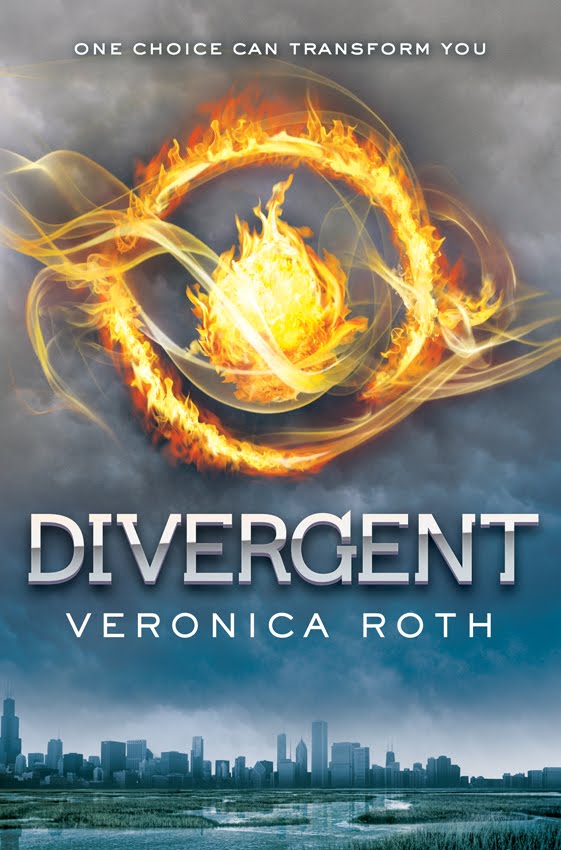
divergentI recently finished Divergent by Veronica Roth, and I. Loved. It.

The book is set in post-apocalyptic Chicago, where the city is divided into five factions, each based on what they most value.  Abnegation values selflessness; Erudite values knowledge; Amity values friendship; Candor values truth.

And Dauntless?  It values fearlessness, bravery, courage.

Beatrice Prior is sixteen, so it’s time for her to choose a faction.  Should she stay in Abnegation, where she was born and raised, or should she leave her faction for a new one?  Her choice changes her life.

As many of you know, dystopians are not typically my first choice to read, which is why it took me so long to pick this one up (I bought it about a year ago!), but I shouldn’t have waited.  It was delicious.  The characters are fabulous, the world-building is incredible, and action is non-stop.  And it’s safe to say that Four, the love interest, will be pushing others further down on my Literary Boyfriends List.

One thing that is super exciting to me is that the Divergent series is published by Katherine Tegen Books, my new publisher!  I feel incredibly blessed and humbled to be invited into the publishing family that published Divergent!  Every once in a while it will hit me that the same people who gave this incredible book its wings into the world are doing the same for Truest.

What I loved the most about Divergent are the characters themselves, the relationships between characters, and the ideas and concepts that it helps you to process.  It’s almost always this way for me.  I value characters, relationships, and ideas more than world-building, action, adventure, setting, etc.  I think that’s why I’m drawn to writing contemporary, realistic novels– because they allow me to focus on the former more than on the latter.  (Don’t misunderstand me: setting and plot are still terrifically important!  But characters are always first in my book.)

I feel that I’m not explaining myself well (maybe because I’m writing this near midnight).  To be clear, I loved Divergent.  Veronica Roth did an amazing job.  What I’m saying is that she made me fall in love with her characters, and once that happens, the rest is (nearly) moot to me.  I love Tris and Four, and so Roth could make them do almost anything, and I’d be invested.  In other words, their story (for me) wouldn’t have to be about factions in post-apocalyptic Chicago.  I feel the same way about Maggie Stiefvater’s The Raven Boys.  I am in love with Blue, Gansey, Ronan, Adam, Noah, and the rest– and so the book wouldn’t even have to be about awakening a Welsh king or a family of psychics.  I mean this as a tremendous compliment.  I only hope that one day people love my characters this way.

I often think that this disproportionate love I have for characters over action is what has made me so at home with contemporary novels.  (Along with my sorry lack of world-building skills!)  Heaven knows I love magic and fantasy as much as (read: more than) the rest of the world, but I do think that there is tremendous magic in daily life: dynamic discussions, building one’s worldview like a tenuous fort, falling in love slowly and deeply, watching fireworks from a rooftop patio, talking about words in a field of wind turbines that skulk like monsters.  These things become fantastic if they are spent with characters who are beloved.

I hope this post makes sense.  To summarize: I am besotted with Divergent and wish I wrote it; I am in love with Four; I value characters more than anything else in a story, and I think that’s why I write contemporaries.

Edit: Since I originally wrote this post, I finished the whole series, including Insurgent and Allegiant.  At the time of writing this, I just finished Allegiant about five minutes ago.  I’m grappling with a lot of things right now and loving that literature presses us to do that.  So powerful.

Theme Hopping

Recently someone emailed me and asked if my OCD was more about worrying about hell than it was about worrying if God was real, and I had to say honestly that after twenty-five years of OCD, there aren’t a lot of themes I haven’t experienced.  Is God real, is Jesus real, is heaven real, is Christianity legitimate, was Jesus really God’s son or was he the devil in disguise, have I committed the unpardonable sin?  OCD can cycle through a lot of themes in a quarter of a century.

That’s the thing with OCD: it often doesn’t remain in one place.  When I was still in high school– and even into my college years– I kept thinking, “If I could just sort out X, then I would be happy.”  So I’d wrestle with X, read books about it, seek reassurance, talk things over with my youth pastor and parents, research things online … and if I was ever able to “solve” it, then … my OCD moved onto Y.

Hitman: Contracts by TheKingArthur at deviantArt

Hitman: Contracts by TheKingArthur at deviantArt

I was in perpetual motion for so many years– but I never got anywhere.  It was all spinning my wheels.

Exposure and response prevention ignores the emergencies that OCD is sparking in every corner and goes after the OCD itself.  Instead of relying on compulsions, which temporarily help to “solve” individual issues, ERP is like a hitman with a mission to assassinate the OCD.

You can see why one is far more preferable than the other.


Theory of Inspiration

Melissa was my roomie at the Big Sur Writing Workshop last year. I loved her post here about inspiration and influences. A lot.

M.J. Suhs's avatarWayward Rhapsodies

Lately, I’ve happened upon several instances of writers being asked, “What inspired you to write your book?” or “Where do you get all your ideas?” There seems to be this consensus that if you write a novel, you have to be inspired directly by something. However, the glamorous answers of dreams and train rides don’t apply to every writer. Often, it’s hard to pinpoint one exact thing or time when inspiration struck, which makes for an underwhelming origin story. Many a writer must bemoan recounting the inspiration of a book because, invariable, this question of inspiration comes up every single time I’ve seen a writer asked questions by his or her fans.

For me, being asked, “what inspired you?” is an absolutely terrifying prospect. My answer, right now anyway, is, “what doesn’t?” Okay, so rhetorical questions are rude, but it seems unfair to claim one specific thing inspired me to write one other…

View original post 260 more words

The Journey From Leaving Christianity To Attending Seminary

Loved the honesty of this.

Josh Pratt's avatarHelps To Write

A reader of my blog recently asked a good question that I want to answer with a post.  They wrote:

Reading through your blog, we seem to have some of the same struggles and attitudes about what is generally passed off as Christianity. I see you have just started seminary, and so I have to ask whether your about page is due for an update. You have probably answered this in your past posts, but am I curious how you went from falling away to starting seminary.

First, the easy question.  Yes, I should update the about me page.  It’s been a long time and could definitely use an update.  Thanks for pointing that out.

Now for the big question: How did I go from falling away to starting seminary?  I decided to leave the church and faith back around 2007 or 2008 (I don’t remember specifically), though the frustration…

View original post 1,322 more words

Character Survey: Jackie Lea Sommers

editchristmasBefore I write a novel, I fill out the following survey questions about my main characters.  The first set of questions comes from Gotham Writers’ Workshop.  The second set are from this Yingle Yangle post.  Since people want to know more about me, I thought I’d fill them out for myself.  (Gosh, it feels so egotistical, but this is what you guys asked for.)

P.S. I feel like a teenager filling out questionnaires on Myspace.

• What is your character’s name? Does the character have a nickname?

Jackie Lea Sommers.  My nicknames are Jack, Jach, Jav (pronounced yawv).  A lot of people DO actually call me Jackie Lea or JLS.

• What is your character’s hair color? Eye color?

I’m dishwater blonde with blue eyes.  Although I dyed my hair this winter, so right now it’s fading from red to strawberry blonde.

• What kind of distinguishing facial features does your character have?

Very pale, almost non-existent eyebrows.  Which I hate.

• Does your character have a birthmark? Where is it? What about scars? How did he get them?

I am missing the tips of two fingers and six toes.  Yep, for real!  I was born that way, although I usually tell more dramatic lies, such as my mother chopped them off, I was in a lawn mower accident, etc.

• Who are your character’s friends and family? Who does she surround herself with? Who are the people your character is closest to? Who does he wish he were closest to?

My dad Tom, my mom Ronda, my sister Kristin, and my brother Kevin are all amazing and hilarious.  Some of my very best friends are Eir, Ashley, and Des (Des was my roomie for six years!).  I wish I were friends with Theo James, the actor who plays Four in the upcoming Divergent movie.  I have had to grieve the fact that it is highly unlikely I will ever get the chance to make out with him.

• Where was your character born? Where has she lived since then? Where does she call home?

Minnesota!

• Where does your character go when he’s angry?

Nap time!

• What is her biggest fear? Who has she told this to? Who would she never tell this to? Why?

Hell has been the biggest fear of my life, although since ERP, this has settled down considerably.  

• Does she have a secret?

I do.  Thanks for asking.

• What makes your character laugh out loud?

My co-workers!

• When has your character been in love? Had a broken heart?

I’m not sure that I’ve ever been in love.  I want to be!  My heart has been broken countless times– I count this as writing fuel.

Then dig deeper by asking more unconventional questions:

• What is in your character’s refrigerator right now? On her bedroom floor? On her nightstand? In her garbage can?

Fridge looks pretty empty; I need to venture out into the -22 degrees windchill weather to get some groceries.  Bedroom floor, nightstand … BOOKS!  (There are usually books on every surface in this apartment.)

• Look at your character’s feet. Describe what you see there. Does he wear dress shoes, gym shoes, or none at all? Is he in socks that are ratty and full of holes? Or is he wearing a pair of blue and gold slippers knitted by his grandmother?

Barefoot right now!  I wear dress flats to work, TOMS everywhere else, winter boots when I can get away with it.

• When your character thinks of her childhood kitchen, what smell does she associate with it? Sauerkraut? Oatmeal cookies? Paint? Why is that smell so resonant for her?

Cinnamon toast.  I’d LOVE those days when I’d wake up on a school day, go downstairs, and Dad would be making cinnamon-sugar toast for us!

• Your character is doing intense spring cleaning. What is easy for her to throw out? What is difficult for her to part with? Why?

I’m not much of a hoarder, except for mementos, like notes and letters that people have given to me.  Even books I can more easily part with– I take a bag to Half-Price Books every so often and get a little cash for the ones that aren’t worthy to stay on my bookshelves.

• It’s Saturday at noon. What is your character doing? Give details. If he’s eating breakfast, what exactly does he eat? If she’s stretching out in her backyard to sun, what kind of blanket or towel does she lie on?

Honestly?  Just waking up, lol!

• What is one strong memory that has stuck with your character from childhood? Why is it so powerful and lasting?

I intensely remember when my mom explained to me how she knew I loved God.  I’d struggled with it for three years, and she changed my life with that explanation.

• Your character is getting ready for a night out. Where is she going? What does she wear? Who will she be with?

Probably dinner or a play/musical with a friend!

NEXT SURVEY (by the way, my answers for my characters are usually a bit longer!):

  1. What one thing do you want more than anything else?
    To love God and people well, to be a successful writer.
  1. What would you do if you got it?
    Be joyful.
  1. What did you learn from your parents’ mistakes?
    I don’t drink alcohol at all.  Not ever.
  1. What would you spend your last $10 on? Something indulgent, something practical?
    A journal and a pen, and I’d start frantically writing.
  1. What (or whom) do you blame?
    OCD.
  1. What do you not tell anyone?
    Very little.  As a blogger for mental illness awareness, I’m a pretty open book!
  1. What do you not admit to yourself?
    I’m not sure of this one!  I sometimes think I’m going to be single forever, but I don’t like to spend time with that thought, so I’ll go with that.
  1. What is your biggest regret?
    Not doing ERP sooner.
  1. What is the worst thing you ever did? (It’s not always the same as the biggest regret).
    I can be very cruel with my words when I want to be.
  1. What should you care about, but don’t?
    What people think about me.
  1. What do people say about you?
    “She’s crazy!”  Don’t worry– they’re not referring to OCD, just everything else I do.
  1. What do will the character’s last thought will be? (For obvious reasons it’s hard to phrase this as a direction question).
    Jesus, take me home.
  1. What is your earliest memory?
    I remember spilling Cheerios on the floor when I was only about two and then, thinking I’d get in trouble, I began to frantically eat the evidence.  This is the only super early memory I have.
  1. What is your prejudice?
    I have a prejudice against certain Christian ministries.  That’s probably really bad, right?
  1. What relationship has upset you most?
    There was this boy.  I thought something was going to happen between us.  Then he moved away and dropped out of my life (and everyone else’s) really suddenly.  You can read about it in my story Lights All Around.
  2. What about high school or college upset you most?
    I was shoulder-deep in OCD; it messed with my relationships.
  1. What about your job upsets you the most?
    I actually love my job.  A lot.  Go Eagles!
  1. What do you best?
    I’m creative.
  1. What will happen after you die?
    Jesus.
  1. What things do you know the least about?
    Fashion, television, sports, cooking.