Things That Make Life Easier for Readers

stack of booksI work a full-time job and write almost every single day while maintaining relationships with friends and family.  Sometimes people ask me, Where do you find time to read?

Others wonder, Where do you find out about all these books?  

And others, But how can you afford your book-buying habit?

These are the tools that allow me to keep up an active and enjoyable reading life.

1. Audio books & multi-tasking.
The truth of the matter is that I simply would not be able to read as much as I do without embracing audiobooks.  I listen while I fall asleep at night, while I get ready in the morning, and while I’m in my car.

2. Audible & multi-tasking.
Again, audiobooks.  A fantastic and flexible subscription to Audible.com allows me to have almost any audiobook on hand anytime I want it.  I listen to these when CDs don’t make sense: while exercising, while tanning.

3. I repeat: multi-tasking.
I don’t do anything mindless without listening to a book, a TEDtalk, or a John Green video.  I mean, if I even want to play a quick game of Tetris, I make sure I have something to listen to.

4. Book blogs & Bloglovin.
I follow 85 blogs,over 50 of them writing- or reading-related.  I couldn’t keep up with this many blogs without the help of my blog reader, bloglovin.com.  It’s easy and intuitive and a time-saver!

5. Google Alerts.
How do I decide which book blogs to follow?  I have Google Alerts for my favorite authors, so every day I’m emailed news and posts about them.  If a blogger loves one of my favorite authors or books, I add them to my Bloglovin reader (assuming they have a similar taste as mine!).

6. Goodreads.
I don’t use Goodreads as much as some other readers, but I do like that it gives me personalized recommendations and that I can read quotes from the book before I decide to read it.  The reviews can be hit or miss without any context for the reviewer (i.e. How do I know if this person has good taste?), but they are sometimes helpful.  It’s also nice to see a collective reader rating on a book before diving in.

7. Barnes & Noble membership & Mastercard.
My membership gives me free shipping on everything (worth exponentially more than the membership dues), and my Mastercard gives me Barnes & Noble giftcards as rewards.  I keep my wishlist items in the “save for later” bin on the B&N website, and when a giftcard arrives in the mail, I spent it in about seven seconds.

Hope you’ve found something helpful in this list!  I’d love to hear YOUR best tips!

Top Ten Tuesday is a weekly meme over at The Broke and the Bookish

How I Got an Agent: the (Really, Really) Long Story

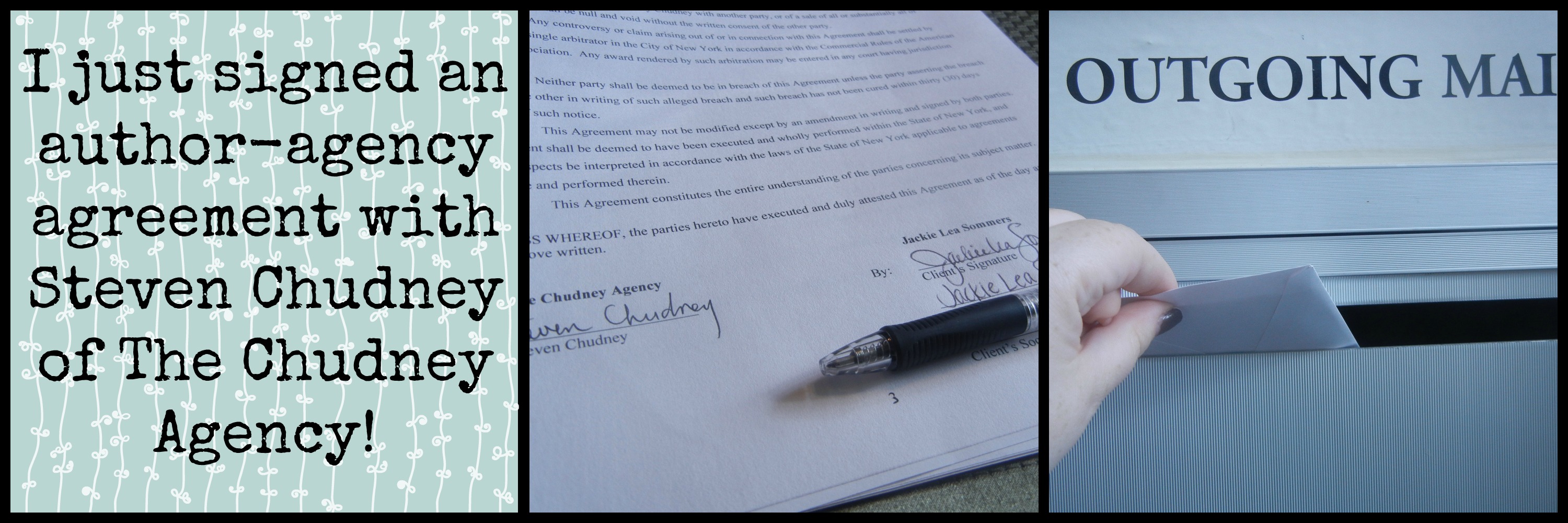
If you haven’t heard yet, I just signed with literary agent Steven Chudney of the Chudney Agency!

I know that some of you are curious about how this all came about, and for you, I’ve decided to write out a more detailed account here.  This might be boring to those of you who aren’t writers, but here goes!

LIGHTS ALL AROUND

My journey toward agent representation actually began about six years ago.  I spent four years working on a novel about OCD; I began that as a poet and somewhere along the way became a novelist.  I poured my heart and soul into that manuscript, and it was/is very near to my heart because it was my first novel and because it is a fictionalized version of my own battle against obsessive-compulsive disorder.  I actually started writing that story before I even started cognitive-behavioral therapy!  So writing some of those scenes were very difficult, visceral, heart-wrenching experiences.  When I felt the manuscript was ready (which makes me laugh now– it’s quite unpolished, and though that can be embarrassing, I wrote it for obsessive-compulsives so you can read it here), I started to research agents.

This can take a long time.  I started with The Guide to Literary Agents, making a note when an agency repped my kind of book, then going to each agency’s website to learn about each agent and then creating a spreadsheet of agents who might be a good fit.  Meanwhile, I was working on a query letter, which is very different writing from novel writing.

When I first queried agents back at the beginning of 2012, it took weeks before I heard back from anyone.  In the end, one agent requested my manuscript, read it and liked it and requested revisions before she’d look at it again.

But let’s be honest: I was completely burnt out on that story.  I’d spent four years writing it– and 20 years living it.  I told the agent that I needed to set it aside for a few months and work on something different.

I never went back to it.

TRUEST

Instead, I started writing another adult novel.  Right around this same time, The Fault in Our Stars by John Green was first released.  I read it, fell in love with his characters (especially Augustus Waters), and when I finished it, I wept for two reasons: the story itself and the fact that I didn’t write it.

After that, I scrapped my adult manuscript (50 pages in) and started over.  It occurred to me that young adult fiction was my favorite, and yet I wasn’t writing it (what was up with that?) and that I wanted to start my story with a character I could love as much as I adored Augustus Waters.  So I created Silas Hart.

I gave myself six months to write the first draft and finished it right on schedule.  It was a really bad first draft by most standards– and yet, compared to the first draft of my earlier novel, it looked pristine.  (Ha!)  Through the advice of several friends– but especially Kristin Luehr— I was able to point the story in the right direction.  I worked hard on a new draft of it and determined that my new year’s resolution would be to put more money into my writing.  So I hired a local editor who helped me restructure the novel.  I did a complete frenetic revision in only six weeks so that I would be ready to take the manuscript to the Big Sur Writing Workshop in California in March.  While I was there, I met some amazing writers, agents, and editors– and made even more big changes to my manuscript.  After another post-California revision, I hired the local editor for line edits, after which, I pronounced the novel complete (for the time being).

I had in the meantime been compiling a whole new list of agents (as this manuscript was YA and the former one was adult, I needed to start over from scratch).  I made a three-tiered list of 100 agents to query, ready to attack this querying process again.  I also worked and re-worked my query letter, putting a lot of research into successful queries, changing my mind about various things, and then finally taking my friend Elyse‘s wise advice, which I believe was the lynchpin to a successful querying experience.  (Thanks Elyse!)

(And yes, in case you’re wondering, I pretty much worked like a draft horse this whole entire time– writing every single day, slaving away over the keyboard, discussing my manuscript concerns with my long-suffering friends [thanks, Cindy, et al!], thinking constantly about my characters, jotting notes about scenes and ideas, weeping when I got them into situations from which I couldn’t see the way out [again, Kristin Luehr to the rescue!], leaving no stone unturned in my search for literary agents.  I probably only took the tiniest handful of days off over those 19 months.)

QUERYING

I queried my top tier of agents on July 11th and was shocked when I heard back from over a dozen people requesting partials and fulls.  It was very evident that this time was a far cry from the querying I had done just a year and a half earlier.

My friend and fellow writing group member Addie (who has a book coming out in October and so is many, many steps ahead of me in the process) mentioned something to me about the emotional rollercoaster of querying, and I wasn’t sure quite what she meant.  That’s because I hadn’t started getting the rejections yet.

The most emotional moment for me came one weekend when an agent remarked, “I’m captivated by what I’ve read thus far and I’d love to see more! Could you please send the full manuscript in a Word document (.doc)? I can’t wait to keep reading your work.”  Somehow, I knew– just knew— that she was going to say no and that it was going to hurt worse because of how eager her email sounded.  I cried like a baby that weekend, prayed a TON, and eventually returned to the manuscript for more revisions (even before I got her rejection, which came the next week).

Some of the comments I got from agents who ultimately rejected the manuscript:

“I think you have a very interesting and unique writing style, which drew me to your work.”

“I think you’re a strong writer.”

“I do like your idea and writing.”

And from the agent I worked most closely with at the Big Sur workshop:

“I came away from Big Sur so impressed by you, certain that you have the authorial (and editorial) eye, the professionalism, and the charming/witty personality to be incredibly successful in this industry. And now that I’ve had a chance to read your work, I’m even more impressed and even more certain. You are a truly talented writer, with a masterful command of language and of your characters. You make it look effortless, like the best of the best do. All of your characters are fully round and compelling, and your depiction of small town teen life is vivid and fully engaging.

“I get lost in your writing in the best way, and I believe TRUEST is about something (which I mean as high praise).   I will be first in line to buy my copy of TRUEST.”

exhausted2

But Steven Chudney of the Chudney Agency loved it.

“I like smart kids,” he told me when I talked to him on the phone earlier this week.  “I’m not so interested in prom night as I am in teenagers exploring questions of spirituality and philosophy.”  (Okay, he said something close to that– I was a little nervous on the phone!)  I find it fascinating (and, I hope, indicative of the far-reaches of the story) that Steven himself is not religious and yet was drawn to these characters who are exploring spirituality.

The contract arrived in the mail yesterday.  I couldn’t be more excited to be represented by the Chudney Agency!

(So, there’s the long story.  I know … so long … but this is essentially the last six years of my life wrapped up into one blog post!)

Now … I just need a book deal!!!

Big News: I Have an Agent!

Hi friends!  I have some exciting news on the writing front.  I now have a literary agent!

agencyagreement

What this doesn’t mean:

A book deal.  Not yet.  🙂

What this does mean:

I am one step closer to a book deal.  Most publishers don’t accept unsolicited manuscripts, so authors need an agent– a middle-man– whom publishers trust and who will represent the authors.  Steven Chudney of The Chudney Agency thinks my manuscript is lovely, and he already has ideas about which publishers he’d like to send it to.  I’m so grateful that he’s taking a chance on me and Truest!

I had no idea that querying was going to be such an emotional journey for me.  I’ll be blogging about it soon!

For now, I just wanted to share this fun news with my blogging community.  I am so grateful to Steven Chudney for this opportunity and so grateful to you blog readers for faithfully reading about my life, experiences, and opinions, and for caring so deeply about my personal writing journey.

Next step: revisions!

A to Z Bookish Survey!

AtoZsurveyI thought this survey, hosted by The Perpetual Page-Turner, looked right up my alley … and yours!

Author you’ve read the most books from:

C.S. Lewis!  (Unless you count the childhood years, in which case, Ann M. Martin wins … I think I owned 150+ Babysitters Club books, ha!)

Best Sequel Ever:

Perelandra by C.S. Lewis or The Piper’s Son by Melina Marchetta

Currently Reading:

UnWholly by Neal Shusterman

Drink of Choice While Reading:

Mmm … hot cocoa.  (Well, in those Minnesota winters, at least!)

E-reader or Physical Book?

Well … I’m mainly an audiobook girl!

Fictional Character You Probably Would Have Actually Dated In High School:

I would have wanted to date Augustus Waters.  Or Jonah Griggs.  Be still, my teenage heart.  (My top 10 literary boyfriends here!)

Glad You Gave This Book A Chance:

City of Bones by Cassie Clare.  This is soooooooo not my normal kind of book, but I ended up really enjoying The Mortal Instruments series!

Hidden Gem Book:

The Last Unicorn by Peter Beagle.  I try my hardest to recruit people to read it!

Important Moment in your Reading Life:

I can think of a couple: 1) Reading Where the Red Fern Grows, the first book to make me cry; 2) Staying up late to finish the Harry Potter series; 3) Reading The Book Thief in pajamas till 5pm one Saturday.

Just Finished:

The Lover’s Dictionary by David Levithan

Kinds of Books You Won’t Read:

Here is a list of books topics that turn me off!

Longest Book You’ve Read:

Harry Potter & the Order of the Phoenix.  870 pages of teenage angst.

Major book hangover because of:

The Book Thief by Markus Zusak.  I take personal offense if people don’t like this book.

Number of Bookcases You Own:

Three.  A “favorites” shelf, a jam-packed fiction and literary writing shelf, and another full non-fiction shelf.

One Book You Have Read Multiple Times:

Well, I just read The Lion, the Witch, and the Wardrobe five times in the last month.  Narnia addict.

Preferred Place To Read:

I love listening to audiobooks on long car rides!  Otherwise, I want to be in bed!

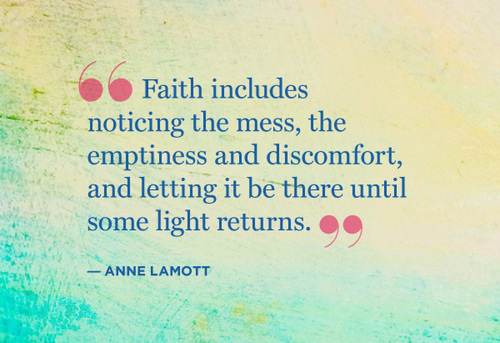
Quote that inspires you/gives you all the feels from a book you’ve read:

quotequote2

Reading Regret:

I regret giving into the pressure to read Twilight.

Series You Started And Need To Finish(all books are out in series):

The Unwind dystology by Neal Shusterman!  (Actually, I’m not sure the third book is out yet …)

Three of your All-Time Favorite Books:

The Chronicles of Narnia by C.S. Lewis (I know that’s cheating, and I don’t care); The Book Thief by Markus Zusak; Jellicoe Road by Melina Marchetta

Unapologetic Fangirl For:

Narnia!!! Harry Potter!!!

Yep, we played this before one of the midnight showings ... our blindfold was a Gryffindor scarf.

Yep, we played this before one of the midnight showings … our blindfold was a Gryffindor scarf.

Very Excited For This Release More Than All The Others:

Into the Still Blue by Veronica Rossi

Worst Bookish Habit:

Not using the library enough.  Using my credit card too much.

X Marks The Spot: Start at the top left of your shelf and pick the 27th book:

To Own a Dragon by Donald Miller and John MacMurray Jr.

Your latest book purchase:

The Beginning of Everything by Robyn Schneider (preordered: it is released later this month!)

ZZZ-snatcher book (last book that kept you up WAY late):

The Sea of Tranquility by Katja Millay, which I rather enjoyed.

List-Making as a Compulsion

lists2A compulsion I haven’t talked about very often on this blog was list-making.  Since it was never something I worked on in CBT/ERP, sometimes I forget about all the lists.

Mine would be numbered (though the numbers didn’t mean much), and they were an attempt to bring some sort of order back into my messy thoughts.  They were an attempt to nail down a position or a stance or anything I could stand on.

This was mostly in high school and in college, before I was even diagnosed with OCD.  All I knew was that my doubts were eating away at me.

For example, in college, I didn’t know if I liked one boy (who liked me back) or his roommate (whom I fought with).  I was in turmoil over this (since OCD can’t just play it by ear– let alone see that I didn’t like the roommate, who annoyed me), so I’d go down by the lake with a notebook and start making a list:

1) I think I like James, not Toby.
2) I don’t want to like Toby.
3) I can decide that, right?
4) Maybe I can’t.
5) But I should be able to– right?  That’s my decision, isn’t it?
6) James is so kind.  And cute.
7) Toby pisses me off.
8) I would break James’s heart if I liked Toby.
9) I don’t want to like Toby.
10) Then why do I think I do?
11) I don’t want to hurt James.
12) If I don’t want to hurt James, then I must really care for him.
13) Do I care about hurting Toby?
14) Not as much.
15) I must like James then.

Satisfied that I was now certain I liked James, I’d stash my notebook back into my backpack and head to class with a smile.

Except that the next time I saw Toby and James, I’d be confused again.  Time for another list.

List-making was a mix of confession and seeking reassurance, to and from myself.

Did/does anyone make lists as a compulsion?

Landing on a Dime

Recently, I was over at my friend Kristin’s Minnesota house (she spends most of the year at her Kenya house), discussing writing and Christian art.

Kristin is lovely and brilliant and so terribly wise– and she gets me, gets my heart.  She knows how the desperate cry of my heart is to honor God in my writing through creating a book that is excellent and thought-provoking while avoiding mawkish sentimentality and all cliches, Christian or otherwise.

It’s so hard.

dime“I feel like I’m parachuting,” I told her, “and trying to land on a spot the size of dime.”

That is how precise my goal seems.  I want my stories to be just offensive enough to disturb someone’s thoughts– but not so offensive that they’ll put down the book.  I want them to be full of mystery– but with enough clues to find the answer.  I want them to reflect the trials, confusions, and joys of my deepest heart– but in a way that no one will find cheesy or trite.

Again: the size of a dime.

I’m not sure that I am a good enough writer to hit such a bullseye (in fact I feel quite confident that I am not).  So, what then?  Do I stop writing?

Of course not.  Not when that’s the goal of my life and the best worship I can offer.

I tell myself, You’re 31.  Keep writing and you’ll be better at 32 … 33 … 34.  But I am a perfectionist, an achiever, a go-getter, and terribly impatient.  I get frustrated with myself (see here, here, here, here, here, and here) and get so down and low, or else frantic and scared.  But the best I can do is to keep writing, continue praying, practice grace, revel in creation, and gauge my faithfulness.

And my faithfulness looks like persistence, like fidelity to Christ, to his gifts, and to showing up.

Christian Culture’s (Sad) Response to Mental Illness

It’s in the Title: Mental Illness is an Illness

Salads and sandwiches and a shared mental illness, all of it on the tiny table between us.

“There is help for OCD,” I told her.  “The most effective treatment is cognitive-behavioral therapy.  Between that and my medication, I got my life back.  I know you can too.”  (The evangelical zeal I have for this particular therapy reminds me of the way I love Jesus: both took me from darkness into light, both make me want to throw parades in their honor.)

“Oh, I don’t know,” said my friend, poking at her salad with a fork, sounding hesitant.  “I think before I take any extreme methods, I want to just pray about it more.  I know that God can bring me through this.”

I wanted to say, But you have been praying about this for years!  I also believe God can bring you through this—and I am telling you how.

There is a pervasive and unhealthy attitude in the Christian culture toward mental illness.  Many believe that one should be able to “pray away” a disorder.  Some think that mental illness is, quite simply, spiritual warfare; some think it’s the result of unresolved sin issues.  One of my friends has said before that a real Christian can’t be clinically depressed.  I saw a Facebook status once that read, “Depression is a choice.”

These sentiments light a fire in me, especially for the way that they marginalize a group of people that are often already more susceptible to guilt.  I know that in my OCD hey-day, I felt continual guilt and severe shame; for someone to intimate to me that these feelings were the appropriate ones would only mean that my Christian brothers and sisters were siding with my disorder—and against me.

Mental illnesses are just that: illnesses. 

friendsGod and Satan can work through them just the same way as they could through, say, cancer or diabetes.  All issues are spiritual issues, simply because we are spiritual beings, but it is not helpful to label a chemical issue with a giant term like spiritual warfare.  To say that a Christian cannot be depressed is like saying a real Christian can’t get the flu.  To say that depression is a choice is like saying strep throat is a choice.

If you break a bone, do you get it set in a cast?  If you learn you’re diabetic, do you take insulin?  If cancer steps into your body, do you pursue chemotherapy?

The answer is usually yes.  Yes—and pray.  (Don’t get me wrong: I’m all for prayer!  And for medical innovation!)

That is why I am unashamed of my OCD, my depression.  Instead, I am proud of my God for seeing me through a therapy as difficult as CBT and for being my strength through five years of side effects in the search for the right medication.

Unfortunately, my friend left the sandwich shop that evening feeling obligated to “pray away” a spiritual flaw instead of feeling empowered to fight illness, in spite of my best efforts.  My voice is being drowned out by the multitude of louder voices of the Christian culture, a culture that should be supporting this demographic, not alienating it.