medication is scary, part one

PROZAC

POSSIBLE SIDE EFFECTS that may occur while taking this medicine include abnormal dreams; anxiety; decreased sexual desire or ability; diarrhea; dizziness; drowsiness; dry mouth; flu-like symptoms (eg, fever, chills, muscle aches); flushing; increased sweating; loss of appetite; nausea; nervousness; runny nose; sore throat; stomach upset; trouble sleeping; weakness; or yawning.

CONTACT YOUR DOCTOR IMMEDIATELY if you experience bizarre behavior; black or bloody stools; chest pain; confusion; difficulty concentrating; exaggerated reflexes; excessive sweating; fainting; fast or irregular heartbeat; fever, chills, or sore throat; hallucinations; increased hunger, thirst or urination; joint or wrist aches or pain; loss of coordination; memory loss; new or worsening agitation, panic attacks, aggressiveness, impulsiveness, irritability, hostility, exaggerated feeling of well-being, restlessness, or inability to sit still; persistent or severe ringing in the ears; persistent, painful erection; red, swollen, blistered, or peeling skin; seizures; severe or persistent anxiety, trouble sleeping, or weakness; severe or persistent nausea, vomiting, diarrhea, or headache; significant weight loss; stomach pain; suicidal thoughts or attempt; tremor; unusual bruising or bleeding; unusual or severe mental or mood changes; unusual swelling; vision changes; or worsening of depression.

I boast in the cross.

I give the credit for my rescue from OCD to Jesus Christ alone, and I believe that CBT and medicine and doctors were the tools He used.

Tonight I listened to a sermon online given by John Piper of Bethlehem Baptist Church, right here in Minneapolis.  He was talking about something that won’t make sense to some:

“[F]or redeemed sinners, every good thing–[and] indeed every bad thing that God turns for good–was obtained for us by the cross of Christ. Apart from the death of Christ, sinners get nothing but judgment. Apart from the cross of Christ, there is only condemnation. Therefore, everything that you enjoy in Christ–everything you boast in, everything you exult in–is owing to the death of Christ. And all your exultation in other things is to be an exultation in the cross where all your blessings were purchased for you at the cost of Christ’s life.”

Essentially, if I follow the path of blessings back to its source, there I will find the cross–the death–of Jesus Christ.  Because the death of Christ was an act of grace, an act of rescue.

I am grateful and blessed and pleased to be free from the clutches of obsessive-compulsive disorder.  In doing so, I am exulting in the cross of Jesus.

As Piper said, “[Being dead to the world] means that every legitimate pleasure in the world becomes a blood-bought evidence of Christ’s Calvary love and an occasion of boasting in the cross.”

how CBT helps me to see clearly

OCD-related blogs I have been reading:

http://www.pureocanuck.blogspot.com/
http://www.lollyshope.com/
http://ocdtalk.wordpress.com/

The other day, there was a post on Lolly’s Hope that seriously could have been written by me, only a couple years ago.  It told how she was nervous that she’d been rude to the secretary at the doctor’s office and was wondering if she should call back and apologize.  OCD induces such confessions and apologies that are not necessary, simply because the obsession causes such PANIC, and the confession/apology temporarily alleviates that panic.  Your heart will be racing, as well as your mind, believing that things must be solved NOW and that you are going to feel this terrible panicky sensation UNTIL things are solved.  That’s why most of us give in right away.  Heck, I’m the girl who emailed Caribou corporate because my barista gave me a 10-cent discount and I felt guilty as all get-out.  Ridiculous, right?

Yes.

I’ve been reading things from people at all different stages– people who have never heard of CBT/ERP (cognitive-behavioral therapy/exposure and response prevention), people who are undergoing it now, and people like myself– who have gone through that hell, survived it, and are HAPPY on the other side!

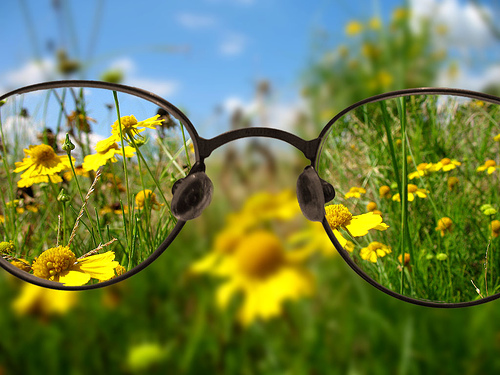
I can see clearly now that I’ve undergone CBT.  I am a huge proponent of it as THE BEST TREATMENT THERE IS FOR OCD.  Yes, it is one of the most difficult things I have ever done, but God has given me my life back through it.  It was all worth it.  And the eyesight of my head and heart is 20/20 again!!!


Image credit: See Clearly

“reasonable doubt”

I read an interesting article today called “Casey Anthony, Reasonable Doubt, and OCD” by Stacy Kuhl-Wochner at the OCD Center of Los Angeles — you can read the entire article here.

Just wanted to quote a little bit of it for all you blog readers to consider, especially after having an interesting phone conversation along these same lines with my college roomie Megs.

Being a therapist who specializes in treating those with OCD, I can only imagine what an especially difficult task quantifying reasonable doubt would be for many of my clients.  People with OCD and related OC Spectrum Disorders such as Body Dysmorphic Disorder (BDD), Hypochondria (Health Anxiety), and Social Anxietyare on a constant quest for answers to unanswerable questions.  They seek to quantify that which cannot be quantified, to gain certainty when it is only possible to be “pretty sure.”  These are questions that most people who do not have OCD can accept despite their inevitable doubts.  But for many people who experience OCD or a related spectrum condition, “reasonable” doubt often feels unbearable.

Doubt is such an intrinsic part of OCD that the condition has often been referred to as “the doubting disease. Some common doubts seen in OCD and related OC Spectrum Disorders include:

  • Are my hands clean enough to ensure that I won’t accidentally make someone sick through casual contact?
  • Am I straight enough to to be certain that I am not actually gay?
  • How do I know if I really love my spouse?
  • What level of pain is a enough that I should visit a doctor to see if I have a serious medical condition?
  • What is the right amount of eye contact to avoid being seen as socially inappropriate?
  • How do I know whether I am a good person or a bad person?
  • If I become angry at my child, does this mean that I do not love them enough, and that I am close to mentally snapping and harming them?

The only realistic answer to these and similar questions is to accept that nobody has 100% certainty on these issues*, and to stop the mental checking.  The goal is to make decisions based on what is “most likely”, given all the evidence.  For people with OCD, it may feel terrifying** to make that leap and take that chance because their brain is telling them that absolute certainty is required.

*JLS adds: That is why the point of cognitive-behavioral therapy is not to remove uncertainty but to make one okay with uncertainty.

**”Terrifying” doesn’t even touch it.

Thoughts?  What’s the most basic thing you know that you have doubted before?  (I have sometimes wondered if all of life that I’ve “experienced” so far is only a dream.)

I’m a Christian and I take MEDS!!!

After I wrote an article for the college newspaper, one of my former professors asked me if next year I would speak to his biblical counseling class.  Apparently, the day after the paper came out, the class had had a whole discussion on whether believers should use medications.  This professor said that in general the class seemed to think that therapy should be “enough.”

And it may be.  For some people.

I’m not going to preach, but I will do a little copy-and-paste job here and share an old story:

A man who couldn’t swim very well was stranded in the middle of the lake. He prayed to God, asking Him to save him from drowning. Shortly after, a man on a boat came by.

“Do you need some help?” He asked, slowing his boat to a stop next to the man.

“No thank you,” The man replied. “God will save me.” The man with the boat shrugged his shoulders and kept going.

Next, a man with a canoe paddled next to him, slowing to a stop and asking, “Do you need some help?”

“No thank you. God will save me.” The man replied, smiling. The man on the canoe shrugged, and paddled on.

Next, a man in a tiny paddle boat came by, stopping next to the man and asking, “Do you need some help?”

The drowning man replied, “No thank you, God will save me.” The man in the paddle boat shrugged, and paddled away.

The drowning man did indeed drown, and when he reached heaven, he asked God “Why didn’t you save me?”

God replied “I gave you three boats. What more did you want?”

today

… was a hard/stressful day and I agreed to see a therapist (but this time NOT for OCD– wow!).

BUT today was also really good in a couple of ways:

1) I re-took the MMPI last week (read here for my past blog about this test), and I went over the results at the doctor’s office today, and they were saying how HEALTHY my results were. I teared up there in his office and said, “You don’t know. I was a MESS. Praise God.” He said, “Good for you for working so hard and coming so far,” which showed me he completely missed my point. It wasn’t me. That’s for sure.

2) My writing group has a write-up on the NWC English department’s blog. Check it out!

One thing that would really be meaningful for me would be for you to post a comment saying that you read my blog.  I can see the analytics, and I know people are stopping by, but it all feels so anonymous, and I need some names and faces please.  I wish I could sit down and have hot cocoa with you blog readers.  With marshmallows.  Lots of them.

diagnosis

Eve Ensler writes, “I believe in the power and mystery of naming things. Language has the capacity to transform our cells, rearrange our learned patterns of behavior and redirect our thinking. I believe in naming what’s right in front of us because that is often what is most invisible. I believe freedom begins with naming things. Humanity is preserved by it.”

And I agree.

To me, naming an enemy steals away some of that enemy’s power, and that is why I believe diagnosis is so important.

For years, I didn’t know what was wrong with me– only that I thought and worried more than anyone I knew– enough to think myself into panicked circles from which escape was nearly impossible. I couldn’t see this behavior in any of my friends, this dizzying chasing-of-my-own-tail beginning the moment I woke up. I was the odd man out, always stressed to the max, always teetering on the edge of something HUGE– heresy, atheism, a change in direction or pursuit, a redefining of my entire worldview.

But how can you fight against an invisible enemy? Since you can’t see the enemy standing between you and the mirror, instead you see yourself and the fight becomes personal. All the while, the real culprit is standing right there … only it is unnamed.

And then, the diagnosis arrives. OCD is named. There is a transfer of power, even if only minute. And the real war begins.

Anonymous, you feasted on me like a silent maggot,
until I was weary of the ugly business of waking up.
You fed on my tears, licking the salt off of
your fingertips in a greedy appetite for sorrow that
backed me into a boxy corner of paranoia
where I first learned your name.
My move.

bullying my bully, part two

Such an interesting post on this same topic on ocdtalk’s blog!

In my story, Neely discovers this concept through a brochure in her psychiatrist’s office, but in my own life, it came out of NOWHERE.  (God??)  All I’d ever heard of it before was from a friend with an eating disorder who called it “Ed” and talked about it as something separate from herself.  So I randomly started to do something similar, imaginging my OCD as a black dot. 

In real life, people stumble into things, but most of the time in fiction, characters have to be forced.  That’s why I altered my story a little bit as I told Neely’s story.  I mean, how crazy is it to just one day start imagining a little black dot riding in the car’s passenger seat?!

Here’s another scene:

“My OCD wants me to think that thought,” I’d spell out in my head as I continued through the neighborhood, realizing that autumn’s chill had definitely hit Minnesota at full force.  “It’s not actually my thought.  I’m just the messenger.” 

It was an awkward dance, one where I sidled up to the thought and tried to hold its hand.  One foot in front of the other, a stealthy warrior on a tiptoed journey toward freedom. 

“Oh, you’re along?” I said to the black dot that was jogging to keep up with my longer strides.  “Well, keep up, won’t ya?”  I “dressed” it in a child’s train conductor costume and laughed under my breath as it seethed in humiliation.  “Chugga-chugga-choo-chooooo!” I said, pulling a fake train whistle above my head.  “Aren’t you a cute little conductor?”  It glared at me.

Another day, another walk, this time my little black dot in a Scottish kilt and a tiny tam beret.  The day after, a doll-sized sailor suit and white sailor hat.  It had toddled behind me, trying to keep a low profile, which was just fine by me.  By the end of the week I’d landed on an outfit for keeps—a pink tutu with tights and ballet slippers, which my OCD hated worse than all the rest.  I was bullying my bully, and it felt powerful.  Whenever my mind started to race, I said to my OCD in its ballerina getup, “You there!  Start twirling!”  And so it would, even as it boiled with rage.  “Keep on twirling!” I said with a smile.  “I’ll tell you when you can stop … little one.”

I felt an odd sense of control that I’d never had before, not completely free of OCD, but like someone separate from it.  I didn’t need to get my toes wet; I could stand on the dry bank, command my orders, and get back to work.

Isn’t it interesting that something that seems so crazy is actually what’s keeping an obsessive-compulsive from craziness?  I’d love to hear your thoughts on this concept.  Leave a comment!

bullying my bully

This post from Pure O Canuck inspired me to post this excerpt from my novel.

There were new magazines on the table beside me but the same display of brochures.  I skipped the
pamphlet about CBT, feeling I knew more about it than I wanted, and chose one labeled “Narrative Therapy.”  I had intended just to skim it, to amuse myself as I waited, but the heading on the inside flap caught my attention.  “The person is not the problem,” it boldly claimed.  “The problem is the problem.”

The brochure shared how narrative therapy assumes that stories shape a person’s identity and has an emphasis on externalizing the problem.  “Name the problem—allow it to have its own identity—so that you can assess and evaluate its presence and ultimately choose your relationship to it.”  I thought briefly about Ellen’s story and the scene she’d written the other night about tricking the wizard into revealing his name.  Name something and steal its power.

On the back of the pamphlet was a photo of a young lady with thin white-blonde hair, and beneath her photograph, there was a quotation: “When I started thinking of my anorexia as separate from myself, the real healing began.  I named my problem Ed (for ‘eating disorder’), and I continually reminded myself that Ed was a liar and started to take back control.”

It all resonated with me.  In fact, it was exactly what I had been doing this last week—employing
Dr. Foster’s strategy, making observations: I am the messenger.  OCD has the message.  We are
not the same. 
“The person is not the
problem; the problem is the problem.”

“Neely,” said that familiar accent, and I looked up to see Dr. Lee, nodding at me before tearing down the hall like a shot.  I tucked the pamphlet in my purse and made my way, alone, down the hallway to his office.  I knew the next words before he spoke them, and I mouthed them along with him: “Come in.  Close door please.”

            This time he decided to reduce the Prozac, dropping me from thirty milligrams to twenty. 
He typed it into his computer and murmured, “Looking good … looking good …” as he did so.  Dr. Lee swiveled his chair to look at me.  “As we lower your dosages, you’ll have to double your behavioral therapy efforts.  You will do okay though.  This is good.  We reduce medicine side of things.  We are almost there with meds, agreed?”

“Agreed.”

“Almost there,” he said again, looking at me as if my potential were dancing atop my head like a little flame.


I noticed the brochure when I searched through my purse for my keys.  I sat in the driver’s seat of
my car, looking at it, re-reading it, thinking about it.  “Name the problem—allow it to have its own
identity—so that you can assess and evaluate its presence and ultimately choose your relationship to it.”  I didn’t know if Dr. Foster would approve, but as I turned the key in the ignition, I imagined my OCD as a little black dot sitting on the passenger’s seat beside me. 

It was the size of a large fist, perfectly round, and it had attitude.  Even sitting in the passenger’s seat, I could feel the way it tried to masquerade as my smarter, oppressive friend.  Its condescending
grin showed it didn’t think much of me, especially in this moment as I left the hospital, the gathering place of the weak.

As I drove, I felt the dot exuding confidence.  It actually annoyed me to the point where I said aloud, “You know what?  You think you’re sooo cool, but you’re a dot.”  Then I realized that I was talking outloud in my car and laughed a little bit.  This couldn’t possibly be what the brochure was talking about, could it? I thought.  Then with only the slightest glance at the passenger’s seat out of the
corner of my eye, I visualized a change in the black dot as I dressed it in baby clothes—a tight little blue onesie and a binky in its mouth.  It was enraged by this turning of the tables.  “Now who looks dumb?” I muttered with a smile on my lips.

my two cents

Well, wouldn’t you know it– I wrote up a whole blog entry, and it somehow vanished.  I think I might be due for a new laptop soon.

It’s been so interesting to read the comments on the last post– MLP, keep it up and one of these days you’re going to coax me away from my Prozac and onto a Maximized Living chiropractor’s table!

Let me be honest (and brief, since I’m annoyed that my post disappeared): what do I know about anything?  I don’t consider myself an expert at all.  Meds have been terrible to me and wonderful to me.  Luvox stole my energy for a time.  Salagen gave me a spasm in my back that dropped me to the floor of my apartment.  Paxil made my mind throw up on itself.  Going off of Clomipramine sunk me into a depression.  An allergic reaction to Propranolol almost sent me to meet my Maker.

And  yet the lovely little cocktail I’m on now– Prozac, Effexor, and Risperdal– seems to be going great.  I will say that I believe that the successful completion of cognitive-behavioral therapy, along with a year and a half of successes, has probably done more for me than meds ever will.  (Successes accumulate, you know, tearing away at OCD’s ridiculous pride– I love that it isn’t in charge anymore!)

I thought everyone made such good points!

I will say this one quick thing.  My body reabsorbs serotonin so quickly– is it wrong if I “level the playing field” by taking a pill to slow that down?  I don’t think it’s wrong.  I feel like it is bringing me back to “zero.”  I believe that God can and does use medication to lift sick, broken people in a fallen world out of their deficit and back to square one– in some ways, a “redemption.”  It is, afterall, His business, is it not?

Love to hear your thoughts!