She’s always writing.

… and maybe you don’t care.  That’s fine too. 🙂

But if you want to know and understand me, you’d have to read my creative work.  I invite you to click a link below!

Drops of Jupiter, Revisited | Do you know the Train song?  These jottings take place in the years before the song.

Valuing the Arts | Flash fiction satire.

Nine Names | Flash fiction I wrote to help myself sort through “The Problem of Susan.”

Date a Girl Who Writes | An essay I wrote as a companion essay to Rosemarie Urquico’s brilliant “Date a Girl Who Reads.”

Seeing Saturn | An excerpt from my work-in-progress.

Rooster | A short story about holding on and letting go during those crazy college years.

The Call | A poem inspired by jealousy and a friend’s phone call.

Madam, Meet Adam | A short story about Adam meeting Eve for the very first time.

Susan of Narnia | This poem also helped me to explore “The Problem of Susan.”

Which Education? | A poem … kinda fan fiction … about my own story.

Why Christians Should Write | Some thoughts on the matter.

Gala at Death | A poem about the death of my poems.

What I Want to Say | A poem from college, recently revised.

On the Shore | A poem about the disciples seeing Christ after His resurrection.

Grace Beneath the Line | Creative non-fiction I wrote for my senior capstone in undergrad.

Edmund | A poem about Edmund Pevensie, my favorite character from the Narnia series.

The Colors | Jottings about my favorite colors.

writer girl3

Half-Mast | Speculative fiction set in the distant future.  Satire.

Why Write? | Thoughts on why I love writing.

Brought to You by the Letter V | Jottings on letters.

Invitation | A poem I wrote in college about a summer love/fall heartbreak.

Scenery Matters | A brief poem inspired by the accompanying photo.

Tall, Dark, and Handsome | A poem about a boy.

Castle | A short poem about Cair Paravel in ruins.

Knit | A poem about my bestie.

Her Life in Red | Flash fiction.

Introducing Crux Literary Journal

Hi friends!

Today I’m excited to tell you about a new project of mine.  Crux Literary Journal is a brand-new online arts project that launches today at cruxliteraryjournal.com.

I love Jesus.  I love quality writing.  But so often in my life, I have found Christian literature to be cheesy, over-sentimental, and sub-par.

But I know it doesn’t have to be this way.  That’s why I started Crux.  

Crux Literary Journal is committed to publishing works of Christian art that display true excellence.  We publish poems and stories that are real, gritty, raw, even savage– but laced with the grace that is ours through the cross.

I invite you today to check out the site’s first two posts– a short story by T.J. Martinson and a poem by Anna Stone.  Both pieces are brilliant.

What else can you do to support Crux?

1. Follow the blog site.
2. Leave encouraging comments for the writers.
3. Submit your own creative work with Christian themes.

Enjoy!

Love,
Jackie

crux2

Just One More

Even though one of my strengths is ideation, as a writer, I still worry that my current work-in-progress (whatever it happens to be) will also be my last.  I worry that inspiration works more like the lottery than like an assembly line.  It seems to me that so many other writers have one hundred million ideas for stories, poems, and projects while I have one— whatever I happen to be working on.

And what if that next idea never comes?

It makes me nervous.

I wonder if musicians ever worry if this song will be their last one, or if an artist thinks, What if I don’t have another painting in me?  Is this a common worry among creative types?

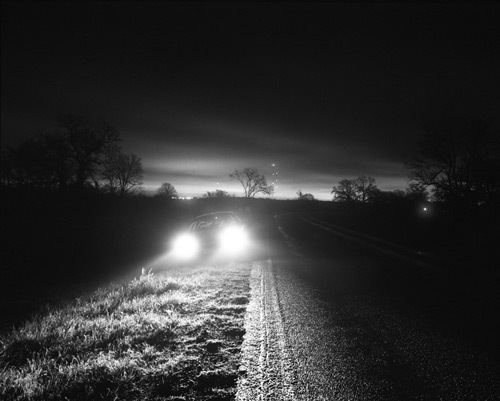
E.L. Doctorow has this famous quote, which goes, “Writing a novel is like driving a car at night. You can see only as far as your headlights, but you can make the whole trip that way.”

headlights

As Anne Lamott once pointed out, “This is right up there with the best advice on writing, or life, I have ever heard.”


Truth Tripline

I’m one of those writers who doesn’t really know what she wants to say until she says it.  I don’t do a lot of planning before I start fiction projects.  I might have a vague idea of the ending, but I don’t know the steps it will take to get to that point, or even if that ending will be what I eventually land on.

Apparently, Jo Rowling planned Harry Potter for seven years before she started writing it.  It definitely worked for her.

For me, I make friends with a few characters and then I toss them into a situation together to see what they’ll do.

Listen, I know it’s kind of a trendy thing for authors to say that they are surprised by what their characters do, but I’ll be honest with you: it’s the truth.  I am sometimes shocked at what happens when I sit down at the laptop to write.  I won’t let my characters have the final say; I get that, as the author … but they usually know what they’re doing, and I’m usually humble enough to listen.

When I sat down to write my current work-in-progress, all I knew was that it featured three teenagers and one of them wasn’t sure if reality was really reality.  The first thing that happened when I started writing was that this blind, elderly man named Gordon suddenly started speaking.  I had no idea where he came from, had not planned or prepared for him … but there he was.  And he ended up being an important character in the story.

C.S. Lewis had the image of a faun carrying an umbrella and parcels in a snowy wood in his head.  He wrote, “At first I had very little idea how the story would go. Then suddenly Aslan came bounding into it. I think I had been having a good many dreams about lions about that time. Apart from that I don’t know where the Lion came from or why he came. But once he was there he pulled the whole story together, and soon He pulled the six other Narnian stories in after him.”

Likewise, Lewis said that the stories weren’t originally intended to be Christian allegory.  “At first there wasn’t even anything Christian about them; that element pushed itself in of its own accord.”

This happens to me while I write.  I won’t know what a character should do or say … and then I just write it.  My fingers just fly across the keyboard, and I, Jackie, at home on my couch, am marveling at this truth that I tripped over.

Where do these things come from?

I think I know.

Alice in Wonderland 2 by *Ashenebal on deviantART

Alice in Wonderland 2 by *Ashenebal on deviantART

My Love/Hate Relationship with Feedback

“If you show someone something you’ve written, you give them a sharpened stake, lie down in your coffin, and say, ‘When you’re ready.’”
David Mitchell, Black Swan Green

Yup.  That’s about it.

No, but seriously, I have such a love/hate relationship with feedback and writing criticism.

On the one hand, I hate it.  Showing people a chapter you’ve written is like saying, “Look, here’s my baby.  Tell me if you think it’s ugly.”  And they do.  You slave over your words, you climb up a mountain with them, and when you finally reach the top, someone pushes you over and you tumble back down.  It’s really, really hard to get writing feedback, especially when you truly care about a project.  When I was in my writing program in college, I couldn’t look at feedback on my poetry and stories immediately after our work was graded.  I would get my work back, and– while looking away from the top of the page where the grade was– would fold it in half and tuck it, unseen, into my backpack.  In my room, I would move it to a desk drawer where it would sit– still unseen– until it was time to work on the next draft; usually by that time, the sting would have gone out of it a little bit.

During my senior capstone, I had to learn how to handle criticism.  I met every single week with my advisor, who could cover the whole front and back sides of a sheet of paper in red ink full of suggestions, deletions, squiggle underlines (bad), straight underlines (good), and the word PUSH.  There would be more red ink from her than black ink from what I’d originally written.  In addition, every week, I sat down with a group of seven other writers, and we critiqued each other’s work aloud in a local Caribou.  At the beginning of that semester, I would pray before I had to meet with my advisor; I was so nervous for her critiques and so scared I might cry in front of her.

By the end of that semester, though, I had learned how to handle criticism– and better yet: I had learned how to take the criticism, revisit my writing, and make it better.  When I graduated, I had a senior portfolio I was proud of.

So on the other hand, I love criticism.  I love that my friends who love reading and writing, words and metaphors, can see the potential in my drafts and that they are willing to put the time and energy into reading them and making suggestions.  I love that they can pick out the obvious flaws that I somehow just cannot see.  They tell me when my characters aren’t being true to themselves; they find big-picture concepts that are a little off and help me correct them.  I have realized that the mere fact that someone is willing to offer feedback shows that they are investing in me and my writing, shows that they believe it has a future, one they want to buy into.

I’m so blessed.  I have the most incredible writing group.  Anna, Rachel L, Jaidyn, Rachel R, Carra, and Addie.  We meet once a month to share life, stories, poems, and commiserations.  They are all completely brilliant and care deeply for me and my novel, and I am so, so grateful for their help on this journey.  Along with my writing group, I also have wonderful beta-readers in Elyse, Stacey, and Mary.  My faithful blog readers Brienna and Melody too!  My mom and sister are rockstar readers as well.

In addition, I have been getting help from Ben Barnhart, this incredible editor in Minneapolis, and of course, I went to the Big Sur Writing Workshop too for an intense look at my first two chapters.  I have come a long, long way from those early days of feedback– now I seek it out.  It’s still not easy; make no mistake.  It’s hard.  But it’s good.  

In fact, for me, it’s the only way I can take my writing to the next level.

How about you?  How do you feel about feedback and constructive criticism?

group reading

Asking the Tough Questions

confused boyThe Wednesday before Easter, my dear friend Ashley and I went to a performance of “Kingdom Undone,” which was showing at the Southern Theater in Minneapolis.  This was a story of days leading up to Christ’s death, but the emphasis … was on Judas Iscariot.

The betrayer.  The traitor.  But in this play, a lover of Christ who misunderstood just what the coming of Christ’s kingdom would truly look like.  A zealous believer who thought he was doing what was right, even what was needed of him.

It was fascinating.  Afterward, Ashley and I could not quit talking about Judas and his role in Christ’s death, both of us eager to return to Scripture to measure our thoughts against Truth.

I want Judas to be redeemed.  So badly.  Mostly because I think that would make for the best story.

That alarmed me for a little bit, made me really uncomfortable.  Was I imagining that I could make an “improvement” on the gospel story (if Judas was not under grace)?  The gospel is my FAVORITE story.  It’s like how I’d feel if someone wanted to change the ending to The Last Battle or something.  (Potentially– I still have not totally landed on what I think was Judas’ fate.  Although scripture does say, “Satan entered into him.”  But we also do know that he regretted his choices– deeply.)

Anyway, it’s good for this obsessive-compulsive to sit with troublesome uncertainty.  Once upon a time, these kinds of questions would have collapsed me, but now I’ve learned to sit with them.

Another of my friends emailed me this week with an unrelated faith crisis as she struggles to reconcile the (vengeful, confusing, sometimes bloodthirsty) God of the Old Testament with the (merciful, loving, gracious) Christ of the New Testament.  They are, after all, one and the same.  But she loves Jesus, she told me, and is pissed at the OT God and trying to struggle her way through the dissonance.

I wonder the same thing sometimes too.  The Old Testament and New seem so vastly different.  But I know that the Law was a tutor to lead us to Christ, and I know that the God of the Old Testament orchestrated the whole beautiful gospel from before time began, so they do flow together.  I know that God welcomed Gentiles like me in order to make Israel jealous, and I am forever grateful to be a wild shoot grafted into the natural tree.

This post doesn’t have a lot of answers, and I think that’s okay.  I’m learning to ask the tough questions and to sit without an answer, wait in that uncomfortable silence because God is still holy there.

Jackie’s Must-Read Books

1. The Chronicles of Narnia by C.S. Lewis
These are classics!  I seriously cannot get enough of them– I read them over and over and over and love them every single time.  I am just finishing up the series for the first time this year, and– no joke– after book 7 is over, I will start again on book 1.
Must-read: everyone, all ages

2. Jellicoe Road by Melina Marchetta
This book is seriously one of the best-written young adult books I have ever read.  In my life.  Period.  I love so many things about this book: the language, the characters, the structure, the humor.  It gets a 10 out of 10 from me.
Must-read: anyone who loves YA or a clever, quirky romance

3. The Book Thief by Markus Zusak
A Printz honor book narrated by Death himself, this is “just a small story really, about, among other things: a girl, some words, an accordionist, some fanatical Germans, a Jewish fist fighter, and quite a lot of thievery.”  I love books that are about the joy of words– and it’s even better when you mix in unforgettable characters and gorgeous writing full of incredible imagery.
Must-read: YA lovers, people who love words, anyone interested in Nazi Germany and the Holocaust

4. Peace Like a River by Leif Enger
The brilliance of this story is in the masterful writing.  Every single page will leave you in awe, plus the story is so real and deep, and it makes you think about things like miracles and family and loyalty and guilt.
Must-read: lovers of literary fiction, adults who want a great story, parents

5. The Night Circus by Erin Morgenstern
This book is richer than chocolate.  It has magic and competition and romance– and it avoids all cliches.  It is a sensory extravaganza.
Must-read: people who love Harry Potter and are ready for magic from a grown-up perspective, anyone who values great imagery

6. The Fault in Our Stars by John Green
TIME’s 2012 book of the year!  This YA book will make you laugh and cry and think.  It’s a cancer book– but not one of those cancer books.
Must-read: people who love YA, philosophy, and incredible characters

I’ll leave you with those six for now.  As I think through this list, I feel full.  They are that good.

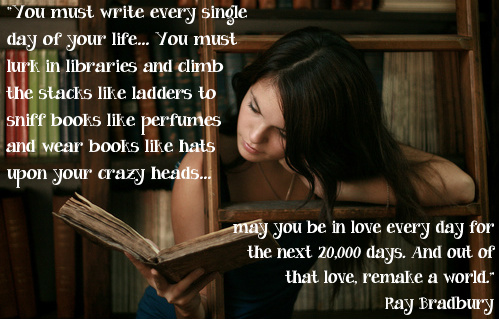
reading girl