Fairy Tales & Tears

I.

Once upon a time, there was a young girl named Jackie Lea who loved to tell and write stories.  She made a short list of her life’s goals, and one of the items on the list was to publish a book.

Jackie Lea worked tirelessly toward this goal: she wrote all through high school and college.  She wrote after college too, and she created a writing group, and she spent her precious money on workshops and conferences and readings to help her become a better writer.

She was very, very tired.  But still very determined.

“If I can just get a book deal, I’ll have met my goal, and then just think how happy I’ll be!  I’ll be a professional.  I’ll be thrilled.  I’ll be validated,” she told herself.

Then one lovely November day, she got incredible news: an editor loved her story and was going to publish her!  Jackie Lea had worked hard, and all her dreams had finally come true.

II.

fairy tale4Except that the book deal added so much stress to Jackie Lea’s life that she felt overwhelmed and panicked, jealous of other writers, nervous about her revisions, terrified to give up control, and generally quite fearful.

And she would cry about it.

And that felt wrong too, because who cries in a fairy tale when her dream is coming true?


Image credit: Gabriela Camerotti


Oceans & Revisions

I went to praise chapel at Northwestern the other day. Though UNW has worship chapel every week, this was a special one for the semester since the entire orchestra was on stage, a powerful treat.

They played Hillsong’s “Oceans.”

wanderSpirit lead me where my trust is without borders
Let me walk upon the waters
Wherever You would call me
Take me deeper than my feet could ever wander
And my faith will be made stronger
In the presence of my Savior

When I sang, “Take me deeper than my feet could ever wander,” I immediately thought of Truest and all its many rounds of revisions.

Here is the truth: on my own, Truest would have been finished a long time ago.  And it wouldn’t have been nearly as good. But so many people have been put into my life to press me further down that path than my feet could ever wander on their own.

And the result?

A better novel.  Also, my faith was made stronger: my faith in the creative process and my faith in God.


Image credit: if you know the owner of this image, please let me know.

Major & minor themes in the Christian worldview [and what that means for my writing]

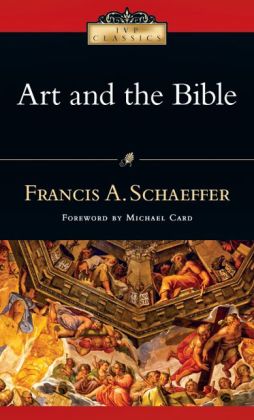
art and the bibleMy dear friend Elyse recently loaned me a book called Art and the Bible, written by Francis Schaeffer.  It was less a book and more an essay, and I read it in one sitting.  Let me tell you, it was refreshing to have someone explore so many ideas related to the Christian worldview and the value of art.

The idea that stood out to me the most was this: the Christian world view has both a major and minor theme.  The minor theme is that the world has revolted and is revolting against God, that Christians will never be perfect this side of heaven.  The major theme is that God is at work redeeming the world.

What does that mean for the Christian artist? It’s okay for your art to show both themes too.

Why does this matter to me? Because, as a Christian artist who has suffered from OCD, I’ve sometimes wondered if my responsibility to my faith meant that I needed to focus only on the positive.  The answer is no.  It should be emphasized over the minor theme, but the minor theme has its place in my writing too.

I wish that all Christian artists realized this. We need more gritty, raw Christian art and fewer poems about rainbows and puppies.  If you have art like this– especially written work– you should submit your work to Crux Literary Journal.  We’d be thrilled to take a look.

My Hunger Mountain Story

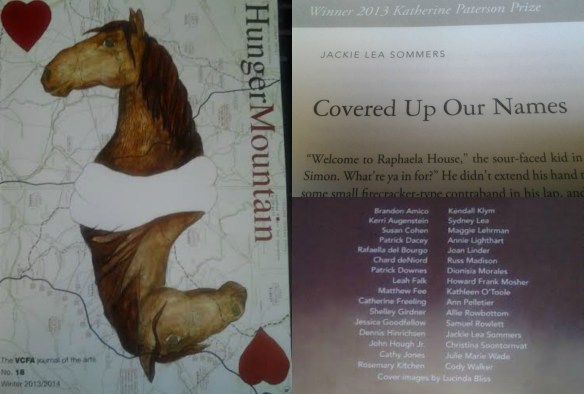
Hunger Mountain 18 is finally out, and it includes my short story “Covered Up Our Names.”

HMcollage


(You may recall that I had this crazy idea about teenaged wards of the state living in hospice care, wrote the story and submitted it to Hunger Mountain with no expectations, and then won the 2013 Katherine Paterson Prize for it!)

Now that it’s been published, the rights have reverted back to me, so I have posted it over at Crux Literary Journal, the online arts project I curate.  I hope you’ll take ten minutes or so to read it and tell me what you think!

The Good & Bad of Writing

writer__s_block_by_arzu88-d3hg9efAm I a whiner?  Sometimes I feel like it.

The truth of the matter is that writing is just plain hard.

When I am writing a first draft, I wish I was revising. I tell myself it’s so much harder to make something out of nothing than it is to make something better out of something okay.  In a first draft, I still don’t know my characters very well, so I’m not entirely sure of what they should do or how they should react to people or events. I typically have no idea how the story will actually end, so I’m writing blind and terrified that because I see no ending now I won’t see an ending ever. I have to cast deep into my well of creativity because everything– absolutely everything– is brand new. (It gives me so much appreciation for my God who created ex nihilo [Latin, “out of nothing”].) It’s physically exhausting and mentally draining, and (at least in me) it prompts deep, deep doubts about myself.  In the early days of a first draft, I desperately long for revisions– when I will know my characters well and will be perfecting the story and imagery.

When I am revising, I wish I was writing a first draft. Deep in revisions, I feel bored to death with the process. It feels so stagnant and dull compared to the excited fervor of creation. It feels nit-picky and brutal, a journey to endure as a longsuffering artist.  And everything needs to be moving forward, finding its place.  You have to “kill your darlings.” You can’t keep putting things on the backburner to deal with another day– “another day” has come and the time is here. It’s like finding yourself in the middle of a battle without armor.  I think longingly of the days of freewriting and drafting, how carefree they were, how it didn’t matter if things fit together, how fun it was to be coming up with new adventures for my characters, how exciting it was getting to know them.

I am finding that the old adage “the grass is always greener on the other side of the fence” is true in my writing life.  I don’t want that to be true, and I want to find ways to love and appreciate whatever stage I’m in.

How?

I don’t know the answer yet, but I suspect it might look something like this:

1) I need to reflect on what I love about writing in general, about words, ideas, stories.
2) I need to count my blessings. I honestly do feel terrifically grateful to be a writer– even with all its woes.
3) I need to remember that every stage has its own merits and to start focusing on those positive parts instead of the negative.
4) I need to respect the creative process.
5) I need to be healthier.

What other suggestions do you have for me?


Image credit: Arzu88 on deviantArt
Where I Get My [Literary] News

I thought some of you literary-type folks might be interested to know how I [attempt to] keep my finger on the pulse of the reading, writing, and publishing world.

book necklaceI subscribe to the following e-newsletters:
Publisher’s Weekly Daily Newsletter
Publisher’s Weekly Children’s Bookshelf
Publisher’s Weekly Tip Sheet
Shelf Awareness Pro
Shelf Awareness for Readers
Goodreads YA Newsletter*
Goodreads Newsletter*
* Sign up in your Goodreads email preferences

I use Google Alerts for my favorite authors as well as topics like “YA publishing.”

I follow 98 different blogs (including over 70 related to reading and writing) and manage to do so through Bloglovin.

I follow authors, editors, agents, and reviewers on Twitter.

I also subscribe to Writer’s Digest, though I’m not always the best at sitting down and going through the magazine.  An issue arrived in the mail today, though, and I sat down and scoured it thoroughly.  It had a great feature about literary magazines and what their editors are looking for.

I attend writing conferences when I’m able.

I have a Ticketmaster account with my “favorites” listed, so that I’ll get an email if they are coming to town.  I also get an e-newsletter from the local theatre venues in the Twin Cities so that I’m aware if any of my favorite writers are scheduled to speak or read in Minneapolis or St. Paul.

Does this seem wildly unmanageable?  It’s actually not (most days)– and yet it helps me stay in touch with my literary world!  Hope this helps!

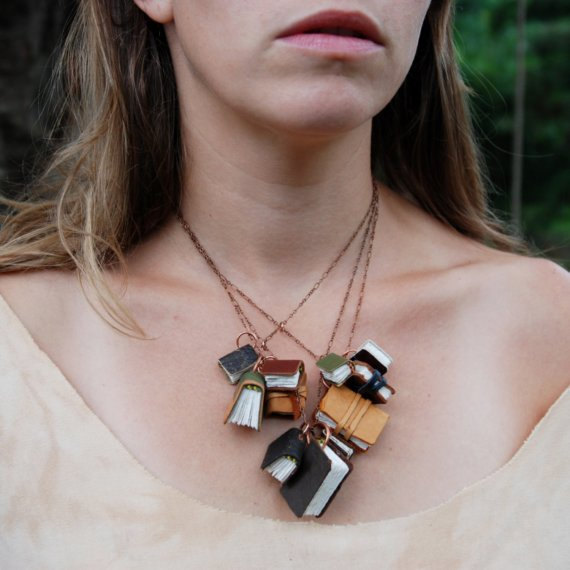
Image credit: Peg and Awl on Etsy

3 Novels That Changed My Life

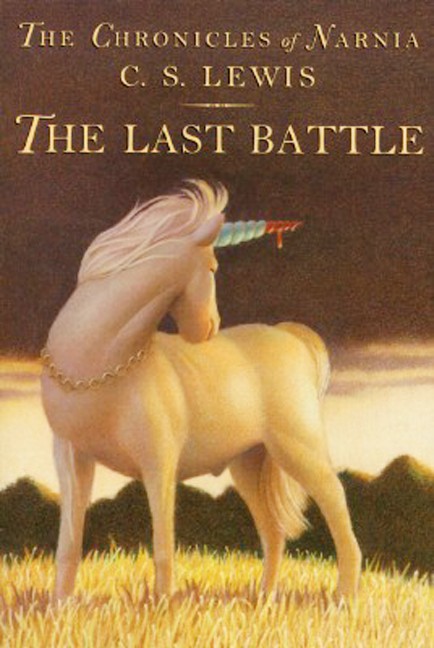
last battleThe Last Battle by C.S. Lewis

The truth is that I’ve lived a lot of my life in fear.  Twenty years in bondage to obsessive-compulsive disorder will do that to a person.  I’ve been afraid of so many things, most often related to my faith journey and the way that God sees me.  The concept of eternity collapsed me.

The Last Battle helped me to not be so scared.

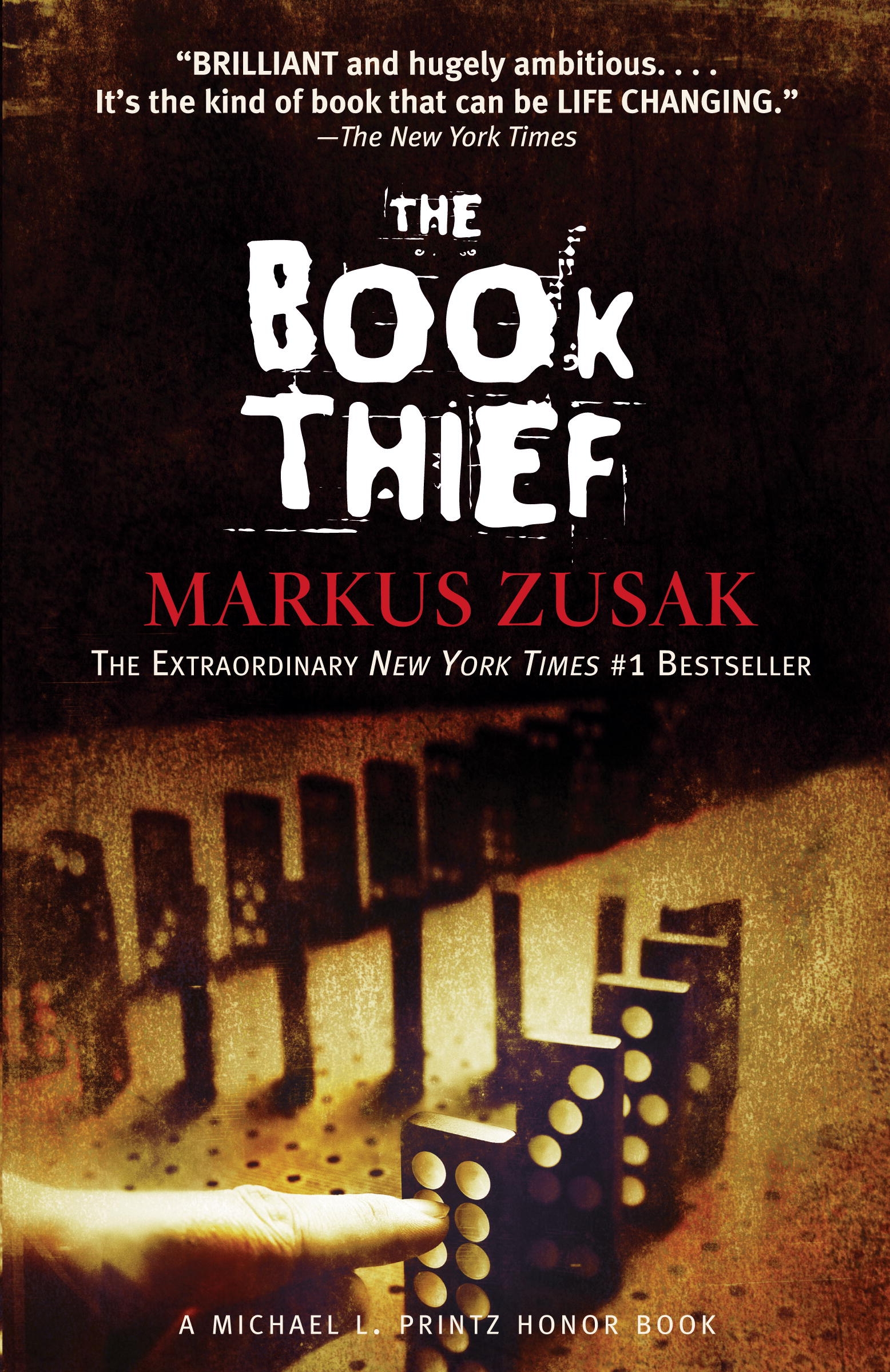
the-book-thiefThe Book Thief by Markus Zusak

I was a mediocre writer in college and in the years following.  Okay, maybe above average.  But excellence happened by accident, and I was hesitant to embrace imagery and metaphor because it felt very physically descriptive to me.

But in The Book Thief, I encountered imagery that was emotionally descriptive, images that rousted my soul and completely changed the way I write.


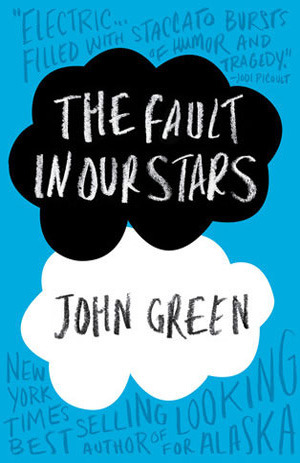
faultThe Fault in Our Stars by John Green

Even though young adult literature was my favorite to read, I still spent four years writing a novel for adults and then started in earnestly on a second one.

Then I encountered John Green’s masterpiece, angels started singing and fireworks exploded in my brain, and I adopted my new identity as a YA author.

Related posts:
Thoughts on The Last Battle
My History as a Writer
The Importance of The Fault in Our Stars

Thoughts on Rejection

no thanksEvery aspiring writer is told she is going to have to learn to deal with rejection, that rejection is simply a normal part of the road to publication.  I’d read how Stephen King hammered a big ol’ railroad spike into his wall and then hung rejection after rejection on the spike till they pulled it out of the wall.  Jo Rowling was told to get a day job because of the unlikelihood she could make money in children’s books.  Twenty-six publishers rejected the future Newberry Medal-winning A Wrinkle in Time.  Gone with the Wind?  Rejected by 38 publishers.

knew I’d experience rejection as I pursued publication; I braced myself for it.

It still hurt.

I’ll admit that with Truest, what will be my debut YA novel, I made it through the gauntlet rather easily.  But please remember thatprior to Truest, I’d poured four years of my life into a novel that never even got an agent.  I sent out maybe forty queries, and one agent asked to read the manuscript.  Then kindly said no and suggested edits.

Four years is a lot of your life, time, energy, emotions.  Your heart.

I actually started writing Truest while waiting to hear back from literary agents regarding Lights All Around.  When the onslaught of rejections came, I was protected– cushioned– from the sting by the excitement I had for my new project.  That taught me to fill my waiting time with work.

I’ve heard of authors receiving very cruel rejections, but those I received were quite cordial.  In fact, a couple of them sounded more like a yes than a no.

From an agent:

Thank you so, so much for your giving me the chance to consider TRUEST, even so late in the game! I appreciate it more than you know. I came away from Big Sur so impressed by you, certain that you have the authorial (and editorial) eye, the professionalism, and the charming/witty personality to be incredibly successful in this industry. And now that I’ve had a chance to read your work, I’m even more impressed and even more certain. You are a truly talented writer, with a masterful command of language and of your characters. You make it look effortless, like the best of the best do. All of your characters are fully round and compelling, and your depiction of small town teen life is vivid and fully engaging. I even spent a good half hour trying to find the August Arms radio program because it sounded so marvelous and right up my alley!
However, after much soul-searching and late night agonizing, and with so much regret, I’m afraid I don’t feel I’m the right agent for TRUEST. I get lost in your writing in the best way, and I believe TRUEST is about something (which I mean as high praise).  […] I will be first in line to buy my copy of TRUEST. 
From an editor:
It’s always such a pleasure reading the submissions you send my way and TRUEST was certainly no exception. This is a powerful contemporary story with a cast of layered yet relatable characters. I’m going to pass because I struggled to connect the complicated chronology of the framework but I recognize that there is definitely something special here. West and Silas (what fantastic names!) form a magnetic relationship and their stark differences play off each other with vigor. The dark tension lurking beneath the surface of the storyline is captivating and makes for a compelling read.

These kind, gentle rejections are interesting to process.  They are encouraging, on the one hand, but on the other: they’re still a no.

I feel terrifically blessed in regard to Truest.  I queried my first round of YA agents on July 11, 2013, and Steven Chudney offered me representation on August 7, less than one month later.  (By the way, as I look at the dates now, I’m shocked that it took less than one month– it felt like about four.)  Steven suggested some edits, and I returned the manuscript to him on September 9.  Steven sent the manuscript out into the world on September 16.  November 12, Steven told me that Jill Davis at HarperCollins loved my story and would be sharing it with her boss.  November 20, HarperCollins made me a two-book offer.

Those four months and nine days felt so much longer than that.  Remember that while things were cooking with Steven– and later, with Jill– I was still getting rejections.

All told:
30 rejections from literary agents
4 rejections from editors

Anyway, I realize that this is a meandering post about rejection.  I can be done now.  Except that I want to say that rejection is hard.  It hurts so bad to have someone turn down your “baby” (novel, short story, memoir, etc.).  Those four months and nine days felt like I’d willingly hopped aboard the Rollercoaster of Agony and Anticipation.  But they were worth it because now my dreams are coming true!

P.S. Check out literaryrejections.com for some amazing facts about books that endured rejection to eventually become bestsellers.

P.P.S. Click here to learn more about my novel Truest.