Spotlight on Melina Marchetta

I’ve written before about how amazing Melina Marchetta is, giving six reasons why you should read her books:

1) The writing is unbelievable.
2) The characters are people you want to know in real life.
3) The books are laced with wonderful humor.
4) You can’t guess what will happen next.
5) She knows how to write about teen romances without being cliche.
6) She is consistently good. Every. Single. Book.

This time, I thought I’d tell you a little about the books themselves so that you can choose where you’d like to start (since I *REQUIRE* that you read her books).

marchetta collage

Jellicoe Road is my favorite.  It’s a contemporary novel set in Australia, and it’s about a territory war between the boarding school kids, the townies, and the cadets (boys from a military school who camp on their land six weeks each year). It’s really two stories that become one (gosh, I love when that happens), and it’s probably my favorite contemporary YA novel period.  Just saying.  It can be a little confusing at the beginning, but keep reading: it will fit together like a jigsaw puzzle in the end, and then you’ll want to go re-read it immediately.  Also, major swoon factor: Jonah Griggs is one tough cadet with a heart.

Saving Francesca is right up there for me, right alongside Jellicoe Road.  It’s about a girl whose mom is going through a mental breakdown at home while the girl is trying to maneuver her way through her new school– which had been an all-boys school prior to that year.  It’s uh-may-zing.  Seriously.  When I read this one, I just soak in the utter brilliance of Marchetta.  Not to mention that there is a hot Italian-Australian math nerd hottie involved.

The Piper’s Son reunites the Saving Francesca gang, only it’s five years down the road, and this story promotes a secondary character from the first book to being the protagonist.  And, my oh my, he does so well in that role!  This book is about a family that is trying its best– making it sometimes and not making it sometimes.  It’s sheer brilliance.

Looking for Alibrandi is actually Marchetta’s first novel that put her name on the map.  Even though it’s my least favorite book of hers, it is still so, so good.  Now, that’s pretty impressive.  It’s about a girl whose lifelong absent father suddenly re-enters her life.

And then we come to the fantasy stories.  Yes, that’s right– Marchetta is just as comfortable writing fantasies as she is writing contemporaries.  So. Much. Talent.

The Lumatere Chronicles begin with Finnikin of the Rockan amazing story full of twists and turns about reviving a kingdom that’s been under a curse.  I’m not naturally drawn to fantasy novels (with the glaring exceptions of Narnia, Potter, and The Last Unicorn), so I didn’t immediately purchase this book.  But after I’d read all her contemporaries, I was dying for more Marchetta, so I took the plunge … and am so glad I did!  This book was delicious.

Froi of the Exiles and Quintana of Charyn round out the trilogy, and they are full of politics and intrigue and romance.  I should warn you– Froi ends on a killer cliffhanger, so make sure you have Quintana ready to go afterward!  I read Froi before the third book was out and ended up ordering an Aussie copy of book three so that I could get my hands on it 6+ months before the book was released in the US.  That good.

It’s the characters, I think, that make all her books so good.  When you start with amazing characters, you can toss them into any situation and see what happens.  Melina Marchetta is a masterful storyteller, my favorite YA writer out there, and you’d better believe that is the highest of praise coming from me.

Hop to it!  In my opinion, you should just skip the library and purchase copies of your own to have and to hold from this day forward.

Can’t wait to hear your thoughts!

For those of you who have already read Marchetta’s books, what is your favorite and why?  Leave a comment below!

Related posts:
Why You Need to Read Melina Marchetta’s Books
Jellicoe Road by Melina Marchetta
Amalgamation
Authors Who Deserve More Recognition

In Support of the English Major

I was an English major.

The conversation usually went like this:
What are you going to do with that– teach?

No, I’m not an English education major, just English.

So, like, you’re gonna … read and write?  Good luck with that.

If I could re-do all those conversations, I’d answer differently now.  When asked What are you going to do with that? my answer would be:

Whatever I want.

My English degree is going to teach me to think critically and communicate well, skills that any employer is going to want from his/her workers.  I’m going to have my creativity stoked, my writing skills honed, and my worldview shaped and sharpened by reading the works and thoughts of some of the greatest minds in history.  I’m going to be able to problem solve, think on my feet, fashion thoughtful responses and do it all with style.  I can use my English degree as a stepping stone toward a graduate degree in a wide variety of fields, if I choose.  Or I can choose to be gainfully employed by a company that needs a hard-working creative thinker.

And write my stories and poetry at night.

That’s what I’m going to do with my English major.

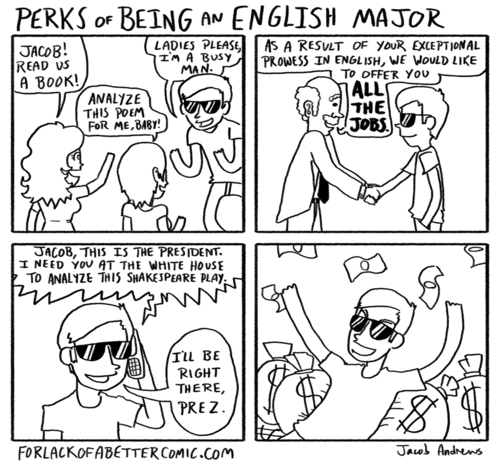
And now that I've stepped off my soapbox, please enjoy this comic, which is even funnier because of its terribly limited view of what an English major can do.

And now that I’ve stepped off my soapbox, please enjoy this comic, which is even funnier because of its terribly limited view of what an English major can do.

Related posts:
My History as a Writer
Date a Girl Who Writes
Why Write?

A Detailed Post about ERP

ERPI have written many times about Exposure and Response Prevention therapy, and lately, many people have been contacting me for more details about it, especially how they can do ERP on their own from home.

GIANT DISCLAIMER:
I AM NOT A THERAPIST.  NOT EVEN CLOSE.  

I am an obsessive-compulsive 31-year-old female who successfully underwent a twelve-week ERP experience four and a half years ago.  I say “successfully” because at the end of the twelve weeks, I then spent the next year and a half without obsessions or compulsions.  (Can you even imagine?  It sounds like a different life, right?  It was.)  In the three years after that, I have only had a handful of obsessive bouts (probably fewer than five), which I have been able to manage well with my ERP tools and which didn’t last longer than one day.  You can gauge for yourself if that sounds like success to you.  For me, it has been like happy freedom after spending twenty years in slavery to OCD.

With all of that said, I’m going to give my very best advice in this post.

SKIP TALK THERAPY AND PURSUE EXPOSURE AND RESPONSE PREVENTION THERAPY.  Talk therapy (where you spend an hour with a therapist discussing your problems) can actually, in some cases, perpetuate your OCD, especially if your compulsions include confession and seeking reassurance.  Your talk therapy sessions will essentially become one-hour opportunities for you to confess to your therapist and seek reassurance from him or her.  That is the opposite of what you want to do.

FIND A COGNITIVE-BEHAVIORAL THERAPIST WHO IS SKILLED IN ERP.
Begin by asking him or her questions about the techniques they use to treat OCD.  If the therapist doesn’t mention cognitive-behavioral therapy or exposure and response prevention therapy, keep looking.  You don’t want to waste your time spinning your wheels with someone who doesn’t know how to do exposure therapy.

WHAT WILL USUALLY HAPPEN IN ERP:
Your therapist will begin by asking lots of questions to get a real understanding of your OCD.  Remember, there are several different kinds of OCD, and in order for your therapist to really mold your treatment plan around you as an individual, he is going to need to ask for lots of details.  If it seems like he is zoned in on what will cause you the most anxiety, you’re probably right.  In ERP, your therapist is looking to trigger your anxiety and then prevent you from doing anything to alleviate that anxiety.  (Good times!)

You will probably create a fear hierarchy, a list of various things that would cause you intense anxiety.  Then you’ll probably start with the least scary item and work your way up to the top.  The top item on your fear hierarchy will probably seem IMPOSSIBLE.  Continue anyway.  By the time you actually get to that item, ERP may have already re-wired your brain enough to be able to handle it.  I need to repeat: focus on the item you’re at, even though the temptation is to stress about the next, scarier item.  Your therapist is not going to force you to do anything, and it’s going to be a better experience for you if you simply focus on each individual day and what you have to do that day.

Your exposures will be specific to you, though, in general, if you have contamination fears, you will probably have to interact with things that you deem unclean (in fact, probably with things that really are!).  If your OCD is more concerned with order, you may be asked to sit with things out of place.  If you have HOCD, you may be asked to read LGBT literature or to look at scantily-clad members of your same gender.  If you have harm thoughts or other anxieties that you’re not able to actually expose yourself to, you’ll likely need to do imaginal exposures, which may involve writing graphic stories and then reading them or possibly recording the story and listening to it on repeat.

If you’re doing this on your own (and are not guided by a therapist), I recommend doing the recording.  It was more anxiety-inducing for me to listen to a recording than it was for me to quickly read over the story I had written.  Make the story bad– the worst things you can imagine.  And perhaps opt to use lots of details: instead of just using large, blanket statements like “I am thinking a blasphemous thought, and I will go to hell for it,” try “I think of cursing God, and I know I will go to hell, where I will be lost and alone forever.”  Describe it.

The first time you do your exposure, keep track of your anxiety level, 0-100, where 0 is no anxiety at all and 100 meant you were clawing at the ceiling.  Then, every time you do your exposure, rate your anxiety level at the beginning, middle, and end of it.  Keep doing that exposure until your anxiety level is half of what it was when you first started.  Then, you can probably move on to a higher, scarier exposure on your fear hierarchy.

If your exposure (when you start it) is not causing you much anxiety, then chances are you have something a little off.  You’ll need to talk to your therapist or think through your exposure to see if you’re hitting the nail exactly on its head.  (I read a story once where the OC thought her obsession was one thing, say, worrying that she would hurt her child, but the exposures weren’t causing intense anxiety, so she and her therapist took a closer look at it, and together they realized that her actual, larger fear was that she would never know if she would hurt her child … similar but a little different, enough that they changed her exposure to fit better.)  If you have been doing your exposure for a while and the anxiety levels are dropping, then that is a good thing, my friend.  That means that ERP is re-wiring your brain correctly.

Keep all your anxiety ratings in one place so that you have a visual representation of how ERP is working as you watch the anxiety levels drop.  It may be a while before you start seeing a downward movement.  That’s okay.  Keep going.  In my experience, my anxiety levels didn’t start to drop until about week ten.  After that, they plummeted quickly.

ERP is a scary experience, so I do recommend paying the money to see a therapist IF you can afford it and IF the person is well-trained in exposure therapy.  If you decide to create your own ERP experience, buy a book that will guide you, such as Stop Obsessing! by Edna Foa or Freedom from Obsessive-Compulsive Disorder by Jonathan Grayson.  Talk to your friends and family ahead of time and spell out for them what your compulsions are, asking them to not aid you in these, even when it is difficult.  It may be helpful for you to tell them that aiding your compulsions is akin to them being on Team OCD instead of Team You.

Many people choose to pair ERP with medication.  I did.

I spent fifteen years with OCD before I was diagnosed, then another five before I began ERP.  That was twenty years that OCD stole from me, so when I began ERP, I essentially knew it was my last hope, short of some supernatural miracle.  You might not be mentally in that place yet, ready to put your nose to the grindstone and make it happen.  You’ll know when you’re ready.  Just know this: most obsessive-compulsives I talk to who have gone through ERP say their big regret is not pursuing ERP sooner.  ERP is hard … but it is not (not-not-NOT) harder than living daily life with OCD.

And what is happening while you go through these exposures?  I meant it when I said that your brain is being re-wired.  In this therapy, the brain changes, allowing an obsessive-compulsive more room to live with uncertainty (the root of it all).

ERP gave me back my life.  I am happy again, have joy again, love life.  I no longer fight a daily battle with my own mind.

Related posts:
OCD, ERP, & Christianity
ERP & Imaginal Exposures
Preparing for ERP Therapy
Medication vs. Exposure Therapy
All About CBT

The Faith of a Pantser

Plotter: a writer who plans out his or her novel.
Pantser: one who writes by the seat of his or her pants.

Confession: I am a pantser.

I have tried to be a plotter.  Here is the evidence, blurred in case I use it one day:

Kipp plot blur

I sat down and figured out the timelines of events for seven characters and subplots.

And then I proceeded to stare at my blank screen and could. not. make. it. happen.

I returned to my pantser ways.

It occurred to me the other day that pantsers need to have a lot of faith in the writing process: we are stepping into the unknown, armed with no conclusion, shielded by no outline.  Instead, we have to simply believe that the writing process will take over: write, feedback, revise, repeat.  It’s so, so risky.

What if no conclusion presents itself?
What if I get my characters into trouble I can’t save them from?
What if I’m walking blindly over the edge of a cliff?

Thankfully I’ve learned (and continue to learn) to love risk and uncertainty.  (Thanks, ERP!)

And so I’ll walk that tightrope, trusting the creative process is a net beneath me.

Related posts:
Pantsers Unite!
Trusting the Creative Process
Fiction: How I Start
Truth Tripline
My Writing Process

On Being a Novelist and Feeling like a Fraud

The thoughts currently living in my head:

* Everyone is going to realize what a phony you are.

* You have no more usable ideas.

* Writing a novel is beyond your ability.

* You may have done it twice, but the third time is either a charm or a strike– and you’re proving that you don’t belong in this game.

* Others write first drafts that are at least readable.

* You’ve bitten off more than you can chew.

* You need to go back to step one.

WHY CAN’T I JUST FREAKIN’ LET GO AND WRITE A CRAPPY FIRST DRAFT?

*off to read Bird by Bird to find some good company*

Young desperate girl writing with an old typewriter. Conceptual image.

The Question of Emeth

Warning: spoilers ahead for The Last Battle, the final book of The Chronicles of Narnia series.

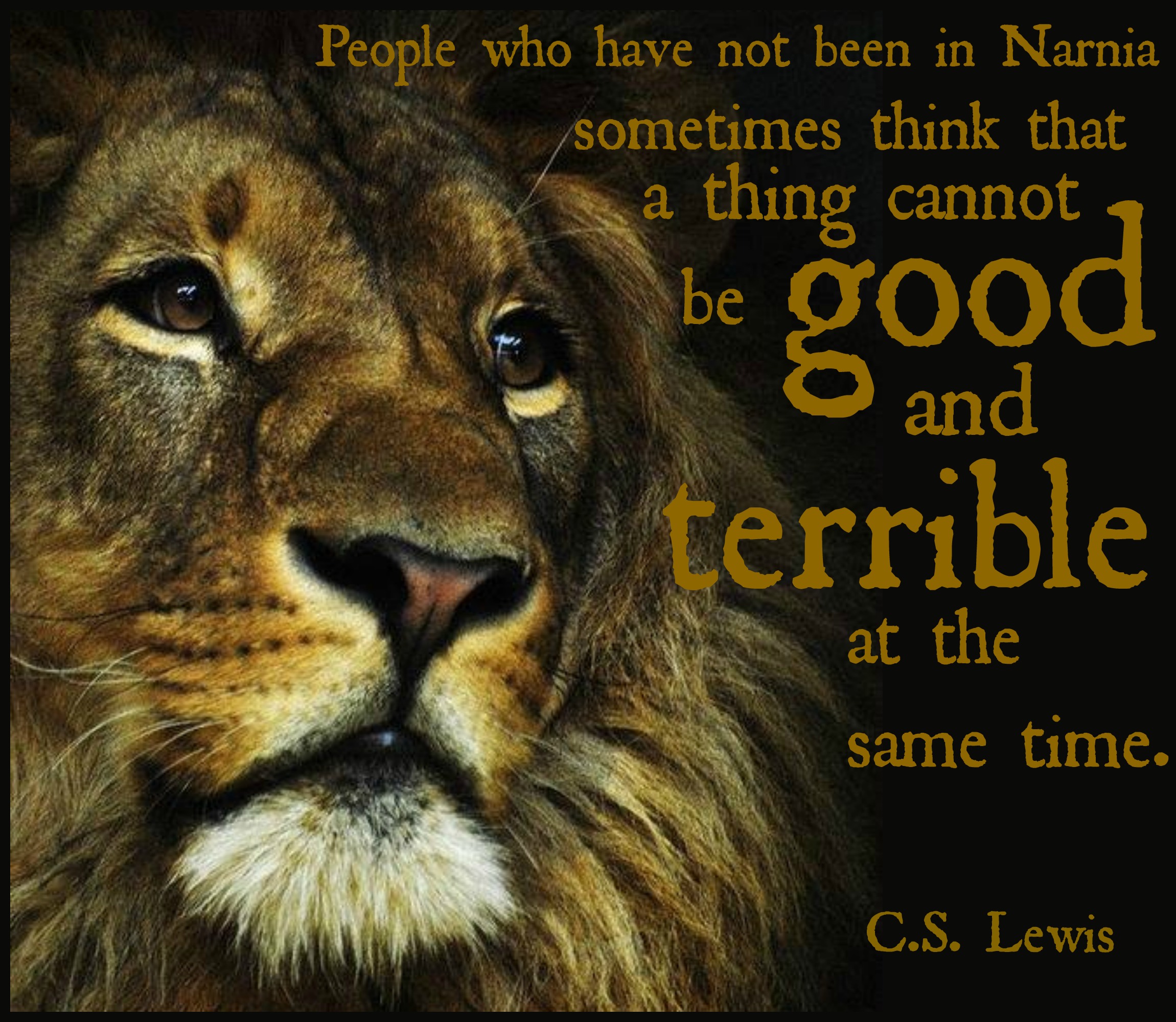
emethDoes anyone really know what to do with Emeth, that Calormene soldier who was so devoted to Tash … and yet was welcomed by Aslan?

Here’s the story: Emeth was on the “bad guys” side– part of the army from Calormen that was invading Narnia– and he had served Tash, the Calormen god (though he was evil, more of demon), since his youth.

Yet …

“So I went over much grass and many flowers and among all kinds of wholesome and delectable trees till lo! in a narrow place between two rocks there came to meet me a great Lion. The speed of him was like the ostrich, and his size was an elephant’s; his hair was like pure gold and the brightness of his eyes like gold that is liquid in the furnace. He was more terrible than the Flaming Mountain of Lagour, and in beauty he surpassed all that is in the world even as the rose in bloom surpasses the dust of the desert. Then I fell at his feet and thought, Surely this is the hour of death, for the Lion (who is worthy of all honour) will know that I have served Tash all my days and not him. Nevertheless, it is better to see the Lion and die than to be Tisroc of the world and live and not to have seen him. But the Glorious One bent down his golden head and touched my forehead with his tongue and said, Son, thou art welcome. But I said, Alas, Lord, I am no son of thine but the servant of Tash. He answered, Child, all the service thou hast done to Tash, I account as service done to me. Then by reasons of my great desire for wisdom and understanding, I overcame my fear and questioned the Glorious One and said, Lord, is it then true, as the Ape said, that thou and Tash are one? The Lion growled so that the earth shook (but his wrath was not against me) and said, It is false. Not because he and I are one, but because we are opposites, I take to me the services which thou hast done to him. For I and he are of such different kinds that no service which is vile can be done to me, and none which is not vile can be done to him. Therefore if any man swear by Tash and keep his oath for the oath’s sake, it is by me that he has truly sworn, though he know it not, and it is I who reward him. And if any man do a cruelty in my name, then, though he says the name Aslan, it is Tash whom he serves and by Tash his deed is accepted. Dost thou understand, Child? I said, Lord, thou knowest how much I understand. But I said also (for the truth constrained me), Yet I have been seeking Tash all my days. Beloved, said the Glorious One, unless thy desire had been for me thou wouldst not have sought so long and so truly. For all find what they truly seek.

“Then he breathed upon me and took away the trembling from my limbs and caused me to stand upon my feet. And after that, he said not much, but that we should meet again, and I must go further up and further in. Then he turned him about in a storm and flurry of gold and was gone suddenly.

“And since then, O Kings and Ladies, I have been wandering to find him and my happiness is so great that it even weakens me like a wound. And this is the marvel of marvels, that he called me Beloved, me who am but as a dog – “

My friend Ashley has major issues with this part of the story (as do many others):

1) How does Emeth get “heaven” without having been devoted to Aslan?
2) How does this reconcile with the Christian doctrine that “there is only one name whereby men may be saved”?
(Though you could argue the two questions are the same.)

The answers?  I don’t know.

May I quote Wikipedia here?  It says:

The implication is that people who reflect a righteous heart are to some degree justified, regardless of misbelief. This is a cornerstone of Christian theology: one party cites the Christian paradigm that faith in Christ alone saves, and the other wants to account for the fate of those born and raised into another faith. There has been extensive commentary on the question. In a letter from 1952, Lewis summarized and explained his position:

I think that every prayer which is sincerely made even to a false god, or to a very imperfectly conceived true God, is accepted by the true God and that Christ saves many who do not think they know him. For He is (dimly) present in the good side of the inferior teachers they follow. In the parable of the Sheep and Goats those who are saved do not seem to know that they have served Christ.[2]

Lewis cites this view as derived[2] from the parable of the sheep and goats in Matthew 25:34-40, from Paul‘s speech to the Athenians in Acts 17:23: “What you now worship as something unknown, I am going to proclaim to you”, and from 1 Timothy 4:10: “God, the Savior of all men, especially of those who believe” (all references NIV).

Lewis encountered[2] one contradiction to this idea in Romans 10:14: “How, then, can they call on the one they have not believed in? And how can they believe in the one of whom they have not heard? And how can they hear without someone preaching to them?” (TNIV). This is consistent with Paul’s doctrine that though God is already with the pagans, they still need to see him revealed. Lewis, however, replied with 1 Corinthians 1:12-13: “One of you says, ‘I follow Paul’; another, ‘I follow Apollos’; another, ‘I follow Cephas‘; still another, ‘I follow Christ.’ — Is Christ divided?” (TNIV), which he interpreted as indicating the sameness of God regardless of his context.

Perhaps the strongest support for Lewis’ case is found in Romans 2:13-15 (TNIV):

For it is not those who hear the law who are righteous in God’s sight, but it is those who obey the law who will be declared righteous. (Indeed, when Gentiles, who do not have the law, do by nature things required by the law, they are a law for themselves, even though they do not have the law. They show that the requirements of the law are written on their hearts, their consciences also bearing witness, and their thoughts now accusing, now even defending them.)

A final reply is found in Jesus’ words in John 14:6: “No one comes to the Father except through me” (NIV). However, its interpretation is ambiguous: if Jesus meant that he was an object by conscious faith in whose name a person is saved, this verse would appear to contradict Lewis’ argument. However, Jesus could have meant (a) that he alone made salvation possible (i.e., activated it by his death), and/or that (b) as Lewis suggested, some might come to the Father through Jesus who did not at first realize that was what they were doing.

I admit that I myself have tried to reconcile it all by believing that the stable door was not a door of death and that the “real Narnia” they entered was more of a road to Damascus (leading to the gated garden, which was the true “heaven”).  I’ve perhaps lost many of you by now.

But I’d love to hear your thoughts.

Sequels I’m Ready to Gobble Up

In general, I’m not a huge fan of series, so I perhaps don’t have as many on my radar as others.

But I am quite eager for the following:

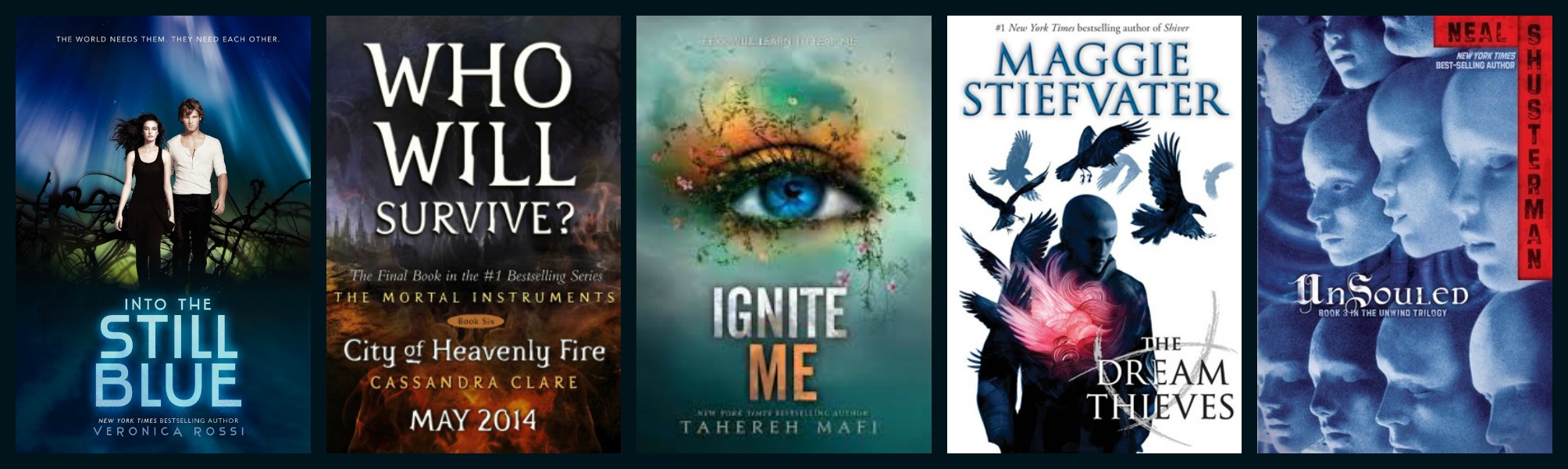
want sequel collage

Into the Still Blue by Veronica Rossi | Oh my gosh, cannot WAIT to see how things end up for Perry, Aria, and Roar!  And early reviews have said the conclusion to this trilogy is really satisfying.  Yay!

City of Heavenly Fire by Cassandra Clare | I’m invested in the Shadowhunters now and dying for book six to pull everything together.

Ignite Me by Tahereh Mafi | I finished Unravel Me mostly feeling pissed.  Not sure whom to root for: Adam is my favorite, but I’m not sure Juliette deserves him.

The Dream Thieves by Maggie Stiefvater | Listening to the audiobook right now! Will Patton’s drawl makes this whole series even better.

UnSouled by Neal Shusterman | I just finished reading UnWholly, and it. was. amazing.

Top Ten Tuesday is a weekly meme hosted by The Broke and the Bookish.