A Metaphor for Obsessive-Compulsives

A new friend came over to my apartment the other week, and we got to talking about Exposure and Response Prevention (ERP) therapy, and I shared a metaphor with her that I’d like to share with you now.

We put out fires, but what we need to do is shoot the arsonist.

arson

The problem with attempting to “solve” an OC’s obsession is that, as soon as it’s solved, a new obsession will take its place.  In that way, you’re only putting out fires, not dealing with the root issue, which is an inability to handle uncertainty.  For years and years, I watched my obsessions hop from one thing to the next.  My compulsions– and even my talk therapy sometimes– were shortsightedly stamping out the flames in one corner of my mind while OCD set a new fire in another corner.

How can you possibly manage to keep up that way?  It’s not sustainable.

That’s why I agree with so many of the OCD experts in this country that the best way to fight OCD is with Exposure and Response Prevention therapy.  ERP is so very different from most standard therapies.  In it, obsessive-compulsives are exposed to a trigger that prompts in them deep anxiety; then they are not allowed to respond with an anxiety-easing compulsion.  Instead, they are forced to sit in that discomfort.  Doing this repeatedly actually re-wires the obsessive-compulsive’s brain in a way that they learn to live with uncertainty and their quality of life improves dramatically.

It’s been four years since I turned my attention from the bonfires to the disorder that was setting them.

It’s been a good four years.

Hope Begins in the Dark

hopeinthedark


I love when my worlds collide.  This quote from Anne Lamott’s brilliant book Bird by Bird can be seen through every lens of this blog: faith, OCD, creativity.  Here’s the full quote:

“I heard a preacher say recently that hope is a revolutionary patience; let me add that so is being a writer. Hope begins in the dark, the stubborn hope that if you just show up and try to do the right thing, the dawn will come. You wait and watch and work: you don’t give up.”

Satan is the accuser; Christ is our defender.

Recently, one of my blog readers asked me how I could tell when a thought came from OCD or from God, especially because one of my formerly intrusive thoughts was of a Bible verse that seemed to condemn me.  She wrote, “I keep reading that Bible verses spontaneously popping into one’s head is a prime way God speaks to people.”

What a great question.  One I’m not entirely sure I’m qualified to tackle, although I do know that the more I learn about and understand my OCD, the easier and easier it is for me to spot it.  I can recognize its tell-tale voice from a mile away now.  And while I don’t think that OCD = Satan (at all), they are both my enemies and they are both accusers.

Here is the (in flux) conclusion (is that an oxymoron?) I’ve come to:

I guess the big thing is this: when OCD would bring up that Bible verse, it worked like an intrusive thought and brought deep anxiety to me, but with God … his kindness leads us to repentance, not to shame.  The voice of God showers me with kindness, grace, conviction that leads to change … but I don’t think God’s voice is one of shame and accusation. In fact, scripture even tells us that SATAN is the accuser and CHRIST is the one who defends us.

Remember, Satan used and twisted scripture when Christ was going through his temptations, so we know that it’s part of the devil’s arsenal.

frustration4My friend Erica told me something fascinating she’d once heard: “The Holy Spirit does not motivate with guilt.”  Likewise, my incredibly wise writing professor Judy said, “I know the voice of God because that voice invites me to move closer without shame while the voice of Satan fills me with an electric dread that makes me want to hide.”

As always, I encouraged this blog reader to explore Exposure and Response Prevention therapy.  In the four years since my ERP, the voice of OCD has become so easy to recognize.  I finally know my enemy’s voice.

And better yet, I know my savior’s.


Live OCD Free app: my review

I first learned of the Live OCD Free app when I was in Boston last October, attending an event hosted by the International OCD Foundation.  I was intrigued by the idea of a web app that could simulate or guide Exposure and Response Prevention, so I picked up some handouts to take back to my university, and that was that.

Until I had lunch with Faith, this incredible 9-year-old who is battling with OCD.

Somewhere in the back of my mind, I had stored the memory that this app had a children’s version to it, so I contacted the company and asked if I could have a free trial of the app so that– if I liked it– I could promote it on my blog.  I received a very kind email from Dr. Kristen Mulcahy, who also sent me a promo code.

Live OCD Free app

What it is: 
Billed as “your personal pocket therapist,” this web app allows you to undergo cognitive-behavioral therapy (CBT), specifically Exposure and Response Prevention (ERP), either on your own or with the help of a therapist.  With it, you create a hierarchy of exposures, practice your exposures, and record your progress.  You can even easily email your progress reports to your therapist!  There is an adult version and a child version (both available with just the one purchase).

Child version:
In the child version of the app, there is a video that shares the story of the “Worry Wizard” with the child– in the video, the Worry Wizard happens to be another person (a bad kid, ha!), which I kind of like.  It goes along with the idea of narrative therapy that YOU are NOT the problem, the PROBLEM is the PROBLEM.  By showing children that the Worry Wizard is a completely separate entity from themselves, they are able to treat OCD as the enemy and not themselves.

ERP is then made into a game of sorts.  Children (along with the help of an adult) create a list of exposures (with simple prompts to aid them).  They then can practice their exposure at the click of a button.  If there is a need for an imaginative exposure (creating a loop tape/recording), they can do that within this app as well.  There are also built-in timers to remind users to practice their exposures and to record their anxiety levels (for the progress reports).  It’s really easy to use, very self-explanatory.

Adult version:
The adult version is very similar to the child version except that it just tells it like it is. 🙂  

PROS:
The secret weapons (child version)/toolbox (adult version).

Oh my goodness, I absolutely loved this feature*.  When you choose to practice an exposure, you set the timer for how long you’d like to do it.  While you are practicing an exposure, you can access the secret weapons/toolbox area, which includes:

1. Reasons for fighting (both versions).  A place where you can review and record your reasons for fighting OCD/the Worry Wizard.
2. Uncertainty agreement (adult version).  Where you acknowledge that you cannot know things with certainty.  This records the date that you “signed on” for this!
3. Relaxation (both versions).  Listen to an exercise in muscle relaxation.
4. Motivational messages and inspirational quotes.  You can even add your own!
5. Tips from other kids fighting the Worry Wizard.  Obviously, this is in the children’s version.  Loved it.  The quotes were so good and meaningful and encouraging without being enabling at all.
6. Songs (child version).  This included two songs for children (although there is a whole CD available on iTunes).  I have to admit, one of the songs– “Worry Wizard”– made me cry listening to the lyrics.  It just breaks my heart that children have to deal with this crippling disorder.  They are so brave!

*When I was doing my own exposures, I was told to focus intently on them … I wonder how this toolbox jives with that, or if that was only my therapist’s method.

Live OCD Free User’s Guide
This is wonderfully written, very clear.  If someone is choosing to do ERP on their own and without the guidance of a therapist, this user’s guide will be critical to their success.  Since I have undergone CBT, I now find it fairly easy to recognize obsessions and compulsions– and to identify appropriate exposures.  However, I would not have been able to do this if I hadn’t gone through ERP myself already.  The prompts are very helpful (and OCs often know what things bring them the most anxiety), but this user’s guide will be a huge help in sorting through obsessions, compulsions, and exposures.  I emailed with Dr. Mulcahy, and she said that sometimes people will meet once or twice with a cognitive-behavioral therapist just to set up their exposure hierarchy before attacking the actual exposures on their own.  Even if you don’t have health insurance, I can see where this would be very helpful.  If not, the user’s guide will assist in that matter.

Progress reports
This app makes it easy to see your progress.  I love that.  A visual reminder of how far you’ve come can go such a long way!

CONS:
There are very, very few cons to this app.  The graphics in the video of the Worry Wizard were not my favorite, and (of course) being a writer, I thought the story could have used a little polishing, but all in all, this app is phenomenal.  

The cost is around $80, which at first seemed like a lot of money to me … but it’s really not.  Not for what you get.  An ERP experience for $80 is a bargain (even with awesome health insurance, I still probably paid about $300 out of pocket to meet with my cognitive-behavioral therapist).  And the freedom to be gained through this process is priceless.

I imagine that CBT without the guidance of a therapist would also be more difficult, especially as there is less accountability, but the truth of the matter is that CBT takes a lot of commitment, no matter what.  I have said it before and I will say it again, you know you are ready for CBT when the hell you’re experiencing daily is worse than the hell you’ll have to go through with CBT.

All said, I highly recommend this product.

I cannot say enough good about CBT/ERP and how it gave me back my life.  Whether someone chooses to go the traditional route of seeking out a cognitive-behavioral therapist (note: NOT a talk therapist) or chooses to use this web app … or chooses to use both in conjunction with one another … I am 110% for it.

The important thing is that you pursue CBT.

Live-OCD-Free_App_12

Tips for Interviewing a Therapist for Your OCD

Janet from the ocdtalk blog pointed me to the International OCD Foundation’s website for this list.  I hope it will be helpful for you as you seek appropriate treatment for your OCD.  I can’t stress this enough: OBSESSIVE-COMPULSIVES SHOULD NOT WASTE THEIR TIME ON TALK THERAPY.  YOU NEED COGNITIVE-BEHAVIORAL THERAPY, SPECIFICALLY EXPOSURE AND RESPONSE PREVENTION THERAPY.

“What techniques do you use to treat OCD?”
If the therapist is vague, or does not mention cognitive behavior therapy (CBT) or Exposure and Response Prevention (ERP), use caution.

“Do you use Exposure and Response Prevention to treat OCD?”
Be cautious of therapists who say they use CBT, but won’t be more specific.

“What is your training and background in treating OCD?”
If they say they went to a CBT psychology graduate program or did a post-doctoral fellowship in CBT, it is a good sign. Another positive is if a therapist says they are a member of the International OCD Foundation (IOCDF) or the Association of Behavioral and Cognitive Therapists (ABCT). Also, look for therapists who say they have attended specialized workshops or trainings offered by the IOCDF, like our Behavior Therapy Training Institute (BTTI) or Annual Conference.

“How much of your practice currently involves anxiety disorders?”

“Do you feel that you have been effective in your treatment of OCD?”

“What is your attitude towards medicine in the treatment of OCD?”
If they are negative about medicine, this is a bad sign. Medicine is an effective treatment for OCD.

“Are you willing to leave your office if needed to do behavior therapy?”
It is sometimes necessary to go out of the office to do effective ERP.

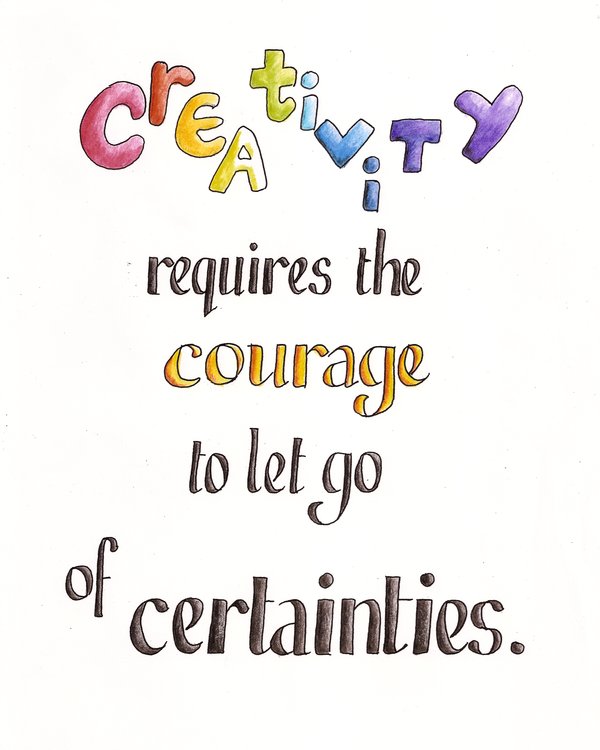
letting go of certainties


I thought this picture was particularly fascinating because you can replace “creativity” with “cognitive-behavioral therapy.”    And those are two of the most important things in my life.

I always thought that certainty was the goal and that doubt was the adversary, but it was just another lie.

What do you think of this quote?

all about CBT

Some people have been asking for more details on cognitive-behavioral therapy, the incredible tool that God used to set me free from obsessive-compulsive disorder.  It is my pleasure to share with you about CBT!  Please note that I am not a mental health professional– but I did have a wildly successful experience with CBT and am a huge advocate.

This is the preferred method of treatment for OCD; specifically, it is called Exposure and Response Prevention (ERP).  Long name, but actually, it is exactly what it says!  The patient is exposed to something that triggers an obsession and then the response (the compulsion) is prevented.  This therapy actually re-wires the brain– the brain physically changes in this therapy– and it helps an OC to live with uncertainty.

CBT either works or doesn’t in 12 weeks.  My psychiatrist, national OCD expert Dr. Suck Won Kim, told me beforehand that it would be worthless to meet with a CBT therapist longer than 12 weeks and that Dr. Chris Donahue wouldn’t ask me to meet any longer than those 12 weeks.  Three months.  You can handle anything for three months, right?

The first couple weeks were most intake.  Dr. Donahue asked lots of questions to help assess what my obsessions and compulsions were, and what triggered the obsessions.  He was basically probing to find what buttons to push later: “How much would that stress you out if you couldn’t do XYZ after ABC happened?” and that sort of thing.  I knew it would all come back to “haunt” me, but I was all in.  This honestly felt like my last hope for a normal, happy life.

I took the YBOCS (Yale-Brown Obsessive-Compulsive Scale) test and found out that I was a moderate case, which surprised me.  But then again, there are some people who can’t leave their homes, can’t touch a loved one, people who wash their hands with Brillo pads and bleach.  

Dr. Donahue outlined the measurable goals of my treatment plan: a fifty-percent reduction in distress when focused on upsetting stimuli and six consecutive weeks of no avoidance or rituals.  Three months was starting to sound like a long, long time.

Then Dr. Donahue and I wrote a story together.  Well, he started it and it was my homework to finish it.  Since my obsessions were primarily focused around hell, we had to do imaginative therapy (since, obviously, there is no way to really, literally expose me to hell).  So I wrote this story about an imagined worst day ever (I mean, really bad– I go to hell in it).  If you’d like me to share with you the story, I will.

My therapist recorded this story (along with his own additions to it) digitally, and I was sent home with an 18-minute recording from the pit of hell.  My job was to listen to it four times a day– two times through, twice a day– every day and record my anxiety levels when prompted.  And I needed to do this consistently until my anxiety levels reduced by 50% from what they were the first time through.  Oh, and I couldn’t perform my compulsions either to make myself feel better.

It. Was. Awful.

I won’t lie to you, listening to that recording– that exposure– was like torture.  It was being triggered left and right and not being allowed to do anything to ease my anxiety.  Doesn’t this sound like some type of cruel and unusual punishment?  It’s what it felt like, and I honestly wanted to quit at about week 8 or 9 when my anxiety levels weren’t dropping.

I hated it.  It made me sick to my stomach, made my heart race, terrified me.  I tried to listen to the recording right away in the morning, in order to get half of my required listenings out of the way early in the day, but eventually, I couldn’t do it that way anymore– the weight of beginning my morning in such misery made it hard to get out of bed, and I had to push it all back later in the day just so that I wouldn’t dread waking up.

But something clicked around week 10 or 11.  Praise. The. Lord.  It clicked, and all of the sudden, I was in the driver’s seat again!  I controlled my OCD and not the other way around.  One day I was listening to the recording– this device of torture and grief– and I thought, This is so annoying.  And then I smiled and thought, Finally.

This, of course, is a brief description of my experience.  I could tell you so many more things– about how hard it was, about what other exposures look like for other kinds of OCs, about the tools Dr. Donahue gave me for success.  It’s all detailed in my fictionalized account of it, my novel Lights All Around, which you can read here.

It was one of the hardest things I have ever had to do– but not as hard as living for 20 OCD-riddled years without help.  I hated to go through CBT, but I loved to have gone through it.  It rescued me and those twelve weeks are a defining period of my life.  I remember being so angry and upset with my therapist, absolutely despising him and the exposures, and feeling certain that I was going to fail at this, my last shot at freedom.  I very nearly quit.

But that moment came right before everything changed.

If OCD is ruining your life, you need to undergo cognitive-behavioral therapy.  It will be hard.  It will be hell.  But it will be worthwhile.

Questions, anyone?

To read a stark account of my life before and after CBT, check out this blog post!

joy in sorrow

I grew up hearing that happiness was situational but that joy was not: that joy was this solid rock you stood on, and it never moved, even when everything else around you was crashing down.  I was supposed to feel a deep-seated joy, even when I wasn’t happy.  I knew this.  I tried to make it be true, tried to convince others that it was.

But for much of my life, if you were to strip away all the smiles and masks, I was resting on an uncomfortable bedrock of deep sorrow, bondage, and fear– and oceans below, barely visible, there was a flickering hope.  I smiled often– sometimes it was fake, sometimes it was real.  There were moments of joy, real instances where it flashed so bright that I couldn’t see the ugliness around me.

It’s different now.

I have what I always wanted while growing up, and it is incredible.  Even when I am feeling low, depressed, frustrated with friends or with my writing life, or even deeply saddened, I am grounded like an anchor to JOY.  I have a permanent seat inside it, and from that seat, I can experience the whole wide range of other emotions, but I don’t move from the chair.

I believe that anyone who loves Jesus Christ can have this be true.  In my early life, the problem was that I was convinced by a lie: I believed that my future was not secure in my Savior.  Obsessive-compulsive disorder robbed me of that truth.  Cognitive-behavioral therapy restored it.

What is at your core today?  Are you standing immovable on joy, or something else?  Why is that?


end of an era

Last week, I ventured to the Fairview Medical Center at the University of Minnesota to see my beloved psychiatrist Dr. Suck Won Kim for the last time before his retirement.  Dr. Kim is a skinny Korean man with salt-and-pepper eyebrows and sharply combed hair.  I met him first in 2008 when, after years of failed prescriptions, my old psychiatrist essentially threw in the towel and referred me to Dr. Kim, a national expert on OCD who has seen over 3,000 OCD patients.

The first time I met with Dr. Kim, he asked me about what meds I had tried.  And when I had told him, he resolutely said, “No more of that.  You are done with that.”  And he started me on Effexor XR, which I am on to this very day.  Dr. Kim spoke with such confidence that I had felt confident.  I remember thinking, I think this might actually work this time.

But Dr. Kim wasn’t done after he wrote out the prescription.  He turned to me and said, “Cognitive-behavioral therapy.  Tell me, have you heard of it?”

I had.  Horror stories.

“It’s the best treatment there is for OCD.  I’d like you to call Chris Donahue and get an appointment.”

“Okay.”

“It will be hell,” said Dr. Kim, telling me what to expect.

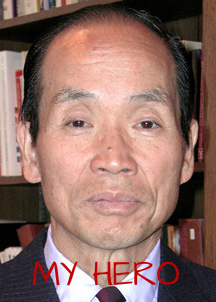
And it was– but it set me free from the reign of OCD.  And that is why I was feeling sentimental as I sat in the office of this OCD genius for the last time, feeling cheesy but needing to tell him that he was one of my heroes.

manic writer

I had lunch with my friend Brittane this week.  Brittane is tall and gorgeous and insightful and full of God’s strength.  She has her degree in psychology, and she has this perfect way of asking questions so that you almost feel like you’re getting free therapy while you hang out with her.  She’s a delight.

I was telling Brittane about the rollercoaster I can’t seem to get off … the high highs, the low lows, the sudden switches.  “I don’t mean to be blaise about this, since I hate when people are like, ‘I’m so OCD,’ but sometimes I wonder if I am manic depressive.”

Brittane, in her perfect way, nodded, listened, asked questions, offered insight until we stumbled upon one important fact: these days, my rollercoaster is only about my writing life.  Since my writing life is SO important to me, I wasn’t seeing the forest for the trees.  It felt important, like a hand-hold.  “Maybe it’s just what the writing life is like,” I said.  “It’s just a continual up-and-down.”

If it is, I’m on the rollercoaster for good.

Back in the office that afternoon, I read a quote on Donald Miller’s blog that fit so perfectly with our conversation.  It read:

To write is to struggle with your sanity, at times. And there will be bad days and you will feel defeated. This work is more difficult than climbing a mountain because you are doing it in the dark. I want to urge you to keep going. You matter and your words matter. By writing, you are saying to God I agree with you, you gave me a voice and the gift was not in vain. By writing, you are showing up on the stage of life rather than sitting in the comfortable theater seats (there is a time for both) and are casting your voice out toward an audience who is looking for a character to identify with, somebody to guide them through their own loneliness, no matter how transparent or hidden that loneliness is.

It was just what I needed to hear in that moment.  I will continue to write, to ride this rollercoaster, because I agree with God, that he gave me a voice and the gift was not in vain.