OCD and suicidal thoughts

Recently Janet at the OCDtalk blog posted about her friend whose obsessive-compulsive son had just committed suicide.  The post broke my heart.  It reminded me of earlier this fall in Boston where I met Denis Asselin, the winner of the International OCD Foundation Hero Award.  Denis’s son Nathaniel, who suffered from intense body dysmorphic disorder (on the OCD spectrum), took his own life in 2011.  It was beautiful but devastating to listen to him talk about his beloved son.  My heart is heavy as I think about these families, now missing an important member, and about the horrific pain that these young men were experiencing that made them see no other way out.

It’s a dark, heavy topic, but tragically important to discuss.

OCD is so often thought of as simply being neat or orderly– or sometimes even anal retentive about certain things.  Media portrays obsessive-compulsive disorder as a quirky, nitpicky, and sometimes comical disorder, but let me level with you: OCD is debilitating, devastating, and torturous.

Can you imagine feeling nothing but sheer, unadulterated terror for days, sometimes weeks, on end?

I remember some of my darkest, hardest, most terrifying days.  I lived in the Brighton Village Apartments with Becky and Tricia.  During the day, I was given the small grace of suspending my obsessions– at least enough to make it through work (most days– not all), for which I am grateful.  In the evenings, I would return to our apartment, where I would drown in an ocean of terror.  My soul felt untethered, lost, condemned; I felt the hot, ugly breath of hell on my neck all evening.  I felt unforgiven and completely cut off from the God I wanted so desperately.  (It is making me cry right now as I write about those dark days.)  And the torture of not knowing— heaven or hell?  saved or condemned?  found or eternally lost?  heard or ignored?– was the worst kind of mental anguish.

Those apartment buildings were built like an X, with the pool and laundry facilities at the center where all four wings came together.  I remember– and this is not an isolated event but something that happened every time I was in that third-floor laundry room– I would look over the balcony down to the first-floor pool area, usually empty, and I would thinkIf I threw myself off this ledge head-first, I would finally know: heaven or hell.  I would have my answer, instead of the torture of not knowing.

But what if the answer was hell?  I couldn’t hurry that on.  What I wanted even more was annihilation— to cease to exist.  I craved oblivion.  That is true pain for you.

I realized that I was already in hell– just of a different stripe.  I was living like a condemned person, in TERROR and heartache and loneliness, and in constant combat with the blasphemous thoughts that plagued my mind.

Most people wouldn’t have guessed it.  I smiled a lot at work.  I even managed to fool those closest to me who knew the anguish I was experiencing.  But I would look over that balcony at the hard floor, and I would think about it.  OCD is that devastating.  I believe obsessive-compulsives (even those who take their own lives) are some of the strongest people you will ever meet.  They fight a constant war.  It is no wonder to me that many want to lay down their weapons and surrender.

And yet, here I am, eight years later, happy and healthy and secure in my faith, enjoying life and friendships and a growing relationship with Jesus Christ.  I am not tormented by my own thoughts, and uncertainty isn’t anguish any longer.  I want to gently take the faces of the anguished obsessive-compulsives into my hands, stare them directly in the eye, and tell them, There is hope.  There is help.  It doesn’t have to stay this way.  I would hug them and cry with them and personally drive them to my cognitive-behavioral therapist.  I was once where you are.  Follow me to freedom.

If you are struggling today with intrusive thoughts, obsessions that plague you, compulsions that take over your life, THERE IS HOPE.  I promise you.  This is a disorder– just a disorder, albeit a powerful, ugly, life-thieving one.  Follow me to freedom.  There is Truth, and it is not what you are hearing from your OCD.  Rescue is possible.  Follow me to freedom.  Email me.  Joy, happiness, laughter, truth, peace, safety– these may seem like impossibilities, but they can be yours too.

suicide

Holy Week

I love Easter.  I mean, I really love it.  I love Easter the way most people love Christmas.

Palm Sunday.  Gethsemane.  The cross.  Blood, blood, blood, and the sin of the world on His shoulders.

And then Easter morning comes, and HE LIVES, and EVERYTHING IS DIFFERENT NOW.  Such a mighty victory– one that turned the ugliest thing (the cross) into this incredibly BEAUTIFUL picture of salvation.

Here is something I have wondered.  You know how sick you feel over the weekend when you know you have a terrible Monday ahead of you– maybe it’s a presentation, or you have to have a hard conversation with a co-worker, or you have to face your poor sales figures once again?  The anticipation is terrible, gut-wrenching, so ugly.

My question is this: how could Jesus know about the cross from all eternity and survive such a weight of knowledge?  I imagine it was almost a relief when Judas finally stepped into the garden and kissed His cheek.

I am so proud of my God.

Euthanasia Coaster

It’s just hypothetical.  An art concept.

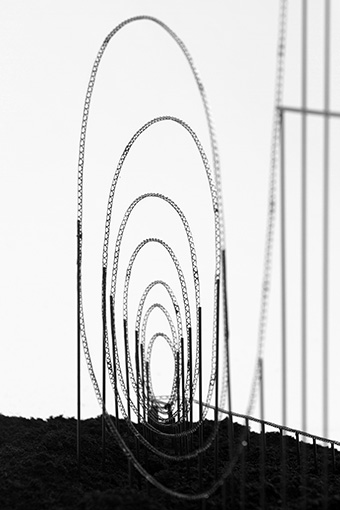
A rollercoaster that sends 24 people up a 500-meter rise and fall and then through seven consecutive loops, each smaller than the last, which racks up so much G-force that the person can’t sustain it and dies “with elegance and euphoria.”

I heard about it last summer, and I felt sick– a strange kind of sick.  A revulsion and a fear for our future, but also this bizarre fascination that has made me look it up many times over the nine months.

You can read all about it on Julijonas Urbonas’s website.  Let me know if it fills you with the same strange wonder and horror and disgust as it does me.

I have always been drawn to oddities, to things that are broken or are sick– because I am myself.  A broken, sick oddity, but covered in the blood of Christ.

scrupulosity and the unforgivable sin

Scrupulosity: OCD centered around religious themes.

The story of my life.

The obsession: for many years, my head would repeat blasphemous things over and over, sometimes triggered by certain sounds and sometimes by non-specific phrases about hell, demons, souls, the devil.

The compulsion: I began to repeat one particular phrase– “Father God, I love You”– over and over in my head as a way to stem the other thoughts.

It became very difficult to handle everything that was going on: these blasphemous thoughts would crowd me– I mean, really crowd me (the image I have is of these thoughts bumping and grinding on me like dirty brutes at a dance club), and I’d be warding them off by repeating this repetitive prayer over and over (and over and over and over).  And on the outside, it didn’t look like anything.

Those who were closest to me (dear friends and roommates and family members) knew that I was going through hell, but they couldn’t see the battle that was taking place.  They only knew of it when I told them (or on nights when I broke down sobbing in fear of eternal damnation … thanks for speaking truth to me those nights, Desiree!).

It is hard to describe exactly what it feels like to feel as though you’re wearing a sentence of hell on your shoulders.  Here’s a shot:

Condemnation (or supposed condemnation) is like being in a tank of water with only inches of air at the top.  You have to lean your head back to put your lips to the air, and the whole while you must keep treading water.  There is no opportunity for distraction.  It consumes every moment of your life.

Anyone reading this understand me?

If so, please read this sermon.  I think it might help.  My heart aches for you, but there is hope.  Lovers of Jesus Christ don’tbelong in hell.  Let’s talk.

medication is scary, part one

PROZAC

POSSIBLE SIDE EFFECTS that may occur while taking this medicine include abnormal dreams; anxiety; decreased sexual desire or ability; diarrhea; dizziness; drowsiness; dry mouth; flu-like symptoms (eg, fever, chills, muscle aches); flushing; increased sweating; loss of appetite; nausea; nervousness; runny nose; sore throat; stomach upset; trouble sleeping; weakness; or yawning.

CONTACT YOUR DOCTOR IMMEDIATELY if you experience bizarre behavior; black or bloody stools; chest pain; confusion; difficulty concentrating; exaggerated reflexes; excessive sweating; fainting; fast or irregular heartbeat; fever, chills, or sore throat; hallucinations; increased hunger, thirst or urination; joint or wrist aches or pain; loss of coordination; memory loss; new or worsening agitation, panic attacks, aggressiveness, impulsiveness, irritability, hostility, exaggerated feeling of well-being, restlessness, or inability to sit still; persistent or severe ringing in the ears; persistent, painful erection; red, swollen, blistered, or peeling skin; seizures; severe or persistent anxiety, trouble sleeping, or weakness; severe or persistent nausea, vomiting, diarrhea, or headache; significant weight loss; stomach pain; suicidal thoughts or attempt; tremor; unusual bruising or bleeding; unusual or severe mental or mood changes; unusual swelling; vision changes; or worsening of depression.

“reasonable doubt”

I read an interesting article today called “Casey Anthony, Reasonable Doubt, and OCD” by Stacy Kuhl-Wochner at the OCD Center of Los Angeles — you can read the entire article here.

Just wanted to quote a little bit of it for all you blog readers to consider, especially after having an interesting phone conversation along these same lines with my college roomie Megs.

Being a therapist who specializes in treating those with OCD, I can only imagine what an especially difficult task quantifying reasonable doubt would be for many of my clients.  People with OCD and related OC Spectrum Disorders such as Body Dysmorphic Disorder (BDD), Hypochondria (Health Anxiety), and Social Anxietyare on a constant quest for answers to unanswerable questions.  They seek to quantify that which cannot be quantified, to gain certainty when it is only possible to be “pretty sure.”  These are questions that most people who do not have OCD can accept despite their inevitable doubts.  But for many people who experience OCD or a related spectrum condition, “reasonable” doubt often feels unbearable.

Doubt is such an intrinsic part of OCD that the condition has often been referred to as “the doubting disease. Some common doubts seen in OCD and related OC Spectrum Disorders include:

  • Are my hands clean enough to ensure that I won’t accidentally make someone sick through casual contact?
  • Am I straight enough to to be certain that I am not actually gay?
  • How do I know if I really love my spouse?
  • What level of pain is a enough that I should visit a doctor to see if I have a serious medical condition?
  • What is the right amount of eye contact to avoid being seen as socially inappropriate?
  • How do I know whether I am a good person or a bad person?
  • If I become angry at my child, does this mean that I do not love them enough, and that I am close to mentally snapping and harming them?

The only realistic answer to these and similar questions is to accept that nobody has 100% certainty on these issues*, and to stop the mental checking.  The goal is to make decisions based on what is “most likely”, given all the evidence.  For people with OCD, it may feel terrifying** to make that leap and take that chance because their brain is telling them that absolute certainty is required.

*JLS adds: That is why the point of cognitive-behavioral therapy is not to remove uncertainty but to make one okay with uncertainty.

**”Terrifying” doesn’t even touch it.

Thoughts?  What’s the most basic thing you know that you have doubted before?  (I have sometimes wondered if all of life that I’ve “experienced” so far is only a dream.)

I couldn’t have guessed

Tonight I had dinner with some lovely young writing majors at the college where I work, and of course, talking about their senior projects made me think back to my own.  “It’s interesting,” I told them.  “I wrote about having OCD, although at the time I didn’t know that’s what it was.  In my senior project, I called myself ‘a skeptic’ and someone who ‘didn’t understand grace’ when really– a couple years later– I’d be diagnosed, and all of this would be so clear.”

And here, for your viewing pleasure, is a piece of work from my senior project.  (I can’t believe it’s been 8 and a half years since I read this at my Capstone presentation!)  (Oh, and P.S. Don’t judge my writing too critically– I’ve grown a lot!)

If You, Lord, should mark iniquities,
O Lord, who could stand?
But there is forgiveness with You,
That You may be feared.

Psalm 130:3-4

Grace Beneath the Line

There are people who live the scripture verse that instructs, Work out your salvation with fear and trembling, harassed by the pressure to perform. I am one of them. A rotting offering in my hands, I seek God, knowing my gift is sour but too insecure to approach with empty palms.
We who are this way step lightly and with caution through days of deliberation. We twist beneath blankets from fear carried over into sleep, hoping all the while that God is not like us, hard and without mercy. Often we’d rather stay stagnant than move at all, rather close our eyes to the search than squint at a Savior we don’t know—fearing unseen wrath. And we wonder: What if He sees us and turns away His holy face? So we continue inching our way, working out our salvation. With fear. With trembling.
With much trembling.

Last summer at camp, I was the volunteer counselor whose voice cracked and split at the faculty meeting, disturbed by the nature of the game Kierstin explained to us all. A mock heavenly judgment at Pine Haven Christian Assembly in Park Rapids, Minnesota—an activity called “Heaven and Hell”—was intended not only to make the campers think but also to unsettle them with fear.
I knew that Kenny was rolling his eyes behind me, the 20-year-old Target operator, as he said, “It’s just a game”—to me—but while looking ahead at Kierstin, who had planned this controversial activity without a thought of its controversy, now looking helpless and unsure behind the lodge’s wooden lectern.
“Well, maybe we could …” she started.
“No,” said Kenny firmly. “The game is simple. It’s good.”
The game would last 24 hours, during which 20 counselors would defend 10 assigned worldviews—2 counselors for each—while the campers searched for a view they agreed with. When the campers asked us for the Truth, we’d spell out the worldview we were assigned as best we could, try to persuade them, as someone would in real life. Once the kids found the worldview they agreed with, they were to sign up on that counselor’s list.
Troubled with lying to the kids even in the context of a game, I muttered, “It just kills me to think that they’ll ask for the Truth and I’ll give them a lie.” My title of counselor afforded no comfort in temporary deception.
They gave me a real saved-by-grace-through-faith-in-Christ worldview to endorse to keep me pacified and participating.
The following day, only the names collected on my created page—along with another counselor’s twin list—would be welcomed into “heaven”—the right side of the chapel. Those not found in that pretend Book of Life—folded into squares in the back pockets of jeans—would depart to “hell”—on the left.

I’d known Phil for nearly a year; he was a skinny, artistic kid who played bass guitar and drums and who sent me e-mails clever enough to be published. He wore glasses with thick black rims and grew his dark blonde curls long “to look like a rock star.” Still, this witty, intelligent boy was far less than confident when he asked me to write his name on my worldview’s list. After some private calculating, some dialoguing with counselors, and a lot of camper “evangelism,” he added his name to my paper—the action that would “save” him—but even the next day as we all stood in line for pseudo-judgment, Phil looked worried.
Since the campers were to enter the chapel to “approach the throne” one at a time, the procession of casual teenagers curved itself down the rock path from the chapel toward the mess hall. Phil and I were at the line’s end, discussing thoughts on acne, baptism, and poetry.
Phil pushed his glasses up his nose and put his hand through his hair as he carelessly handed over a piece of paper to amuse me. I laughed at his comically malicious thoughts about loud boys in his cabin, but my compliments dropped to the ground in the warm, wet air.
“You okay?” I asked.
“Yeah. No. I don’t know. Jackie … we’re going to heaven, aren’t we?” His
gathered eyebrows told of sincere concern even though he smiled. It was an honest question although he referred only to the action inside the chapel, swallowing campers whole as we spoke.
And because I knew the answer, I smiled softly at his worry and asked, “Well, did you find the Truth?”
“I think so,” Phil said, frowning at the path, “but I’m not sure. You know. Tell me. What’s going to happen in there?” And he looked up and nodded at the white building collecting bodies the way the afterlife would someday collect souls. Phil pressed his mouth shut firmly, and my heart hurt with a huge love for this boy whose fear was so real.

Why did Phil doubt? Why did he fear even a game’s rendition of hell? Christians accept Jesus; we are saved; then, so often, we doubt that the God we love really loves us back. A pastor I know once asked my Bible study, “Do you think your name is written in God’s book in pencil?” and I rutted my brows in my forehead because I lived as if I believed in a God who stands ready with eraser poised over my name if His flitting eyes came to rest on the dark places in my mind. Even David the God-chaser spoke, “Take not your Holy Spirit from me.”
But scripture tells also of grace, of mercy, of a Jesus who’s gentle and of a Spirit
who stays. If we are faithless, He remains faithful, for He cannot deny Himself.
What parts of life pervert pictures of the Christ who promises never to leave nor forsake into One whose mind changes every moment I sin or sing? I may be born guilty, but I am looked on in love; yet some malicious, hot voice asserts it’s a love that keeps strict record of wrongs.
Sunday Schools, churches, parents, camps—when they teach that Jesus doesn’t like sin, do they inadvertently emphasize sinner?

Simon, Simon, behold, Satan has demanded permission to sift you like wheat.
At age seven, I thought of dirty words in my head, running to my mother while hitting my forehead, confessing, “Bad thoughts! I’m thinking bad thoughts!” I was terrified that these tiny seeds would overgrow my entire mind until I was so engulfed in sin that the Lord of my Sunday School would shake a divine finger at me and bar the gates to His heaven.
But even worse was the fear of lying. I knew that lying was sinning and that God hates sinning, and so to protect my heavenly innocence, I wouldn’t answer questions. “Jackie, what do you think?” “I don’t know.” “Jackie, what’s your favorite color?” “I don’t know.” All this in an attempt to ward off what would amount to lies if I were to change my young mind. And in doing so, I lied. My favorite color was purple.
This is the life of a neurotic Christian skeptic who has yet to understand grace.
At eleven, I wondered if I loved God—and even how to love God. But I knew, too, that this was wrong and assumed that hell would drink my soul greedily if I died in that state. I sang the inserted words want to in “I Love You, Lord” quickly, and I still have that pillow with its circular tear stains, evidence of pain that stayed quiet so I wouldn’t wake my sleeping sister. I cried nearly every night from fifth grade to eighth.
Then, at age sixteen, I labored with a heart hostile to the atheism that desired to hold it, fighting doubt alternately wildly and weakly, drinking communion juice that tasted like acid, hearing hypocrite! hissed in my ears that craved the voice of the God I questioned. Fear. Its claws ripped into my brain, and to drive five miles into town was terrifying. I distrusted thoughts of heaven but felt hellfire like a razor to my throat, escalating the intense horror of death. To pass a car, I’d hold my breath.
And then, at twenty, I died. I went blank. I read Matthew 12’s passage about the unpardonable sin, feared I had committed it. Unalterable guilt prescribed in red. Whoever speaks a word against the Son of Man, it shall be forgiven him; but whoever speaks against the Holy Spirit, it shall not be forgiven him, either in this age or in the age to come. And how is one to live without the hope of heaven? What of quiet mutterings questioning the Holy Spirit’s work? What of the testing of the spirits? What of bad thoughts? Are they the equivalent of bad words? Certain condemnation. Sadness to sickness to bitterness. And the hostility hardened my heart to a rock. Now I loved God and believed He was real, and that made it all worse.
Then a pastor sat me down at Caribou, my own personal purgatory, where Dave promised me that there were no black holes in Christianity. I wasn’t expecting his condemnation, but I supposed that he wouldn’t be able to take me far enough in the opposite direction and that his failure to explain the road to heaven to me would leave me scratching at my eyes in the burning blank room I was locked into, severely calloused at this milestone so far down the path of destruction.
But is this really life? Maybe this is the continual death. The hell on earth—but still with a vague, far-off hope.
Until now—it shall not be forgiven him, either in this age or in the age to come. Ah! Even a quick glance at holiness broke me into an Isaiah much too ashamed to cry out, “Woe is me!” In His dazzling, overwhelming beam, all of my sins were laid bare before those eyes and mine. To see—even for a second—God’s holiness is awesome and horrible because it shows that I am ugly with guilt for everything and anything.
But has He not blood-colored vision? Dave reminded me of all the other scriptures of promises undeniable. Therefore there is now no condemnation for those who are in Christ Jesus. We will know by this that we are of the truth, and will assure our heart before Him in whatever our heart condemns us; for God is greater than our heart and knows all things. And the testimony is this, that God has given us eternal life, and this life is in His Son. He who has the Son has the life. There is weight on my side. Many scriptures tip the scale.
Or maybe there is no scale. I am a neurotic Christian skeptic who has yet to understand grace.
It’s still hard to believe Dave sometimes. We get so scared about what happens “after.” But I’m learning how to trust the Lord’s promises in other places, how to read Matthew 12, sleep in peace, and then—the next morning—exhale a deep and quiet breath and read Matthew 13. In faith.

“Jackie … we’re going to heaven, aren’t we?” Phil asked. And now I wonder if his thoughts were only of the chapel’s game. At the age of 17, my own mind had already a vertical focus.
The Judgment Day game was meant to shake the kids, to make them realize the importance of what comes next, to realize how awesomely narrow the road to eternal life really is, but maybe they already know. Maybe they’re already crushed beneath the weight of the stone at the Savior’s tomb, which their sins helped prod into position. Maybe they’ve forgotten that omnipotence rolled it away, and that love, mercy, and grace in bodily form walked barefoot from that grave to find them where they wander—in the corners of locked houses, on their beds that fill with tears, on the road to Emmaus, or at the tables of Caribou Coffee.
Maybe we all need a reminder of saving grace—or a friend to point us to that reminder: He who has the Son has the life. I want to collect Phil and all the others in my arms and weep with them—tremble—for the uncertainty that burdens some of us even daily. I want to hold them while they struggle against the Stealer of Hope. My arms are available, but I know the Lord’s are stronger, and His hands cup themselves beneath the taut thread we creep to heaven; then that slight path lies sagging on His wide, wide palms, and the curve of them keeps us protected from the fall.
Work out your salvation with fear and trembling … if we dare to read further, we find our assurance. Work out your salvation with fear and trembling; for it is God who is at work in you, both to will and to work for His good pleasure.
Yes, Phil, we are going to heaven. We have to trust that.

what it feels like

I just had an OCD dream.  Is that even possible?

In it, my mom was talking about Halloween and beseeching me to guard myself against dark powers on that day (my mom is not generally a nut about these kinds of things, but she was very passionate in my dream), and I was telling her that I was protected because I have Christ … when I began to doubt my salvation.  In my dream. 

Weird.  Never have done that before.

And I woke up to those same old feelings of terror that dominated me for so long.

I was reading OCDTalk blog and read a post about what OCD felt like (the link will take you there).  She wrote:

* You have that feeling you get after swerving to avoid a potentially fatal car accident.

* You have that feeling you get when you take your eyes off of your child in a store for one minute, and then he/she is gone.

With the above examples, your physical and mental distress dissipates once the blackboard scratching stops, you avoid the accident, or you’ve located your child. But try to imagine having those feelings of intense anxiety repeatedly, perhaps hundreds of times a day. That is what some sufferers say life with severe OCD feels like.

Those were the two examples that resonated most with me– I wrote a couple things over the past three years trying to describe what OCD felt like.  Here’s a poem that reminds me of how I just woke up from my dream– the feeling that I’m trying to let drain out of me right now as I blog:

TERROR

 I remember in junior high when for Christmas I received
an old-fashioned alarm clock, two bells like golden mushrooms
and the tiny hammer that trilled between them. 
The alarm was like crashing through four levels of reality
in mere seconds, like being doused with water from the Atlantic,
like defibrillator plates on my chest, shocking me into the morning,
like frozen hands slapping my brain.  These days,
it is as though the golden clock of my childhood has taken up residence
inside my chest, where it is continuously ringing, jolting me back to the
Issue at Hand whenever I forget, for a moment, to be scared.

Here’s another line from my book:

I worked myself into hysterics by that evening, an amusement park ride spinning out of control.  Terror licked at my heart and felt permanent: I just knew that nothing would ever be right again. 

And here’s one last one.  I hope it helps you to understand.

It reminded me of my later years of high school, when Charlotte’s and my friend Terri started to go to parties in our classmates’ cornfields, where she would steal cigarettes from boys’ mouths to take her own drag.  Jeremy Mason’s back forty was the preferred party spot for our small class, although from time to time, the melee would move over to Madison Prewett’s pasture pond.  And sometimes, as if they were begging to be stereotyped, the group would convene for indiscretion at the railroad trestle just outside of the Collins Falls city limits.

At the time, I was stuck in my own paradoxical world—worrying that God wasn’t real, and that because I thought so, He would send me to hell—and so had no time for petty crimes like underaged drinking, which would only muddy my already-soiled “record.” 

            The one time I made it out to the trestle was on a Sunday afternoon, the day after a party where half of my class had gotten minors.  Terri had shirked the police but dropped her cell phone while fleeing the scene, so the next day, she asked me and Charlotte to help her look.  Charlotte, who had just gotten both her license and the Voyager, drove us to the scene in a reckless fashion she’d never outgrow.

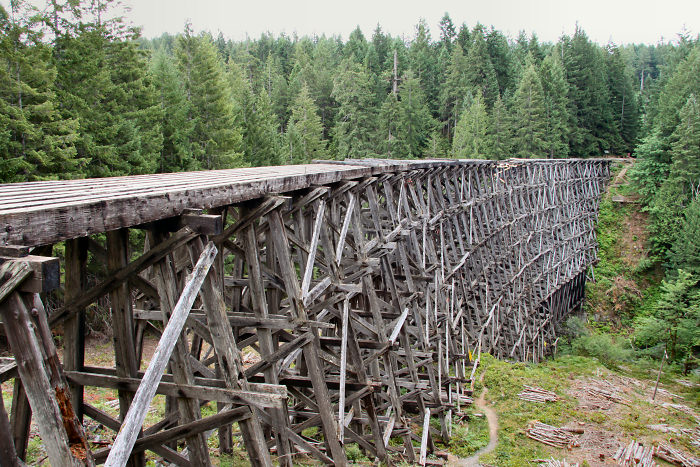
            The site had an abandoned, makeshift fire pit and empty cans of Coors Light scattered all around like eggs at an Easter hunt.  The fire pit had a few hay bales around it that someone or another had brought out in his pickup truck, and all this was at the base of the western hill.  From the top of that hill, the trestle bridge ran out straight to the eastern bank, at least 120 feet high in the center of
the bridge and about a quarter of a mile from one end to the other.  It looked rickety and ominous, like the oldest rollercoaster at the amusement park.

            “Call my number,” demanded Terri, as we started to climb the western hill.  “I ran this way, trying to get into the trees.” 

            We were nearly at the top when we heard the old Nokia ring.  Terri located it and wiped it off on her jeans.  “Good as new,” she pronounced.

            The three of us turned around and looked down the hill, then across the long stretch of tracks with the support frames branching out beneath them like Tim Burton’s grotesque version of gothic
giraffe legs or the Imperial walkers on planet Hoth.  “Let’s go across it,” said Terri, her eyes shining.

            “Oh gosh,” said Charlotte.  “Really?”

            “I’ve done it before,” said Terri.  “It’s really not that big of a deal.”

            “What if a train comes?” I asked.

            “That’s the point,” said Terri.  “It’s scary because you don’t know if a train could be coming just around the corner.  I mean, it probably won’t, but you don’t know that.  If a train comes, then you
have to run for it.”

            “Okay,” I said, and the words shocked me as they left my mouth.  I felt as if someone had bumped into me and I’d accidentally burped them out. 

            “Really?” asked Terri.

            “Yeah, really?” asked Charlotte.

            Now my stomach was reeling as I looked down the side of the hill we’d come up.  It was a long way down.  I moved over to the tracks and stood in the middle of them, facing the bridge.  It was so far across, and so terribly narrow.  I wondered briefly if we could somehow climb down the support beams if the worst came to the worst.  “Let’s just do it,” I said.  “Let’s get going.  It’s going to be fine.”

            And so we walked across the trestle then, a quarter mile from safety to safety, and the whole time we marched across those wooden slats, none of us spoke but Terri, who said, “Whoa,” in the
middle of the bridge, when she looked over the edge.  She said, “It’s actually worse in daylight,” and then we continued on, a silent march, ears tuned for any shrieking whistle just around the bend.  I felt bent over with tension, as if my shoulders were knotting up the way water boils in a pot.  My stomach felt hollow and greasy. 

            It’s nothing, I told myself.  Nothing is coming.   But it didn’t calm me. My heart beat like a steady roll on a snare.  It was one of the most terrible and memorable experiences of my young life, and my mind was ravaged with images of three bodies lying still in the rushes below.  Every step felt like sheer panic flowing up from my toes to my chest, rattling my heart then moving like a laser beam to my head, where I manufactured nightmares.

            And now, all these years later, this memory was like putting a finger on the pulse of that evening: absolute terror, only this time, there was no safety in sight.  Just the feel of walking on an endless, narrow railroad trestle, listening, straining for the sound of destruction on its way to meet me.