
Introducing my new novel!

Soooo … did you know that I am working on my second novel?  This time around it is young adult literature.  I’ve read a lot of YA lit, but this is my first real attempt at writing it.  I thought I’d introduce you to my story and see what you think.  Any and all feedback is welcome!

CHAPTER ONE

Once a month, my dad takes holy communion to the members of our church who aren’t able to make it to Sunday services.  Most are older folks from Legacy House, the assisted living home in town, but some are those whose wings have been temporarily clipped by bronchitis or a broken hip.  Dad, Pastor Kerry Beck of Green Lake Community Church, reads from the Bible before he shares communion with them.  A striking number of them manage to spill their tiny little plastic cups—miniature shot glasses, really—of grape juice on their shirts, and when they take the tab of bread, they seem to chew it and chew it as if it were a steak.

This particular day, the second Sunday in June, I tagged along on his communion route.  What else was there to do?  The day before I’d waved goodbye to my best friend Trudy, who was abandoning me our last summer before senior year for a counselor-in-training position at a Wisconsin adventure camp.  She drove east toward the Saturday morning sun and the land of the cheeseheads while I sat dejected on my front porch, a stack of already-stamped postcards addressed to Trudy Kirkwood, in care of Camp Summit, resting on my knees.  Without her, I’d been bored within an hour.

And besides, a few concentrated hours with my father was like accidentally finding a diamond in your cereal box.  Pastor, city council member, and coach of my brother’s summer t-ball team—I barely saw him unless he was behind the pulpit or yelling “stay on second!” to third-graders with poor athletic judgment.

At Legacy House, Dad and I first visited Betty Thorman, who uses a walker around her apartment—the kind with the tennis balls on the back legs for easier gliding, and also Marcheline Von Wald, who has dementia and sometimes thinks I’m her daughter, which always creeps me out a little bit, to be honest.  But it’s worth it, because I know the next stop is always Gordon’s apartment.

Gordon Leimbach is blind and closing in on ninety but still sharp as a tack from his days as a university professor.  He sits in his rocking chair and listens to audio books most of the day.  He even smokes a pipe, which absolutely delights me.  I picture him as a sightless Oxford don.

When Gordon answered his door, he knew who’d come to visit.  “Welcome, welcome!  Hello Pastor Beck.  Is that Westie-girl with you today?”

“I’m here, Gordon,” I said.

“Come on in,” he said.  He walked confidently—if not a little hunched—back into his living room and sat down in his rocker.  Gordon knew the layout of his apartment perfectly well, so long as no one moved anything.  “Westie, what did you think of Wednesday’s broadcast?”

My dad rolled his eyes good-naturedly at the companionship between me and Gordon, who shared a love for a weeknight radio talk show called August Arms, a half-hour story collection.  “Was that the one about the stuntman from Canada?” I asked.

“No, no, that was Thursday.  Wednesday was the story on the hummingbird.  Pastor Beck, did West here tell you that hummingbirds are the only birds who can fly backward?”  Gordon wore dark black glasses and kept his silver hair short.

“She did not,” said my dad, who was always amused by Gordon.

I tossed my two-cents in.  “And their wings move in the pattern of the infinity circle.  And on really cold nights, they go into this weird temporary hibernation.”

“Yep,” agreed Gordon, “and some people think seeing a hummingbird means someone you know is going to die soon.”

I drew a line across my neck, making the characteristic noise of a cut throat, and hung out my tongue as if to demonstrate.  Gordon laughed.  “I can picture the face you’re making!” he said.

“Yeah, it’s lovely,” my dad deadpanned as he smiled.  “So, what have you been up to, Gordon?”

“Always learning, Pastor Beck.  Always learning.  Just started teaching myself Spanish through the YouTube.  And listening to The Chronicles of Narnia on compact disc and dreaming about heaven and seeing Mavis again.  El señor, prisa el día.

The YouTube.  Compact disc.  You had to love Gordon.

“Westie, will I see you much this summer?” Gordon asked me.  “I mean, of course, figuratively.”

I laughed.  “I’ll be around.”

“Car detailing again?”

“I guess,” I said.

“She’s bummed because the Tru part of TruWest Detailing is spending the summer in Wisconsin,” my dad explained.

“Trudy’s at an adventure camp,” I disparaged.  “She left me friendless and without a business partner.”

“Haven’t you learned anything from August Arms and all your reading, Westie?”  I waited.  “With a set-up like that—static in the air—lightning is bound to strike.”


I thought we’d head home after the Legacy House, but Dad said there was one more stop.

“Oh,” I said.  “Where at?”

“Some new folks in town,” he said.  “The Harts.  Just moved into the old Griggs house over in Heaton Ridge.”

“All right.”

The town of Green Lake, Minnesota, is shaped like a right-handed mitten—our church and house, as well as downtown, is within the palm, and the more residential area is where the fingers would be.  The long thumb is called Heaton Ridge, the pricey part of town, and the actual lake for which the town is named is nestled in the crook of the thumb like webbing.  Green River flows out of Green Lake and cuts across like a thumb-ring, so that anyone going into or out of Heaton Ridge has to take a bridge.  It’s like their own version of a gated community.

The old Griggs house—or rather, the new Hart house—was nice in comparison to most of the other houses in Green Lake, even amongst those in Heaton Ridge.  Mr. Griggs had invented some sort of clamp that was used in the farming community, and the royalties from that alone were more than the Griggs family needed to live on.  But when Mrs. Griggs’s lupus got out of control, the family moved to Arizona for the warmer weather, and the house had sat empty for the last year and a half.  No one in town could afford it.

It was a relatively new home—about 15-20 years old—and nice but not ludicrous.  It dwarfed the other homes in the neighborhood and was rumored to have a rooftop patio with a custom masonry fire pit worth twelve thousand dollars.  So maybe mildly ludicrous.

We rang the doorbell and waited.  Inside, I could hear a voice yell, “Got it!” and footsteps approaching.  The huge oak door opened, and there stood the most beautiful boy I’d ever seen in my life.  A perfect jawline, incredible lips, and a thick, dark mop of hair that made him look like some kind of 21st century teenage Beatle.  His cheerful eyes looked at us as if we’d come a-caroling.

“Hey there.  You must be Silas!” my dad said.  “Kerry Beck.  This is my daughter West.”

Hi,” I said, wide-eyed.  “I’m West.”

Silas laughed at my redudancy.  “So I’ve heard!  Come on in.  Mom!  Dad!”  He was tall—maybe six-foot-two or  -three—and he wore a well-worn t-shirt that said “PRACTICE SAFE LUNCH: Use a Condiment,” which seemed a little out of place in this house but made me giggle.  “Sunroom is this way.”

Silas led me and Dad into the “sunroom”—which was the humble word for what was actually an extravagant conservatory: glass-paned walls and ceiling, vaulted and with white beams.  There was the palest bamboo floor, a white rug made of something suspiciously like polar bear fur, and perfect white wicker furniture.  Sitting on the couch was a princess.

I blinked.  The girl was young—about my age—and she offered a faint smile to me and my dad.  Her hair was the color of golden honey, and with the afternoon sun shining down through the conservatory ceiling panels, she was glowing like an angel.  She had perfect peach lips, high cheekbones, dramatic eyebrows, and a pale oval face.  I was so thrown by her stunning presence that it took me several moments to realize that this princess was wearing sweat pants.

“Hi Pastor Beck,” said Mr. Hart, stepping into the sunroom with his wife.  He nodded toward his daughter.  “This is—”

“Laurel,” she said, and she held out her hand to shake my father’s hand, although she didn’t stand up.  I wondered if she was paralyzed or something.  Then she turned toward me.  “Hi,” she said, still that slight smile on her face.  Her eyes looked deep into mine for a moment, but then they looked sad, almost hollow, and she looked away.

“I’m West,” I muttered.  “Nice to meet you.”

Everything felt surreal, as if I’d entered some dreamlike fairytale upon entering the sunroom—but then Mrs. Hart put a hand on my shoulder.  “West, good to meet you, sweetie,” she said.  “It was good of you and your father to come.  Silas, why don’t you and West go have fun, and Dad and I will stay here with Laurel and Pastor Beck?”  Go have fun—it reminded me of what my mom would say to me and my sister Libby when we were little.  Go outside.  Play nice.  Mrs. West noticed Silas’s t-shirt, rolled her eyes, and said, “You couldn’t have changed?”

Silas laughed.  “Come on,” he said to me.  “Let’s go upstairs.”

Gosh, he didn’t have to tell me twice.

“So, how long have you guys been in Green Lake?” I asked, following him back toward the front door and up the stairs that ran along the right wall.  The carpet was so thick that I felt like I was wading.

“Just moved a couple weeks ago.  From Fairbanks.”

Alaska?” I asked, dumbfounded.

“Yeah, we’ve lived there for the last three years.  This is my room.”

He opened a door, the second one on the left.  I wasn’t sure what I’d expected to see inside, but it was the room of a teenaged boy.  It was messy—some shirts and jeans lying on the floor, and a pair of boxers, from which I quickly looked away.  There was a small TV in the corner of the room and beside it, a pizza box with one old slice and some pieces of crust.  His nightstand seemed to have a mix of Sports Illustrated magazines and comic books.  Beside his closet was a huge bookcase, double-lined with books.  “Sorry about the mess,” he said.  “I’d like to say that it’s because of the move, but well … I’m just a slob.  Want to see the roof?”

But I was in his room already, the bookcase drawing me in like a tractor beam.  “You like to read,” I said.  Then, realizing it was the second obvious thing I’d said in the last ten minutes, I blushed.

But Silas laughed—clear, buoyant—and sat down on his bed, watching me peruse his titles.  “I do like to read, This-is-West-my-name-is-West.”

I rolled my eyes, but it was all good natured.  “How did you get so many books?”

“Growing up in the Hart family, you got books instead of toys.  I guess it stuck.”

“What’s your favorite?”

“Mmmm,” he said.  “Billy Collins.  Heard of him?”

I nodded.  “He’s a poet, right?”  I narrowed my eyes at Silas skeptically.  “Really?”  I didn’t know any teenagers who read poetry—I didn’t even read poetry, and I read more than anyone I knew.

“Cross my heart and hope to die,” he promised, still grinning where he sat on the bed.  Behind Silas’s head, hanging on the wall over his bed, were posters.  One said, “NOTICE” in official-looking red letters across the top, and beneath it ran the words, “Thank you for noticing this notice.  Your noting it has been noted.”  Beside it was poster of an orange (yes, the fruit) looking in horror at a glass of orange juice and saying, “Mom??”  In the corner of the room was a full-sized cardboard cutout of Darth Vader.

“Does Vader like to watch you sleep?” I teased, nodding toward the cutout.

“Nah,” said Silas, “but he joins me in bed and puts his head on my chest.  We both fall asleep to the sound his ventilated breathing.  It’s very soothing.”

I laughed.

Looking back at the shelves, I noticed a wide range—from Louis Sachar to John Steinbeck.  And Donovan Trick.  “What did you think of Collier?” I asked.

“It was good.  Actually, if it’s on that bookcase, it got my thumbs up.  I sell everything else on eBay.  I can’t stand to have crap lying around in my room.”

I gestured to the mess on his floor.  “I don’t quite believe you.”

Silas laughed and shrugged.  “You got me,” he said.  “So, are you a reader or do you write too?”

“Just a reader.”

“You’re lucky,” he said.  When I raised my eyebrows, he said, “Readers can just enjoy.  Writers enjoy a great sentence for about a minute, then we’re so envious we either want the incredible writer to die or we want to kill ourselves because we figure we’ll never write a sentence as good.  Or maybe that’s just me.”

“Do you listen to August Arms?” I asked.

“Huh?  Is that a band?”

“It’s a radio show.  It comes from Collier—you know that part where he says, ‘Stories are our most august arms against the darkness’?  The show is cool, just full of interesting stories.  You’d like it.  You know, or want to kill yourself.”  We both laughed.

I sat down on the edge of his bed.  “So what’s with Laurel?” I asked.  “Can she walk?”

He scowled.  He had a tiny freckle on his left cheek.  “Yes.  She’s fine.”

“Oh,” I retreated.  “Sorry.  We just—sorry.”

Silas shrugged and seemed to soften.  “It’s fine,” he said.  “I’m just protective; Laurel’s my twin sister.  It was really good of your dad to bring over communion.  Body and the Blood.  Good stuff.”

I was used to my dad using church phrases like that—but no one my own age talked that way.  “How old are you?” I asked him, suspiciously.

“Seventeen.  You?”

“Seventeen.”

I was looking hard at Silas Hart.  His cheekbones were high like Laurel’s, his eyebrows rapacious, and his eyes a dark, dark brown that looked just as alive as Laurel’s had looked hollow.  “What?” he asked, but this time his voice was cheerful again, almost teasing.

“West!” I heard my dad shout up the stairs.  “Ready to go?”

Silas and I walked down the stairs.  I glanced back down the hall in the direction of the sunroom, hoping to see Laurel again, as if she were an oddity, but the couch was empty.

“Silas, good to meet you today.  I hope we’ll see you at church next week too?” my dad asked.

“With bells on, sir,” Silas promised.

“Glad you got to meet Westlin,” Dad said.  “Maybe she can show you what’s fun in Green Lake, introduce you to some of her friends.”

“Maybe she can show me where to find a decent summer job,” he said to my dad, but glanced at me with a smile.  “That’s my first priority.”

“West here makes pretty good money doing car detailing in the summer, and she’s short a business partner and needing some help.”

Both Dad and Silas looked at me.  “You interested?” I squeaked out.

“Very.”

“We start tomorrow morning at nine in my driveway.  We’re in the parsonage by the community church.  Wear junky clothes.”

Silas pointed to his condiments t-shirt with a smirk.  “I’ll be there at five to.”


Dear Tru,

I met twins today—secrecy and spirit, dark and light.

Love, West

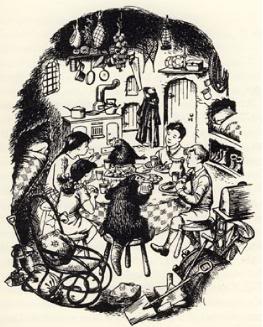
This is how I picture Silas Hart.
adult fiction

So, last week, I posted about my favorite YA lit titles, and it was fun to see others’ reactions and suggestions, both in the comments and on Facebook.  This week, I thought I’d post my top ten fiction books that fall outside of YA.

Peace Like a River by Leif Enger
The Last Unicorn by Peter Beagle
C.S. Lewis’s space trilogy, but especially That Hideous Strength
East of Eden by John Steinbeck
Rosie by Anne Lamott
Rebecca by Daphne du Maurier
The Great Divorce by C.S. Lewis
Life of Pi by Yann Martel
Les Miserables by Victor Hugo
The Bell Jar by Sylvia Plath

Which ones have you read and enjoyed?  Which of your all-time favorites did I miss?

falling in love with fictional characters

Those of us who consider books to be among our best friends often find ourselves in this … situation … where we fall in love with people who don’t exist.

How many of us have wished to be bosom friends with Anne Shirley or to play Himmel Street soccer with Liesel Meminger and Rudy Steiner?  How many finished that epilogue in Deathly Hallows and then cried because our adventures with the Hogwarts trio were over?  And I know that I discover “my perfect boyfriend” from time to time– someone who exists only in the ink on pages– Gilbert Blythe, Jonah Griggs, Augustus Waters.

When I think of all the friends I’ve made through literature, I’m reminded of the power of books.  I hope I can create characters whom people consider friends someday.

Molly Grue, Stargirl Carraway, Leslie Burke and Jess Aarons, the Pevensie siblings, Dickon, Winnie Foster and Jesse Tuck, Swede Land, Cal Trask, Pi Patel, Diana Barry, Prince Caspian, Richard Parker, Max Vandenburg … who are your best literary friends?

books books books

I know I blog a lot about how much I love to write, but hand-in-hand with that is my love for reading.  My reading feeds my writing.

What I have read and enjoyed recently:
The Sky is Everywhere by Jandy Nelson
Jellicoe Road by Melina Marchetta
The Fault in our Stars by John Green
My entire Billy Collins collection of poetry (I literally re-read through 7-8 Collins books in 3 days)

What I am reading and enjoying now:
The Last Battle by C.S. Lewis (I have probably read this book around 75 times; it’s my favorite, and I re-read favorites the way I eat chocolate.)
Sophie’s World by Jostein Gaarder
Froi of the Exiles by Melina Marchetta
World War Z by Max Brooks
Desiring God by John Piper
Her Fearful Symmetry by Audrey Niffenegger

I buy books faster than I can read them– and I read fast!  But reading fuels my energy to write, and I find myself returning to my laptop, eager to build my own worlds.

solipsism syndrome, anyone?

Solipsism syndrome is a condition where a person believes that everything she is experiencing is a dream, is inside her head.  She believes that reality is not real.  She believes that others either don’t exist or that their existence can never be proven.

I have been doing a lot of research on SS lately (for a story I am writing, not because I have been feeling this way), and it is fascinating.

In my wildest OCD days, this idea would sometimes come to me in one variation or another.  Some days I would wonder if everything I had “experienced” up until that point was actually a very intricate dream– and when I finally woke up, I would only be a toddler.

I would imagine that everyone who truly entertains ideas like these must either be Pure O or an astronaut.  But what do I know?

Solipsism syndrome is hard to argue with– the solipsist will always win any debate, because in the end, she can simply dismiss you– since, of course, you don’t really exist.  People affected by this obviously become very withdrawn and experience incredible loneliness.  Some people probably think of this idea and can easily dismiss it (it doesn’t feel like I’m living a dream, so I’m just not going to worry about it), but obsessive-compulsives don’t work like that.  We hold on.  We strangle thoughts.  Or let them strangle us.

So, blogging community, here are my questions for you:
* Have you ever experienced anything like this?  What was it like for you?
* What helped you to feel less alone?
* Care to share some experiences?

Because SS is not recognized as a psychiatric disorder by the American Psychiatric Association, I am relying on human experiences for much of my research!


not only neurotic, but a writer too

If you subscribe to my blog, you know that my posts revolve around obsessive-compulsive disorder and that I sometimes post scenes from the book I’ve been writing about OCD.  Tonight, instead of writing about OCD, I want to write about writing.  Meta-writing … now there’s something an OC can latch onto!  Haha!

Words have been important to me since I was young– summertimes, my mom would have to yell at me to go play outside, since all I wanted to do was lie in my bed and read.  We met halfway: I took my book outdoors.  My sister and I and the neighbor girl would play “library,” setting all our books out on the stairs to the deck, carefully each selecting one, “checking it out,” and retreating to various areas of the yard to read.  They would abandon their books long before I would.

When I was in third grade, I remember creating a whole made-up family of characters so that I could write stories about them.  In junior high, I started to mess around with poetry.  In high school, I wrote an episodic soap opera and passed it around for friends to read.  When the notebook made its way back to me, I wrote some new scenes.  In college, I studied creative writing and finally discovered a true family of other writers, who– let’s be honest– are all a little strange.  It’s not mean.  We just are.

In 2008, I began chicken-scratching some thoughts about my latest Paxil-induced obsession, which turned into a four year novel-writing project that I’m pretty proud of.

Well.  That is, until I read some fantastic new book.  Then I feel like I will never be more than mediocre.

Readers love books.  Writers do too.  But sometimes writers kind of hate them as well.  Take, for example, last night when I read The Fault in Our Stars, the latest by John Green, and found myself simultaneously DELIGHTED by it and MORTIFIED as it revealed my own weaknesses.  One of my greatest desires in life is to be a good writer, and so, reading great writing from others is wonderful/horrible, an honor/shameful, a gift/a rebuke.  I would never “forfeit” the opportunities to have read The Book Thief,  Jellicoe Road, The Last Unicorn, For the Time Being, Peace Like a River, and absolutely anything by Billy Collins.  Doesn’t mean I didn’t seethe with envy while I read.

I complained to my friend Kyle, who wrote me You can trust a good giver that He’s given you what you need. So, take heart, and write.

And my friend Erica patiently encouraged Remember you are part of the body of Christ and have greater purpose.  I totally believe in your writing.

Both were needed reminders for this neurotic writer.

like finding a friend

Well, I did it.  I finished writing my first novel.  It took me just short of four years to write, rewrite, revise, rewrite, edit, polish, and complete my book, Lights All Around.  (You were wondering about the blog title, weren’t you?)

Lights All Around is a story about 26-year-old Neely Jane Richter, an obsessive-compulsive undergoing cognitive-behavioral therapy, and my own 20-year struggle with OCD informed my writing.  While I hope that this book will be helpful for non-OCs to understand OCD, I have always intended that the primary audience be those who struggle with OCD themselves.

OCD can be incredibly alienating, and I want my story to be like finding a friend.

In fact, that is exactly how I felt when I first read the book Kissing Doorknobs by Terry Spencer Hesser.

This book, although intended for a young adult audience, was HUGE in my life.  Reading it and identifying with Tara, the protagonist, was like finally having someone put into words what I’d been experiencing for years.  I recommend this book to OCs and everyone who loves an OC.

I guess what I am trying to say is that I hope my story will do the same.  It’s intended to be a companion.  I hope you understand what I mean.


would you read it?

How do you choose between hell and, well, hell?

In the novel LIGHTS ALL AROUND, Neely Jane Richter, a neurotic and endearing young poet, is at her own personal crossroads: continue life in the clutches of OCD or battle the disorder head-on with a hard-ass therapist who doesn’t find Neely amusing in the least.

It’s a choice that will force her to embrace uncertainty—in her writing, in her spirituality, and in her relationships both with Matt Coty, the man she loves, and Gabe Reed, her attractive but wayward new friend who wants to take Matt’s place.  At her end of her strength, Neely—supported by quirky friends and neighbors—clumsily tackles life, love, and healing.

Leave any suggestions for ways to improve my hook and description!

bullying my bully, part two

Such an interesting post on this same topic on ocdtalk’s blog!

In my story, Neely discovers this concept through a brochure in her psychiatrist’s office, but in my own life, it came out of NOWHERE.  (God??)  All I’d ever heard of it before was from a friend with an eating disorder who called it “Ed” and talked about it as something separate from herself.  So I randomly started to do something similar, imaginging my OCD as a black dot. 

In real life, people stumble into things, but most of the time in fiction, characters have to be forced.  That’s why I altered my story a little bit as I told Neely’s story.  I mean, how crazy is it to just one day start imagining a little black dot riding in the car’s passenger seat?!

Here’s another scene:

“My OCD wants me to think that thought,” I’d spell out in my head as I continued through the neighborhood, realizing that autumn’s chill had definitely hit Minnesota at full force.  “It’s not actually my thought.  I’m just the messenger.” 

It was an awkward dance, one where I sidled up to the thought and tried to hold its hand.  One foot in front of the other, a stealthy warrior on a tiptoed journey toward freedom. 

“Oh, you’re along?” I said to the black dot that was jogging to keep up with my longer strides.  “Well, keep up, won’t ya?”  I “dressed” it in a child’s train conductor costume and laughed under my breath as it seethed in humiliation.  “Chugga-chugga-choo-chooooo!” I said, pulling a fake train whistle above my head.  “Aren’t you a cute little conductor?”  It glared at me.

Another day, another walk, this time my little black dot in a Scottish kilt and a tiny tam beret.  The day after, a doll-sized sailor suit and white sailor hat.  It had toddled behind me, trying to keep a low profile, which was just fine by me.  By the end of the week I’d landed on an outfit for keeps—a pink tutu with tights and ballet slippers, which my OCD hated worse than all the rest.  I was bullying my bully, and it felt powerful.  Whenever my mind started to race, I said to my OCD in its ballerina getup, “You there!  Start twirling!”  And so it would, even as it boiled with rage.  “Keep on twirling!” I said with a smile.  “I’ll tell you when you can stop … little one.”

I felt an odd sense of control that I’d never had before, not completely free of OCD, but like someone separate from it.  I didn’t need to get my toes wet; I could stand on the dry bank, command my orders, and get back to work.

Isn’t it interesting that something that seems so crazy is actually what’s keeping an obsessive-compulsive from craziness?  I’d love to hear your thoughts on this concept.  Leave a comment!

bullying my bully

This post from Pure O Canuck inspired me to post this excerpt from my novel.

There were new magazines on the table beside me but the same display of brochures.  I skipped the
pamphlet about CBT, feeling I knew more about it than I wanted, and chose one labeled “Narrative Therapy.”  I had intended just to skim it, to amuse myself as I waited, but the heading on the inside flap caught my attention.  “The person is not the problem,” it boldly claimed.  “The problem is the problem.”

The brochure shared how narrative therapy assumes that stories shape a person’s identity and has an emphasis on externalizing the problem.  “Name the problem—allow it to have its own identity—so that you can assess and evaluate its presence and ultimately choose your relationship to it.”  I thought briefly about Ellen’s story and the scene she’d written the other night about tricking the wizard into revealing his name.  Name something and steal its power.

On the back of the pamphlet was a photo of a young lady with thin white-blonde hair, and beneath her photograph, there was a quotation: “When I started thinking of my anorexia as separate from myself, the real healing began.  I named my problem Ed (for ‘eating disorder’), and I continually reminded myself that Ed was a liar and started to take back control.”

It all resonated with me.  In fact, it was exactly what I had been doing this last week—employing
Dr. Foster’s strategy, making observations: I am the messenger.  OCD has the message.  We are
not the same. 
“The person is not the
problem; the problem is the problem.”

“Neely,” said that familiar accent, and I looked up to see Dr. Lee, nodding at me before tearing down the hall like a shot.  I tucked the pamphlet in my purse and made my way, alone, down the hallway to his office.  I knew the next words before he spoke them, and I mouthed them along with him: “Come in.  Close door please.”

            This time he decided to reduce the Prozac, dropping me from thirty milligrams to twenty. 
He typed it into his computer and murmured, “Looking good … looking good …” as he did so.  Dr. Lee swiveled his chair to look at me.  “As we lower your dosages, you’ll have to double your behavioral therapy efforts.  You will do okay though.  This is good.  We reduce medicine side of things.  We are almost there with meds, agreed?”

“Agreed.”

“Almost there,” he said again, looking at me as if my potential were dancing atop my head like a little flame.


I noticed the brochure when I searched through my purse for my keys.  I sat in the driver’s seat of
my car, looking at it, re-reading it, thinking about it.  “Name the problem—allow it to have its own
identity—so that you can assess and evaluate its presence and ultimately choose your relationship to it.”  I didn’t know if Dr. Foster would approve, but as I turned the key in the ignition, I imagined my OCD as a little black dot sitting on the passenger’s seat beside me. 

It was the size of a large fist, perfectly round, and it had attitude.  Even sitting in the passenger’s seat, I could feel the way it tried to masquerade as my smarter, oppressive friend.  Its condescending
grin showed it didn’t think much of me, especially in this moment as I left the hospital, the gathering place of the weak.

As I drove, I felt the dot exuding confidence.  It actually annoyed me to the point where I said aloud, “You know what?  You think you’re sooo cool, but you’re a dot.”  Then I realized that I was talking outloud in my car and laughed a little bit.  This couldn’t possibly be what the brochure was talking about, could it? I thought.  Then with only the slightest glance at the passenger’s seat out of the
corner of my eye, I visualized a change in the black dot as I dressed it in baby clothes—a tight little blue onesie and a binky in its mouth.  It was enraged by this turning of the tables.  “Now who looks dumb?” I muttered with a smile on my lips.