Writing and/or Life, Both Hard

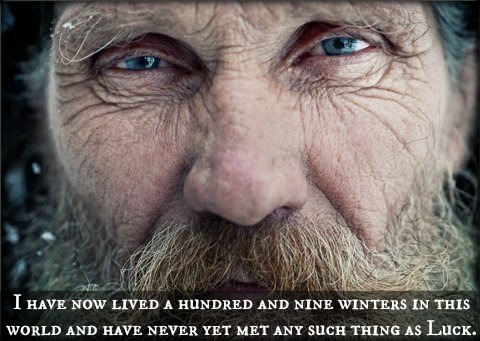
rumiWriting.

Either I’m not doing it right and still need to learn the universe’s secrets, or else the truth is that writing is masochism.

No, stop. I shouldn’t say that. Believe me, I love to write. Sometimes.

But it is really, really hard.

Why does it so often seem like other writers have their acts together?  They feel confident in their abilities.  They are clever and funny and smart … gahhh, I know I can be those things too.  But mostly I just feel insufficient and terrified that I’ll be found out.

Not just writing either.  Life.  I’m 32, and I feel like I know so little about how to be successful at Life.  I retreat in fear to my favorite things night after night: my bed, my prayer journal, my Jesus.

A few lines from Truest (as it stands today):

And while I sit in the stand and pray, I have the same sensation—that I am being outlined, defined, and that the definition doesn’t come from me.

I am trying to hold so many things—and failing—but this one thing is holding me.

Please tell me, people: do any of you get so overwhelmed that you become paralyzed? Have you fallen in love with a vocation that gnaws on your heart? Have you figured out any ways to be still and yet productive?

All I know is Jesus, Jesus, Jesus— thankfully, he’s more than enough.


Writerly Thoughts on Predestination, Conflict, & Rescue

I.

It’s an old debate: do humans have free will, or are “choices” predestined by God?

I have a friend who thinks the former while I lean more toward the latter (honestly, I most prefer to live in the gray area between the two), and we were talking briefly about this.  The Big Question, of course, is If there’s no free will, then why would God predestine the sinful fall of man?

My response was that I think that rescue and redemption are more valuable to God than there being no need for them, that somehow God gets more glory from saving a fallen world than from not needing to save a perfect one.

My friend didn’t buy it, didn’t think it made sense.

II.

My writing critique group met recently, and it was a great evening.  We didn’t actually critique anything, only shared about our current projects (and a couple people shed some tears, it’s true).  One of my friends is writing a young adult novel for her MFA program, and the problem she keeps running into is that she loves her characters so much that she doesn’t want to hurt them.

“It’s what I always used to yell at you for, Jackie!” she said to me.  “And now I’m doing it myself!”

If you’re not a writer, you probably can’t understand, but trust me– it can be hard to create characters you adore and then force them through hell.

But we have to.

Why?

If there’s no conflict, it’s not a good story.

Reaching_by_fotomachineIII.

I started to think about that in terms of the story of the world.  God is the ultimate creator, the supreme artist, and the universe and its inhabitants are his masterpiece.

Is the same principle at work here?  Did God as an Artist determine that the great Story of the world would not be good without conflict?  Every good writer knows that a story needs a conflict and a climax.  Could that be the very simplest of explanations for the fall of man and the cross of Christ?  God was writing a story, and he wanted it to be great.

You’re welcome to chime in in the comments!


Image credit: fotomachine

Oceans & Revisions

I went to praise chapel at Northwestern the other day. Though UNW has worship chapel every week, this was a special one for the semester since the entire orchestra was on stage, a powerful treat.

They played Hillsong’s “Oceans.”

wanderSpirit lead me where my trust is without borders
Let me walk upon the waters
Wherever You would call me
Take me deeper than my feet could ever wander
And my faith will be made stronger
In the presence of my Savior

When I sang, “Take me deeper than my feet could ever wander,” I immediately thought of Truest and all its many rounds of revisions.

Here is the truth: on my own, Truest would have been finished a long time ago.  And it wouldn’t have been nearly as good. But so many people have been put into my life to press me further down that path than my feet could ever wander on their own.

And the result?

A better novel.  Also, my faith was made stronger: my faith in the creative process and my faith in God.


Image credit: if you know the owner of this image, please let me know.

Major & minor themes in the Christian worldview [and what that means for my writing]

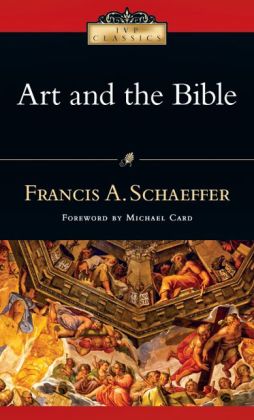
art and the bibleMy dear friend Elyse recently loaned me a book called Art and the Bible, written by Francis Schaeffer.  It was less a book and more an essay, and I read it in one sitting.  Let me tell you, it was refreshing to have someone explore so many ideas related to the Christian worldview and the value of art.

The idea that stood out to me the most was this: the Christian world view has both a major and minor theme.  The minor theme is that the world has revolted and is revolting against God, that Christians will never be perfect this side of heaven.  The major theme is that God is at work redeeming the world.

What does that mean for the Christian artist? It’s okay for your art to show both themes too.

Why does this matter to me? Because, as a Christian artist who has suffered from OCD, I’ve sometimes wondered if my responsibility to my faith meant that I needed to focus only on the positive.  The answer is no.  It should be emphasized over the minor theme, but the minor theme has its place in my writing too.

I wish that all Christian artists realized this. We need more gritty, raw Christian art and fewer poems about rainbows and puppies.  If you have art like this– especially written work– you should submit your work to Crux Literary Journal.  We’d be thrilled to take a look.

Why I Believe in God

About a month ago, a co-worker asked why we believed in God.  Obviously faith is a huge, huge part of it, but he wasn’t asking about faith.  He wanted to know what evidence we’d experienced that contributed to our beliefs.

Personal experience, some people said.

Another co-worker cited the teleological argument of the watchmaker: if you come upon a watch on a beach, you asume there was a watchmaker.

Me?  I shared one story and one historical finding.

bowI’m not sure I’m ready to share the story on my blog yet.  It’s such a special, intimate, significant experience in my life that most readers might think is silly, and I’m not ready to subject it to that yet.  I will say, though, that there was a moment in my life when I asked God for something and he gave it to me only seconds later.  Not a physical object but a thought/memory.  There was no other possible explanation for it but God, and it came at a very low time of my life, when OCD was like a railroad spike splintering my faith, and this experience mattered so much that I fell to my knees in awe and gratitude.

As for the historical finding, it comes from a book I read called Humilitas, which was written by Australian historian John Dickson. It examines the historical timeline of the virtue of humility, attempting to locate the turning point in history where humility went from being something people looked down on to being something people admired.

The turning point was the crucifixion and resurrection of Jesus Christ.

There are others things I could add: Can Man Live without God by Ravi Zacharias presents a fascinatingly different kind of apologetics as it examines not whether God is real but whether life has value and meaning if God is not real.  Other personal experiences with God throughout the years, most specifically an evening under the stars I spent with him. The backward nature of Christianity: how people can find joy in suffering, how we can lose our lives to gain them, how the last shall be first.

How about you? Do you believe in God, and if so, why?  

Keep comments civil, peeps.  I know we’re capable of having a mature, intelligent discussion on God.

Image credit: Hungry for God


OCD & Faith

I was recently asked how my faith survived 20 years of abuse at the hand of OCD.  This fellow sufferer wondered how I reconciled/justified my continued believe in God after so much hurt and such a sense of betrayal.

It’s a great question.

I am a Christian, that is, I believe that Jesus Christ is God’s only son, that he came to earth to rescue men, died on a cross on a Friday, and rose again to life the following Sunday.  

It’s actually the story of the cross and the resurrection that have allowed me to cling to my faith.

The agony of the cross shows me that Jesus understands my suffering; we identify with one another. And the victory of the resurrection prompts me to have hope in my suffering, knowing that only a weekend separated the worst story from becoming the best; I am filled with hope that, just as I identify with him in his suffering, I will also identify with him in his victory.

The truth is that without the gospel of Christ, it would be difficult for me to justify my continued faith.


For more about my faith, go to jackieleasommers.com/faith.
For (lots!) more about OCD and ERP, go to jackieleasommers.com/OCD.

cross and resurrection

Don’t Push the River [& other advice]

Last month I was stressing out intensely over writing my next novel.  We’re talking panic, high stress, extreme anxiety, the whole shebang.  There’s a head game in writing, and I was losing it.  Badly.

I reached out to my undergraduate writing instructor, Judith Hougen.  She was a mentor to me in college, and in many ways, she still is today, even though I don’t get to see her nearly as often as I’d like.  I’ve written about Judy on my blog before: how she is laden with wisdom and creativity, how she loves truth and beauty.

We got coffee, and I shared how stressed I was, then I waited for her wisdom.  She said:

InWater1 by carpeemorteem via deviantART

InWater1 by carpeemorteem
via deviantART

Don’t push the river.

The full proverb is “Don’t push the river; it flows by itself.”

A river is going to go where it wants, carve out the path it chooses.  I’m a fool if I think that I can redirect it– or that I somehow keep it flowing.

It quite fascinated me because one of the things that my cognitive-behavioral therapist said to me (digitally recorded for all time in my ERP exposure recording) was this:

“I want you to close your eyes and imagine you’re standing in a river.  The current is strong, and the waters rush past you, pounding you, beating against your legs, hips, waist.  Eventually your whole body is fatigued; your legs are so tired you can barely stand.  Then you finally turn around and let yourself go with the current.”

His point was plainly and simply that he was offering me relief.

And that’s what Judy was offering too.

Judy said, “If you skip writing one night, you have to trust it’s not all going to leave you.”

Judy said, “Let the writing of this book be its own experience.  Don’t compare it to the last one.”

Judy said, “Respect the mystery of writing.

It was like balm to my anxiety-riddled soul.  I am letting her words minister to my writer’s heart.  And letting my one word for 2014– grace— work its way into the cold and lonely places in me like an adhesive that holds me together.

Emerging Artists Collective

writing girl againMy college writing mentor Judith Hougen started an artist group in the Twin Cities called the Emerging Artists Collective, and we had our first meeting in November.

I cannot tell you how amazing it was to be gathered with other Christian artists (writers, filmmakers, visual artists) to discuss faith and writing.

The thing that stood out to me most was a quote Judy shared.  I have been looking online, and I can’t find the quote, but it went something like this: “The older I get, what I mean by Christianity and what I mean by writing are largely the same thing.”

I love that.

It’s true that in my own life, my faith and my writing have become terrifically wrapped up.  When I write, I feel like I have spent time with God.  It all feels very mysterious to me, but I love that too (of course I do).

Related posts:
The Faith of a Pantser
Why Christians Should Write


Guest Blogger: I Walk with a Limp (aka What I Wish I’d Known in Christian College)

Hi friends, Jackie here.  I’d like to introduce you to my friend Cindy, a truly brilliant woman whom I’ve referenced before.  She is so, so good for me and has challenged my thinking time and again.  Sometimes I want to just post her emails on my blog (and if you’re smart enough to find it, you’ll realize I *have* done this before).  Over the last, oh, two years, Cindy and I have had an amazing ongoing conversation about how much we’ve learned since undergrad, how much we’ve grown.  I asked her to write something to share with my blog readers.  Here it is.

I Walk with a Limp

I walk with a limp recently due to a running injury.  This injury knocked me out, slowed me down, yet I stubbornly ignored it for two months before finally going to the doctor and getting it put into an air cast.  The cast is huge and noticeable.  It causes me to limp.

Jacob of the Bible walked with a limp also.  He wrestled with God all night until God won the match by simply touching his hip.  For the rest of his life, Jacob walked with a limp to remind him of his humility before God.
* * *
I was at youth group in high school when I made the comment that the Bible is our weapon.  I meant that the Bible is our spiritual weapon and that we use it to combat the forces of evil in our world.  I meant it in the way that Paul describes – putting on the whole armor of God.  But over the years, I didn’t use the Bible as a weapon against evil.  I used it as a weapon against others.  Those who didn’t believe as I did, think as I did, act as I did, vote as I did, interpret the Bible as I did.  My Bible was my gun and I looked at its texts as if I was staring down the scope of a shotgun.  I lined up the perfect text against whatever or whomever I found lacking, and I fired.
* * *
Paul writes in Galatians that Jesus breaks down divisions.  That there isn’t Jew or Greek, slave or free, male or female, because Christ made us one.  We Christians recite this passage from memory, and then we turn around and start creating divisions.  Categories of people.  Those who are saved and those who are lost.  Those who read the Bible the right way and those who read it the wrong way.  Those who say they believe in Jesus and those who actually do.  Those who vote the right way and those who don’t.
We look at the ways people screw up and we use their sins to put them into the “other” category.  Separate from us — those who got it right.
When I arrived at Christian college, I arrived ready to perfect my faith.  I sought more shells to load into my spiritual weapon.  I wanted someone to teach me the Biblical texts I needed to create divisions between faiths that called themselves “Christian.”  I wanted proof that those churches weren’t doing it right, because they didn’t really believe in Jesus.  Because they didn’t believe in Jesus the right way.  Because they didn’t believe in Jesus my way.
Never mind that Paul says we’re all one in Christ.  I read his words as, “All who believe in Christ the way I believe in Christ are one, and everyone else is out.”
* * *
I got the idea, at some point, that the Christian faith wasn’t worth it if it wasn’t really hard.  Uncomfortable.  Outside the grain.  Counter-cultural.  What I failed to recognize was that Jesus dug right into culture.  He made the poor and meek and thirsty feel comfortable, welcome, loved.  He said, “My yoke is easy and my burden is light.”
My Christianity believed that Jesus gave me His burden, believed that I should want to be like Jesus, but it never considered my role in relieving the burdens of others.  Those whose burdens were heavy.  Those who needed love.  Those whom I’d placed into the “other” category.  It never considered that instead of sitting back and judging culture that Jesus dove right in to it.  That maybe I too should be diving in with arms full of love and grace and healing.
* * *
A pastor at my church preached on the story of Jesus crossing the Sea of Galilee with His apostles.  Jesus said, “Let’s go across to the other side of the lake,” so into the boat they all went.  The ship undoubtedly rocked gently, sweetly, like rocking a baby in a cradle, and Jesus succumbed to the lull of the seas and fell asleep.  Yet as the ship continued across the sea, the gentle waves grew stronger as the wind began to blow wildly.  With the boat rocking furiously, the disciples shook Jesus awake, panicked, terrified that they were going to capsize.  Jesus got up, rebuked the seas, and then asked His apostles, seemingly incredulously, “Where is your faith?!”
The pastor discussed that across the Sea of Galilee was Syria — a country of others.  Non-Jews.  Yet Jesus said, “Let’s go to the other side of the lake,” and His disciples got in the boat.
In the Christian church today, the pastor explained, Jesus is asking us to do the same thing.  He is saying, “Let’s go to the other side of the lake,” and on the other side of the lake are “others,” those who have been ostracized and excluded and broken down.  We get into the boat, but the seas get rough, and we cry out to God, demand to know why He isn’t saving His church, insist that it’s too hard to bridge this gap between us and the others, that we will never make it to the other side.
“Where is your faith?!” I can almost imagine Him saying.
* * *
In my Christian walk, I walk with a limp.  The limp won’t allow me to forget all the pain I’ve caused others by seeing the world as “us” and “them,” by using my Bible as a weapon against the others instead of using it to combat the evil that plagues us all.  It’s a limp that reminds me of how many times I’ve looked out at a rocky sea, a small boat, and told Jesus, “No thanks.  I’m not getting into that boat.”
I still screw up, judge, categorize, ridicule, doubt.  But I pray and I seek grace and I do my best to see people as Jesus did, to break down divisions, to see everyone as one in Him.  And when Jesus says, “Get in the boat.  Let’s go to the other side of the lake together,” I seek the strength to take His hand and climb on in.