Major & minor themes in the Christian worldview [and what that means for my writing]

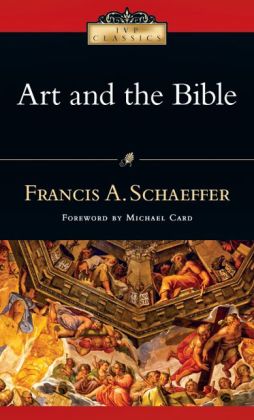
art and the bibleMy dear friend Elyse recently loaned me a book called Art and the Bible, written by Francis Schaeffer.  It was less a book and more an essay, and I read it in one sitting.  Let me tell you, it was refreshing to have someone explore so many ideas related to the Christian worldview and the value of art.

The idea that stood out to me the most was this: the Christian world view has both a major and minor theme.  The minor theme is that the world has revolted and is revolting against God, that Christians will never be perfect this side of heaven.  The major theme is that God is at work redeeming the world.

What does that mean for the Christian artist? It’s okay for your art to show both themes too.

Why does this matter to me? Because, as a Christian artist who has suffered from OCD, I’ve sometimes wondered if my responsibility to my faith meant that I needed to focus only on the positive.  The answer is no.  It should be emphasized over the minor theme, but the minor theme has its place in my writing too.

I wish that all Christian artists realized this. We need more gritty, raw Christian art and fewer poems about rainbows and puppies.  If you have art like this– especially written work– you should submit your work to Crux Literary Journal.  We’d be thrilled to take a look.

Why I Believe in God

About a month ago, a co-worker asked why we believed in God.  Obviously faith is a huge, huge part of it, but he wasn’t asking about faith.  He wanted to know what evidence we’d experienced that contributed to our beliefs.

Personal experience, some people said.

Another co-worker cited the teleological argument of the watchmaker: if you come upon a watch on a beach, you asume there was a watchmaker.

Me?  I shared one story and one historical finding.

bowI’m not sure I’m ready to share the story on my blog yet.  It’s such a special, intimate, significant experience in my life that most readers might think is silly, and I’m not ready to subject it to that yet.  I will say, though, that there was a moment in my life when I asked God for something and he gave it to me only seconds later.  Not a physical object but a thought/memory.  There was no other possible explanation for it but God, and it came at a very low time of my life, when OCD was like a railroad spike splintering my faith, and this experience mattered so much that I fell to my knees in awe and gratitude.

As for the historical finding, it comes from a book I read called Humilitas, which was written by Australian historian John Dickson. It examines the historical timeline of the virtue of humility, attempting to locate the turning point in history where humility went from being something people looked down on to being something people admired.

The turning point was the crucifixion and resurrection of Jesus Christ.

There are others things I could add: Can Man Live without God by Ravi Zacharias presents a fascinatingly different kind of apologetics as it examines not whether God is real but whether life has value and meaning if God is not real.  Other personal experiences with God throughout the years, most specifically an evening under the stars I spent with him. The backward nature of Christianity: how people can find joy in suffering, how we can lose our lives to gain them, how the last shall be first.

How about you? Do you believe in God, and if so, why?  

Keep comments civil, peeps.  I know we’re capable of having a mature, intelligent discussion on God.

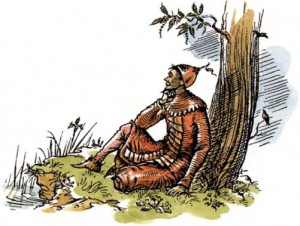
Image credit: Hungry for God


OCD & Faith

I was recently asked how my faith survived 20 years of abuse at the hand of OCD.  This fellow sufferer wondered how I reconciled/justified my continued believe in God after so much hurt and such a sense of betrayal.

It’s a great question.

I am a Christian, that is, I believe that Jesus Christ is God’s only son, that he came to earth to rescue men, died on a cross on a Friday, and rose again to life the following Sunday.  

It’s actually the story of the cross and the resurrection that have allowed me to cling to my faith.

The agony of the cross shows me that Jesus understands my suffering; we identify with one another. And the victory of the resurrection prompts me to have hope in my suffering, knowing that only a weekend separated the worst story from becoming the best; I am filled with hope that, just as I identify with him in his suffering, I will also identify with him in his victory.

The truth is that without the gospel of Christ, it would be difficult for me to justify my continued faith.


For more about my faith, go to jackieleasommers.com/faith.
For (lots!) more about OCD and ERP, go to jackieleasommers.com/OCD.

cross and resurrection

The Magic of the Gospel

I posted something about Harry Potter on my Facebook page recently, and a Christian friend of mine made a comment about how she was against witchcraft, just as the Bible insists.

I’ll be clear: if something is invoking evil and Satan, I’m against that too.

But to me, the magic of Harry PotterMary PoppinsThe Wizard of Oz, etc., is not the same thing as what the Bible is describing as witchcraft.  Who knows.  Maybe I’m wrong.  It wouldn’t be the first time.

I said to my friend: “In Narnia, both the good side and bad side use magic.  Just like in Star Wars and many others.”

She asked if I was saying there is a “good” magic and a “bad” magic.

My response? “Of course there is a good magic– Christ’s miracles!  What else would you call them?”

Am I way off?  I think the amazing, supernatural, miraculous works of God could be described as “good magic.”

I don’t know how to explain it, so I’ll call upon J.R.R. Tolkien’s words in his essay “On Fairy Stories”:

The Gospels contain a fairystory, or a story of a larger kind which embraces all the essence of fairy-stories. They contain many marvels—peculiarly artistic, beautiful, and moving: “mythical” in their perfect, selfcontained significance; and among the marvels is the greatest and most complete conceivable eucatastrophe.

deeper magic masikarainIn Narnia, there is a Deep Magic from the dawn of time … and there is a Deeper Magic from before the dawn of time.

I like that.

Image credit: MasikaRain

That Time Anne Lamott Responded to Me

Let’s be honest: this week has been hard.  Really hard.

Writing-wise.

I am writing a first draft, and it’s going horribly (as writing a first draft is wont to go), and I’m stumbling into evening after evening of soul-shaking, identity-questioning doubts about my writing abilities.

I’m a fraud.
I don’t know how to write a book.
I don’t have a second book in me.
My agent and editor and everyone else will discover that I’m just a one-book girl.

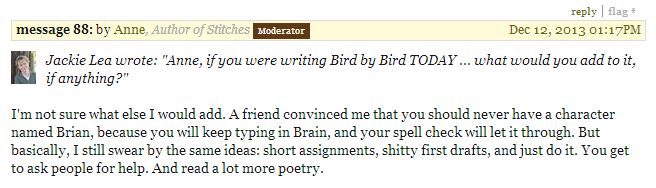
Goodreads hosted an event “Ask Anne Lamott” this past week, and just now, I have found the time to sift through her responses.  You need to know that Anne Lamott always seems to be speaking directly to my heart– we are both writers, Christians, and women who wildly, desperately need help– and so all of her responses to various reader-posed questions felt like balm.  This one, in fact, felt like validation:

Anne Lamott

“You have to be pretty lost and crazy” in writing fiction.  Yes, okay, I reassure myself.  This is just the way of things; this is The Way It Goes.

But then, there it was– an actual response to me.  Me!  Jackie Lea Sommers!

Anne Lamott to Me

“Short assignments, shitty first drafts, and just do it.”  Yes, thank you.  That is how my next novel will get written: day after day writing something bad, then making it less bad, then making it good, then making it great.  I’m in the bad stage right now, and that’s okay.

“You get to ask people for help.”  Yes, thank you.  I actually stopped in to my beloved writing professor’s office just yesterday to vocalize my fears, and she said that if I needed encouragement in the zen of writing or someone to commiserate with, I could just ask.  I will definitely be asking.  And then, last night, I met with [some, but not all, of] my writing group, women who let me vent about Penn and Maggie, my newest characters, and about their problems.  My group members listened and encouraged and offered suggestions, and it was lovely.  And I’m so terribly grateful for my beta readers too!

“And read a lot more poetry.”  I couldn’t agree more.  I think I’ll start with some Mary Oliver tonight.  I haven’t yet had a chance to crack open her latest, A Thousand Mornings.  Then Christian Wiman’s Every Riven Thing.  It sounds like respite.

The Question of Emeth

Warning: spoilers ahead for The Last Battle, the final book of The Chronicles of Narnia series.

emethDoes anyone really know what to do with Emeth, that Calormene soldier who was so devoted to Tash … and yet was welcomed by Aslan?

Here’s the story: Emeth was on the “bad guys” side– part of the army from Calormen that was invading Narnia– and he had served Tash, the Calormen god (though he was evil, more of demon), since his youth.

Yet …

“So I went over much grass and many flowers and among all kinds of wholesome and delectable trees till lo! in a narrow place between two rocks there came to meet me a great Lion. The speed of him was like the ostrich, and his size was an elephant’s; his hair was like pure gold and the brightness of his eyes like gold that is liquid in the furnace. He was more terrible than the Flaming Mountain of Lagour, and in beauty he surpassed all that is in the world even as the rose in bloom surpasses the dust of the desert. Then I fell at his feet and thought, Surely this is the hour of death, for the Lion (who is worthy of all honour) will know that I have served Tash all my days and not him. Nevertheless, it is better to see the Lion and die than to be Tisroc of the world and live and not to have seen him. But the Glorious One bent down his golden head and touched my forehead with his tongue and said, Son, thou art welcome. But I said, Alas, Lord, I am no son of thine but the servant of Tash. He answered, Child, all the service thou hast done to Tash, I account as service done to me. Then by reasons of my great desire for wisdom and understanding, I overcame my fear and questioned the Glorious One and said, Lord, is it then true, as the Ape said, that thou and Tash are one? The Lion growled so that the earth shook (but his wrath was not against me) and said, It is false. Not because he and I are one, but because we are opposites, I take to me the services which thou hast done to him. For I and he are of such different kinds that no service which is vile can be done to me, and none which is not vile can be done to him. Therefore if any man swear by Tash and keep his oath for the oath’s sake, it is by me that he has truly sworn, though he know it not, and it is I who reward him. And if any man do a cruelty in my name, then, though he says the name Aslan, it is Tash whom he serves and by Tash his deed is accepted. Dost thou understand, Child? I said, Lord, thou knowest how much I understand. But I said also (for the truth constrained me), Yet I have been seeking Tash all my days. Beloved, said the Glorious One, unless thy desire had been for me thou wouldst not have sought so long and so truly. For all find what they truly seek.

“Then he breathed upon me and took away the trembling from my limbs and caused me to stand upon my feet. And after that, he said not much, but that we should meet again, and I must go further up and further in. Then he turned him about in a storm and flurry of gold and was gone suddenly.

“And since then, O Kings and Ladies, I have been wandering to find him and my happiness is so great that it even weakens me like a wound. And this is the marvel of marvels, that he called me Beloved, me who am but as a dog – “

My friend Ashley has major issues with this part of the story (as do many others):

1) How does Emeth get “heaven” without having been devoted to Aslan?
2) How does this reconcile with the Christian doctrine that “there is only one name whereby men may be saved”?
(Though you could argue the two questions are the same.)

The answers?  I don’t know.

May I quote Wikipedia here?  It says:

The implication is that people who reflect a righteous heart are to some degree justified, regardless of misbelief. This is a cornerstone of Christian theology: one party cites the Christian paradigm that faith in Christ alone saves, and the other wants to account for the fate of those born and raised into another faith. There has been extensive commentary on the question. In a letter from 1952, Lewis summarized and explained his position:

I think that every prayer which is sincerely made even to a false god, or to a very imperfectly conceived true God, is accepted by the true God and that Christ saves many who do not think they know him. For He is (dimly) present in the good side of the inferior teachers they follow. In the parable of the Sheep and Goats those who are saved do not seem to know that they have served Christ.[2]

Lewis cites this view as derived[2] from the parable of the sheep and goats in Matthew 25:34-40, from Paul‘s speech to the Athenians in Acts 17:23: “What you now worship as something unknown, I am going to proclaim to you”, and from 1 Timothy 4:10: “God, the Savior of all men, especially of those who believe” (all references NIV).

Lewis encountered[2] one contradiction to this idea in Romans 10:14: “How, then, can they call on the one they have not believed in? And how can they believe in the one of whom they have not heard? And how can they hear without someone preaching to them?” (TNIV). This is consistent with Paul’s doctrine that though God is already with the pagans, they still need to see him revealed. Lewis, however, replied with 1 Corinthians 1:12-13: “One of you says, ‘I follow Paul’; another, ‘I follow Apollos’; another, ‘I follow Cephas‘; still another, ‘I follow Christ.’ — Is Christ divided?” (TNIV), which he interpreted as indicating the sameness of God regardless of his context.

Perhaps the strongest support for Lewis’ case is found in Romans 2:13-15 (TNIV):

For it is not those who hear the law who are righteous in God’s sight, but it is those who obey the law who will be declared righteous. (Indeed, when Gentiles, who do not have the law, do by nature things required by the law, they are a law for themselves, even though they do not have the law. They show that the requirements of the law are written on their hearts, their consciences also bearing witness, and their thoughts now accusing, now even defending them.)

A final reply is found in Jesus’ words in John 14:6: “No one comes to the Father except through me” (NIV). However, its interpretation is ambiguous: if Jesus meant that he was an object by conscious faith in whose name a person is saved, this verse would appear to contradict Lewis’ argument. However, Jesus could have meant (a) that he alone made salvation possible (i.e., activated it by his death), and/or that (b) as Lewis suggested, some might come to the Father through Jesus who did not at first realize that was what they were doing.

I admit that I myself have tried to reconcile it all by believing that the stable door was not a door of death and that the “real Narnia” they entered was more of a road to Damascus (leading to the gated garden, which was the true “heaven”).  I’ve perhaps lost many of you by now.

But I’d love to hear your thoughts.

Guest Blogger: I Walk with a Limp (aka What I Wish I’d Known in Christian College)

Hi friends, Jackie here.  I’d like to introduce you to my friend Cindy, a truly brilliant woman whom I’ve referenced before.  She is so, so good for me and has challenged my thinking time and again.  Sometimes I want to just post her emails on my blog (and if you’re smart enough to find it, you’ll realize I *have* done this before).  Over the last, oh, two years, Cindy and I have had an amazing ongoing conversation about how much we’ve learned since undergrad, how much we’ve grown.  I asked her to write something to share with my blog readers.  Here it is.

I Walk with a Limp

I walk with a limp recently due to a running injury.  This injury knocked me out, slowed me down, yet I stubbornly ignored it for two months before finally going to the doctor and getting it put into an air cast.  The cast is huge and noticeable.  It causes me to limp.

Jacob of the Bible walked with a limp also.  He wrestled with God all night until God won the match by simply touching his hip.  For the rest of his life, Jacob walked with a limp to remind him of his humility before God.
* * *
I was at youth group in high school when I made the comment that the Bible is our weapon.  I meant that the Bible is our spiritual weapon and that we use it to combat the forces of evil in our world.  I meant it in the way that Paul describes – putting on the whole armor of God.  But over the years, I didn’t use the Bible as a weapon against evil.  I used it as a weapon against others.  Those who didn’t believe as I did, think as I did, act as I did, vote as I did, interpret the Bible as I did.  My Bible was my gun and I looked at its texts as if I was staring down the scope of a shotgun.  I lined up the perfect text against whatever or whomever I found lacking, and I fired.
* * *
Paul writes in Galatians that Jesus breaks down divisions.  That there isn’t Jew or Greek, slave or free, male or female, because Christ made us one.  We Christians recite this passage from memory, and then we turn around and start creating divisions.  Categories of people.  Those who are saved and those who are lost.  Those who read the Bible the right way and those who read it the wrong way.  Those who say they believe in Jesus and those who actually do.  Those who vote the right way and those who don’t.
We look at the ways people screw up and we use their sins to put them into the “other” category.  Separate from us — those who got it right.
When I arrived at Christian college, I arrived ready to perfect my faith.  I sought more shells to load into my spiritual weapon.  I wanted someone to teach me the Biblical texts I needed to create divisions between faiths that called themselves “Christian.”  I wanted proof that those churches weren’t doing it right, because they didn’t really believe in Jesus.  Because they didn’t believe in Jesus the right way.  Because they didn’t believe in Jesus my way.
Never mind that Paul says we’re all one in Christ.  I read his words as, “All who believe in Christ the way I believe in Christ are one, and everyone else is out.”
* * *
I got the idea, at some point, that the Christian faith wasn’t worth it if it wasn’t really hard.  Uncomfortable.  Outside the grain.  Counter-cultural.  What I failed to recognize was that Jesus dug right into culture.  He made the poor and meek and thirsty feel comfortable, welcome, loved.  He said, “My yoke is easy and my burden is light.”
My Christianity believed that Jesus gave me His burden, believed that I should want to be like Jesus, but it never considered my role in relieving the burdens of others.  Those whose burdens were heavy.  Those who needed love.  Those whom I’d placed into the “other” category.  It never considered that instead of sitting back and judging culture that Jesus dove right in to it.  That maybe I too should be diving in with arms full of love and grace and healing.
* * *
A pastor at my church preached on the story of Jesus crossing the Sea of Galilee with His apostles.  Jesus said, “Let’s go across to the other side of the lake,” so into the boat they all went.  The ship undoubtedly rocked gently, sweetly, like rocking a baby in a cradle, and Jesus succumbed to the lull of the seas and fell asleep.  Yet as the ship continued across the sea, the gentle waves grew stronger as the wind began to blow wildly.  With the boat rocking furiously, the disciples shook Jesus awake, panicked, terrified that they were going to capsize.  Jesus got up, rebuked the seas, and then asked His apostles, seemingly incredulously, “Where is your faith?!”
The pastor discussed that across the Sea of Galilee was Syria — a country of others.  Non-Jews.  Yet Jesus said, “Let’s go to the other side of the lake,” and His disciples got in the boat.
In the Christian church today, the pastor explained, Jesus is asking us to do the same thing.  He is saying, “Let’s go to the other side of the lake,” and on the other side of the lake are “others,” those who have been ostracized and excluded and broken down.  We get into the boat, but the seas get rough, and we cry out to God, demand to know why He isn’t saving His church, insist that it’s too hard to bridge this gap between us and the others, that we will never make it to the other side.
“Where is your faith?!” I can almost imagine Him saying.
* * *
In my Christian walk, I walk with a limp.  The limp won’t allow me to forget all the pain I’ve caused others by seeing the world as “us” and “them,” by using my Bible as a weapon against the others instead of using it to combat the evil that plagues us all.  It’s a limp that reminds me of how many times I’ve looked out at a rocky sea, a small boat, and told Jesus, “No thanks.  I’m not getting into that boat.”
I still screw up, judge, categorize, ridicule, doubt.  But I pray and I seek grace and I do my best to see people as Jesus did, to break down divisions, to see everyone as one in Him.  And when Jesus says, “Get in the boat.  Let’s go to the other side of the lake together,” I seek the strength to take His hand and climb on in.

5 Favorite Moments in Narnia

WARNING: SPOILERS AHEAD!  (P.S. If you have not read these books yet, what is wrong with you?!!!) 🙂

5. The end of the world in Voyage of the Dawn Treader.
The lilies!  The stillness!  The water so sweet and the lamb on the shore.

After that for many days, without wind in her shrouds or foam at her bows, across a waveless sea, the Dawn Treader glided smoothly east. Every day and every hour the light became more brilliant and still they could bear it. No one ate or slept and no one wanted to, but they drew buckets of dazzling water from the sea, stronger than wine and somehow wetter, more liquid, than ordinary water, and pledged one another silently in deep draughts of it. And one or two of the sailors who had been oldish men when the voyage began now grew younger every day. Everyone on board was filled with joy and excitement, but not an excitement that made one talk. The further they sailed the less they spoke, and then almost in a whisper. The stillness of that last sea laid hold on them.

4. The celebration in Prince Caspian.
I love that even the trees got their own food:

They began with a rich brown loam that looked almost exactly like chocolate; so like chocolate, in fact, that Edmund tried a piece of it, but he did not find it at all nice. When the rich loam had taken the edge off their hunger, the trees turned to an earth of the kind you see in Somerset, which is almost pink. They said it was lighter and sweeter. At the cheese stage they had a chalky soil, and then went on to delicate confections of the finest gravels powdered with choice silver sand. They drank very little wine, and it made the Hollies very talkative: for the most part they quenched their thirst with deep draughts of mingled dew and rain, flavoured with forest flowers and the airy taste of the thinnest clouds.

3. The creation in Magician’s Nephew.
Singing it into creation.  Yes.

The Lion was pacing to and fro about that empty land and singing his new song. It was softer and more lilting than the song by which he had called up the stars and the sun; a gentle, rippling music. And as he walked and sang the valley grew green with grass. It spread out from the Lion like a pool. It ran up the sides of the little hills like a wave. In a few minutes it was creeping up the lower slopes of the distant mountains, making that young world every moment softer.

2. The resurrection in LWW.
So mighty!

“It means,” said Aslan, “that though the Witch knew the Deep Magic, there is a magic deeper still which she did not know. Her knowledge goes back only to the dawn of time. But if she could have looked a little further back, into the stillness and the darkness before Time dawned, she would have read there a different incantation. She would have known that when a willing victim who had committed no treachery was killed in a traitor’s stead, the Table would crack and Death itself would start working backward.”

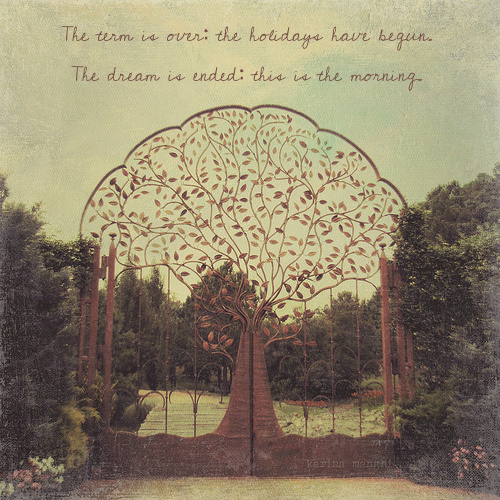
1. The reunion in The Last Battle.
Every bit of it.

The term is over: the holidays have begun. The dream is ended: this is the morning.

heaven

 Random 5 Friday is a weekly meme over at A Rural Journal.

My Favorite Verses

Random 5 Friday is a weekly meme over at A Rural Journal.

Today I’d like to share with you my favorite Scripture verses!

1. “And this is eternal life, that they know you the only true God, and Jesus Christ whom you have sent.” (John 17:3, ESV)
I love how well this defines eternal life: knowing Christ is the ultimate reward!

2.”For freedom Christ has set us free; stand firm therefore, and do not submit again to a yoke of slavery.” (Galatians 5:1, ESV)
This verse reminds me of just how much freedom and joy Christ has won for me.

3. “When my anxious thoughts multiply within me, Your consolations delight my soul.” (Psalm 94:19, NASB)
Love this verse as someone who suffers from an anxiety disorder!

4. “And this is the testimony: God has given us eternal life, and this life is in his Son. 12 Whoever has the Son has life; whoever does not have the Son of God does not have life.” (1 John 5:11-12, NIV)
Spelling it out.

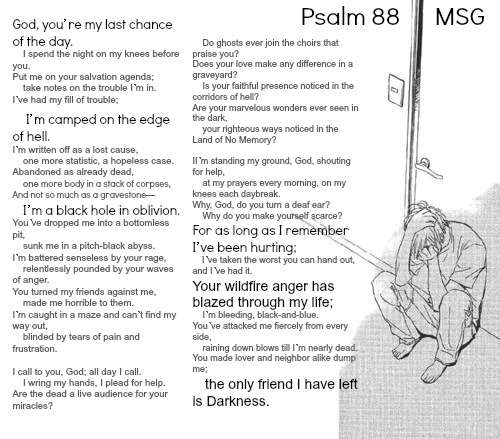
5. Psalm 88, MSG
These verses put my deepest heart sorrows into words.  Even though the psalm is a devastating one, it was good to find myself in the pages of the Word.  I’m glad I don’t feel this same pain anymore!
psalm88