Uncertainty is the Key

uncertainty2

One of my friends has had her obsessions flare up again (she is worried that her brother will die on his spring break trip), and she emailed me for prayer and advice.  I asked her, “Do you want tough love?”

Her response:  “Yes, okay, just hold on a second I have to prepare myself.”
A minute later: “I am ready.  Go.”

I wrote back:

I’m not going to reassure you about this because LIFE IS FULL OF UNCERTAINTY, and we have to learn to live with it.  I’m not saying this to be mean, but the truth of the matter is that he could slip on the Minnesota ice outside and hurt himself that way just as easily as a trip to California.  We DON’T KNOW.  We CAN’T know.  All we can do is make decisions based on the evidence available.  The evidence available suggests he will be fine.  Whether you worry about him or not won’t change anything except for how YOU cope with his spring break.

The best thing that you can do for yourself to keep from spiraling is to repeat to yourself, “I can’t know if he’ll be okay.  He might be.  He might NOT be.  Either way, he knows God, and I have to just live my life with uncertainty.”

want to reassure you.  But that would be just silly—who am I (who is any mere human) to reassure you of something like this?  Our lives ARE like a vapor!  We have no way of knowing.

The evidence available suggests that most healthy young people live till their 70s, so that’s what I’m going to plan for.

***

My friend thanked me for the tough love; I think I’m allowed to dole it out because she knows about how cognitive-behavioral therapy changed my life.  CBT is really just a giant act of tough love, isn’t it?  We’re put through torture so that we can barrel through the hell of daily life with OCD.  I know I am so glad to have gone through it myself, and that is why I am not willing to reassure someone of something we can’t know.

Life is full of uncertainty, and each obsessive-compulsive wants to eliminate it– which is just not possible.  Still, we go to great lengths to attempt this impossible feat.  Really, our rescue is in learning to embrace the uncertainty.

If it boggles your mind a little, that’s okay.  It still does mine too, and I’m a success story!

For those of you with OCD, is it hard for you to receive tough love from people?  For those of you who love an OC, is it hard for you to dole it out?

OCD torture

Through my website, I can see what search terms are bringing people to my blog, and this week, the number one search term was “OCD torture.”  It breaks my heart.  But I can completely understand and relate.

For those who are in the throes of such torture:

Welcome to my blog.  I know what you’re going through– I was there myself, only about 5 years ago.  And the torture was long-lasting for me– nearly 15 years of it.  It’s crazy how we can even bear up, isn’t it?  Sometimes I am amazed that I survived, was able to get through school, was able to keep my job.  Every single day, I hurt so bad.  Every single day, I had this feeling that something was wrong, something was off.  I felt frantic.  The weight of the world was on my shoulders, even from when I was young.  Personally, my OCD attacked my Christian faith and made me doubt my salvation, and that doubt is like pure agony to one who loves Christ.  So many evenings I spent weeping, almost keening, because I couldn’t handle the thoughts and doubts that were inhabiting my brain, burrowing into it as if they’d stay forever.

torture

My OCD attacked whatever was most important to me.  It made me think people were secretly against me, it made me think I shouldn’t tell my problems to my best friend, it made me think it was sinful to write (one of my life’s greatest loves), it made me think I was gay when I clearly was not, it made me think I was a sex offender, it made me think it was wrong to meet new people or to talk to anyone I didn’t know (not helpful when your job is recruiting!).  It made me feel guilty if I brought home a STAPLE from work.  It made me feel guilty and sinful all the time.  And TERRIFIED too.  It wasn’t always just a dull agony.  Quite often it ramped into a shrill, turbulent nightmare.  Overwhelming, engulfing terror would swallow me whole.  And then sometimes, to hide itself, it would make me even doubt that I had OCD (tricky bastard!!).

Notice I say it made me feel this way.  OCD, my disorder, made me feel this way.  The guilt and terror were not from God.  The thoughts and doubts weren’t my own.  They were given to me, like the ugliest of gifts, from my disorder.

I remember reading blog post about the unpardonable sin, thinking that is me.  I am in those shoes, and I will never be out of them. Guess what?  I have been delivered from that ugly hold OCD had on me.  I still have it.  But I’m the boss; it’s not.

How?  Cognitive-behavioral therapy, specifically exposure and response prevention therapy, which I’ve explained on my blog here.  Now, after twelve weeks of CBT, I have been in control of my OCD for the last four years.  It’s like another life.  When I feel guilty now, it’s because I’ve done something wrong.  When I doubt something, I don’t freak out– I seek out advice from family, friends, and the Holy Spirit.  I know my soul belongs to God.  I can look at OCD’s silly suggestions and see that they are ridiculous.  I don’t have to entertain them.  I can toss them aside like I never could before.

And my OCD knows it’s not in control anymore.  To be honest, it doesn’t even fight me as much now that it knows it loses every single time.  It knows I have the tools to toss it out the window, so it keeps pretty quiet around me.

Meanwhile, it is torturing you.  I hate that.  I want you to be free like I am.  It is going to be a rough road, but there is help.  Find a cognitive-behavioral therapist, buckle in, and do whatever you have to do to complete your therapy.  And when you want to quit, you can post a comment on this blog, and I will be your cheerleader.  Skip the traditional talk therapy.  You need someone who knows how to do ERP.

Start today.  It’s time for freedom.

Note for those without health insurance: If you can’t afford to see a cognitive-behavioral therapist, and if you’re ready to take back your life, you can try a self-guided CBT experience with an iPhone app like the one at http://www.liveOCDfree.com or by using a book like “Stop Obsessing!” by Edna Foa or “Freedom from Obsessive-Compulsive Disorder: A Personalized Recovery Program for Living with Uncertainty” by Dr. Jonathan Grayson.

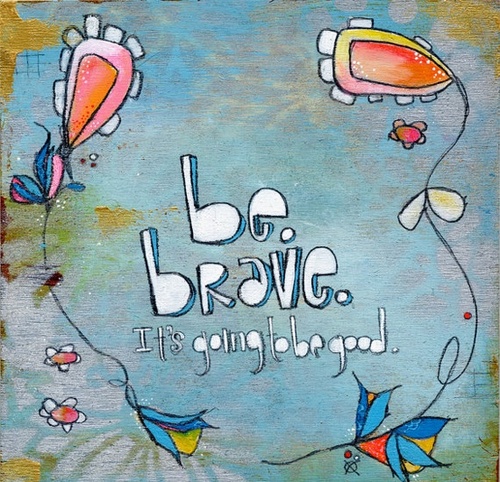
brave

When I think of words to describe myself, brave is not one that comes quickly to mind.  In fact, I think I’m actually kind of a wimp.  A chicken.  I read books about crazy adventures because quite often I’m too scared to tackle them myself.

If I’d have gotten my letter for Hogwarts, I’d so desperately have wanted the Sorting Hat to put me into Gryffindor House.  But, let’s be honest, I’d have probably been in Ravenclaw.  Or Hufflepuff (gasp!).

hufflepuff

Movies scare me … sometimes even when they’re not supposed to be scary.  Change scares me.  Public speaking scares me (although not as much as it used to!).  I’m scared of needles, writing criticism, driving in the snow, and going to parties alone.

But last week I was emailing my friend Kyle about various opportunities in my life, and he wrote to me: “It will be a brave decision to stay, or a brave one to go, and for different reasons. You’re a brave person.”

Really?

But I thought about it more.  I am scared of change … but I am willing to take risks I feel called to take.  I am scared of public speaking … but I force myself to accept opportunities to share with crowds (and have really honed my skills!).  I’m scared of needles, but I get shots.  Of writing criticism, but I invite it, ask for feedback all the time.  Of going places alone, but I suck it up, paste on a smile, and meet new people.

Driving in the snow … yeah, okay, I avoid that and just stay in. 🙂

But even more than all of this, I lived for over fifteen years under the tyranny of obsessive-compulsive disorder, and I stood up to it.  I tackled cognitive-behavioral therapy, which was the hardest thing I have ever had to do, and came out with OCD under my foot instead of the other way around.

Know how I feel?

Brave.

brave

Tips for Interviewing a Therapist for Your OCD

Janet from the ocdtalk blog pointed me to the International OCD Foundation’s website for this list.  I hope it will be helpful for you as you seek appropriate treatment for your OCD.  I can’t stress this enough: OBSESSIVE-COMPULSIVES SHOULD NOT WASTE THEIR TIME ON TALK THERAPY.  YOU NEED COGNITIVE-BEHAVIORAL THERAPY, SPECIFICALLY EXPOSURE AND RESPONSE PREVENTION THERAPY.

“What techniques do you use to treat OCD?”
If the therapist is vague, or does not mention cognitive behavior therapy (CBT) or Exposure and Response Prevention (ERP), use caution.

“Do you use Exposure and Response Prevention to treat OCD?”
Be cautious of therapists who say they use CBT, but won’t be more specific.

“What is your training and background in treating OCD?”
If they say they went to a CBT psychology graduate program or did a post-doctoral fellowship in CBT, it is a good sign. Another positive is if a therapist says they are a member of the International OCD Foundation (IOCDF) or the Association of Behavioral and Cognitive Therapists (ABCT). Also, look for therapists who say they have attended specialized workshops or trainings offered by the IOCDF, like our Behavior Therapy Training Institute (BTTI) or Annual Conference.

“How much of your practice currently involves anxiety disorders?”

“Do you feel that you have been effective in your treatment of OCD?”

“What is your attitude towards medicine in the treatment of OCD?”
If they are negative about medicine, this is a bad sign. Medicine is an effective treatment for OCD.

“Are you willing to leave your office if needed to do behavior therapy?”
It is sometimes necessary to go out of the office to do effective ERP.

looking back … and ahead

2012 was a good year.

In January, I had just aside my OCD manuscript and was 50 pages into writing adult fiction about a woman who was a late discovery adoptee when I read The Fault in Our Stars by John Green.  The book walloped me in the best way possible, inspiring me to drop the LDA story and try my hand at young adult literature.  12 months later, I am head-over-heels in love with writing for this demographic– not to mention deeply in love with the characters in my book.

In February, I posted one of my most frequented links, about how medication is scary.

In March, my friend Ashley encouraged me to get serious about my blogging, and the rest is history.  I started blogging with a lot more frequency after that, trying to refine and define what exactly Lights All Around was about.  In the end, it boils down to three things: faith, creativity, and OCD.

I believe it was in April that I wrote and submitted a post for the Rage Against the Minivan blog, never guessing that it would actually be chosen and posted months and months later.

In May, I left my job in management, moving into my old role as an admission counselor only.  At the time, it was devastating to me, but in the months since, I have come to realize it was a true blessing in disguise.  I had wondered if it might, but it was hard to see past the sadness.

In June, I spent a week tucked away in an apartment above a Wisconsin garage, writing like a maniac and finishing the first draft of Truest.  It was a bad draft, but that’s what first drafts are supposed to be.  At least it was in the computer.

July, I nursed my crush on the Olympian Michael Phelps and posted a mildly scandalous short story about Adam and Eve, one of my most-commented-on posts.

In August, I read The Night Circus by Erin Morgenstern, which, alongside The Fault in Our Stars, was one of the best books I read all year.  (I love that I can measure my months by the words I encountered.)

September marked the end of an era as I ventured to the University of Minnesota Medical Center to meet with my beloved psychiatrist for the final time before he retired.

In October, the International OCD Foundation flew me out to an event of theirs in Boston to read an excerpt from my OCD novel that had won an international creative expression contest.  There, I fell in love with the IOCDF.

November I decided to speak out even louder than usual about cognitive-behavioral therapy, explaining to blog readers what my life was like before and after CBT and also details of what my CBT experience was like.  I got emails from people after this, asking for even more details, even some fellow Minnesotans wondering specifically about my own therapist.

In December, I finished yet another draft of Truest while on an artist retreat I had been selected for.  I am committed to this story.  My writing group has helped and continues to help me SO MUCH with revisions, and I decided to purchase a short mentorship with a Minneapolis editor.

Which brings us to now.  And what’s ahead for me?

I have gotten into the habit of blogging, and I love it.  I will keep speaking loudly about OCD and CBT and ERP.  God has been so good and so faithful to me, and even today, when I was feeling very low, I was still able to be grateful that I have a permanent love in my savior.  I will keep reading as much as I possibly can and review the books here on my blog.  I will keep writing– because I love it, and because I crave it, and because I have to.  I will continue to meet with my brilliant writing group and start my online mentorship next month.

2012 was good.  Here’s to an amazing 2013.

20122013

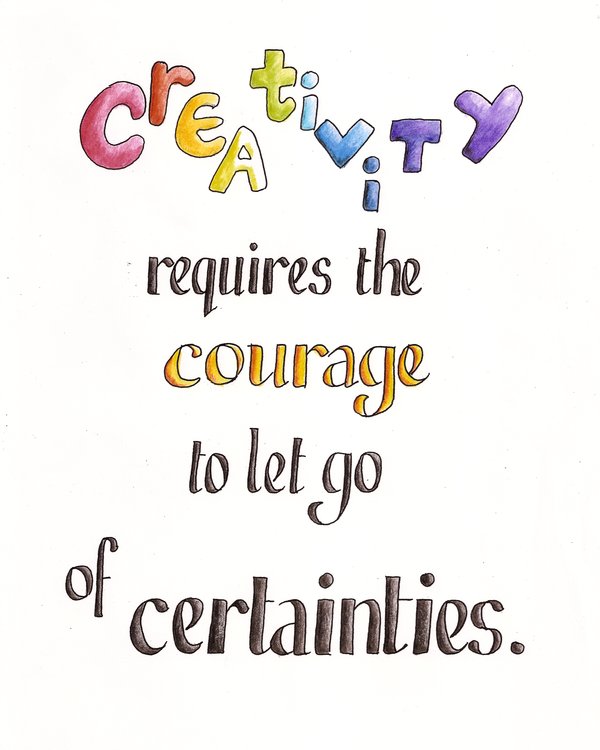
letting go of certainties


I thought this picture was particularly fascinating because you can replace “creativity” with “cognitive-behavioral therapy.”    And those are two of the most important things in my life.

I always thought that certainty was the goal and that doubt was the adversary, but it was just another lie.

What do you think of this quote?

all about CBT

Some people have been asking for more details on cognitive-behavioral therapy, the incredible tool that God used to set me free from obsessive-compulsive disorder.  It is my pleasure to share with you about CBT!  Please note that I am not a mental health professional– but I did have a wildly successful experience with CBT and am a huge advocate.

This is the preferred method of treatment for OCD; specifically, it is called Exposure and Response Prevention (ERP).  Long name, but actually, it is exactly what it says!  The patient is exposed to something that triggers an obsession and then the response (the compulsion) is prevented.  This therapy actually re-wires the brain– the brain physically changes in this therapy– and it helps an OC to live with uncertainty.

CBT either works or doesn’t in 12 weeks.  My psychiatrist, national OCD expert Dr. Suck Won Kim, told me beforehand that it would be worthless to meet with a CBT therapist longer than 12 weeks and that Dr. Chris Donahue wouldn’t ask me to meet any longer than those 12 weeks.  Three months.  You can handle anything for three months, right?

The first couple weeks were most intake.  Dr. Donahue asked lots of questions to help assess what my obsessions and compulsions were, and what triggered the obsessions.  He was basically probing to find what buttons to push later: “How much would that stress you out if you couldn’t do XYZ after ABC happened?” and that sort of thing.  I knew it would all come back to “haunt” me, but I was all in.  This honestly felt like my last hope for a normal, happy life.

I took the YBOCS (Yale-Brown Obsessive-Compulsive Scale) test and found out that I was a moderate case, which surprised me.  But then again, there are some people who can’t leave their homes, can’t touch a loved one, people who wash their hands with Brillo pads and bleach.  

Dr. Donahue outlined the measurable goals of my treatment plan: a fifty-percent reduction in distress when focused on upsetting stimuli and six consecutive weeks of no avoidance or rituals.  Three months was starting to sound like a long, long time.

Then Dr. Donahue and I wrote a story together.  Well, he started it and it was my homework to finish it.  Since my obsessions were primarily focused around hell, we had to do imaginative therapy (since, obviously, there is no way to really, literally expose me to hell).  So I wrote this story about an imagined worst day ever (I mean, really bad– I go to hell in it).  If you’d like me to share with you the story, I will.

My therapist recorded this story (along with his own additions to it) digitally, and I was sent home with an 18-minute recording from the pit of hell.  My job was to listen to it four times a day– two times through, twice a day– every day and record my anxiety levels when prompted.  And I needed to do this consistently until my anxiety levels reduced by 50% from what they were the first time through.  Oh, and I couldn’t perform my compulsions either to make myself feel better.

It. Was. Awful.

I won’t lie to you, listening to that recording– that exposure– was like torture.  It was being triggered left and right and not being allowed to do anything to ease my anxiety.  Doesn’t this sound like some type of cruel and unusual punishment?  It’s what it felt like, and I honestly wanted to quit at about week 8 or 9 when my anxiety levels weren’t dropping.

I hated it.  It made me sick to my stomach, made my heart race, terrified me.  I tried to listen to the recording right away in the morning, in order to get half of my required listenings out of the way early in the day, but eventually, I couldn’t do it that way anymore– the weight of beginning my morning in such misery made it hard to get out of bed, and I had to push it all back later in the day just so that I wouldn’t dread waking up.

But something clicked around week 10 or 11.  Praise. The. Lord.  It clicked, and all of the sudden, I was in the driver’s seat again!  I controlled my OCD and not the other way around.  One day I was listening to the recording– this device of torture and grief– and I thought, This is so annoying.  And then I smiled and thought, Finally.

This, of course, is a brief description of my experience.  I could tell you so many more things– about how hard it was, about what other exposures look like for other kinds of OCs, about the tools Dr. Donahue gave me for success.  It’s all detailed in my fictionalized account of it, my novel Lights All Around, which you can read here.

It was one of the hardest things I have ever had to do– but not as hard as living for 20 OCD-riddled years without help.  I hated to go through CBT, but I loved to have gone through it.  It rescued me and those twelve weeks are a defining period of my life.  I remember being so angry and upset with my therapist, absolutely despising him and the exposures, and feeling certain that I was going to fail at this, my last shot at freedom.  I very nearly quit.

But that moment came right before everything changed.

If OCD is ruining your life, you need to undergo cognitive-behavioral therapy.  It will be hard.  It will be hell.  But it will be worthwhile.

Questions, anyone?

To read a stark account of my life before and after CBT, check out this blog post!

what it was like

B.C.B.T. (Before Cognitive-Behavioral Therapy):

I was in bondage to obsessive-compulsive disorder for over fifteen years; I was depressed, overwhelmed, scared, sad, and I felt guilty all the time. I was terrified of thoughts and wallowed in grief and terror for over a decade.

Doubt and this lingering wrong feeling were the normal for me; it was only for small periods of time (sometimes even seconds) that I felt peace.  I worried about ridiculous things– like that I might cause someone to kill him/herself or that I would sexually abuse a child.  I wondered if Jesus was really Satan and if people were really demons, if everyone was pretending to be my friend just so that it would hurt worse when I found out the “truth.”  I woke up in the morning and felt sick to my stomach within a few seconds.

I worried about hell, about my soul, about whether or not my prayers could reach God.  I wondered if writing fiction was the same as lying and if writing about the hard things in life was displeasing to God.

This niggling feeling of unease was constant– sometimes it was at the back of my mind, lingering there in the background, and sometimes it was at the forefront, screaming at me like a siren that SOMETHING IS WRONG.  Peace was fleeting and momentary, and I had to keep asking after it: do you think this is okay?  Do you think this was wrong?  Do you think I’m going to heaven?  Do you think I should worry about this?

I cried a lot.  Sometimes I fell asleep with quiet tears, and sometimes I would WEEP and KEEN while my roommates could do nothing to comfort me.

It was a cycle of horror: I would obsess and stress about A Particular Issue for two to three weeks, until I had completely exhausted myself in every way, and then it would fade into the background.  But only for awhile.  It or another obsession would attack again in a week or so.

I felt alone and scared and not even the gentle hand of a friend on my back could bring relief.  I felt deep confidence that I was condemned and doubted everything else.  At times, I lost my grip on reality and thought I was really, sincerely losing my mind and would end up in a straightjacket or room with padded walls.

I felt hopeless.

A.C.B.T. (After Cognitive-Behavioral Therapy):

I hated almost every minute of CBT and (at the time) thought my therapist was a BEAST, an unfeeling monster.

But twelve weeks later, I was in charge of my OCD and not the other way around.  I knew that I had been a victim and not a monster.

I am living in freedom, I do not suffer from intense intrusive thoughts nor do I feel the need to perform my compulsions to relieve any anxiety, and the quality of my life has improved SO SO SO much.   I don’t have to confess everything all the time or seek reassurance from my friends.  I don’t doubt the tiny decisions I make each day.  I am okay with uncertainty.

And I know it’s not a cover-up!  I know that CBT didn’t work like a band-aid, covering up my problems and making me blind to them.  It worked like an electrician: it RE-WIRED my brain.  Now I can think like a “normal” person.

I still have bad days, just like everyone else.  Sometimes I am sad, bored, cranky.  I fight with friends and hurt because of it. But it’s all in the normal course of life; I experience these the way that others do.  I begin each day at zero instead of at -1000, handicapped so that I have a million miles to make up before I can even deal with things the way others do.

GLORY TO GOD for leading me to CBT, which has UNLOCKED MY PRISON. I am MYSELF now: joyful, creative, secure in my relationship with Christ, and not living behind a mask. My smile is REAL, and I love my life and my God and myself! I give credit to Jesus Christ for such an incredible rescue. Thank You, Lord, for two years of freedom; I am looking forward to an eternity of it.

Would you like to learn more about CBT?  I am happy to answer any and all of your questions with complete honesty.

joy in sorrow

I grew up hearing that happiness was situational but that joy was not: that joy was this solid rock you stood on, and it never moved, even when everything else around you was crashing down.  I was supposed to feel a deep-seated joy, even when I wasn’t happy.  I knew this.  I tried to make it be true, tried to convince others that it was.

But for much of my life, if you were to strip away all the smiles and masks, I was resting on an uncomfortable bedrock of deep sorrow, bondage, and fear– and oceans below, barely visible, there was a flickering hope.  I smiled often– sometimes it was fake, sometimes it was real.  There were moments of joy, real instances where it flashed so bright that I couldn’t see the ugliness around me.

It’s different now.

I have what I always wanted while growing up, and it is incredible.  Even when I am feeling low, depressed, frustrated with friends or with my writing life, or even deeply saddened, I am grounded like an anchor to JOY.  I have a permanent seat inside it, and from that seat, I can experience the whole wide range of other emotions, but I don’t move from the chair.

I believe that anyone who loves Jesus Christ can have this be true.  In my early life, the problem was that I was convinced by a lie: I believed that my future was not secure in my Savior.  Obsessive-compulsive disorder robbed me of that truth.  Cognitive-behavioral therapy restored it.

What is at your core today?  Are you standing immovable on joy, or something else?  Why is that?


as CBT started to work

On Tuesday, the sky was ominously green as Sophie and I walked through the parking lot and into Target; it a way, it reminded me of the sky the night that Trapper called it quits.  Once we were inside, the tornado siren began to blare, muted by the walls of the store.

Stella and AJ Cook were in the produce section, checking for a fresh cantaloupe.  “Hey,” I said.  “Do you know what’s going on outside?”

“My mom just called,” said Stella.  “She said a tornado’s coming through Fridley.”

“Excuse me,” said a red-and-khaki worker to our quad.  “We’re asking everyone to move to the back of the store, away from any windows, for the next fifteen minutes.  There’s a tornado warning.”

Sophie, Stella, and I looked at each other; AJ looked toward the doors.  “I suppose we’d better listen,” he said.  And so it was decided.

We left our shopping carts by the fruit and headed for the back of the store, choosing an aisle of rugs and runners.  I sat down on the bottom shelf.  Sophie sat beside me, and AJ and Stella sat on the shelf opposite us.  Target employees were milling back and forth, talking into their walkies like police at the scene of a crime.  The atmosphere was dry, ready.  “I hope that everyone in the store tonight sings a song together before this is all over,” I said.  “It just seems right.”  AJ sat with his long legs sprawled into the aisle; Stella, beside him, had her knees pulled up to her chest and her chin resting on them.  “This feels like the perfect setting for a movie,” I said.  I nodded at AJ and Stella.  “You two are the Young Couple in Love.  You know, like in Armageddon or Poseidon.  The young folks so in love when it’s tested by tragedy.”

AJ laughed and dramatically grabbed Stella and shook her.  “You stay with me!” he roared.  “I’m not gonna lose you!”

“Exactly,” I said, laughing with the others.

An attractive male Target worker in thick black-rimmed glasses marched resolutely through our aisle, between our two groups.  I watched him as he walked to the end of the row and turned right.  “Someone should fall in love with a Target employee by the end of the movie,” I said.

“Sophie,” suggested AJ.

I scowled at him.  “Thanks a lot, AJ.”

“Or you,” he said, shrugging with upturned palms.  “Whoever.”

I sighed and leaned my head back against a black shag rug.  “No, it’s okay.  I will play the part of the Frustrated Writer.  The tragedy will be what shakes my character free of writer’s block, and the whole movie will be narrated by me, by what I write in the book.”

“Oooh, I like this!” said AJ.  “I dig!”

“We should probably have a dramatic scene where someone loses a phone call,” said Sophie.  “Stella’s mom calls back, and over the phone, she’ll hear her mom be … lifted away.”

“Yeah,” I said.  “Then Stella will go berserk, screaming all over the place and trying to run out of the doors, but AJ will hold her back.”

“I’ll have to wrestle with her!” he said.  “I’ll have to slap her to get her to focus.  It will all be so gripping.”  He grinned at Stella while she rolled her eyes.

“We’ll call it The Target Zone,” I suggested.  “Target TwisterBullseye Funnel?”

We continued to create an epic tornado-meets-Target screenplay while the muffled siren blared on.  And so we effectively entertained ourselves while danger swirled by outside, passing over our building as if we had blood on the doorposts.  The thought crossed my mind that this sort of thing—this Passover of danger—was becoming my new “normal.”  After only fifteen or twenty minutes, the sirens stopped, and the Target workers let us get back to shopping.  So we returned to our carts by the fruit, said goodbye to Stella and AJ, and eventually left Target.

“No singing, screaming, death, or romance,” I said to Sophie.  “All in all, a boring night.”  We both laughed, and it sounded like tiny bells ringing in the dark.