audience, revisited

I know that I’ve blogged recently about whom I write for, but I was thinking about that more this past weekend, as I was reading Alan Jacobs’s book The Narnian, a biography of C.S. Lewis’s creative life, and I had additional thoughts … or maybe questions.

If they won’t write the kind of books we want to read, we shall have to write them ourselves; but it is very laborious.  C.S. Lewis to J.R.R. Tolkien

Now, I am certainly not saying that there are no books being written that I want to read (hello, I am practically panting for Marchetta’s new book to arrive in the mail!), but this does bring up the question for me of whether it is okay to write for oneself or if it is more noble to write for others.

What I am trying to do right now with Truest is to write the kind of story that I would like to read.  Is that a selfish way to write?  Is that even a smart way to write?  It’s not that I am not taking any criticism … I just keep my list of whom to please in my mind (#1 God, #2 me, #3 John Green).  (Man, it makes me laugh every time I post that list … John Green.  Oh gosh.  I wonder if he will ever know how influencial he has been on the writing of Truest.)

“Better to write for yourself and have no public, than to write for the public and have no self.” —Cyril Connolly

Anyway, blog world, I’d love to hear your thoughts on this.


end of an era

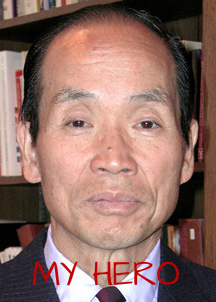
Last week, I ventured to the Fairview Medical Center at the University of Minnesota to see my beloved psychiatrist Dr. Suck Won Kim for the last time before his retirement.  Dr. Kim is a skinny Korean man with salt-and-pepper eyebrows and sharply combed hair.  I met him first in 2008 when, after years of failed prescriptions, my old psychiatrist essentially threw in the towel and referred me to Dr. Kim, a national expert on OCD who has seen over 3,000 OCD patients.

The first time I met with Dr. Kim, he asked me about what meds I had tried.  And when I had told him, he resolutely said, “No more of that.  You are done with that.”  And he started me on Effexor XR, which I am on to this very day.  Dr. Kim spoke with such confidence that I had felt confident.  I remember thinking, I think this might actually work this time.

But Dr. Kim wasn’t done after he wrote out the prescription.  He turned to me and said, “Cognitive-behavioral therapy.  Tell me, have you heard of it?”

I had.  Horror stories.

“It’s the best treatment there is for OCD.  I’d like you to call Chris Donahue and get an appointment.”

“Okay.”

“It will be hell,” said Dr. Kim, telling me what to expect.

And it was– but it set me free from the reign of OCD.  And that is why I was feeling sentimental as I sat in the office of this OCD genius for the last time, feeling cheesy but needing to tell him that he was one of my heroes.

Damned if I do; damned if I don’t.

What happens if you write a book that is too Christian for a secular publisher and too secular for a Christian publisher?

God, I want to write a book that honors You, boldly declares Your Name, is NOT preachy, but is CLEAR on the gospel.  And also is realistic and full of grotesque life.  I feel burdened tonight, but I KNOW that YOU will find a place for it if YOU want to.  I just want to write the book that You want me to write.  Point me to YOUR edits above all others’.  I just want to please everyone, and I need to QUIT THAT.  I need to return to my list.  #1 You, #2 me, #3 JG.  Remind me of this list.  This is the list I should have in the back of my mind as I make edits, as I rewrite.
God, I feel emotionally drained by West and Silas and Laurel.  But it feels GOOD, in a way.  Good, if I can point to You in dark times.  Why would I want to write a story that didn’t point to You?  Please help me, Jesus.  Will You please make the road rise up before me?
I love You.  I need Your help in EVERYTHING.  Amen.
And so I am just trying to write the very best book I can and to trust God to divinely intervene all he wants. 

manic writer

I had lunch with my friend Brittane this week.  Brittane is tall and gorgeous and insightful and full of God’s strength.  She has her degree in psychology, and she has this perfect way of asking questions so that you almost feel like you’re getting free therapy while you hang out with her.  She’s a delight.

I was telling Brittane about the rollercoaster I can’t seem to get off … the high highs, the low lows, the sudden switches.  “I don’t mean to be blaise about this, since I hate when people are like, ‘I’m so OCD,’ but sometimes I wonder if I am manic depressive.”

Brittane, in her perfect way, nodded, listened, asked questions, offered insight until we stumbled upon one important fact: these days, my rollercoaster is only about my writing life.  Since my writing life is SO important to me, I wasn’t seeing the forest for the trees.  It felt important, like a hand-hold.  “Maybe it’s just what the writing life is like,” I said.  “It’s just a continual up-and-down.”

If it is, I’m on the rollercoaster for good.

Back in the office that afternoon, I read a quote on Donald Miller’s blog that fit so perfectly with our conversation.  It read:

To write is to struggle with your sanity, at times. And there will be bad days and you will feel defeated. This work is more difficult than climbing a mountain because you are doing it in the dark. I want to urge you to keep going. You matter and your words matter. By writing, you are saying to God I agree with you, you gave me a voice and the gift was not in vain. By writing, you are showing up on the stage of life rather than sitting in the comfortable theater seats (there is a time for both) and are casting your voice out toward an audience who is looking for a character to identify with, somebody to guide them through their own loneliness, no matter how transparent or hidden that loneliness is.

It was just what I needed to hear in that moment.  I will continue to write, to ride this rollercoaster, because I agree with God, that he gave me a voice and the gift was not in vain.


writer’s envy

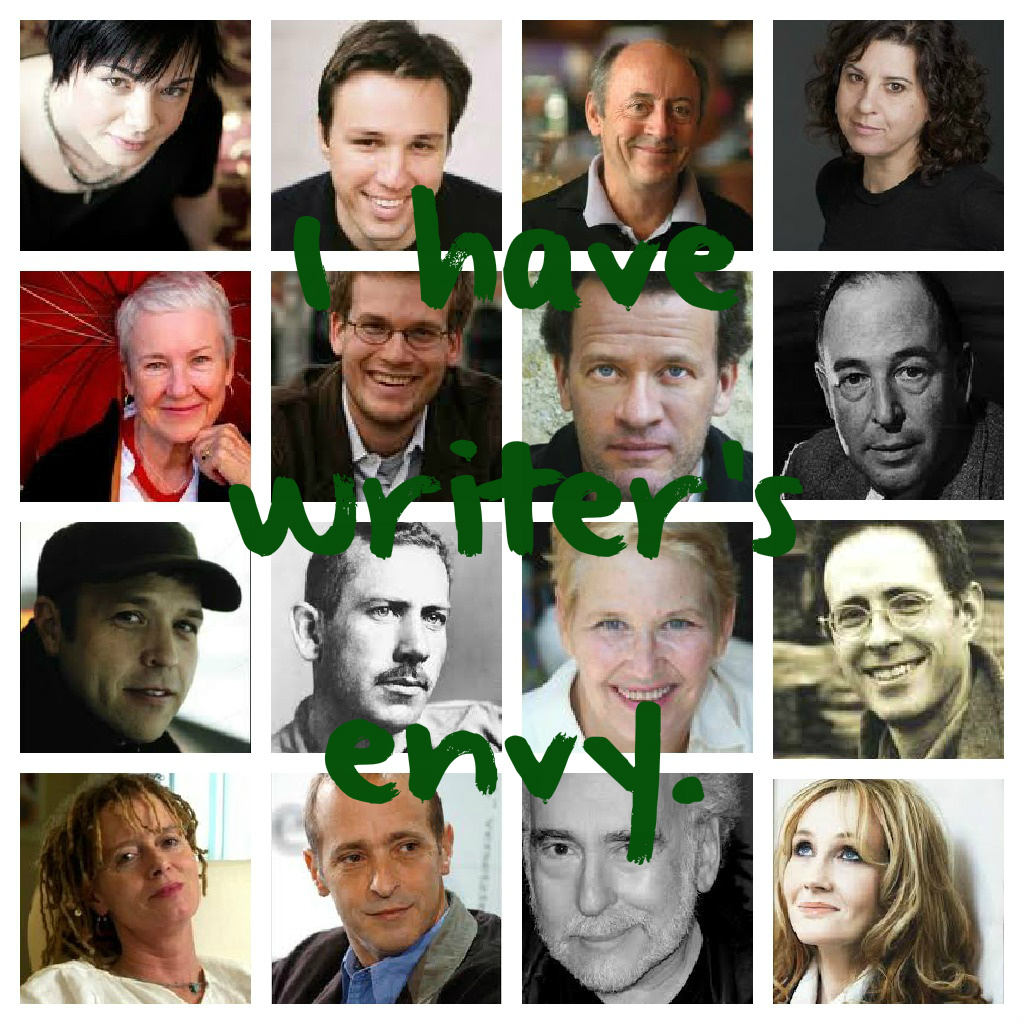
I have it pretty bad.  It’s the dichotomy of being a writer who reads great literature– it is feeding your work but also fueling your envy and self-loathing.

At least, this is true for me.

So, my question is how do you turn envy into motivation?

Bonus points: how many of these (my favorite writers) can you identify?

whom I write for

Who is your audience? is a question every writer faces in the midst of creative work.  For me, the question has kind of morphed into For whom am I writing this?  In other words (for me), Whom do I most want to please with this work?

It’s different answers for different things.  For example, with Lights All Around, my first novel, the answer was

1) God.
2) Other obsessive-compulsives.
3) My writing community.
4) Myself.

With my second novel, Truest, I have found the answer to be

1) God.
2) Myself.
3) John Green.

I hadn’t really thought through this much until the other day at work when I was talking to some coworkers about how desperately I wanted John Green to like the story I was writing.  Am I crazy?  Maybe.

How about you, writing friends?  What does your list look like?  Does it change from project to project?

A Night to Believe 2012, Part One

I am so excited to announce that I will be reading an excerpt from my novel, Lights All Around, at “A Night to Believe” next month, culminating OCD Awareness Week!  I emailed today with Michael from the International OCD Foundation, and they are purchasing my flight to Boston and two nights in the Sheraton.  I am beyond thrilled to attend and SO excited to share part of my story with the OCD community.

Thank you to everyone who voted for my submission!  I will update again after the event … which I am nervous about (a little) … reading the excerpt will be an exposure in and of itself.  Nothing like ERPT right in front of a crowd, eh?  🙂  I think I am up to it.

Is anyone else from the blogosphere going to be at this event?  I’d love to meet you, if so!

11 years ago … my memories of 9/11

My second year of college, I lived in a suite with seven other girls whom I laughed with and fought with and loved.  That Tuesday morning, one of my quadmates Tracy and I had a class together, and I was getting annoyed because she was dawdling because she didn’t feel well and was probably going to make me late.

Another quadmate Megan, pre-med, had an early lab that morning and returned to our place, breathless as she reached for the remote.  She clicked on the news, saying, “A plane crashed into the World Trade Center!”

My first image was of some podunk, rogue new pilot who had accidentally somehow managed to bump into the building.

But the people on the news seemed serious, and Tracy sat down on the couch next to Megs to watch.  “We need to go,” I told her.

She waved me off, still watching the screen.  “I’m not going to go.  You can leave.”

I stomped off to Nazareth Hall, upset and annoyed that I would be late now without a partner in crime.  When I got to the fourth floor, someone in my class had turned on the TV in the room, and now the news was reporting on the crash at the Pentagon.  Everyone was transfixed.  I clearly remember thinking, Is this the end of the world?

Our teacher made us turn off the TV.  I don’t think anyone quite realized yet that this would be one of our nation’s biggest tragedies.  We talked in class about leadership.  I don’t remember anything specific about it.

At Northwestern College, we had chapel every morning at 10:30 am (CST).  As the student body was making its way to Maranatha Auditorium from all areas of campus, everyone was buzzing about the news.  I was in the Totino stairwell talking animatedly about the towers being hit when John, a friend from freshman year, said, “I think the bigger deal is that it has collapsed.”

Wait, what?

I remember being in complete shock– how could a small plane collapse a skyscraper?  It wasn’t until a week or so later when I saw in a magazine an illustrated cross-section of the tower with an overlaid plane, as if seen from above.  Then it made more sense.

In chapel, they had a live news feed playing over the giant screen above the stage.  The student body watched, cried, prayed.  They let the feed play all day, and students came in and out to watch and pray.

I was shell-shocked, since my sister Kristin and my dad had been in New York City only two weeks earlier.  They had pictures of themselves from the roof of the WTC.  Even though I knew they were safe and in Minnesota, I kept picturing them on top of that building, knowing that someone else’s sister and dad had to be in the building that day, my heart breaking for them and so relieved that my family had escaped tragedy by fewer than 14 days.

Everyone at my (rather Calvinistic) school kept saying, “This did not surprise God; this did not surprise God,” and I knew that Northwestern was the very best place for me to sort through the tragedy.  It was incredible to grieve with a community that both loved and trusted God’s sovereignty in spite of the destruction and sadness.

What a day.  Sometimes it is hard to believe that it has been over a decade since then.  Sometimes it feels like it’s been even longer.  My dad says he always remembers what he was doing when he found out JFK was shot.  I suppose this is my generation’s event.  It makes me sad even to write about it today, all these years later.

One thing I know: September 11, 2001, did not surprise my good and perfect God.  I continue to trust Him.

a poem I wrote

I wrote this back in college, but I was thinking of it recently when I was up north at my summer camp.  The poem is about a boy with whom I shared one wonderful week– and after that, things fell apart.  In college, this was my assessment of the situation (which, for the record, took like three years to heal from.  One week, then three years.  Boys.)

Invitation

It appears to be about the temperature,
the way your body reacts to the sun,
how you kissed my hand and left.

You sang raw songs aloud, white flags
you spited for the sake of the sun,
a clumsy surrender to the afternoons,

later blaming the northern countryside for
the way it slows your blood,
allowing more time to warm.

And so you dressed your hurts in city shade,
where haste is the liquor to rinse your mind
of that summer and the way your hands were soft.

I left St. Paul and welcomed the day’s damage
because of the lessons that leak into open sores.
I make the most of my summer wounds.

But I want you to know—I would have helped you adjust:
dark faces shadowed by a background of pines,
only the moon with no warmth of its own.

Remember, dear, the northern nights are cold.