all about CBT

Some people have been asking for more details on cognitive-behavioral therapy, the incredible tool that God used to set me free from obsessive-compulsive disorder.  It is my pleasure to share with you about CBT!  Please note that I am not a mental health professional– but I did have a wildly successful experience with CBT and am a huge advocate.

This is the preferred method of treatment for OCD; specifically, it is called Exposure and Response Prevention (ERP).  Long name, but actually, it is exactly what it says!  The patient is exposed to something that triggers an obsession and then the response (the compulsion) is prevented.  This therapy actually re-wires the brain– the brain physically changes in this therapy– and it helps an OC to live with uncertainty.

CBT either works or doesn’t in 12 weeks.  My psychiatrist, national OCD expert Dr. Suck Won Kim, told me beforehand that it would be worthless to meet with a CBT therapist longer than 12 weeks and that Dr. Chris Donahue wouldn’t ask me to meet any longer than those 12 weeks.  Three months.  You can handle anything for three months, right?

The first couple weeks were most intake.  Dr. Donahue asked lots of questions to help assess what my obsessions and compulsions were, and what triggered the obsessions.  He was basically probing to find what buttons to push later: “How much would that stress you out if you couldn’t do XYZ after ABC happened?” and that sort of thing.  I knew it would all come back to “haunt” me, but I was all in.  This honestly felt like my last hope for a normal, happy life.

I took the YBOCS (Yale-Brown Obsessive-Compulsive Scale) test and found out that I was a moderate case, which surprised me.  But then again, there are some people who can’t leave their homes, can’t touch a loved one, people who wash their hands with Brillo pads and bleach.  

Dr. Donahue outlined the measurable goals of my treatment plan: a fifty-percent reduction in distress when focused on upsetting stimuli and six consecutive weeks of no avoidance or rituals.  Three months was starting to sound like a long, long time.

Then Dr. Donahue and I wrote a story together.  Well, he started it and it was my homework to finish it.  Since my obsessions were primarily focused around hell, we had to do imaginative therapy (since, obviously, there is no way to really, literally expose me to hell).  So I wrote this story about an imagined worst day ever (I mean, really bad– I go to hell in it).  If you’d like me to share with you the story, I will.

My therapist recorded this story (along with his own additions to it) digitally, and I was sent home with an 18-minute recording from the pit of hell.  My job was to listen to it four times a day– two times through, twice a day– every day and record my anxiety levels when prompted.  And I needed to do this consistently until my anxiety levels reduced by 50% from what they were the first time through.  Oh, and I couldn’t perform my compulsions either to make myself feel better.

It. Was. Awful.

I won’t lie to you, listening to that recording– that exposure– was like torture.  It was being triggered left and right and not being allowed to do anything to ease my anxiety.  Doesn’t this sound like some type of cruel and unusual punishment?  It’s what it felt like, and I honestly wanted to quit at about week 8 or 9 when my anxiety levels weren’t dropping.

I hated it.  It made me sick to my stomach, made my heart race, terrified me.  I tried to listen to the recording right away in the morning, in order to get half of my required listenings out of the way early in the day, but eventually, I couldn’t do it that way anymore– the weight of beginning my morning in such misery made it hard to get out of bed, and I had to push it all back later in the day just so that I wouldn’t dread waking up.

But something clicked around week 10 or 11.  Praise. The. Lord.  It clicked, and all of the sudden, I was in the driver’s seat again!  I controlled my OCD and not the other way around.  One day I was listening to the recording– this device of torture and grief– and I thought, This is so annoying.  And then I smiled and thought, Finally.

This, of course, is a brief description of my experience.  I could tell you so many more things– about how hard it was, about what other exposures look like for other kinds of OCs, about the tools Dr. Donahue gave me for success.  It’s all detailed in my fictionalized account of it, my novel Lights All Around, which you can read here.

It was one of the hardest things I have ever had to do– but not as hard as living for 20 OCD-riddled years without help.  I hated to go through CBT, but I loved to have gone through it.  It rescued me and those twelve weeks are a defining period of my life.  I remember being so angry and upset with my therapist, absolutely despising him and the exposures, and feeling certain that I was going to fail at this, my last shot at freedom.  I very nearly quit.

But that moment came right before everything changed.

If OCD is ruining your life, you need to undergo cognitive-behavioral therapy.  It will be hard.  It will be hell.  But it will be worthwhile.

Questions, anyone?

To read a stark account of my life before and after CBT, check out this blog post!

as CBT started to work

On Tuesday, the sky was ominously green as Sophie and I walked through the parking lot and into Target; it a way, it reminded me of the sky the night that Trapper called it quits.  Once we were inside, the tornado siren began to blare, muted by the walls of the store.

Stella and AJ Cook were in the produce section, checking for a fresh cantaloupe.  “Hey,” I said.  “Do you know what’s going on outside?”

“My mom just called,” said Stella.  “She said a tornado’s coming through Fridley.”

“Excuse me,” said a red-and-khaki worker to our quad.  “We’re asking everyone to move to the back of the store, away from any windows, for the next fifteen minutes.  There’s a tornado warning.”

Sophie, Stella, and I looked at each other; AJ looked toward the doors.  “I suppose we’d better listen,” he said.  And so it was decided.

We left our shopping carts by the fruit and headed for the back of the store, choosing an aisle of rugs and runners.  I sat down on the bottom shelf.  Sophie sat beside me, and AJ and Stella sat on the shelf opposite us.  Target employees were milling back and forth, talking into their walkies like police at the scene of a crime.  The atmosphere was dry, ready.  “I hope that everyone in the store tonight sings a song together before this is all over,” I said.  “It just seems right.”  AJ sat with his long legs sprawled into the aisle; Stella, beside him, had her knees pulled up to her chest and her chin resting on them.  “This feels like the perfect setting for a movie,” I said.  I nodded at AJ and Stella.  “You two are the Young Couple in Love.  You know, like in Armageddon or Poseidon.  The young folks so in love when it’s tested by tragedy.”

AJ laughed and dramatically grabbed Stella and shook her.  “You stay with me!” he roared.  “I’m not gonna lose you!”

“Exactly,” I said, laughing with the others.

An attractive male Target worker in thick black-rimmed glasses marched resolutely through our aisle, between our two groups.  I watched him as he walked to the end of the row and turned right.  “Someone should fall in love with a Target employee by the end of the movie,” I said.

“Sophie,” suggested AJ.

I scowled at him.  “Thanks a lot, AJ.”

“Or you,” he said, shrugging with upturned palms.  “Whoever.”

I sighed and leaned my head back against a black shag rug.  “No, it’s okay.  I will play the part of the Frustrated Writer.  The tragedy will be what shakes my character free of writer’s block, and the whole movie will be narrated by me, by what I write in the book.”

“Oooh, I like this!” said AJ.  “I dig!”

“We should probably have a dramatic scene where someone loses a phone call,” said Sophie.  “Stella’s mom calls back, and over the phone, she’ll hear her mom be … lifted away.”

“Yeah,” I said.  “Then Stella will go berserk, screaming all over the place and trying to run out of the doors, but AJ will hold her back.”

“I’ll have to wrestle with her!” he said.  “I’ll have to slap her to get her to focus.  It will all be so gripping.”  He grinned at Stella while she rolled her eyes.

“We’ll call it The Target Zone,” I suggested.  “Target TwisterBullseye Funnel?”

We continued to create an epic tornado-meets-Target screenplay while the muffled siren blared on.  And so we effectively entertained ourselves while danger swirled by outside, passing over our building as if we had blood on the doorposts.  The thought crossed my mind that this sort of thing—this Passover of danger—was becoming my new “normal.”  After only fifteen or twenty minutes, the sirens stopped, and the Target workers let us get back to shopping.  So we returned to our carts by the fruit, said goodbye to Stella and AJ, and eventually left Target.

“No singing, screaming, death, or romance,” I said to Sophie.  “All in all, a boring night.”  We both laughed, and it sounded like tiny bells ringing in the dark.

the Sons of Korah get it

To me, there are two places in scripture that embody the depression and hopelessness inspired by OCD.

The first is in Luke 23:48-29, which takes place immediately after Jesus has died: “And all the crowds that had assembled for this spectacle, when they saw what had taken place, returned home beating their breasts. And all his acquaintances and the women who had followed him from Galilee stood at a distance watching these things.”  This one is more implied than overt, of course, but I can clearly imagine the deadness in the hearts of his friends as they watched their great hope dangle dead on a cursed tree.

The second is Psalm 88.  I’m drawn toward the Message version, and I used to sob as I read these words, feeling their truth weigh on my heart like the worst kind of pain and loneliness that existed.

God, you’re my last chance of the day.
I spend the night on my knees before you.
Put me on your salvation agenda;
take notes on the trouble I’m in.
I’ve had my fill of trouble;
    I’m camped on the edge of hell.
I’m written off as a lost cause,
one more statistic, a hopeless case.
Abandoned as already dead,
one more body in a stack of corpses,
And not so much as a gravestone—
I’m a black hole in oblivion.
You’ve dropped me into a bottomless pit,
    sunk me in a pitch-black abyss.
I’m battered senseless by your rage,
relentlessly pounded by your waves of anger.
You turned my friends against me,
made me horrible to them.
I’m caught in a maze and can’t find my way out,
    blinded by tears of pain and frustration.

I call to you, God; all day I call.
    I wring my hands, I plead for help.
Are the dead a live audience for your miracles?
Do ghosts ever join the choirs that praise you?
Does your love make any difference in a graveyard?
Is your faithful presence noticed in the corridors of hell?
Are your marvelous wonders ever seen in the dark,
your righteous ways noticed in the Land of No Memory?

I’m standing my ground, God, shouting for help,
at my prayers every morning, on my knees each daybreak.
Why, God, do you turn a deaf ear?
Why do you make yourself scarce?
For as long as I remember I’ve been hurting;
    I’ve taken the worst you can hand out, and I’ve had it.
Your wildfire anger has blazed through my life;
    I’m bleeding, black-and-blue.
You’ve attacked me fiercely from every side,
    raining down blows till I’m nearly dead.
You made lover and neighbor alike dump me;
    the only friend I have left is Darkness.

I praise God that he faithfully saw me through the very worst throes of OCD, and I believe that he will see me through whatever else lies ahead.  But I have known deep depression, darkness so intense that I could see no escape, terror that ignited my heart with a wild fury.  And he has seen me through it all.

There is hope.  Even though those friends couldn’t imagine it in their wildest dreams as they stared at that lifeless body stapled to the cross, the resurrection was just around the corner.

deviant ART
Depression_by_ironcpu

OCD shared experiences

Last Wednesday, I was interviewed about my OCD in front of a group of around 100 students at the college where I work.  It was such a blessing to be able to share with them.  We talked about wanting to keep OCD a secret, about how OCD affected my relationships, about cognitive-behavioral therapy, about how long it took for me to find relief.

Afterward, I had a small group of students who hung around to ask questions and to connect with me.  One girl was crying, telling me her older sister had OCD and she hoped that her sister could “come as far” as I had.  Another told me that she had never had the chance to meet someone who struggled the same way as she did.  Another asked some great, probing questions about CBT.  Two days later, I had a mom email me and tell me that her daughter had come to my chapel talk and told her how great it was to hear from someone else who’d been diagnosed with scrupolosity.  I’ve scheduled or am scheduling several coffee dates with these newfound obsessive-compulsive friends.

The mom wrote:
I could tell it meant a lot to her the other night to hear that someone she knows, and is successful and enjoying her career, and has remained faithful amidst all the doubts scrupulosity brings is living an abundant life.  You are the first person she’s met that truly struggles as she does; someone who understands better than any councelor or psychologist or psychiatrist  OR MOM WHO HAD READ EVERY BOOK SHE CAN GET HER HANDS ON TO HELP HER DAUGHTER.

It’s sad, but it’s also true.  No one really gets an obsessive-compulsive like another obsessive-compulsive.  I am so grateful for every opportunity I have to connect with someone else who GETS IT.  We haved lived a nightmare together– while others only hear about it second-hand.  OCs truly share a unique experience of pain, struggle, and attack.

I hope that these new OCs I’ve connected with will also one day share my story of victory.  Please Jesus.

uncertainty

I spent last weekend with my incredible friend Cindy, whom I know from Northwestern.  Cindy went to law school at Georgetown and now lives and works in Washington, DC, and she was kind enough to take the Amtrak to Boston to spend the weekend with me.  So, so good.

We did lots of fun stuff, but to be honest, some of the best parts of the weekend were just all the wonderful conversations.  You have to understand that Cindy is 100% brilliant, and you can talk to her about absolutely anything, and she has all this valuable insight.  One night, we ate a late dinner at the Cactus Club (where, btw, I had the most incredible chicken and avocado quesadillas), and we got to talking about Rene Descartes (since I had begun his book Meditations on the flight out to Boston and because he is playing quite a significant role in my YA book) and about his dream argument and the way he was establishing universal doubt.  It led to a great conversation on uncertainty and how healthy it actually is (in fact, it was the key to my therapy!).

Cindy and I talked about how certain statements and discussions used to jar us in regard to faith, but how as we got older, we both reached a point where we decided, “Look, I am committed to this Christianity thing.  I think it is true, even though I can’t really know that.  But I’m not going to be swayed by every new scientist and fact and detail and argument that arises.  I’ve made a choice and I’m sticking with Christ regardless.”

I’d like to hear what you think about this.  My assumption is that different ages will have different reactions.

Not to go all Narnia-nerd on you (but let’s be honest, I can’t always help it), but I told Cindy it reminded me a lot of Puddleglum the Marshwiggle in The Silver Chair.  Are you familiar?  Let me set the scene for you.

Puddleglum and friends are in the Underworld, and the evil Queen of Underworld is strumming her magical guitar and has tossed some sweet-smelling something-or-another into the fire, and the marshwiggle and his friends are falling under her spell as she tries to convince them that there is no Overworld.

“But we’ve seen the sun!” they argue.  The queen asks what a sun is, and they describe it as very large, very bright lamp.

“You’ve seen my lamp,” she contradicts, “and so you imagine a bigger and better one and call it a sun.”  The same argument is repeated when they bring up Aslan.  “You’ve seen a cat,” she said, “and you imagine a bigger and better one and call it a lion.”

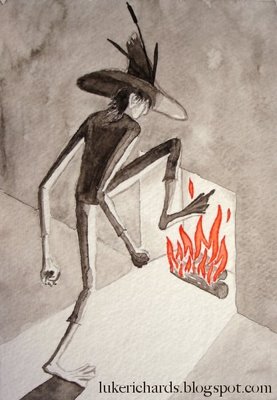
But Puddleglum puts his foot into the fire, shocking him into clarity, and he essentially says, “It’s sad that if you’re right, we’ve still managed to make a play, fake world that licks your real world hollow.”  Then he goes on to say, “I’m going to live like a Narnian, even if there isn’t any Narnia.  I’m going to serve Aslan, even if there isn’t any Aslan.”

Cindy and I feel the same way about Christianity.  Now, don’t get me wrong: I believe Christianity is real, and I believe Christ is real and is alive today and is working in my life.  But I will allow for doubt.  Uncertainty in certain dosages can be very healthy, and I have made a choice to serve Jesus Christ, no matter what.

Thoughts?


A Night to Believe 2012, Part Two

I am writing this post from the Starbucks located in the lobby of the Boston Sheraton Hotel, having had an incredible weekend.  My friend Cindy joined me in Boston, and I was sooooo blessed by her company; together, we explored Boston and Cambridge, including adventures like eating White Trash cheese dip at Bukowski Tavern, incredible treats at Georgetown Cupcake, and my first experience on the subway!

But Saturday night was certainly the highlight.  First of all, the International OCD Foundation has incredible staff members, and they made this whole experience so simple for me– booking my flight and hotel, picking me up from the airport (someone was there with a “J. Sommers” sign!!), and giving me plenty of time to explore the city.  Jeff Bell, spokesperson for the foundation and founder of the Adversity 2 Advocacy Alliance, was the emcee of the event, and he sat down with me on Saturday morning and asked fascinating questions about my OCD and my writing, putting me totally at ease about the on-stage interview that would come that evening.

The event began with a cocktail hour, and then the award ceremony began.  Jeff Bell is an absolute all-star, and he discussed the theme of OCD awareness week, which was “Dare to believe … together we can beat OCD,” hitting hard on the DARE, the BELIEVE, and the TOGETHER.  I cannot tell you how impressed I was with this man– I can’t wait to learn more about his A2A Alliance.  He has also written a book, which I’d like to read and review on this site soon.

After that, I was the first to share.  I read an excerpt of my novel, and people laughed in all the right places.  It was an incredible audience, a vocal one, so you knew when they were totally jiving with you.  Love that.  Then Jeff interviewed me on the stage about my experiences.  The only question he asked me that I didn’t expect was “Do you ever worry that people will think your fictional story is actually your true story?” and I said, “No, I don’t worry about that because I’m not ashamed of my OCD.  Neely has a lot of the same experiences as I’ve had … except she has a much better love life,” which made the audience laugh.  We also talked about cognitive-behavioral therapy and about how it is simultaneously horrible/incredible and how someone will know he/she is ready for it “when the hell you’re in becomes worse than the hell you’ll have to go through.”  It’s true.

Next up was Jenn Cullen from Washington, DC, who wrote a children’s story called Ranger Ben Discovers the Mysterious Mr. OCD, this wonderful story to help children with OCD feel empowered to tackle their disorder.  She wrote it for her son Ben, who was diagnosed with OCD at age 5.  He is 13 now, and he joined her on the stage.  Very, very cool.

Then we watched a film trailer for Englander Claire Watkinson’s in-process documentary called Living with Me and My OCD.  Claire is so talented, and I am so excited to follow the progress of her documentary!

Vincent Christoffersen from New Zealand finished off the evening with his song called “Till I’m Down,” which I completely adored.  Vincent is 21, looks 15, and has the maturity of a 30-year-old.  He had wonderful stage presence and everyone LOVED him!

They also presented an IOCDF Hero Award to Denis Asselin of Walking with Nathaniel.  Denis’s son Nathaniel suffered from intense body dysmorphic disorder, on the OCD spectrum, and took his own life in 2011.  Denis made a 500-mile pilgrimage from Cheyney, PA, to Boston, MA, for BDD awareness and research.  It took everything in me not to weep as he spoke.

Afterward I met him and was very impressed by his humility.  I also met Michael Jenike, professor of psychiatry at Harvard Medical School (by the way, I just looked him up, and his CV is 92 pages long!  Intense!), and a slew of people who thanked me for my story.  It was a wonderful, well-planned event, and I enjoyed being in a group of OCs and awareness advocates, and it only made me want to do MORE.  I want to just scream from the rooftops about CBT, and I want to help the general public to understand more about OCD (unfortunately, it still believes primarily that OCs are just “neat freaks”).

This whole Boston trip was an incredible adventure, and I want to thank everyone who voted for me in the creative expression contest.  I loved-loved-LOVED this entire experience, and I am so grateful to you for making it possible for me.

On a sidenote, I really want to go to the IOCDF annual conference in Atlanta when it rolls around next year … anyone want to join me??? 🙂

dare to take off your mask

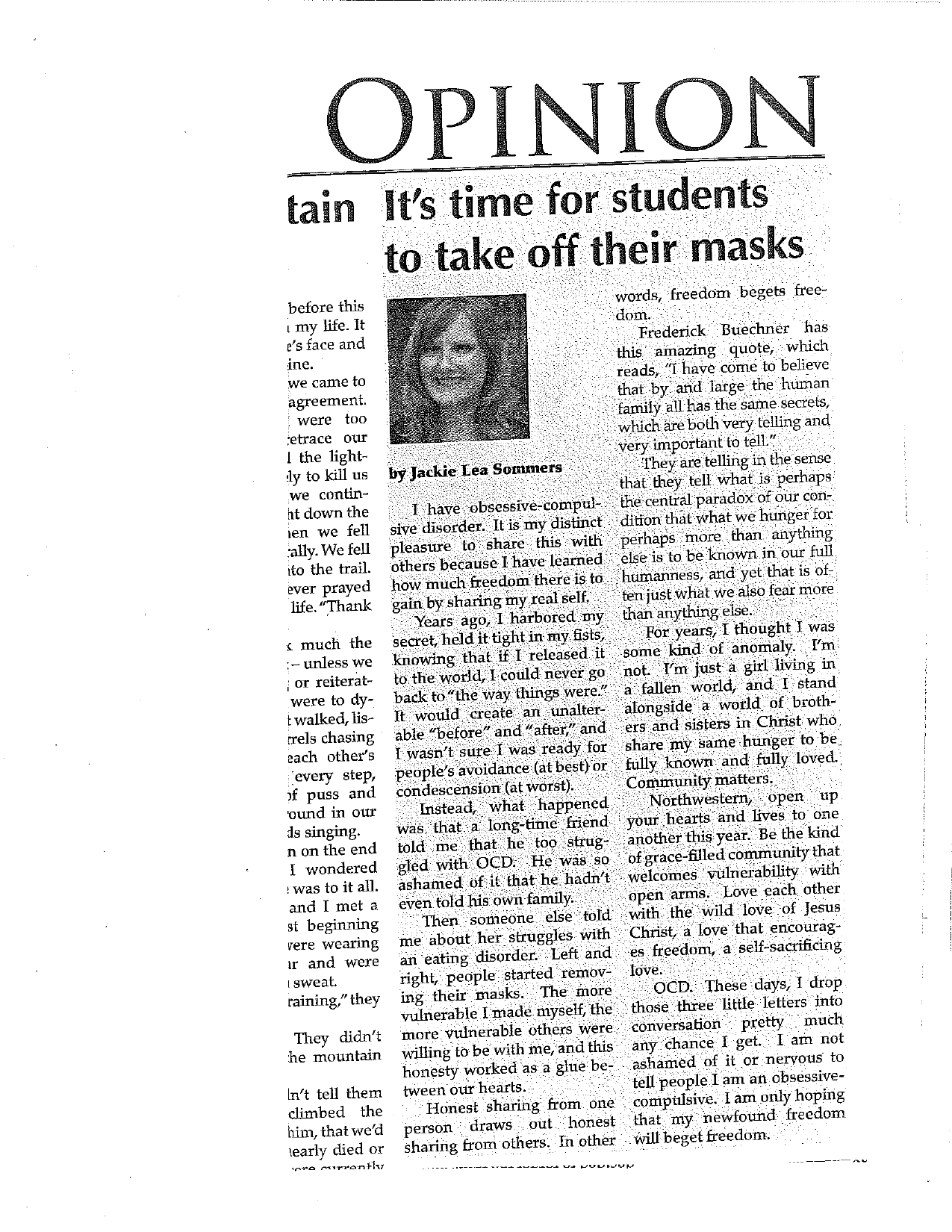
Here is an article I recently wrote for the student newspaper at the university where I work …

I have obsessive-compulsive disorder.

It is my distinct pleasure to share this with others because I have learned how much freedom there is to gain by sharing my real self.

Years ago, I harbored my secret, held it tight in my fists, knowing that if I released it to the world, I could never go back to “the way things were.”  It would create an unalterable “before” and “after,” and I wasn’t sure I was ready for people’s avoidance (at best) or condescension (at worst).

Instead, what happened was that a long-time friend told me that he too struggled with OCD.  He was so ashamed of it that he hadn’t even told his own family.  Then someone else told me about her struggles with an eating disorder.  Left and right, people started removing their masks.  The more vulnerable I made myself, the more vulnerable others were willing to be with me, and this honesty worked as a glue between our hearts.

Honest sharing from one person draws out honest sharing from others.  In other words, freedom begets freedom.

Frederick Buechner has this amazing quote, which reads, I have come to believe that by and large the human family all has the same secrets, which are both very telling and very important to tell.  They are telling in the sense that they tell what is perhaps the central paradox of our condition—that what we hunger for perhaps more than anything else is to be known in our full humanness, and yet that is often just what we also fear more than anything else.”

For years, I thought I was some kind of anomaly.  I’m not.  I’m just a girl living in a fallen world, and I stand alongside a world of brothers and sisters in Christ who share my same hunger to be fully known and fully loved.

Community matters.  Northwestern, open up your hearts and lives to one another this year.  These early weeks of the semester are exciting ones; I am thrilled when I think of all the possibilities and opportunities stretching out before the student body this year.  Be the kind of grace-filled community that welcomes vulnerability with open arms.  Love each other with the wild love of Jesus Christ, a love that encourages freedom, a self-sacrificing love.

OCD.  These days, I drop those three little letters into conversation pretty much any chance I get.  I am not ashamed of it or nervous to tell people I am an obsessive-compulsive.  I am only hoping that my newfound freedom will beget freedom.

OCD Awareness Week

This is OCD Awareness Week.  It is my great hope that this blog is chipping away at the misunderstandings about obsessive-compulsive disorder.  These are truths I know:

* OCD is a thief.
*
Obsessive-compulsives are not alone or crazy.
* Although there is currently no known cure for OCD, there is an incredibly effective treatment for it– and tools that keep it well in-check!
* The general public still doesn’t understand OCD, which is much more than just being a “neat freak.”
* Obsessive-compulsives are some of the bravest and most compassionate people I know.

Care to add some truths?  Leave a comment!

hearing your story on someone else’s lips

The week after OCD Awareness Week, I am going to be a part of a breakout chapel service at the university where I work.  (I am employed by Northwestern College, the most wonderful Christian college in the world … as an alumnus, I’m a little biased.  Ha!)  I am going to be interviewed by one of the campus therapists, and I am just so eager to tell my story.

I think one of the most helpful things for OCs is to hear their own story on someone else’s lips.

It makes us feel less alone.

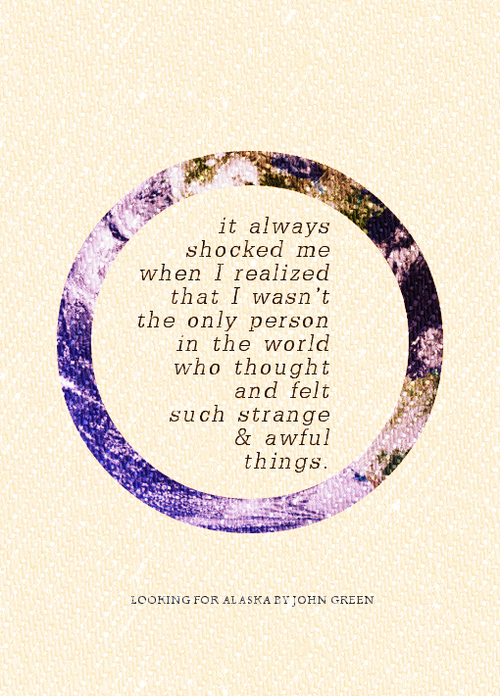
I remember my first conversation with another obsessive-compulsive.  I was sitting on a dock underneath a sky of summer stars, and as we talked, it was like shrugging off a giant sheath that had separated me from everyone else.  I was not alone; this person had the same experiences.

And when I read Kissing Doorknobs by Terri Spencer Hesser, it was like reading my own biography.  It stole power from OCD, just reading that, because it showed me how not creative the disorder is … sure, it has a variety of manifestations, but at their core, they are really very similar.

And that is what I am hoping will happen for someone in the audience on October 17th.  For that person to say, That sounds just like me!  I am not an anomoly.