Christmas and Depression

sad christmasI have friends and family who absolutely cannot understand me when I say that I do not love Christmastime.  I love what it stands for, but most years, it felt like a season to simply survive.

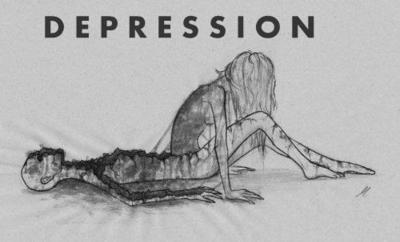
In Minnesota, it’s cold and snowy and dark before you even leave work.  There’s this strange pressure to be joyful that somehow results in a meta-awareness of not fitting the mold.  In the light generated by the holidays, the darkness of depression becomes even more obvious.

Thankfully, so, SO much in my life has been redeemed in the last five years since ERP.  But I can still remember when the holidays were the very hardest time of the year for me (I suppose it would be true to say that they still are the hardest time).  I know that there are many of you out there who cannot wait until the calendar flips to the new year and normalcy will return (even if normalcy leaves much to be desired).

I get it.

I am thinking of you this season.  Jesus Christ, whose birth we are celebrating, is big enough to hold such heavy hearts.

Related posts:
Christmas isn’t fun for everyone.
Holidays are hard for some of us.

It could be the smiling person next to you.

depressed

Only my closest friends and family ever really knew what I was dealing with.  I smiled a lot, was the class clown, told great stories, graduated summa cum laude.  No one would have looked at me and guessed that I was drowning in depression, a slave to OCD, driven to certainty in unhealthy ways.

Try to hear what people aren’t saying.  And have more discussions.

Related posts:
My Darkest, Lowest Days
The Sons of Korah Get It

Resisting Treatment for a Mental Illness

Consistently, I …
* talk to people with mental illness who resist beginning treatment.
* hear from those who’ve gone through treatment who wish they’d sought help sooner.

I get frustrated with the first group, but then I remind myself that I used to be a long-time, card-carrying member.  My college mentor encouraged me time and time again to just meet with a therapist at my school’s free counseling services center, and I balked and balked and balked.

I wish I hadn’t.

Today, I want to address four of the excuses I hear most often for avoiding treatment along with my best argument against them.

Too much money.
First of all, if you had a life-threatening disease, I can almost guarantee you that you’d find the means to get treatment.  Mental illness are often life-threatening– not always in the sense of imminent death, but they reduce the quality of your life and deserve your reaction to their severity.  There are prescription assistance programs, such as Partnership for Prescription Assistance or Walmart’s $4 prescriptions.  More and more, I am seeing churches starting free or pay-what-you-can counseling sessions with highly-trained lay therapists.  Obsessive-compulsives are able to do self-guided exposure and response prevention therapy from their own homes with helpful and inexpensive books like Stop Obsessing! or Freedom from Obsessive-Compulsive Disorder.

Too much fear.
I can absolutely relate to this.  Some fear vocalizing their anxieties; some fear they will do so and be told there is no hope (in which case, it feels less scary to stay silent and hold onto the tiny thread that there may be a rescue coming).  Some fear the treatment itself (I can very much understand this, as ERP, the preferred treatment for OCD, is a particularly challenging therapy that exposes obsessive-compulsives to their greatest fears).

Therapy for OCD was one of the scariest things I have ever had to do in my life.  It was awful– but not as awful as daily life with OCD with no end in sight.  Short of a miracle, your mental illness will probably not just go away on its own.  Now is the time to declare war.

Too much pride.
A blog reader told me the other day that he was disconnected from reality, could hardly talk to his wife, and felt like the loneliest person on the planet– though too proud to see a therapist and admit there is something wrong.

This is so hard for me to understand– even though this used to be me!  To me, it’s the equivalent of breaking your arm and then being too proud to get it set in a cast.  What are you too proud of?  That you are invincible?  No one is, and you are fooling yourself if you think you are.  Ignoring a real problem is nothing to be proud of.  It’s like when you realize you took a wrong turn and are headed the wrong way.  It makes far more sense to turn around than to continue on in the same wrong direction.

Too much doubt.
I have a friend whose life is crumbling right now, yet he refuses to get help because he doesn’t think therapy works.  I want to shake him a little and say, “Look around you– what you are doing right now doesn’t work!”  I know how easy it is to get trapped by indecision and by the feeling that no direction is a good one (that’s why I took one year off from my medication search), but in the end, you’re probably going to have to take some sort of step toward healing.  Even if you take teensy-tiny baby-steps, that’s okay.  Find a trusted friend and work out the best baby-step possible.

I know it is an expensive, scary, humbling, and doubtful enterprise– but please, please keep reaching out for help.

choice

Stigma, Part Two: I Don’t CHOOSE to be Unhappy.

Recently, the following was posted on the Twin Cities OCD Facebook page:

Happiness is a state of mind –

It is important that you understand and appreciate that your happiness lies within. Consider this – no one can make you unhappy if you have decided for sure that you will be happy in every situation. If you have made up your mind to be happy, you can always seek out the positive aspects of a situation and remain happy. Life may throw challenges at you but solutions will come faster and to you if you face them with a smile on your face.
Sounds easy? Its only a challenge at first-then momentum happens. 

And while I don’t think the poster meant to be offensive, I deleted it immediately.

People with mental illnesses are not choosing to be unhappy.  That is such an upsetting suggestion!  It’s like someone has accused me of poisoning myself.  Or being too weak or stupid to choose the right option.  It’s like saying, “Look, you have to understand that if you just choose every day to not have diabetes, it will get easier and easier.”

I don’t choose to have a body that absorbs serontonin too quickly.

do choose to take pills to slow that process down.  And to seek out therapy that gives me tools to manage my mental illness.  I can choose to treat it, but I can’t just choose to not have OCD or depression.

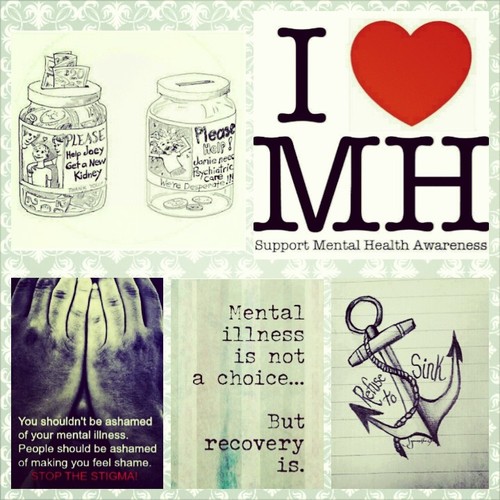
Please stop insisting that I am responsible for my mental illness.  

This, my friends, this is stigma.

stigma2

Related posts:
Stigma
More Stigma
Things That Offend Me
5 Easy (ha!) Steps for Finding the Right Medication
“Happy Pills”

When I Was on Fire

synchroblogToday is a GREAT day; do you know why?

My friend/critique partner Addie Zierman’s memoir  When We Were on Fire comes out!  I have already read and reviewed this book, and folks, let me just say that Addie is a tremendous writer, and you’re going to love this book.

Having grown up in the same 90’s Christian subculture as Addie, I can remember sporting the Christian t-shirts (the ones that annoyingly mimicked popular logos), listening to all the Christian bands, centering my week around youth group on Wednesday evenings.

Today, Addie is hosting a synchroblog on her site.  She’s asked us readers to write about our own “on fire” days.

Mine come loaded with embarrassment– and an apology.

Here is the truth: black and white exist– but so does gray.  I didn’t know that growing up amongst evangelicals.  I was quick to judge, and I thought I owned the market on truth.  In late high school and especially in college, I was a spiritual know-it-all.  After all, I went to a Christian school, studied the Bible as an academic subject, and learned theology from some of the major players in that field of academia.

In other words, I was kind of a jerk.  Maybe not even kind of.

As I am writing this, students from my alma mater (and Addie’s– we overlapped there for a couple years!) are clawing each other’s eyes out over Obamacare and politics and theology, still living in that black-and-whiteness of undergrad.

I graduated.  I lost touch with reality and suffered from paranoia.  I watched friends marry and divorce.  I faced the stigma of mental illness.  I underwent a therapy that some people would consider unholy.  All those beautiful and ugly and layered and confusing shades of gray started to paint my world.

I am on fire in a new way now.  On fire about grace.  And mercy.  About weakness and healing.

I am sorry for when I was on fire about being right and judgement and personal strength.

Addie’s book tells of her journey toward wholeness, of the ways that the evangelical subculture harmed her and others in the name of God and goodness, about her anger and spite when her eyes were opened to see this, and how she climbed out of the bitterness.

Buy her book.

Read the Prologue and First Chapter HERE

Available for Pre-Order in the Following Places

Best of the Web: On Depression

bestofthewebMy friend Addie Zierman is an incredible person and an incredible writer.  She recently wrote an amazing blog post for her sons over at A Deeper Story.  I really would love for you all to take a look.

Here’s a teaser:

You want to know why we’re going through the Walgreens drive thru, so I tell you, “Mama needs to pick up her medicine.”

But you’re FOUR now, so that’s not good enough anymore. You want to know why. You want to know what for. You want to know if Mom has a headache or a tummy ache. What medicine? You keep asking me. And Why?

My first instinct is to oversimplify. I consider telling you that they’re Mama’s “happy pills,” but dismiss it almost immediately. It may sound simple, but it’s not the truth. The pills don’t make me content. This is not a magic potion or a jolt of endorphins. We’re not talking about a hit of happiness here.

In the end, it’s much more complicated than all of that. This is about synapses and neurons, about a kind of short-circuiting in your brain that makes everything go a little bit dark for no good reason at all.

To read the rest of “For My Sons: On Depression,” click here.

P.S. Addie has a book coming out next month called When We Were on Fire.  You should all buy a copy!

Will Treatment Change Me?

I recently had coffee with a lovely young college graduate, a writer who has been dealing with intense anxiety, anxiety that has latched onto her faith and forced her into a position of crisis.  We talked about medication and therapy, about how there is nothing to be ashamed of, about how even scripture can be twisted and used against us.

Then she said, “The way my mind goes so quickly?  That’s why I think I can write.  I’m scared that if I start taking medication, I’ll lose that.”

That’s a fear I could definitely relate to!

I told her, “I think just as quickly now as I did before treatment– only now, it’s productive.  Before, my brain was spinning its wheels.  I was thinking in circles, thinking all the time but never really getting anywhere.  Now I can think productively.  I can focus on things that are important.

“I still think deeply– in fact, more deeply in some areas, since I’m no longer terrified of thoughts.”

So, did treatment change me?

Yes, but for the better.

arms

Christian Culture’s (Sad) Response to Mental Illness

It’s in the Title: Mental Illness is an Illness

Salads and sandwiches and a shared mental illness, all of it on the tiny table between us.

“There is help for OCD,” I told her.  “The most effective treatment is cognitive-behavioral therapy.  Between that and my medication, I got my life back.  I know you can too.”  (The evangelical zeal I have for this particular therapy reminds me of the way I love Jesus: both took me from darkness into light, both make me want to throw parades in their honor.)

“Oh, I don’t know,” said my friend, poking at her salad with a fork, sounding hesitant.  “I think before I take any extreme methods, I want to just pray about it more.  I know that God can bring me through this.”

I wanted to say, But you have been praying about this for years!  I also believe God can bring you through this—and I am telling you how.

There is a pervasive and unhealthy attitude in the Christian culture toward mental illness.  Many believe that one should be able to “pray away” a disorder.  Some think that mental illness is, quite simply, spiritual warfare; some think it’s the result of unresolved sin issues.  One of my friends has said before that a real Christian can’t be clinically depressed.  I saw a Facebook status once that read, “Depression is a choice.”

These sentiments light a fire in me, especially for the way that they marginalize a group of people that are often already more susceptible to guilt.  I know that in my OCD hey-day, I felt continual guilt and severe shame; for someone to intimate to me that these feelings were the appropriate ones would only mean that my Christian brothers and sisters were siding with my disorder—and against me.

Mental illnesses are just that: illnesses. 

friendsGod and Satan can work through them just the same way as they could through, say, cancer or diabetes.  All issues are spiritual issues, simply because we are spiritual beings, but it is not helpful to label a chemical issue with a giant term like spiritual warfare.  To say that a Christian cannot be depressed is like saying a real Christian can’t get the flu.  To say that depression is a choice is like saying strep throat is a choice.

If you break a bone, do you get it set in a cast?  If you learn you’re diabetic, do you take insulin?  If cancer steps into your body, do you pursue chemotherapy?

The answer is usually yes.  Yes—and pray.  (Don’t get me wrong: I’m all for prayer!  And for medical innovation!)

That is why I am unashamed of my OCD, my depression.  Instead, I am proud of my God for seeing me through a therapy as difficult as CBT and for being my strength through five years of side effects in the search for the right medication.

Unfortunately, my friend left the sandwich shop that evening feeling obligated to “pray away” a spiritual flaw instead of feeling empowered to fight illness, in spite of my best efforts.  My voice is being drowned out by the multitude of louder voices of the Christian culture, a culture that should be supporting this demographic, not alienating it.