OCD torture

Through my website, I can see what search terms are bringing people to my blog, and this week, the number one search term was “OCD torture.”  It breaks my heart.  But I can completely understand and relate.

For those who are in the throes of such torture:

Welcome to my blog.  I know what you’re going through– I was there myself, only about 5 years ago.  And the torture was long-lasting for me– nearly 15 years of it.  It’s crazy how we can even bear up, isn’t it?  Sometimes I am amazed that I survived, was able to get through school, was able to keep my job.  Every single day, I hurt so bad.  Every single day, I had this feeling that something was wrong, something was off.  I felt frantic.  The weight of the world was on my shoulders, even from when I was young.  Personally, my OCD attacked my Christian faith and made me doubt my salvation, and that doubt is like pure agony to one who loves Christ.  So many evenings I spent weeping, almost keening, because I couldn’t handle the thoughts and doubts that were inhabiting my brain, burrowing into it as if they’d stay forever.

torture

My OCD attacked whatever was most important to me.  It made me think people were secretly against me, it made me think I shouldn’t tell my problems to my best friend, it made me think it was sinful to write (one of my life’s greatest loves), it made me think I was gay when I clearly was not, it made me think I was a sex offender, it made me think it was wrong to meet new people or to talk to anyone I didn’t know (not helpful when your job is recruiting!).  It made me feel guilty if I brought home a STAPLE from work.  It made me feel guilty and sinful all the time.  And TERRIFIED too.  It wasn’t always just a dull agony.  Quite often it ramped into a shrill, turbulent nightmare.  Overwhelming, engulfing terror would swallow me whole.  And then sometimes, to hide itself, it would make me even doubt that I had OCD (tricky bastard!!).

Notice I say it made me feel this way.  OCD, my disorder, made me feel this way.  The guilt and terror were not from God.  The thoughts and doubts weren’t my own.  They were given to me, like the ugliest of gifts, from my disorder.

I remember reading blog post about the unpardonable sin, thinking that is me.  I am in those shoes, and I will never be out of them. Guess what?  I have been delivered from that ugly hold OCD had on me.  I still have it.  But I’m the boss; it’s not.

How?  Cognitive-behavioral therapy, specifically exposure and response prevention therapy, which I’ve explained on my blog here.  Now, after twelve weeks of CBT, I have been in control of my OCD for the last four years.  It’s like another life.  When I feel guilty now, it’s because I’ve done something wrong.  When I doubt something, I don’t freak out– I seek out advice from family, friends, and the Holy Spirit.  I know my soul belongs to God.  I can look at OCD’s silly suggestions and see that they are ridiculous.  I don’t have to entertain them.  I can toss them aside like I never could before.

And my OCD knows it’s not in control anymore.  To be honest, it doesn’t even fight me as much now that it knows it loses every single time.  It knows I have the tools to toss it out the window, so it keeps pretty quiet around me.

Meanwhile, it is torturing you.  I hate that.  I want you to be free like I am.  It is going to be a rough road, but there is help.  Find a cognitive-behavioral therapist, buckle in, and do whatever you have to do to complete your therapy.  And when you want to quit, you can post a comment on this blog, and I will be your cheerleader.  Skip the traditional talk therapy.  You need someone who knows how to do ERP.

Start today.  It’s time for freedom.

Note for those without health insurance: If you can’t afford to see a cognitive-behavioral therapist, and if you’re ready to take back your life, you can try a self-guided CBT experience with an iPhone app like the one at http://www.liveOCDfree.com or by using a book like “Stop Obsessing!” by Edna Foa or “Freedom from Obsessive-Compulsive Disorder: A Personalized Recovery Program for Living with Uncertainty” by Dr. Jonathan Grayson.

Lunch with Faith: discussing OCD with children

I had the privilege of visiting with Faith over lunch last week.  Faith is a nine-year-old third-grader, and she is the cutest nine-year-old in the world, all eyes and sweet, sweet smile.  Not kidding, you look at this little girl and think, Oh my gosh, a hug from this child could change the world.

Faith is the strongest, bravest nine-year-old I know.  She has obsessive-compulsive disorder, and she is dealing AT NINE with obsessions that buckled me in my 20s.  My heart just breaks when I think about the daily battles she fights, and it makes me hate OCD even more than I already do (with the passion of a thousand and one suns) for the way it could dare to target such innocence and loveliness.

How do you talk about OCD with a third-grader?

That was the question that I grappled with in the week leading up to this lunch.  My OCD first appeared when I was seven, but I didn’t have the vocabulary to really discuss it until after my diagnosis, which didn’t come until after college.  I am such a huge advocate for cognitive-behavioral therapy, but I’m so ignorant as to whether this is even possible or appropriate for a child to tackle.  When it nearly snapped me in half at age 26, is it even reasonable to expect someone one-third of that age to try something like it?

What we ended up talking about was the narrative therapy that I practiced on myself and my OCD.  Narrative therapy reminds us that the person is not the problem; the problem is the problem.  I chose to separate myself from my OCD by imagining it as a black dot that followed me around … and I got the upper-hand by belittling it.  Most often, I would “dress” it in a pink tutu and make it twirl around.  My OCD hated this.

Perhaps this sounds crazy to you, but it was a good strategy for me … and hopefully for children too.  Faith was intrigued by the idea of the black dot, and I told her, “It’s okay to bully the black dot because it’s so mean and it’s a liar.  So you get to bully it back.”  (Please, Jesus, don’t let me be teaching her bad life lessons … can’t you just picture her telling a teacher, “I bullied the kindergartener because he was mean to me first, and this girl I met told me that was okay!”  Oh gosh.  Ha!)  But I think she understood that we were talking specifically about the disorder, the black dot.

And we sort of talked about CBT elements too.  I told her, “When the black dot tells you that you have to have your locker clean before you go to your next class, you can ignore it because it’s a liar.  And when you feel like you need to wash your hands again, just to be safe, you can ignore the black dot because it’s a liar and a bully.  Instead …”

“… I tell it to put on its tutu!” she said, giggling.

Exactly!

So … there is the element of response prevention.  Hopefully introduced in a way she can understand.

I hope it helps her.  I know it helped me, but I was also going through intense CBT at the time.  What I do know is that I hate OCD, which could dare to steal joy from this sweetest little girl, who should be enjoying third grade, best friends, recess, pencil collections (or was that just me in third grade? ha!), and Jesus, her Savior, whom she loves, and about whom her OCD whispers lies to her.

I remember being that young, remembering overthinking every thing, remember the obsessions and the intrusive thoughts and wondering why no one else my age thought about these same kinds of things.  I am so glad that Faith has a name for OCD at such a young age, but I am deeply saddened that she has to struggle.  My heart hurts for all obsessive-compulsives but today especially for the young ones, who are so confused, who feel so guilty, who are so scared.

I wish I could tear through the lies and fear for them, show them truth.  I am trying.

Does anyone know of tools for obsessive-compulsive children?  Is CBT an option?

sad girl3

in which I weigh in on the topic of profanity

I’ve been thinking lately of the topic of profanity.  I have a weird history with it.

I grew up in a home where “shut up” was strictly outlawed and, if uttered, would result in Mom scraping a bar of soap across your teeth.  My undiagnosed OCD latched onto this sin, and I spent some of my younger years tormented by swear words lambasting my mind.  I remember feeling sick and sinful and guilty, and I would confess to my mom that I was “having bad thoughts.”

Years and years later, OCD had strengthened its grip on me like a vice, such that I conditioned myself to “counteract” these bad thoughts with a repetitive prayer.  It started with curse words (most especially the f-bomb) but also words that sounded like curse words (class, bit, switch, luck, etc.) and eventually any word that started with the f sound.  All of these would trigger my compulsive prayer (so that I would avoid the intrusive thoughts the words would also trigger).  I remember one day realizing just how far it had gone when I walked by a stranger who was lightly biting down on her lower lip, and I started praying (for, of course, that is what your mouth does when you make the f sound).

In 2008, I underwent cognitive-behavioral therapy, during which I had to listen to an audio recording littered with curse words, as my doctor attempted to re-wire my brain (with success!).  I didn’t know what my conservative family would think of this therapy, but my mom was supportive and understood this was essentially my last chance to get my life back.  I didn’t talk details with my dad or sister, but my brother was disgusted when he heard about my therapy.  He was really disappointed in me, but I knew better than he did that this necessary.

CBT broke the spell for me around profanity.  For the first time in my life, I could hear it without an overwhelming reaction.  I could even say those words!  They found a home in my fiction as I realized how they added an element of realism to my story.

I do not have a filthy mouth, not by any means.  But after a lifetime of assigning too much meaning and influence to profanity, I have now found freedom from that and power over it.  It doesn’t bother me to share a curse word with a friend either in a joke or for emphasis.  I feel like I’ve escaped that cage I was in.

The other week, I used the phrase “time the hell out” on my blog, and my sister called me on it.  It bothered her, and she let me know.  We were at our parents’ house, and Mom said that profanity in my stories didn’t bother her, but it did in my real life.  My sister said both were an issue for her.  I told them then that neither bothered me and that I even felt a little profanity actually worked well for a powerful emphasis when needed and that it could even improve my witness as a Christian because I didn’t seem so much holier-than-thou.  They disagreed, citing verses like, “Do not let any unwholesome talk come out of your mouths.”  (The version of scripture I read is ESV, which reads, “Let no corrupting talk come out of your mouths,” which is a more literal interpretation and one that doesn’t particularly strike guilt in me.)

I do believe it wrong to use the Lord’s name in an offensive way.  That one does grate against me.

Personally, I choose not to say things like “holy cow” or “holy buckets” or any one of the slew of phrases people use in this way.  This is, to me, more offensive than profanity.  I think that language that tears someone apart is more unwholesome than words we have a special veto on simply because they are pronounced differently than their “approved” synonyms.

What are your thoughts on this?  Both sides are welcome.

brave

When I think of words to describe myself, brave is not one that comes quickly to mind.  In fact, I think I’m actually kind of a wimp.  A chicken.  I read books about crazy adventures because quite often I’m too scared to tackle them myself.

If I’d have gotten my letter for Hogwarts, I’d so desperately have wanted the Sorting Hat to put me into Gryffindor House.  But, let’s be honest, I’d have probably been in Ravenclaw.  Or Hufflepuff (gasp!).

hufflepuff

Movies scare me … sometimes even when they’re not supposed to be scary.  Change scares me.  Public speaking scares me (although not as much as it used to!).  I’m scared of needles, writing criticism, driving in the snow, and going to parties alone.

But last week I was emailing my friend Kyle about various opportunities in my life, and he wrote to me: “It will be a brave decision to stay, or a brave one to go, and for different reasons. You’re a brave person.”

Really?

But I thought about it more.  I am scared of change … but I am willing to take risks I feel called to take.  I am scared of public speaking … but I force myself to accept opportunities to share with crowds (and have really honed my skills!).  I’m scared of needles, but I get shots.  Of writing criticism, but I invite it, ask for feedback all the time.  Of going places alone, but I suck it up, paste on a smile, and meet new people.

Driving in the snow … yeah, okay, I avoid that and just stay in. 🙂

But even more than all of this, I lived for over fifteen years under the tyranny of obsessive-compulsive disorder, and I stood up to it.  I tackled cognitive-behavioral therapy, which was the hardest thing I have ever had to do, and came out with OCD under my foot instead of the other way around.

Know how I feel?

Brave.

brave

Tips for Interviewing a Therapist for Your OCD

Janet from the ocdtalk blog pointed me to the International OCD Foundation’s website for this list.  I hope it will be helpful for you as you seek appropriate treatment for your OCD.  I can’t stress this enough: OBSESSIVE-COMPULSIVES SHOULD NOT WASTE THEIR TIME ON TALK THERAPY.  YOU NEED COGNITIVE-BEHAVIORAL THERAPY, SPECIFICALLY EXPOSURE AND RESPONSE PREVENTION THERAPY.

“What techniques do you use to treat OCD?”
If the therapist is vague, or does not mention cognitive behavior therapy (CBT) or Exposure and Response Prevention (ERP), use caution.

“Do you use Exposure and Response Prevention to treat OCD?”
Be cautious of therapists who say they use CBT, but won’t be more specific.

“What is your training and background in treating OCD?”
If they say they went to a CBT psychology graduate program or did a post-doctoral fellowship in CBT, it is a good sign. Another positive is if a therapist says they are a member of the International OCD Foundation (IOCDF) or the Association of Behavioral and Cognitive Therapists (ABCT). Also, look for therapists who say they have attended specialized workshops or trainings offered by the IOCDF, like our Behavior Therapy Training Institute (BTTI) or Annual Conference.

“How much of your practice currently involves anxiety disorders?”

“Do you feel that you have been effective in your treatment of OCD?”

“What is your attitude towards medicine in the treatment of OCD?”
If they are negative about medicine, this is a bad sign. Medicine is an effective treatment for OCD.

“Are you willing to leave your office if needed to do behavior therapy?”
It is sometimes necessary to go out of the office to do effective ERP.

enabling OCD and telling the truth

I have not written about this in the past because this is not an area that I have a good grasp on.  To me, there is a fine line between enabling an obsessive-compulsive and just being a helpful supporter of that person.  When I was going through cognitive-behavioral therapy, my therapist had me tell my roommate and friends that they were no longer able to reassure me about anything silly.  I was instructed to tell them that if they did this, it would interfere with my therapy and decrease its opportunity for success.

So, all those times when I would ask, “Do you think that is okay?  Is this sinful?  Do you think I’m going to hell?” … they were supposed to answer it with something like, “I’m not allowed to answer that question.”  Or “I don’t answer silly questions.”  Or “I’m not going to answer and enable your OCD.”

It’s a hard position for them to be in.  For the OC too!

As a Christian who believes the Bible when it says, “The truth will set you free,” I had (and still have) a hard time thinking that it is not helpful for a friend to tell someone the truth– shouldn’t that help set them free?

But then I think how I asked those questions for years and years, and all that stated truth piled up like a mountain but never moved me.  Why was it that listening to a LIE– an audio recording telling me repeatedly that I was going to hell– is what ultimately unlocked the doors of my prison?

A student at the university where I worked asked me that earlier this fall– how listening to a lie could rescue me.  I didn’t have an answer for her then.  The more I thought about it afterward though, I realized that what had happened was that listening repeatedly to a lie started to make the lie SOUND like a lie– and that was the truth!  CBT helped me recognize truth, and so in that way, it was still truth that set me free.

Does that make sense?

I’m still processing all of this and would love insight on this!

~4

Mental illness is a medical problem.

One thing that frustrates me to no end is when people treat mental illness like moodiness, as if you can just snap out of it, instead of like the medical issue it is.  This mindset is so pervasive that it has infiltrated even those with mental disorders.  It broke my heart to sit across the table from an obsessive-compulsive who thought she should be able to just “pray away” her OCD.  Now, of course I think that prayer matters.  But I think also that you pray about cancer– and then undergo chemotherapy— and pray some more.

whatifwe

letting go of certainties


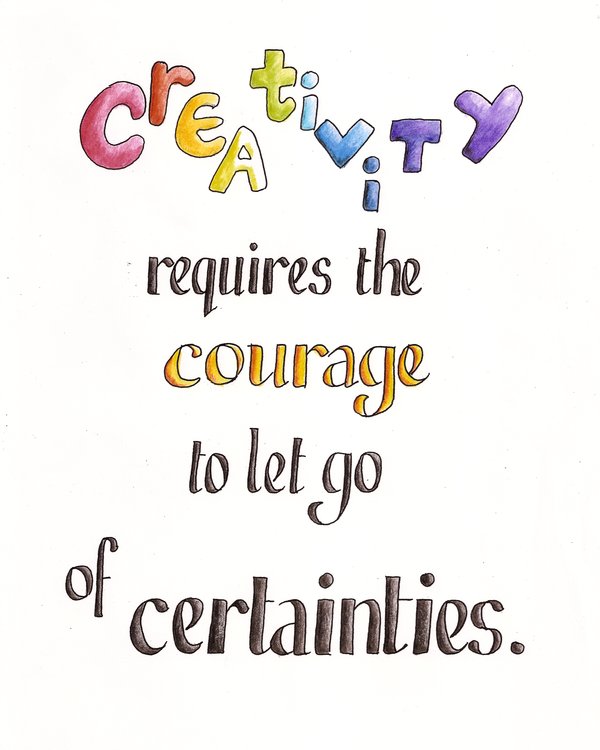
I thought this picture was particularly fascinating because you can replace “creativity” with “cognitive-behavioral therapy.”    And those are two of the most important things in my life.

I always thought that certainty was the goal and that doubt was the adversary, but it was just another lie.

What do you think of this quote?

all about CBT

Some people have been asking for more details on cognitive-behavioral therapy, the incredible tool that God used to set me free from obsessive-compulsive disorder.  It is my pleasure to share with you about CBT!  Please note that I am not a mental health professional– but I did have a wildly successful experience with CBT and am a huge advocate.

This is the preferred method of treatment for OCD; specifically, it is called Exposure and Response Prevention (ERP).  Long name, but actually, it is exactly what it says!  The patient is exposed to something that triggers an obsession and then the response (the compulsion) is prevented.  This therapy actually re-wires the brain– the brain physically changes in this therapy– and it helps an OC to live with uncertainty.

CBT either works or doesn’t in 12 weeks.  My psychiatrist, national OCD expert Dr. Suck Won Kim, told me beforehand that it would be worthless to meet with a CBT therapist longer than 12 weeks and that Dr. Chris Donahue wouldn’t ask me to meet any longer than those 12 weeks.  Three months.  You can handle anything for three months, right?

The first couple weeks were most intake.  Dr. Donahue asked lots of questions to help assess what my obsessions and compulsions were, and what triggered the obsessions.  He was basically probing to find what buttons to push later: “How much would that stress you out if you couldn’t do XYZ after ABC happened?” and that sort of thing.  I knew it would all come back to “haunt” me, but I was all in.  This honestly felt like my last hope for a normal, happy life.

I took the YBOCS (Yale-Brown Obsessive-Compulsive Scale) test and found out that I was a moderate case, which surprised me.  But then again, there are some people who can’t leave their homes, can’t touch a loved one, people who wash their hands with Brillo pads and bleach.  

Dr. Donahue outlined the measurable goals of my treatment plan: a fifty-percent reduction in distress when focused on upsetting stimuli and six consecutive weeks of no avoidance or rituals.  Three months was starting to sound like a long, long time.

Then Dr. Donahue and I wrote a story together.  Well, he started it and it was my homework to finish it.  Since my obsessions were primarily focused around hell, we had to do imaginative therapy (since, obviously, there is no way to really, literally expose me to hell).  So I wrote this story about an imagined worst day ever (I mean, really bad– I go to hell in it).  If you’d like me to share with you the story, I will.

My therapist recorded this story (along with his own additions to it) digitally, and I was sent home with an 18-minute recording from the pit of hell.  My job was to listen to it four times a day– two times through, twice a day– every day and record my anxiety levels when prompted.  And I needed to do this consistently until my anxiety levels reduced by 50% from what they were the first time through.  Oh, and I couldn’t perform my compulsions either to make myself feel better.

It. Was. Awful.

I won’t lie to you, listening to that recording– that exposure– was like torture.  It was being triggered left and right and not being allowed to do anything to ease my anxiety.  Doesn’t this sound like some type of cruel and unusual punishment?  It’s what it felt like, and I honestly wanted to quit at about week 8 or 9 when my anxiety levels weren’t dropping.

I hated it.  It made me sick to my stomach, made my heart race, terrified me.  I tried to listen to the recording right away in the morning, in order to get half of my required listenings out of the way early in the day, but eventually, I couldn’t do it that way anymore– the weight of beginning my morning in such misery made it hard to get out of bed, and I had to push it all back later in the day just so that I wouldn’t dread waking up.

But something clicked around week 10 or 11.  Praise. The. Lord.  It clicked, and all of the sudden, I was in the driver’s seat again!  I controlled my OCD and not the other way around.  One day I was listening to the recording– this device of torture and grief– and I thought, This is so annoying.  And then I smiled and thought, Finally.

This, of course, is a brief description of my experience.  I could tell you so many more things– about how hard it was, about what other exposures look like for other kinds of OCs, about the tools Dr. Donahue gave me for success.  It’s all detailed in my fictionalized account of it, my novel Lights All Around, which you can read here.

It was one of the hardest things I have ever had to do– but not as hard as living for 20 OCD-riddled years without help.  I hated to go through CBT, but I loved to have gone through it.  It rescued me and those twelve weeks are a defining period of my life.  I remember being so angry and upset with my therapist, absolutely despising him and the exposures, and feeling certain that I was going to fail at this, my last shot at freedom.  I very nearly quit.

But that moment came right before everything changed.

If OCD is ruining your life, you need to undergo cognitive-behavioral therapy.  It will be hard.  It will be hell.  But it will be worthwhile.

Questions, anyone?

To read a stark account of my life before and after CBT, check out this blog post!

what it was like

B.C.B.T. (Before Cognitive-Behavioral Therapy):

I was in bondage to obsessive-compulsive disorder for over fifteen years; I was depressed, overwhelmed, scared, sad, and I felt guilty all the time. I was terrified of thoughts and wallowed in grief and terror for over a decade.

Doubt and this lingering wrong feeling were the normal for me; it was only for small periods of time (sometimes even seconds) that I felt peace.  I worried about ridiculous things– like that I might cause someone to kill him/herself or that I would sexually abuse a child.  I wondered if Jesus was really Satan and if people were really demons, if everyone was pretending to be my friend just so that it would hurt worse when I found out the “truth.”  I woke up in the morning and felt sick to my stomach within a few seconds.

I worried about hell, about my soul, about whether or not my prayers could reach God.  I wondered if writing fiction was the same as lying and if writing about the hard things in life was displeasing to God.

This niggling feeling of unease was constant– sometimes it was at the back of my mind, lingering there in the background, and sometimes it was at the forefront, screaming at me like a siren that SOMETHING IS WRONG.  Peace was fleeting and momentary, and I had to keep asking after it: do you think this is okay?  Do you think this was wrong?  Do you think I’m going to heaven?  Do you think I should worry about this?

I cried a lot.  Sometimes I fell asleep with quiet tears, and sometimes I would WEEP and KEEN while my roommates could do nothing to comfort me.

It was a cycle of horror: I would obsess and stress about A Particular Issue for two to three weeks, until I had completely exhausted myself in every way, and then it would fade into the background.  But only for awhile.  It or another obsession would attack again in a week or so.

I felt alone and scared and not even the gentle hand of a friend on my back could bring relief.  I felt deep confidence that I was condemned and doubted everything else.  At times, I lost my grip on reality and thought I was really, sincerely losing my mind and would end up in a straightjacket or room with padded walls.

I felt hopeless.

A.C.B.T. (After Cognitive-Behavioral Therapy):

I hated almost every minute of CBT and (at the time) thought my therapist was a BEAST, an unfeeling monster.

But twelve weeks later, I was in charge of my OCD and not the other way around.  I knew that I had been a victim and not a monster.

I am living in freedom, I do not suffer from intense intrusive thoughts nor do I feel the need to perform my compulsions to relieve any anxiety, and the quality of my life has improved SO SO SO much.   I don’t have to confess everything all the time or seek reassurance from my friends.  I don’t doubt the tiny decisions I make each day.  I am okay with uncertainty.

And I know it’s not a cover-up!  I know that CBT didn’t work like a band-aid, covering up my problems and making me blind to them.  It worked like an electrician: it RE-WIRED my brain.  Now I can think like a “normal” person.

I still have bad days, just like everyone else.  Sometimes I am sad, bored, cranky.  I fight with friends and hurt because of it. But it’s all in the normal course of life; I experience these the way that others do.  I begin each day at zero instead of at -1000, handicapped so that I have a million miles to make up before I can even deal with things the way others do.

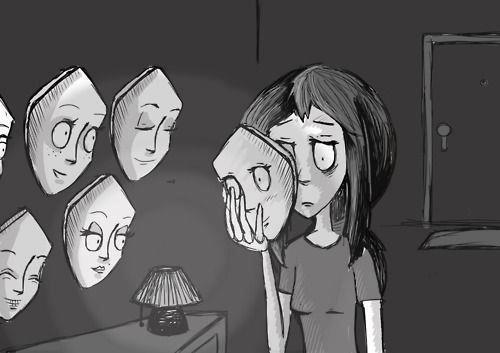
GLORY TO GOD for leading me to CBT, which has UNLOCKED MY PRISON. I am MYSELF now: joyful, creative, secure in my relationship with Christ, and not living behind a mask. My smile is REAL, and I love my life and my God and myself! I give credit to Jesus Christ for such an incredible rescue. Thank You, Lord, for two years of freedom; I am looking forward to an eternity of it.

Would you like to learn more about CBT?  I am happy to answer any and all of your questions with complete honesty.