AFTERWARD
Rediscovery is slow,
tentative,
a necklace beaded
with doubt and risk.
We who once touched
and knew and loved
are moved like strangers
to the start,
and I have to wonder:
What will break
if I take your hand?


AFTERWARD
Rediscovery is slow,
tentative,
a necklace beaded
with doubt and risk.
We who once touched
and knew and loved
are moved like strangers
to the start,
and I have to wonder:
What will break
if I take your hand?
JERK
You walk backward,
flashing a powerful success
that wears vintage jackets
and not business suits.
You raise a finger and command the stars, and I
once loved you for the mighty stoicism your life preached.
Children
melt your bricks like ice,
and sometimes a pretty girl, for one week at a time.
I pity you for the power that provokes adoration
without affection.
I once thought you so strong for the way your hands
could hold so much power without spilling.
Now I name you Selfish and am annoyed
when blonde-haired children make you smile.

I wanted to find and post a poem about the start of a new year, but what actually jumped out in my mind was this, much more beautiful than any other poem I could have found for this occasion.

I wrote this back in college, but I was thinking of it recently when I was up north at my summer camp. The poem is about a boy with whom I shared one wonderful week– and after that, things fell apart. In college, this was my assessment of the situation (which, for the record, took like three years to heal from. One week, then three years. Boys.)
Invitation
It appears to be about the temperature,
the way your body reacts to the sun,
how you kissed my hand and left.
You sang raw songs aloud, white flags
you spited for the sake of the sun,
a clumsy surrender to the afternoons,
later blaming the northern countryside for
the way it slows your blood,
allowing more time to warm.
And so you dressed your hurts in city shade,
where haste is the liquor to rinse your mind
of that summer and the way your hands were soft.
I left St. Paul and welcomed the day’s damage
because of the lessons that leak into open sores.
I make the most of my summer wounds.
But I want you to know—I would have helped you adjust:
dark faces shadowed by a background of pines,
only the moon with no warmth of its own.
Remember, dear, the northern nights are cold.
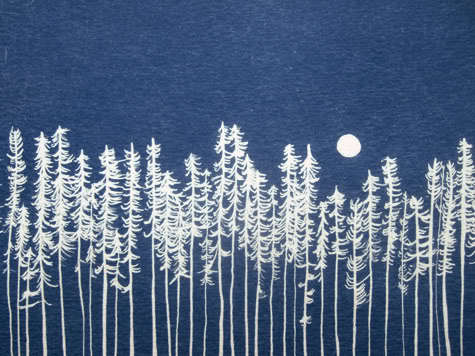
… I finally finished the poem that I starting writing right around college graduation in May 2003. I hope it makes sense to you. Some people have gotten confused by it. Hint: there are 3 characters in it, not 2.
THE CALL
When the sky burst like a balloon, the rain soaked the hikers
for ten wild minutes that shivered like forever.
It was like a gift, he said, or like a holy baptism.
Or it was like a scene in a story you would write.
And when the call was dropped, she phoned to tell me,
who pictured this boy or that on a cell phone in the mountains,
smelling clean like Appalachian rain and wanting me to know.

Aristotle
by Billy Collins
This is the beginning.
Almost anything can happen.
This is where you find
the creation of light, a fish wriggling onto land,
the first word of Paradise Lost on an empty page.
Think of an egg, the letter A,
a woman ironing on a bare stage as the heavy curtain rises.
This is the very beginning.
The first-person narrator introduces himself,
tells us about his lineage.
The mezzo-soprano stands in the wings.
Here the climbers are studying a map
or pulling on their long woolen socks.
This is early on, years before the Ark, dawn.
The profile of an animal is being smeared
on the wall of a cave,
and you have not yet learned to crawl.
This is the opening, the gambit,
a pawn moving forward an inch.
This is your first night with her, your first night without her.
This is the first part
where the wheels begin to turn,
where the elevator begins its ascent,
before the doors lurch apart.
This is the middle.
Things have had time to get complicated,
messy, really. Nothing is simple anymore.
Cities have sprouted up along the rivers
teeming with people at cross-purposes –
a million schemes, a million wild looks.
Disappointment unsolders his knapsack
here and pitches his ragged tent.
This is the sticky part where the plot congeals,
where the action suddenly reverses
or swerves off in an outrageous direction.
Here the narrator devotes a long paragraph
to why Miriam does not want Edward’s child.
Someone hides a letter under a pillow.
Here the aria rises to a pitch,
a song of betrayal, salted with revenge.
And the climbing party is stuck on a ledge
halfway up the mountain.
This is the bridge, the painful modulation.
This is the thick of things.
So much is crowded into the middle –
the guitars of Spain, piles of ripe avocados,
Russian uniforms, noisy parties,
lakeside kisses, arguments heard through a wall
too much to name, too much to think about.
And this is the end,
the car running out of road,
the river losing its name in an ocean,
the long nose of the photographed horse
touching the white electronic line.
This is the colophon, the last elephant in the parade,
the empty wheelchair, and pigeons floating down in the evening.
Here the stage is littered with bodies,
the narrator leads the characters to their cells,
and the climbers are in their graves.
It is me hitting the period
and you closing the book.
It is Sylvia Plath in the kitchen
and St. Clement with an anchor around his neck.
This is the final bit
thinning away to nothing.
This is the end, according to Aristotle,
what we have all been waiting for,
what everything comes down to,
the destination we cannot help imagining,
a streak of light in the sky,
a hat on a peg, and outside the cabin, falling leaves.
… since I’m the biggest nerd you know.
SUSAN OF NARNIA
You cannot convince me that you have wholly erased
the lamp-post, the summer constellations, the Lion Himself.
You were there, saw the knife, heard the table crack like a giant’s plate.
When your great desire stood before you like a golden beacon,
how could you turn from joy to other invitations?
I refuse to believe that you have plucked from your deepest heart
righted wrong, vanished sorrows, the very death of winter.
You will awaken one day, I am sure, when pain claps your heart,
when British railways tear up your world of nylons and lipstick.
Grief will bring you back to solid ground, to your first love.
After all, once a queen, always a queen.

The First Dream
by Billy Collins, my favorite
The Wind is ghosting around the house tonight
and as I lean against the door of sleep
I begin to think about the first person to dream,
how quiet he must have seemed the next morning
as the others stood around the fire
draped in the skins of animals
talking to each other only in vowels,
for this was long before the invention of consonants.
He might have gone off by himself to sit
on a rock and look into the mist of a lake
as he tried to tell himself what had happened,
how he had gone somewhere without going,
how he had put his arms around the neck
of a beast that the others could touch
only after they had killed it with stones,
how he felt its breath on his bare neck.
Then again, the first dream could have come
to a woman, though she would behave,
I suppose, much the same way,
moving off by herself to be alone near water,
except that the curve of her young shoulders
and the tilt of her downcast head
would make her appear to be terribly alone,
and if you were there to notice this,
you might have gone down as the first person
to ever fall in love with the sadness of another.

Photo credit: Jane Pak Oh
 JACKIE LEA SOMMERS