Guest blogger: Broken

If you follow my blog, then you’ve already been introduced to my roommate Desiree.  She is a wonderful woman of God and one of my very favorite people.  Because we have lived together for five years, she is one of the people who has seen me at my very, very worst, OCD-wise.  I asked her to write a guest post about living with an obsessive-compulsive.  Here it is:

Broken
by Desiree Wood

I don’t know how to describe what it’s like to live with someone with OCD, but you all know.

I’m sure Jackie told me that she had OCD while I was in college. She told me how hard it was—about thinking friends were demons or that she was destined for Hell, about sharing her struggles at camp the previous summer—but it just didn’t register. She hid it well for the first year or two that we were friends and roommates, an impressive feat.

And then came the day that I realized this was a problem. Jackie had talked through some other obsessions before, but this one was big. We had been on a retreat with the youth group we volunteered with for the weekend, and on the bus ride home, one of the teens dropped a bomb on Jackie about something he had done. I’m a teacher, so it takes a lot for an experience to blow me out of the water, but what this kid shared did just that! I was shocked when Jackie slid into the bus seat next to me and shared the news. And at that moment, I pleaded with God, “Why?” Why would He allow it to be Jackie who had to shoulder this news? Why the one with OCD triggered by thoughts of guilt? It was so much pressure figuring out what to do with this information. As she sobbed and we tried to work through the news at home that night, my heart broke for her. I felt completely lost and helpless.

To be honest, that’s how I’ve felt through most of this journey through OCD—through the changing meds and different reactions, triggers that come out of nowhere and take days or weeks or months to move past, through the CBT techniques that I felt really unsure about—it’s all a bit lost on me whose mind can just let go of thoughts as I choose. Looking back, I kind of like that I was so lost and helpless, because even though OCD has been hard to deal with for me and a million times harder for Jackie, I know that it has ultimately pushed us both closer to Christ. I love that He redeems the brokenness in our lives.

We all know what it’s like to live with someone with OCD because we are all broken people. Whether you live with family, friends, or a spouse, you battle the brokenness. We’ve all got our issues, sickness, and sin to overcome, and the people around us have to be our support. I pray that I continue to learn how to do that for Jackie.

Galatians 6:2 says, “Bear one another’s burdens, and so fulfill the law of Christ.”  I am blessed to live with Jackie—to have seen her struggle through OCD with Jesus, to have learned from her, and to have her in my corner as I battle my own issues.

What are your experiences with friends or family with OCD?

Me (bottom right) and Des (beside me) BEFORE we were roommates … she had no idea what she was about to get herself into!

medical or spiritual?

Discovered a website this weekend that is very disturbing to me as a Christian obsessive-compulsive.

At GreatBibleStudy.com, you can read quotes like the following:

Obsessive Compulsive Disorder, commonly referred to as OCD, is not a mental disorder or disease… it is a spiritually rooted bondage in the person’s mind that needs to be uprooted.

Obsessive Compulsive Disorder (OCD) is basically demonic torment brought on by a person’s bondages to fear and shame.

These ‘voices’ or compulsive thoughts are NOT caused because of a chemical imbalance (which the secular world cannot explain anyways); they are there because of a spiritual bondage in the person’s life.

Now, don’t get me wrong!  I believe that obsessive-compulsive disorder has entered into this world due to SIN, yes, but to negate that OCD is caused by a chemical imbalance seems ridiculous to me.  As a Christian, I view ALL of life through a spiritual lens, but these quotes seem like the equivalent of saying, “Diabetes is not a problem with the pancreas– it’s a spiritual issue!!!”  To say that diabetes is not connected to the pancreas’s inability to produce insuliin would be silly, just as saying that OCD is not connected to a chemical inbalance (our bodies absorb serotonin too quickly … that’s why we take SSRIs [selective serotonin reuptake inhibitors … they SLOW DOWN the reuptake/reabsorbtion of serotonin]).


All issues are spiritual issues, but that does not mean that they are NOT also medical issues.  God is also the Author of Science and the Creator of our bodies.  To not combine the spiritual with the scientific is short-sighted, I believe.

What are your thoughts on these quotes?  I’d especially love to hear from obsessive-compulsive believers!

Guest Blogger! Checking OCD: Never Quite Sure

Happy Monday, friends!  I wanted to introduce you to some other types of OCD, outside of the Pure-O that I have suffered from.  Today’s post about checking OCD comes from Tina Fariss Barbour of the Bringing Along OCD Blog.  I encourage you all to visit her blog and subscribe to her!  Thank you, Tina, for today’s insightful post!
Thanks,
Jackie

Checking OCD: Never quite sure
By Tina Fariss Barbour

I’m cooking a simple meal of pasta and sauce. I can heat the sauce in the microwave. But I need to use the electric stove to boil the pasta.

The water boils and I cook the pasta until it’s done.

Then I reach over to turn off the stove.

I carefully and slowly turn the knob towards the off label. Slowly, slowly. I’m waiting for the click that tells me I’ve reached my destination.

I hear the click and stop turning. It’s off.

Or is it?

I squint at the off label. Does the line on the knob match up with it enough? Is it supposed to be exactly in the middle of the label, or can it be off-center?

And did I really hear the click? Was it the right click? Was it something else in the kitchen that made a clicking sound?

I reach over and turn the knob so that the stove is back on. The pan with the pasta is still on the stovetop.

I turn the knob off again. But I turn it too fast, I think. The click sounded different, and I didn’t feel the slight vibration under my fingers that the click usually makes.

Even though the line on the knob looks like it’s right under the off label, the click didn’t sound right.

I turn the knob again. The stove is on. I say that out loud.

“The stove is on.”

I turn the knob carefully, concentrating. I hear the click.

It’s off. I say that out loud.

“The stove is off.”

I’ll just look at the off label one more time.

Looking straight at the label, it looks like it’s lined up with the knob. But when I look from an angle, it doesn’t appear to be right under it. Which perspective is correct?

And the knob moved a tiny bit once I took my hand off of it. Does that mean it moved back into an on position?

I turn the knob on again. On. Turn. Listen. Off. Stare. Turn. On. Turn. Listen. Off. Stare.

Two hours later, I drain the water from the pasta.

That scene depicts a ritual that I have carried out, in different places, with different foods on the stove, for different lengths of time, many times.

The scenery may have changed over time, but the underlying fear has been the same: if I don’t properly turn off the stove, it will ignite something, there will be a fire, and people will die.

That fear of harming others is the basis for my checking. It makes checking one of the most challenging of my symptoms of obsessive-compulsive disorder.

Before I was diagnosed with OCD at age 26, I didn’t know there was a name for the actions I felt compelled to perform everyday. I thought of the actions as a way to “just make sure everything’s all right.”

Besides my obsessions with stoves, I’ve checked to make sure lights are turned off, the water faucets have been turned off, there are no clothes dropped behind the dryer, the dryer filter is properly free of lint, soap is completely rinsed from dishes I’m washing, and on and on.

Checking takes up a lot of time. And when I stand and stare at a light bulb, trying to convince myself that it is dark, not lit, I can feel the anxiety invade my body: I get hyper, my legs and arms feel numb, and I want to scream and run away.

When I started taking medication for my OCD, my checking compulsions lessened quite a bit. But I still find that the compulsion to check comes around, especially when I’m particularly stressed.

Lately, I’ve been using a form of the therapy that Dr. Jeffrey Schwartz writes about in his book “Brain Lock.” My therapist has modified it a bit.

Basically, when I turn off the light, or turn off the faucet, and feel the urge to check it, I tell myself, it’s the OCD that wants me to check. My brain is different because of OCD.

Then I refocus on something else, which many times, means walking away from the light fixture, shower faucet, or whatever it is that I want to check.

My goal is to accept that I will have anxiety during these times, but I will not give in to the compulsive urge to check. Every time I resist the urge, it makes it a little easier the next time.

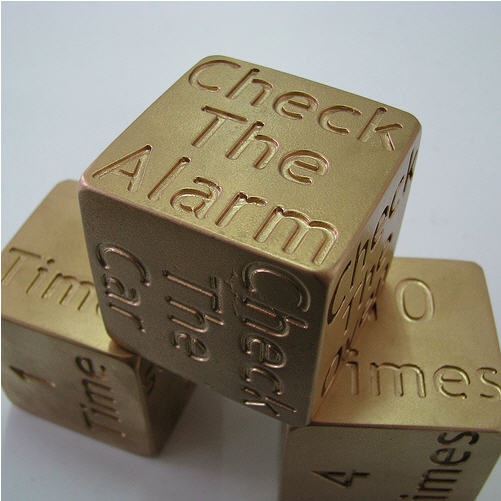
Checking is all about looking for certainty, certainty that nothing bad will happen because I haven’t done something dangerous like leave the stove on.

But none of us—those of us with OCD and those without—can ever truly know certainty as long as we live as humans here on earth. We must learn to accept and even embrace the uncertainty and live life anyway.

compulsions become monsters

“Compulsions are a lousy solution to the problem of having obsessions.”  Fred Penzel

Some of you don’t know just how true this quote is!  I was explaining OCD to a group of student workers in my office the other day, and here’s what I had to say about compulsions:

They start as a way to provide temporary relief to the stress/terror/anxiety/disturbing nature of obsessions, but after a while, the compulsions get out of control and become monsters themselves.

For example, maybe an OC will worry that a room is contaminated and therefore, she is going to get sick herself and die.  So she washes her hands to forestall any illness, and for a moment, it relieves that anxiety.  But after awhile, she is washing her hands all the time to try to keep that anxiety at bay, and now her hands are bleached, raw, bleeding and she can’t stop.

Which is worse– the obsession or the compulsion?  I know different OCs have different answers.  I’d like to hear yours!

medicated

How many times does this have to happen before I realize that I cannot skip my medication?  Last week I was running late to work, and I decided to skip my morning meds (Prozac and Effexor XR), thinking how– since CBT– I have been in control of obsessions.

Bad idea.

I was pretty depressed that evening, had ridden the rollercoaster down to the very bottom, had no idea what to do with the story I’m working on, felt pretty confident I will never be published, and had very little energy for anything.  I fell asleep that night feeling like a failure at life.

I realized later that my lack of meds was probably the culprit for the low.

When will I learn?

How about you: do ever skip your meds?  How long before it affects you?

cared for

My past roommate Becky said she has been reading my blog and is so happy to see that I’m doing better.  She told me, “When we were living together, you were really deep into it.”  It’s true.  The years that I lived with Becky and Tricia (or rather, Biz and Trix) were some of the darkest, most OCD-saturated years of my life.  I am so grateful that God gave those two to me to take care of me in those days when I could not take care of myself.

“Have you had supper?” Tricia would ask.

“Not yet,” I’d respond.  Then I’d begin to consider the whole enterprise.  It exhausted me to ponder opening a loaf of bread, untwisting the twist-tie, pulling out two slices of bread, locating a clean knife, finding a jar of peanut butter, and—it collapsed me—spreading the peanut butter over the bread.  That didn’t even take into account finding a paper plate to put the sandwich on, or cleaning up afterward.  I’d go sit on the couch, my heart racing, a heaviness in my chest.

“Want to make mac and cheese?” she’d ask, browsing through the cupboard’s offerings.

I breathed in and then exhaled deeply.  Macaroni and cheese was so involved—butter and a saucepan and boiling water, milk and cheese mix, and so many dirty dishes.

“Jav?”  (Their nickname for me.)

“I don’t think I’m gonna eat anything,” I peeped from the living room, hoping she would let it go.  I closed my eyes and willed myself to relax.  You’re not going to make anything, I told myself.  You don’t have to do anything.  Just rest. 

“Are you okay?” she asked, poking her head around the corner and seeing me collapsed on the couch.

“Yes,” I said in a voice that screamed, “Not at all.”

She walked over to where I was lying and stood, towering above me, with a frown on her face.  “What is wrong now?”

“Supper overwhelms me,” I said quietly.  “I’ll be okay.”

She rolled her eyes.  “Relax.  I’ll take care of supper.”

“I’ll be okay,” I repeated.

“You have to eat!”

This became something of a routine.  When Tricia and Becky had evening plans, I either didn’t eat, or I tore open a granola bar—something simple.  I lost about ten or fifteen pounds at this time, but I hardly noticed.  But it was an arduous time; I was very dependent and needy, but I was very well cared for.

Thank you, Bizzers and Trix.

me, bec, tricia

Pure-O Compulsions

Media usually presents obsessive-compulsives with very obvious compulsions: hand-washing is a favorite but also extreme organization and hoarding, as well as checking and counting.  But not all compulsions are so easy to see.

In fact, some compulsions are so difficult to recognize that it lead to a misnomer– Pure Obsessional OCD.  The name Pure-O leads some to believe that this type of OCD can essentially drop the “C” from its acronym.  But that would be a mistake.

Pure-O’s still have compulsions– they are just harder for the public to notice.  They include mental rituations like repetition, avoidance, and seeking reassurance.

For example:
I would have an intrusive, blasphemous thought– which would cause me to question my salvation.  I would repeat a particular prayer over and over in my head to ward off this thought, and I would ask everyone if they thought I was going to go to hell (sometimes this would be active– “Do you think I’m going to hell?”– and sometimes passive, as in “I’m scared I’m going to go to hell” and waiting for that person to reassure me … “Why would you think that?!  No way!”).  I would also avoid certain things (Matthew 12 and Mark 3, for example, or movies with profanity, which would trigger my blasphemous thoughts).

Sometimes it was hard to really focus on a conversation I was having because there was another entire conversation happening in my head at the same time.  It’s like listening to two tracks at once.

I wrote a poem to demonstrate it:

So … yeah.  There are compulsions you would never know are there, except for the strange look in my eyes, the odd shake of my head as if I were erasing something dark and secret.

brokenness

After we watched the Blue Like Jazz screening, my former writing professor Judy and I went to the St. Clair Broiler for some late-night breakfast and conversation.

A few things you should know about Judy: she is brilliant, a gifted writer and teacher, and she loves Jesus very much and connects with him in lovely and unique ways like Taizé and lectio divina.

One thing she said to me over pancakes and French toast was this: “Some people hold their brokenness at arm’s length.  Some people embrace their brokenness.  And some people celebrate their brokenness.”

That’s what I want to do– celebrate my brokenness.  I am not ashamed of my obsessive-compulsive disorder.  The Lord’s power is perfected in my weakness.  His grace is sufficient.

“Therefore I will boast all the more gladly of my weaknesses, so that the power of Christ may rest upon me” (2 Corinthians 12:9b).

How about you?

Euthanasia Coaster

It’s just hypothetical.  An art concept.

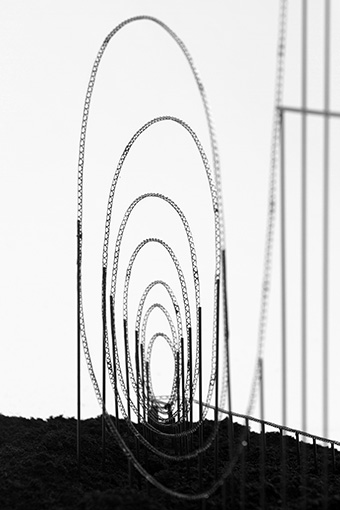
A rollercoaster that sends 24 people up a 500-meter rise and fall and then through seven consecutive loops, each smaller than the last, which racks up so much G-force that the person can’t sustain it and dies “with elegance and euphoria.”

I heard about it last summer, and I felt sick– a strange kind of sick.  A revulsion and a fear for our future, but also this bizarre fascination that has made me look it up many times over the nine months.

You can read all about it on Julijonas Urbonas’s website.  Let me know if it fills you with the same strange wonder and horror and disgust as it does me.

I have always been drawn to oddities, to things that are broken or are sick– because I am myself.  A broken, sick oddity, but covered in the blood of Christ.

the very worst thing

There were days when my OCD would tear my worldview out from under me.  Things that I had thought were solid things to stand on (GOD-IS-GOOD, I-AM-SAVED, IT’S-OK-TO-MEET-NEW-PEOPLE, HUMANS-ARE-REALLY-HUMANS, etc.) turned into vapor beneath me, and there I was, seeming to free-fall forever.

A real, only slightly altered conversation with a former roommate:
Fanny Fakename (frustrated): I can’t believe this!  I can’t believe this!
Jackie: What?  What happened?
Fanny (in anguish): I just found out that my tennis retreat is the same weekend as this political rally I wanted to attend!
Jackie: Oh.
Fanny: The same weekend!  This is terrible.  What am I going to do?  This is the worst thing that has EVER happened to me!
Jackie: thinking harm thoughts even though that is not her regular type of OCD 😉

One thing that OCD has engendered in me is perspective.

Right now, I am trying to lose weight, and it’s been a tough battle for me, but tonight I was praying aloud in my shower and what slipped out of my mouth was, “Thank you, God, that this is not an OCD thing.  I can handle this.  OCD was the very worst thing.”

Perspective.  Love it.

What is the very worst thing that has ever happened to you?  What it OCD-related?  Have you been envious of friends and family when their very worst thing seemed tamer than yours?