Swoon-worthy Books

cutetiptoesI’m not interested in the tawdry genre romance novels of heaving bosoms and shirtless beefcakes.  Give me a real guy with real faults any day.  Here are my “swooniest” picks:

Jellicoe Road by Melina Marchetta
“I’m here because of you. You’re my priority. Your happiness, in some fucked way, is tuned in to mine. Get that through your thick skull. Would I like it any other way? Hell, yes, but I don’t think that will be happening in my lifetime.”

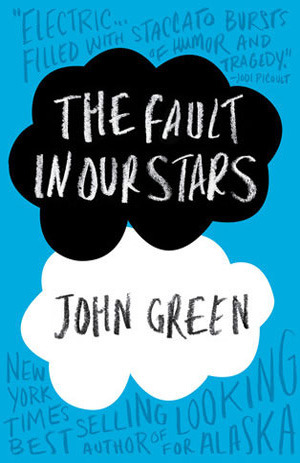
The Fault in Our Stars by John Green
“Oh, I wouldn’t mind, Hazel Grace. It would be a privilege to have my heart broken by you.”

Saving Francesca by Melina Marchetta
“‘Kind of interested in you,’ he laughs, as if he can’t believe what he’s hearing. ‘I’m kind of interested in calculus and Ancient Roman warfare. You don’t use words kind of interested to describe how I feel about you.’”

The Sky is Everywhere by Jandy Nelson
“He smiles and takes his index finger and presses it to my lips, leaves it there until my heart lands on Jupiter: three seconds, then removes it, and heads back into the living room. Whoa – well, that was either the dorkiest or sexiest moment of my life, and I’m voting for sexy on account of my standing here dumbstruck and giddy, wondering if he did kiss me after all.”

The Scorpio Races by Maggie Stiefvater
“Lifting my arm, he presses his lips against the inside of my wrist. I’m utterly still; I feel my pulse tap several times against his lips, and then he releases my hand.”

The Night Circus by Erin Morgenstern
“Do you remember all of your audiences?” Marco asks.
“Not all of them,” Celia says. “But I remember the people who look at me the way you do.”
“What way might that be?”
“As though they cannot decide if they are afraid of me or they want to kiss me.”
“I am not afraid of you,” Marco says.”

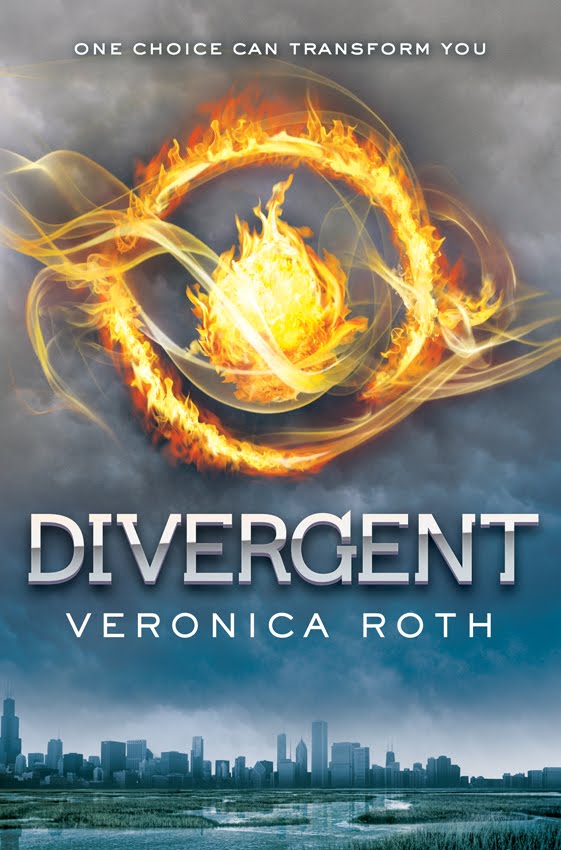
Divergent by Veronica Roth
“I feel his heartbeat against my cheek, as fast as my own.
“Are you afraid of me, too, Tobias?”
“Terrified,” he replies with a smile.”

Eleanor and Park by Rainbow Rowell
“Holding Eleanor’s hand was like holding a butterfly. Or a heartbeat. Like holding something complete, and completely alive.”

Top Ten Tuesday is a weekly meme over at The Broke and the Bookish

Image credit: couldn’t find the original owner of this pic!

Writing or Having Written?

There’s a famous Dorothy Parker quote: “I hate writing; I love having written.”

Someone recently reminded me of this quote, and I argued back immediately, “No, I love writing itself!”

Here is where I will now contradict myself:

I love writing.  What can be more enjoyable than experiencing magic while it is happening?  To let the keystrokes happen almost of their own accord.  To encounter storylines that I could have never dreamed of on my own.  Or to press hard into a challenge and discover a solution.  This is the brilliance of writing, of being in the minute, of loving each moment as the words fly from you.

I love having written.  Lately, writing has been producing so much anxiety in me.  It’s different than my OCD anxiety though.  It’s more of a fear of the future and a fear of failure.  Part of it is that I’m writing on a deadline again for the first time since college.  Part of it is working on a first draft of a character-driven novel where I’m not certain the characters are strong enough to drive it.  Part of it is that it’s simply what writing is like.

I do know that I need to get my anxiety under control again.  I have a couple ideas:

* Post my First Draft Manifesto in places where I will see it often.
* Start using Valor, a blend of essential oils that’s been called both “a chiropractor in a bottle” and “courage in a bottle”
* Meet with writing mentor for some valuable wisdom on the writing life and how to win the head game [edit: did this and will post about it tomorrow!]
* Give myself grace
* Chat with my psychiatrist about this recent flare of anxiety

Any other suggestions?  My writing life as of late has been like a roller coaster of self-doubt, and I need to get this under control.  In other words, I need to not only love having written … I need to love writing itself.

My friend Anna posted about this on her blog today as well!  Check it out here!

anxiety_by_tamberella-d5seq3w

16 Things I Wish I’d Known as a Beginner Novelist

16 things1. This journey is probably going to take longer than you think.
In fact, you might bust your butt on something that never sees the light of day.  It’s okay.  You become a better writer by writing.  I had to write a novel to prove I could write a novel before I could write a good novel, if you follow me.

2. Write because you love it, not because you want to be published.
You might never have your work published.  If you write because you have to write, because you’re a writer in your bones, then this won’t matter.  (Or at least it won’t matter enough to stop you!)

3. Write every day …
Establish a writing routine, even if some days you only get ten minutes to write.

4. … but don’t beat yourself up if you don’t.
I’m still learning this.  GRACE.

5. If you start a website, don’t waste time thinking of a clever blog title.  Just use your name.  
With WordPress and $18 a year, you can even buy your own domain so that you can just have www. [yourname] .com.  Trust me.  It’s going to be better for branding yourself as a writer someday. 

6. Learn blog etiquette.
Make a commitment to post on your blog at least once a week.  Also, don’t solicit readers by posting links to your content as a comment.  The best way to get readers is to read other blogs and leave thoughtful comments.  They’ll be much more likely to visit yours that way than if you use their comments section as your own personal ad space.

7. Join a writing group– or at least collect some beta readers.  Preferably both.  And take their advice.
Make sure they actually know what good literature is.  They should be good writers themselves or at least good readers.  And do take their advice or at the very least try it out.  No one said you have to keep your revisions.  Take their feedback, make revisions, and then decide whether to take it or leave it.  It goes without saying (I hope) that all this should be done without putting up a fuss.  You need feedback to make your writing sparkle.  Well, at least most writers do.

8. Genres have word count guidelines.
Debut authors should be especially aware of this.  Many literary agents won’t even bother with a manuscript that falls outside the genre word count guidelines.  (Not that it has never happened– but it’s the exception, not the rule).  There are detailed posts about this at Literary Rejections and Writer’s Digest.

9. Set aside some money to devote to your craft.
You can use this money to take a class, attend a workshop, or hire a professional editor.  Yes, a professional editor in addition to your writing group and beta readers.  The more [qualified, capable] eyes on your novel, the better!

10. Join Twitter.
I can hear some of you groaning.  I did too.  Who needs one more social media avenue?  You do.  It’s a great way to connect with other writers (amateur and professional!).  You can also start following literary agents and editors to learn more about the industry.

11.  You’ll need an agent.
I didn’t know this.  To be honest, I’d always thought that you sent off your completed manuscript directly to publishers.  But there’s a whole chain of command.  You’ll need to write a query letter (in some ways, this is harder than writing the novel itself!) that you’ll send to literary agents.  Once a lit agent signs you, it’s your agent’s job to sell your manuscript to an editor.  Novelists should wait to have a completed manuscript before beginning the querying process.

12. There are great resources out there for how to write a query letter and what agents are specifically looking for.
If you spend two hours on Rachelle Gardner’s blog, you’ll have the basics of querying down.  Best places to find what agents are looking for include Writer’s Digest’s Guide to Literary Agents, the author acknowledgements in the backs of your favorite books, and querytracker.net, especially the “backward” search that allows to look up an author and find out who reps him or her.  From time to time, literary agents on Twitter will hashtag things #mswl (manuscript wishlist), and this is super helpful and often gives you more specific, up-to-date information than their websites.  Remember that money you set aside (#9)?  Use it to attend a conference or workshop where literary agents will be in attendance.  Sometimes you can meet them and deliver your pitch in person.  (I’m not talking about stalking and cornering here; there are actual times and locations and events set up for this to occur!)

13. Rejection is inevitable, and it hurts.
I’m not sure if knowing this ahead of time helps things or not.

14. Read like crazy.
Everything [good] you can get your hands on, but especially in your genre.  And add a healthy dose of poetry for good measure.  Also: blogs, especially those of authors and literary agents and others in publishing, but also book blogs to keep your finger on the pulse of what is trending in your genre and what readers are looking for.  That said …

15. Write what you’re passionate about, not what’s trendy.
By the time you finish your novel about [insert trendy, current topic here], the topic will probably no longer be trendy or current.

16. The most important thing is that you write a great book. 
Ignore whatever you want on this list, but write an amazing book.  A writer who follows all the rules but writes a sub-par book probably has less of a chance at publication than one who bucked all the rules but wrote a masterpiece.

[I searched online, but could not figure out whom to credit for the original image of the white frame on the green wall.  If you know or find its original owner, let me know.]

Divergent, Katherine Tegen Books, & Contemporary Novels

divergentI recently finished Divergent by Veronica Roth, and I. Loved. It.

The book is set in post-apocalyptic Chicago, where the city is divided into five factions, each based on what they most value.  Abnegation values selflessness; Erudite values knowledge; Amity values friendship; Candor values truth.

And Dauntless?  It values fearlessness, bravery, courage.

Beatrice Prior is sixteen, so it’s time for her to choose a faction.  Should she stay in Abnegation, where she was born and raised, or should she leave her faction for a new one?  Her choice changes her life.

As many of you know, dystopians are not typically my first choice to read, which is why it took me so long to pick this one up (I bought it about a year ago!), but I shouldn’t have waited.  It was delicious.  The characters are fabulous, the world-building is incredible, and action is non-stop.  And it’s safe to say that Four, the love interest, will be pushing others further down on my Literary Boyfriends List.

One thing that is super exciting to me is that the Divergent series is published by Katherine Tegen Books, my new publisher!  I feel incredibly blessed and humbled to be invited into the publishing family that published Divergent!  Every once in a while it will hit me that the same people who gave this incredible book its wings into the world are doing the same for Truest.

What I loved the most about Divergent are the characters themselves, the relationships between characters, and the ideas and concepts that it helps you to process.  It’s almost always this way for me.  I value characters, relationships, and ideas more than world-building, action, adventure, setting, etc.  I think that’s why I’m drawn to writing contemporary, realistic novels– because they allow me to focus on the former more than on the latter.  (Don’t misunderstand me: setting and plot are still terrifically important!  But characters are always first in my book.)

I feel that I’m not explaining myself well (maybe because I’m writing this near midnight).  To be clear, I loved Divergent.  Veronica Roth did an amazing job.  What I’m saying is that she made me fall in love with her characters, and once that happens, the rest is (nearly) moot to me.  I love Tris and Four, and so Roth could make them do almost anything, and I’d be invested.  In other words, their story (for me) wouldn’t have to be about factions in post-apocalyptic Chicago.  I feel the same way about Maggie Stiefvater’s The Raven Boys.  I am in love with Blue, Gansey, Ronan, Adam, Noah, and the rest– and so the book wouldn’t even have to be about awakening a Welsh king or a family of psychics.  I mean this as a tremendous compliment.  I only hope that one day people love my characters this way.

I often think that this disproportionate love I have for characters over action is what has made me so at home with contemporary novels.  (Along with my sorry lack of world-building skills!)  Heaven knows I love magic and fantasy as much as (read: more than) the rest of the world, but I do think that there is tremendous magic in daily life: dynamic discussions, building one’s worldview like a tenuous fort, falling in love slowly and deeply, watching fireworks from a rooftop patio, talking about words in a field of wind turbines that skulk like monsters.  These things become fantastic if they are spent with characters who are beloved.

I hope this post makes sense.  To summarize: I am besotted with Divergent and wish I wrote it; I am in love with Four; I value characters more than anything else in a story, and I think that’s why I write contemporaries.

Edit: Since I originally wrote this post, I finished the whole series, including Insurgent and Allegiant.  At the time of writing this, I just finished Allegiant about five minutes ago.  I’m grappling with a lot of things right now and loving that literature presses us to do that.  So powerful.

One of those pre-birthday posts where I whine about being single

Soon, I will be thirty-two years old.  Wowza.  How in the world did that happen?  I mean, theoretically I understand that every twenty-four hours the earth does a pirouette around the sun and eventually that adds up to a long dance.

But still.

Usually every time January 17th rolls around I re-evaluate the year that just flew by, and I usually feel pretty bummed about all that I haven’t accomplished.  This year, I’m trying to celebrate all the joyous events that came about in 2013: it was another year of OCD being under my heel, I got my first book deal, I won the Katherine Paterson Prize, I started blogging for the OCD Foundation.  That’s exciting stuff!

Still single.  Always single.

I know thirty-two is not that old, but please remember that I both went to and now work for a Christian college.  Do you know what that means?  “Ring by Spring” is the [only half-joking] tagline, and all these little virgins are running around dying to have sex.  Again, I’m only half joking.

I’ve watched nearly all of my college friends get married.  I am the only unmarried roommate (of eight) from my Moyer Hall days, the only unmarried roommate (of something like 12-14 [it was like a revolving door]) of my Lodge days.  I have watched high school freshmen grow through their high school years, graduate, come to Northwestern, fall in love, and get married under my nose.  I blink, and they who were once children are wearing white and saying vows.

It’s okay.  Tonight it’s okay, at least.

It helps to have a book deal.  It almost feels like an excuse.  (This is the first Christmas in a long while I didn’t get asked if I had a boyfriend … we talked about the book deal instead.  PRAISE GOD.)  I know I don’t need to have an “excuse” for not being in a relationship … but sometimes it feels that way.  Just being honest.

In the nearly eleven years since college, I have learned vicariously through my friends just how difficult marriage is.  (Like, really, really hard.)  I’ve watched friends go through difficulties, separations, divorces that shatter my heart.  I am glad I didn’t marry young.  Not that it is wrong to marry young, but I’m such a very, very different person now than I was in college.  And I’m more emotionally stable, slower to anger, quicker to administer grace.

Anyway, to summarize this, I wish I was in love.  Heck, I’d settle for just having a crush on someone who wasn’t a fictional character.  But I’m also okay (tonight, at least) and not wasting my singleness.

jackie is single

3 Novels That Changed My Life

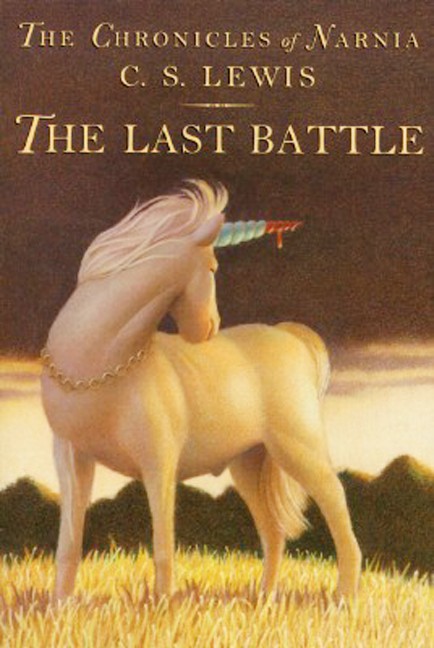
last battleThe Last Battle by C.S. Lewis

The truth is that I’ve lived a lot of my life in fear.  Twenty years in bondage to obsessive-compulsive disorder will do that to a person.  I’ve been afraid of so many things, most often related to my faith journey and the way that God sees me.  The concept of eternity collapsed me.

The Last Battle helped me to not be so scared.

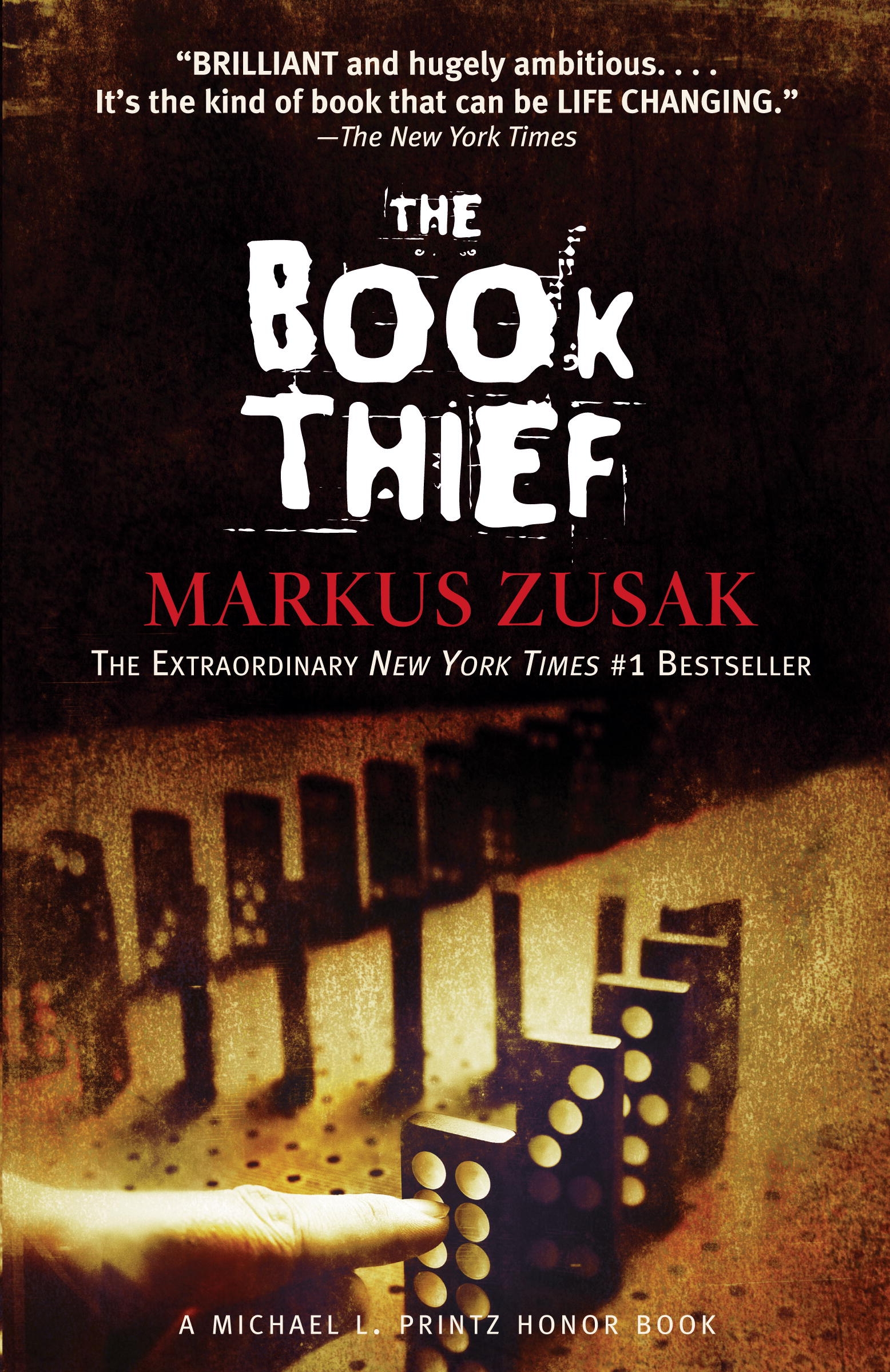
the-book-thiefThe Book Thief by Markus Zusak

I was a mediocre writer in college and in the years following.  Okay, maybe above average.  But excellence happened by accident, and I was hesitant to embrace imagery and metaphor because it felt very physically descriptive to me.

But in The Book Thief, I encountered imagery that was emotionally descriptive, images that rousted my soul and completely changed the way I write.


faultThe Fault in Our Stars by John Green

Even though young adult literature was my favorite to read, I still spent four years writing a novel for adults and then started in earnestly on a second one.

Then I encountered John Green’s masterpiece, angels started singing and fireworks exploded in my brain, and I adopted my new identity as a YA author.

Related posts:
Thoughts on The Last Battle
My History as a Writer
The Importance of The Fault in Our Stars

Thoughts on Rejection

no thanksEvery aspiring writer is told she is going to have to learn to deal with rejection, that rejection is simply a normal part of the road to publication.  I’d read how Stephen King hammered a big ol’ railroad spike into his wall and then hung rejection after rejection on the spike till they pulled it out of the wall.  Jo Rowling was told to get a day job because of the unlikelihood she could make money in children’s books.  Twenty-six publishers rejected the future Newberry Medal-winning A Wrinkle in Time.  Gone with the Wind?  Rejected by 38 publishers.

knew I’d experience rejection as I pursued publication; I braced myself for it.

It still hurt.

I’ll admit that with Truest, what will be my debut YA novel, I made it through the gauntlet rather easily.  But please remember thatprior to Truest, I’d poured four years of my life into a novel that never even got an agent.  I sent out maybe forty queries, and one agent asked to read the manuscript.  Then kindly said no and suggested edits.

Four years is a lot of your life, time, energy, emotions.  Your heart.

I actually started writing Truest while waiting to hear back from literary agents regarding Lights All Around.  When the onslaught of rejections came, I was protected– cushioned– from the sting by the excitement I had for my new project.  That taught me to fill my waiting time with work.

I’ve heard of authors receiving very cruel rejections, but those I received were quite cordial.  In fact, a couple of them sounded more like a yes than a no.

From an agent:

Thank you so, so much for your giving me the chance to consider TRUEST, even so late in the game! I appreciate it more than you know. I came away from Big Sur so impressed by you, certain that you have the authorial (and editorial) eye, the professionalism, and the charming/witty personality to be incredibly successful in this industry. And now that I’ve had a chance to read your work, I’m even more impressed and even more certain. You are a truly talented writer, with a masterful command of language and of your characters. You make it look effortless, like the best of the best do. All of your characters are fully round and compelling, and your depiction of small town teen life is vivid and fully engaging. I even spent a good half hour trying to find the August Arms radio program because it sounded so marvelous and right up my alley!
However, after much soul-searching and late night agonizing, and with so much regret, I’m afraid I don’t feel I’m the right agent for TRUEST. I get lost in your writing in the best way, and I believe TRUEST is about something (which I mean as high praise).  […] I will be first in line to buy my copy of TRUEST. 
From an editor:
It’s always such a pleasure reading the submissions you send my way and TRUEST was certainly no exception. This is a powerful contemporary story with a cast of layered yet relatable characters. I’m going to pass because I struggled to connect the complicated chronology of the framework but I recognize that there is definitely something special here. West and Silas (what fantastic names!) form a magnetic relationship and their stark differences play off each other with vigor. The dark tension lurking beneath the surface of the storyline is captivating and makes for a compelling read.

These kind, gentle rejections are interesting to process.  They are encouraging, on the one hand, but on the other: they’re still a no.

I feel terrifically blessed in regard to Truest.  I queried my first round of YA agents on July 11, 2013, and Steven Chudney offered me representation on August 7, less than one month later.  (By the way, as I look at the dates now, I’m shocked that it took less than one month– it felt like about four.)  Steven suggested some edits, and I returned the manuscript to him on September 9.  Steven sent the manuscript out into the world on September 16.  November 12, Steven told me that Jill Davis at HarperCollins loved my story and would be sharing it with her boss.  November 20, HarperCollins made me a two-book offer.

Those four months and nine days felt so much longer than that.  Remember that while things were cooking with Steven– and later, with Jill– I was still getting rejections.

All told:
30 rejections from literary agents
4 rejections from editors

Anyway, I realize that this is a meandering post about rejection.  I can be done now.  Except that I want to say that rejection is hard.  It hurts so bad to have someone turn down your “baby” (novel, short story, memoir, etc.).  Those four months and nine days felt like I’d willingly hopped aboard the Rollercoaster of Agony and Anticipation.  But they were worth it because now my dreams are coming true!

P.S. Check out literaryrejections.com for some amazing facts about books that endured rejection to eventually become bestsellers.

P.P.S. Click here to learn more about my novel Truest.

Schrödinger’s Book

neil gaiman maybe


I think this might be from a Neil Gaiman book.  In any case, it’s funny.  To me.

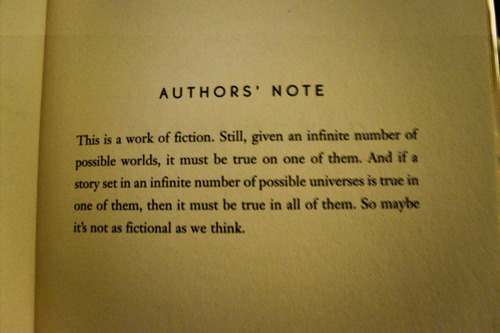
On the other hand, it would send my character Laurel (from Truest) into a manic spiral.  The many-worlds interpretation does not sit so well with her.

Semi-related posts:
Solipsism Syndrome, Anyone?
More Thoughts on Solipsism Syndrome

Review: Fangirl by Rainbow Rowell

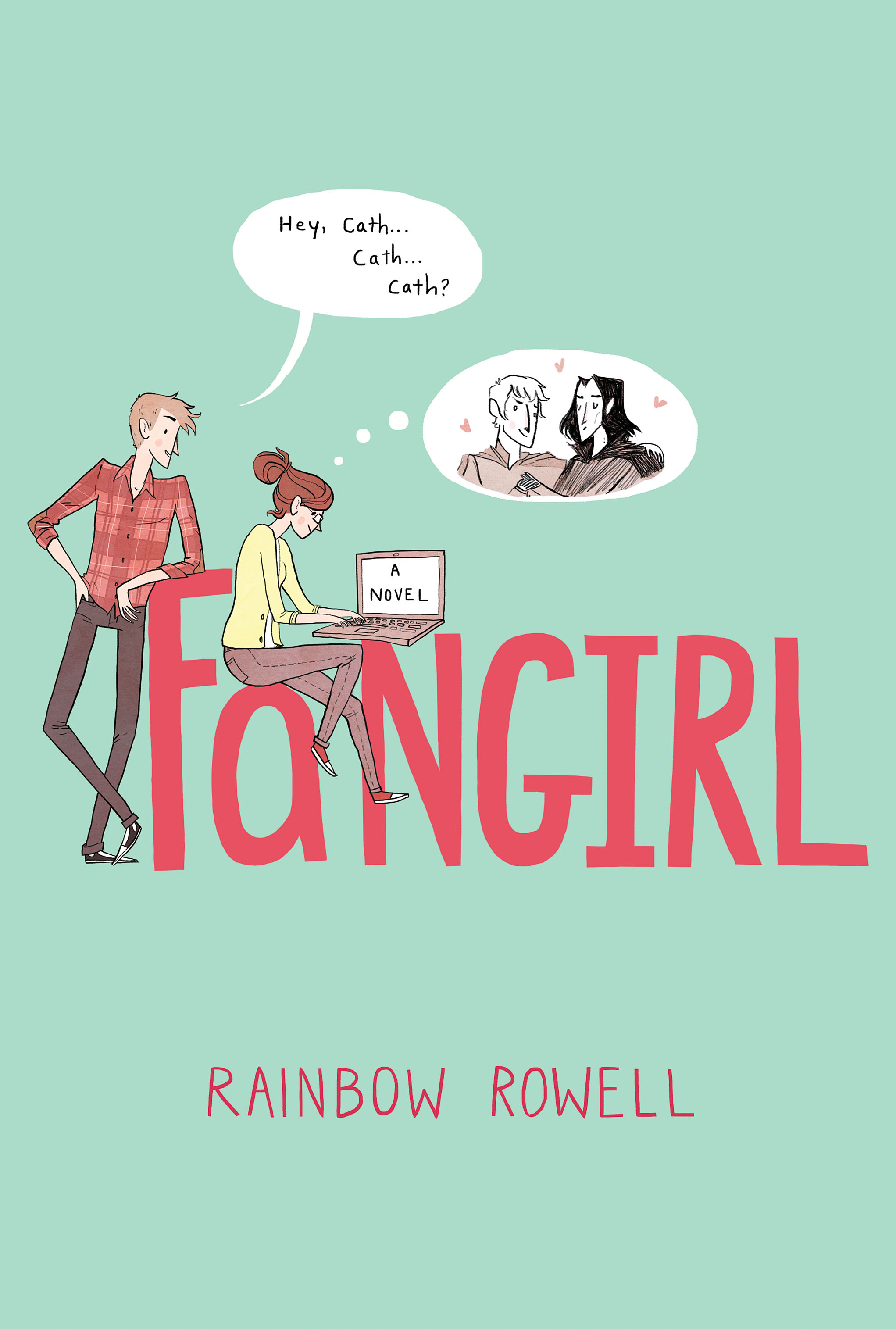
fangirlFangirl by Rainbow Rowell surrounds that curious subculture of fan fiction.  For those unfamiliar with it, fan fiction is where people take characters and worlds already invented and then write their own scenes and stories using them.  There is a massive amount of Harry Potter fan fiction, and even in Fangirl, the main character Cath is writing fan fiction about Simon Snow, which is essentially a thinly veiled Potter.

Cath is a super awkward freshman in college, and her twin sister Wren has chosen not to live with her.  While Wren is out partying night after night, Cath is cooped up in her dorm room, writing fan fiction, and hiding from new people and new situations.

There’s a boy, of course, and while he’s quite lovely, he was a little too over-the-top for me (though I think the rest of the world has fallen in love with him).  While there were definitely some great moments in this book, I didn’t love all the long passages of fan fiction involved.  I also didn’t feel like there was enough conflict (or really, a climax), and the characters’ personalities seemed to change too suddenly for my liking.  I, of course, still think Rowell is absolutely marvelous, but this wasn’t my favorite of her books.

While I was more drawn to the characters in Eleanor and Park, those of Fangirl are definitely going to attract their own following.  If you’re fascinated by the fan fiction element, definitely give this one a look!

Related posts:
C.S. Lewis on Fan Fiction
My Thoughts on Fan Fiction