Do What Scares You: Big Sur, Part One

Experts seem to agree: we grow by doing things that scare us.  I believe this!

It’s why I tackled cognitive-behavioral therapy, why I seek out public speaking opportunities, why I ask for criticism on the things that I write.  Those things all scare(d) me, but I knew I had so much to gain by facing them.  Self-confidence, networking opportunities, friendships, new & improved drafts, stronger character.  In the case of CBT, I gained back my life.

I am not ashamed of being frightened by things … but I force myself to do those things anyway.

As you are reading this, I am probably on a plane to Monterey, California, or perhaps I’ve already arrived for the Big Sur Writing Workshop.  Let’s be honest.  I’m quite terrified.

1) I am not good with airports.  Silly, I know, but I use them infrequently enough that they always make me nervous.  I try to always fly direct so that I don’t have to deal with the pain of connecting flights, but on this trip, it was unavoidable.  I’ll be connecting in Phoenix on the way there … and back.

2) I am not only asking for criticism on my novel but giving myself limited time to respond to it.  At the writing workshop I’m attending this weekend, I’ll get feedback and then have to turn around immediately and revise.  And repeat.  Generally, I like 24-36 hours to process a critique, get over it, and dive back into a new draft.  This entire conference is only about 48 hours, so there is the pressure to act and act now.

3) I will be interacting with literary agents, editors, and authors, all within the children’s and young adult genre.  I want to shine, not only in my writing, but in my personality and presence.  I love networking, but it can be exhausting to always be “on.”  In addition, I am just nervous in general about interacting with people who know so much about the field I’ve chosen.

But I’m doing it.  I have wanted to go to this workshop for the last nine months, and I am finally making it happen.  If you pray, would you pray for me?

I simply want to write impeccably, charm everyone, enjoy myself, and come away with a better manuscript.  Is that too much to ask of one weekend? 😉

Love!

bebrave2


What I Want to Say, a poem

To Jason: What I Want To Say

What place is it you go when you recite
that faith’s eyes are sharp?
So far from this learner who would memorize your portraits
of stars and Sudan, poverty and salvation, to be like you,
to climb that stair.  Your eyes survey nature and science for order;
in perfect strokes you travel logic’s line, pressing it like wet shore
under your heels—across the earth and into space
until you stop on that slender stripe at the very throne of heaven,
where you seek reward for your catalog of answers.
Take me with you.  Say there is merit in exploration
and not merely in accuracy.  Relax your fist enough
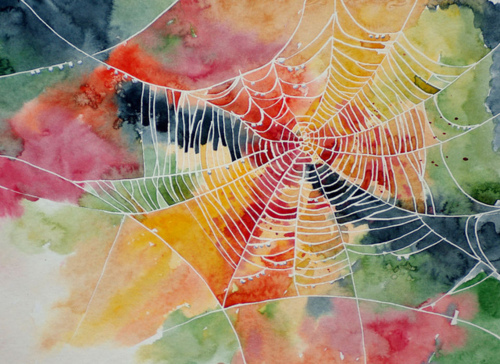
to wrap your hand around mine: maybe logic isn’t a line but a web. 

web

weird little beast

beast


I love being a weird-little-beast writer.  I love finding things so bloody interesting.

Things that fascinate me:

Kryptos, this encrypted sculpture

Witold Pilecki, who volunteered for Auschwitz

As of 1994, there were over 85,000 Chinese characters.  Apparently, basic literacy requires knowledge of about 3,000, although an educated person will know even more.  The English alphabet has just 26 letters, like a short train with the Z as caboose.

chalcophaps

Karel Soucek (and all Niagara Falls daredevils)

synesthesia

colors and all their shades (and names)

Pallor mortis is the paleness a body has after death, as the blood stops circulating through it.  Imagine: a stopped machine, the workers take a nap forever.

wind turbines

believing six impossible things before breakfast


I miss reading.

As you may remember, I am frantically editing my manuscript before I go to the Big Sur Writing Workshop a week from tomorrow, and in doing so, I have neglected reading in favor of spending all my time writing.

I think it’s fair to do that for a short amount of time (for me, six weeks), but it’s starting to feel unhealthy.  When I read, I join in on a large conversation, I connect with a bigger community.  Writing the way I have for the last five weeks is a much more solitary act.  I feel a little lonesome and left out, as if I was in the restroom when the juiciest gossip was shared.

When Big Sur is over, let me tell you, I’m knocking down doors and rejoining that conversation.  It’s what feeds my writing.

Can. Not. Wait.

P.S. I literally have … hold on, I’ll go count … sixteen new books on my shelves.  Dying.

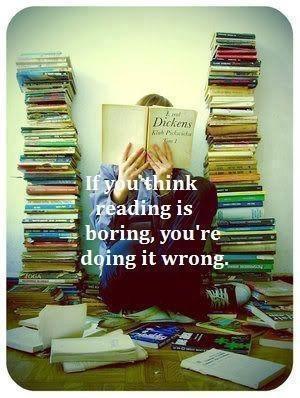
if you think


I judge you based on the books you read. :-)

(This post is meant to be in fun, so no one is allowed to be offended, kapeesh?)

I think we all do something like this, to some extent.  I have a dear friend who judges people based off of their favorite Beatles songs!  My choice of “Here Comes the Sun” passed muster, but if you were to say, for example, “I Wanna Hold Your Hand,” her opinion of you would drop pretty fast.  For some people, it’s the music you listen to; for others, the movies you enjoy.

But for me, it’s books.

librarian

If you read C.S. Lewis, I like you automatically, but if you haven’t read his space trilogy, I start to doubt just how big a fan you are.  When I discover people who haven’t read Narnia, I jokingly ask them why they don’t love Jesus.  (JOKINGLY!  Calm down!)

If you read Melina Marchetta, I think you are brilliant and first-class.  If you’ve discovered Jandy Nelson’s one novel, I’m impressed and can’t wait to discuss it with you.  If you loved The Fault in Our Stars, I think you’re a deep-thinking intellectual.  Same thing if you like Yann Martel’s books.

If you read paranormal romance, I will probably automatically think you’re not serious about good books.  Probably.  Not for sure.  I rather liked The Mortal Instrumentsbut then again, I kind of judge MYSELF for liking them.  Ha!

If you’ve read Sophie’s World, I’d be blown away.  I’m not sure I’ve ever met anyone else who has.

If you refuse to read Harry Potter, I will probably joke that, Yeah, the rest of the world must have been wrong.  But yet, I won’t let that argument work on me if you try to use it for another book.

If you’re a big fan of Christian romance, I’m going to raise an eyebrow.  (You can convince me of your sound judgment if you tell me they are a guilty pleasure.  I have one friend– you know who you are!– who avoids my judgment this way.)

I’m not impressed if you read Austen or the Brontes.  I’m not saying these are bad books at all, just that I don’t care for them much (excepting Wuthering Heights).

A friend of Billy Collins is a friend of mine.  Same goes for Anne Lamott.

I respect LOTR fans though I myself am not interested.

If “cancer books” are your thing (you know, those books where kids fall in love and one of them dies, and every story is almost identical), we should talk.  I can kindly redirect you.

Now, tell me yours!  Do you produce snap judgments, and if so, based on what?  Give me some details!

a literary life

What is your favorite thing about reading and/or writing?

It’s hard for me to choose just one thing!  I love that I get to create new worlds, love that it’s my responsibility to make people think about God and ideas.  But I think my very favorite thing is that I know that, when I write, I am sitting in the very seat of God’s will for my life … I am doing what I was created to do.  How many 31-year-olds are that clear on their calling (and are able to respond)?!  I love my literary life.

read16

publishing peace (and conflict)

I just read Nahum after realizing that I’d forgotten Nahum was even in the Bible.  Whoops.

“Behold, upon the mountains, the feet of him who brings good news, who publishes peace!” (Nahum 1:15a)

Such an interesting choice of words– “who publishes peace.”  Definitely makes this writer stop and think.  In my writing, do I bring good news, do I publish peace?  Juxtapose this question with all I have been learning lately about conflict in stories: how we need conflict in stories even when we avoid it in real life.

Think of the gospel– the word gospel itself means “good news”– and yet it is full of conflict.  The climax of the story involves a death.

And a resurrection.

While I’m still sorting out my thoughts on this, what this means to me is that while a Christian author needn’t shy away from the conflict (and, in fact, should embrace conflict in the story!), there should also be a nod toward hope, toward peace.  The story might not end with sunshine or weddings or all the questions answered (I think I’d be annoyed if it did), but I think there should be a peek, a pinch, an inkling of hope.

I want to be a writer who brings good news, who publishes peace.  And conflict.  All of it.

sunrisecrop

accidental novelist

I never meant to become a novelist.

While pursuing my creative writing degree, I took the stance of an archer and aimed my arrows at poetry.  Sure, I took a semester-long class in fiction and even one in the writing of young adult literature, but when the time came for me to set my goals for my senior project, it was all poetry and creative non-fiction.

Years later, in the throes of an intense, prolonged obsession, I found myself jotting down tiny thoughts here and there.  Just chicken-scratches really.  I was heartsick and frantic and depressed, and I couldn’t handle much more than a thought here or there.  Perhaps a month or so later, I looked at that collection of lines and thought, What if I collected them into a book?  Thoughts, poems, short stories, all related to OCD.  Someone would want to read that, right?

For six months or so, I collected stories from life: my thoughts and experiences, poems I wrote about my obsessions, little stories from life.  It was more like a journal than a manuscript, but it felt great.  I was writing every day, a regular at the coffee shop near the university where I work, their very own “writer-in-residence,” as the baristas would tease me and ask me to include them in my book.

It was a mess of thoughts, with little order to it.  I printed off the whole shebang, cut all the parts up, and quite literally sorted each into various categories, trying to force some semblance of order onto it.

cutting apart

After it was all re-grouped, I gave it to my friend Anna for her review.

She said, “Yeahhhhh … it doesn’t work.  Why don’t you ever include real dialogue from your life?”

“I might not get it exactly right,” I told her.  “And that would be like lying.”  It could have become an obsession so easily; instead I avoided it completely by not including dialogue.

“It needs dialogue,” she said.  “It needs to be more of a story and less of a collection of random thoughts.”

But I was months away from the therapy that would give me that kind of freedom, and I knew that I couldn’t make it my own story because I wouldn’t get every detail right, and that would be wrong.  So I decided to make it fiction, which would allow me to invent as much as I wanted.

It took years to transform that original journal into a novel.  I had no idea what I was doing.  Anna kept telling me I was still writing like a memoirist instead of a novelist, and I thought, What’s the difference?  I honestly didn’t know.  I plowed through that like someone wading in a foot of water with cement blocks strapped to her feet.  It was really hard.

But somewhere in the midst of those years, something both incredible and strange happened: I became addicted.

Addicted to writing fiction, to the limitless creativity available to novelists, to the act of creating something out of nothing— trying my hardest to in a small way mimic God in those earliest days of earth.

One year ago, and hooked beyond rescue on fiction (and with no desire for such a rescue), I started a young adult novel.  I gave myself six months for the first draft, and when six months was over, I was shocked that it was a complete story with a beginning, middle, and end.  At the end of six months with the first story, I had a jumbled collection of journalled thoughts.

So I was learning.

Now, a year into this writing, I asked for help from an editor.  Sometimes my life feels like it’s on repeat: he said, “Yeahhhhhh … it doesn’t work.”  Essentially.

It’s okay.  I know that I can massage it into something workable, something publishable, something excellent.  It’s just going to take a lot longer than I first thought.  I want to plead the excuse, “Well, what did you expect?  I’m a poet.”

But not really.  I still love, read, and write poetry, but it’s not the right descriptor anymore.

I am a novelist.

On accident, but a novelist nevertheless.  A clueless one, but learning every day.  Discouraged, but never enough to stop.

I love this identity.

novelist


OCD and writing

Recently, my friend Tina at the Bringing Along OCD blog wrote about “reading OCD” — which she had in an earlier post described this way:

Imagine opening up a book to begin reading it. Chapter one. You read a paragraph. Then you reread it. Then you move to the second paragraph, but you realize that you may not have read the first paragraph well enough. So you go back and read paragraph one again. Then you read and reread paragraph two several times. You finally make it to the end of the page, and in turning the page, you think, “I’ve read page one adequately.”

  But you can’t be sure. Did you understand everything you read? Will you remember it?
  So you reread page one, reading and rereading the paragraphs again. After an hour of being on page one, you get tired and decide to put down the book. You’ll get through the book someday. It’s only the third time you’ve tried to read chapter one.
Tina said, “This makes reading laborious and sometimes unbearable. I find myself avoiding reading.”
I really, really hate OCD.  I hate the way it tries to steal whatever is most important to us.
For me, it tried to steal (and for a time DID steal) my writing.
At the time, I was working on my first novel, which was all about OCD, and my OCD kept reminding me of the Bible verse that says, “Finally, brothers, whatever is true, whatever is honorable, whatever is just, whatever is pure, whatever is lovely, whatever is commendable, if there is any excellence, if there is anything worthy of praise, think about these things.”
My head snagged on the verse.  I was writing about OCD … and OCD was not lovely; that I knew for sure.  OCD was not pure or commendable.  It was ugly, tyrannical … not worth of praise.  And yet, I was spending all this time writing about it, all this time thinking about it.
I started to obsess that my writing was sinful.
Writing, which had always been a lovely release for me, a respite … even that was being stolen from me by OCD.  This is the scene I ended up writing about it (eventually):

“Stella,” I said, reaching out and touching her hand.

She looked at me.  “What’s up?”

“I think it’s wrong to write my poems.”

She frowned.  “What.”  It was an accusation, not a question.

I tried to explain my logic.  “So I write about feeling scared about hell, for example, okay?  And then other people read about it, and I’m causing them to sin.”

“Neely, the Bible talks about hell.”  The brown eyes of Stella Bay-Blake were flashing—and looking dangerously similar to Trapper’s.

“There is that,” I said, pausing to think it through.  Maybe Christ’s brief mentions of hell didn’t warrant people’s actual dwelling on it, whereas a poem would.  In that case, I’d still be out of line.  “I don’t know.”

“Neely, there is rape in the Bible.  And adultery.  And murder.”

“But maybe not really in a way so that the reader dwells on those things, you know?”

“No,” she said.  She sounded angry, and with her curls falling forward into her face, she looked violent, like a lion.  “This is the one way that you can healthily process your stupid OCD.”

“Maybe I could try to dwell on lovely things.  Write about lovely things.”

“Yeah,” she said sarcastically.  “You can write ‘Walking on a Rainbow to the King: Reprise.’  Because what I want to read are a hundred pages about sunshine and puppies.”

“Not sunshine and puppies, not necessarily,” I said.  “But things like … like faith and confidence.”  Father God, I love You.

“You have OCD,” she reminded me, “and you are going to write convincing poems about confidence?”  She had a point.  “My gosh, I will really blow a nut if you quit writing.  I’m the writer who doesn’t write!”

But we sat in silence at the tiny table, my closed journal a symbol of all my failure.


OCD. Is. A. Thief.  It will steal whatever you love best.  It will warp your mind into believing things that are so far from the truth.  It is a liar.  I hate the bondage it keeps so many people in.  I am so glad to no longer listen to and believe all those lies.