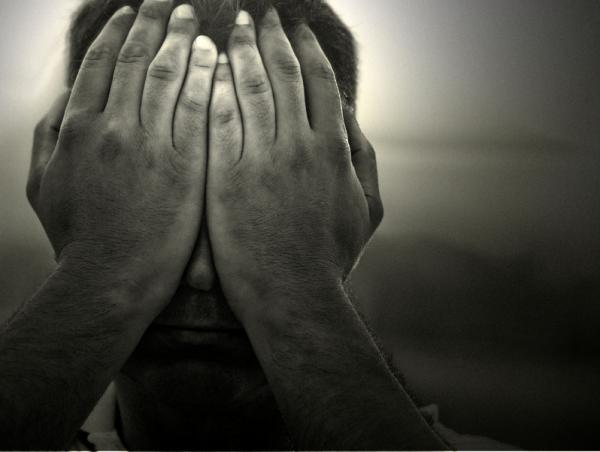
enabling OCD and telling the truth

I have not written about this in the past because this is not an area that I have a good grasp on.  To me, there is a fine line between enabling an obsessive-compulsive and just being a helpful supporter of that person.  When I was going through cognitive-behavioral therapy, my therapist had me tell my roommate and friends that they were no longer able to reassure me about anything silly.  I was instructed to tell them that if they did this, it would interfere with my therapy and decrease its opportunity for success.

So, all those times when I would ask, “Do you think that is okay?  Is this sinful?  Do you think I’m going to hell?” … they were supposed to answer it with something like, “I’m not allowed to answer that question.”  Or “I don’t answer silly questions.”  Or “I’m not going to answer and enable your OCD.”

It’s a hard position for them to be in.  For the OC too!

As a Christian who believes the Bible when it says, “The truth will set you free,” I had (and still have) a hard time thinking that it is not helpful for a friend to tell someone the truth– shouldn’t that help set them free?

But then I think how I asked those questions for years and years, and all that stated truth piled up like a mountain but never moved me.  Why was it that listening to a LIE– an audio recording telling me repeatedly that I was going to hell– is what ultimately unlocked the doors of my prison?

A student at the university where I worked asked me that earlier this fall– how listening to a lie could rescue me.  I didn’t have an answer for her then.  The more I thought about it afterward though, I realized that what had happened was that listening repeatedly to a lie started to make the lie SOUND like a lie– and that was the truth!  CBT helped me recognize truth, and so in that way, it was still truth that set me free.

Does that make sense?

I’m still processing all of this and would love insight on this!

~4

creative growth

body of work

I am still learning this, but oh, how I am learning this!  

I spent four years writing my first novel, finally putting my stamp of approval on it in January of 2012.  Next month will be one year since I put the manuscript away, and already it is so very clear to me how much I have grown as a writer.  History should have taught me that this would happen.  I remember loving my creative work in junior high, high school, and college– all of which I can now summarize as weak.  I didn’t know what I was doing!  I hadn’t read widely enough, experimented enough, or even lived life enough to create a truly brilliant body of work.

Sure, there were moments– beautiful lines here or there that spoke of depth– but I was and still am a learner.

I was so proud of my first novel.  I poured my entire self into the writing of it.  And already one year later, I’m a little ashamed of it.

But not too ashamed.

had to write it.  It was my next step.  It was what needed to happen.  It was my playground.  School was in session.

At least now I am more aware of the process, aware of the way I grow.  I was always in school, but now I’m aware of it.  I read as much as I can, and I re-read books that I love.  I marvel at imagery.  I work at my craft.  I write draft after draft after draft, knowing that it will take a mountain of them before I am truly happy with the finished product.  (Writing that word– finished— makes me smile a little bit.  I wonder if artists ever really feel as if something is completed?  I hope so– but I am going to wait and see.)

I know that twenty-some years of writing has been to build a solid foundation for me to stand on– and maybe leap from.  I needed to invent that Pononia family in elementary school and come up with stories about their lives, needed to write about Mariah and Kayy, the best-friends-turned-track-rivals, in seventh grade.  I needed to write that horror story where the best friend turned out to be a killer– her name was Chloe, and I definitely thought it was pronounced Sh-low.  And that soap opera– the one about Sunnyside High and teen pregnancy, AIDS, romance, running away, and finding a long-lost twin– needed to be written and circulated amongst friends in high school.

And college.  I had to vomit out those awful poems in college, had to learn how to take criticism, how to re-write, how to love a writing community.  I had to attempt  to not be jealous of great writers and then learn that it is pretty much impossible and that you can love those great writers even though you seethe with envy.

I turn 31 next month, but as a writer, I’m practically an infant still– maybe a toddler.  It’s hard to assess.  I still have a lot to learn, and I’m thrilled about that.  I am committed to the writing life for the long haul, even if I still have years ahead of stilted, awkward, gangly stories ahead of myself.

Someday they will shine so bright they will blind you.

How/why does a good and all-powerful God allow bad things to happen?

In light of the recent shooting at the Connecticut elementary school, many people are asking this question.  Years ago at a youth workers’ conference in Atlanta, I heard one of the most stirring messages of my life, delivered by Louie Giglio, and I have never forgotten what he had to say there.  In fact, his message has taken up residence inside my heart so permanently that it made its way into the novel I’m writing.  Here’s an excerpt:

He moved so that he was sitting beside me, both our backs against the tower wall.  “You know, West, I believe that God is in control of everything.”

“Even over the bad things?”

“Yes.”

“Death?  Disease?”

“Yes.”

“Catastrophe?”

“Yes.”

“Solipsism syndrome?”

The pause was brief.  “Yes.”

Why?” I asked.

“The cross,” he said simply, and when I didn’t answer, he took my hand in both of his and explained, “When Christ died, his followers looked at his bloody body on the cross and said, ‘That is the worst thing in the universe.’  The ugliest.  The most horrific.”

I nodded, prompting him to go on.

“After the resurrection, Christians say that same image was the most incredible, amazing thing in the universe,” he said.  “How is that possible?  How is it that one weekend separated the worst thing from being the best thing?”  He leaned his head back against the wall, looking up toward the tower roof.  “That is how I believe that God is in control of everything.”

One thought wrestled its way to the front of my mind, and I blurted out, “But why was it necessary?”

Silas frowned.  “Eden.  The fall of man,” he said.

I shook my head.  “Even that,” I said.  “If God is in control of everything—like you say—then why did humanity fall at all?  Why wouldn’t God just have life go on perfectly, like in the garden at the beginning?  He could have stopped Adam and Eve from ever screwing things up.”

“I think,” said Silas with a sincerity that almost frightened me, “that God favors redemption over perfection.”

“You mean … you mean, he prefers a rescue operation over having no need for one?” I asked.

“That,” said Silas, “is exactly what I mean.”

You can watch the sermon that so impacted my life below, and I hope that you will.  Forty-five minutes of your time is a small price to pay for such a life-changing message.  If you choose to watch, will you post your thoughts in the comments section below?  I’d love to start a healthy and friendly discussion.

OCD and suicidal thoughts

Recently Janet at the OCDtalk blog posted about her friend whose obsessive-compulsive son had just committed suicide.  The post broke my heart.  It reminded me of earlier this fall in Boston where I met Denis Asselin, the winner of the International OCD Foundation Hero Award.  Denis’s son Nathaniel, who suffered from intense body dysmorphic disorder (on the OCD spectrum), took his own life in 2011.  It was beautiful but devastating to listen to him talk about his beloved son.  My heart is heavy as I think about these families, now missing an important member, and about the horrific pain that these young men were experiencing that made them see no other way out.

It’s a dark, heavy topic, but tragically important to discuss.

OCD is so often thought of as simply being neat or orderly– or sometimes even anal retentive about certain things.  Media portrays obsessive-compulsive disorder as a quirky, nitpicky, and sometimes comical disorder, but let me level with you: OCD is debilitating, devastating, and torturous.

Can you imagine feeling nothing but sheer, unadulterated terror for days, sometimes weeks, on end?

I remember some of my darkest, hardest, most terrifying days.  I lived in the Brighton Village Apartments with Becky and Tricia.  During the day, I was given the small grace of suspending my obsessions– at least enough to make it through work (most days– not all), for which I am grateful.  In the evenings, I would return to our apartment, where I would drown in an ocean of terror.  My soul felt untethered, lost, condemned; I felt the hot, ugly breath of hell on my neck all evening.  I felt unforgiven and completely cut off from the God I wanted so desperately.  (It is making me cry right now as I write about those dark days.)  And the torture of not knowing— heaven or hell?  saved or condemned?  found or eternally lost?  heard or ignored?– was the worst kind of mental anguish.

Those apartment buildings were built like an X, with the pool and laundry facilities at the center where all four wings came together.  I remember– and this is not an isolated event but something that happened every time I was in that third-floor laundry room– I would look over the balcony down to the first-floor pool area, usually empty, and I would thinkIf I threw myself off this ledge head-first, I would finally know: heaven or hell.  I would have my answer, instead of the torture of not knowing.

But what if the answer was hell?  I couldn’t hurry that on.  What I wanted even more was annihilation— to cease to exist.  I craved oblivion.  That is true pain for you.

I realized that I was already in hell– just of a different stripe.  I was living like a condemned person, in TERROR and heartache and loneliness, and in constant combat with the blasphemous thoughts that plagued my mind.

Most people wouldn’t have guessed it.  I smiled a lot at work.  I even managed to fool those closest to me who knew the anguish I was experiencing.  But I would look over that balcony at the hard floor, and I would think about it.  OCD is that devastating.  I believe obsessive-compulsives (even those who take their own lives) are some of the strongest people you will ever meet.  They fight a constant war.  It is no wonder to me that many want to lay down their weapons and surrender.

And yet, here I am, eight years later, happy and healthy and secure in my faith, enjoying life and friendships and a growing relationship with Jesus Christ.  I am not tormented by my own thoughts, and uncertainty isn’t anguish any longer.  I want to gently take the faces of the anguished obsessive-compulsives into my hands, stare them directly in the eye, and tell them, There is hope.  There is help.  It doesn’t have to stay this way.  I would hug them and cry with them and personally drive them to my cognitive-behavioral therapist.  I was once where you are.  Follow me to freedom.

If you are struggling today with intrusive thoughts, obsessions that plague you, compulsions that take over your life, THERE IS HOPE.  I promise you.  This is a disorder– just a disorder, albeit a powerful, ugly, life-thieving one.  Follow me to freedom.  There is Truth, and it is not what you are hearing from your OCD.  Rescue is possible.  Follow me to freedom.  Email me.  Joy, happiness, laughter, truth, peace, safety– these may seem like impossibilities, but they can be yours too.


suicide

OCD and the Unpardonable Sin

Scrupulosity: OCD centered around religious themes.

The story of my life.

The obsession: for many years, my head would repeat blasphemous things over and over, sometimes triggered by certain sounds and sometimes by non-specific phrases about hell, demons, souls, the devil.

The compulsion: I began to repeat one particular phrase– “Father God, I love You”– over and over in my head as a way to stem the other thoughts.

It became very difficult to handle everything that was going on: these blasphemous thoughts would crowd me– I mean, really crowd me (the image I have is of these thoughts bumping and grinding on me like dirty brutes at a dance club), and I’d be warding them off by repeating this repetitive prayer over and over (and over and over and over).  And on the outside, it didn’t look like anything.

Those who were closest to me (dear friends and roommates and family members) knew that I was going through hell, but they couldn’t see the battle that was taking place.  They only knew of it when I told them or on nights when I broke down sobbing in fear of eternal damnation.

It is hard to describe exactly what it feels like to feel as though you’re wearing a sentence of hell on your shoulders.  Here’s a shot:

Condemnation (or supposed condemnation) is like being in a tank of water with only inches of air at the top.  You have to lean your head back to put your lips to the air, and the whole while you must keep treading water.  There is no opportunity for distraction.  It consumes every moment of your life.

Anyone reading this understand me?

If so, please read this sermon.  I think it might help.  My heart aches for you, but there is hope.  Lovers of Jesus Christ don’t belong in hell.  Let’s talk.

Mary’s Song by Luci Shaw

Luci Shaw is an incredible poet, and she has a book entitled Accompanied by Angels: Poems of the Incarnation, which I love to pull out around Christmas and Easter.  Here is one of my favorite of her Christmas poems:

Mary’s Song

Blue homespun and the bend of my breast
keep warm this small hot naked star
fallen to my arms. (Rest …
you who have had so far to come.)
Now nearness satisfies
the body of God sweetly. Quiet he lies
whose vigor hurled a universe. He sleeps
whose eyelids have not closed before.
His breath (so slight it seems
no breath at all) once ruffled the dark deeps
to sprout a world. Charmed by doves’ voices,
the whisper of straw, he dreams,
hearing no music from his other spheres.
Breath, mouth, ears, eyes
he is curtailed who overflowed all skies,
all years. Older than eternity, now he
is new. Now native to earth as I am, nailed
to my poor planet, caught
that I might be free, blind in my womb
to know my darkness ended,
brought to this birth for me to be new-born,
and for him to see me mended
I must see him torn.

The LightdeviantART by ~ninebreaker

The Light
deviantART by ~ninebreaker

reading like a rocket

Just finished re-reading The Horse and His Boy by C.S. Lewis, and I so dearly love the part where “the King’s poet with two fiddlers stepped into the middle of the circle”:

Aravis and Cor prepared themselves to be bored, for the only poetry they knew was the Calormene kind, and you know now what that was like.  But at the very first scrape of the fiddles a rocket seemed to go up inside their heads, and the poet sang the great old lay of Fair Olvin.

Mmm, I love that– “a rocket seemed to up inside their heads.”

It made me think, How do I feel when I hear or read an amazing story?

Incredible stories rush my heart like a beautiful phantom.  They satisfy this incredible longing for beauty in me– and then stretch that part of my soul, increasing my appetite for enchantment.

How about you?

magic

books to movies

Books being made into movies that I am excited for:

City of Bones by Cassandra Clare … I have to admit I was thrown off when I heard that Alex Pettyfer turned down the role of Jace Wayland, but Jamie Campbell Bower is growing on me day by day!

jace

Jellicoe Road by Melina Marchetta … this hasn’t begun filming yet, but I am FREAKING OUT about this one.  The book is 200% incredible, and the secrets in it will be harder to keep in a film version, but Marchetta herself seems to be pretty involved with the project, and I know her influence will keep things on track.

Ender’s Game by Scott Orson Card … this one is coming to theatres SO SOON.  Card was unwilling to sell the film rights to anyone who wouldn’t agree to make Ender 12 or younger, and it will be really interesting to see a film full of young stars (could be hit or miss!).

Magician’s Nephew by C.S. Lewis … the most important things to me in this movie are 1) Who will write the score?  (Remember, Aslan sings Narnia into creation) and 2) How will they show that Digory is Professor Kirke in the future?

The Night Circus by Erin Morgenstern … this is going to be INCREDIBLE, and it is being produced by David Heyman of Harry Potter fame!

Books I want to be made into movies:

The Fault in Our Stars by John Green … for goodness sakes, it was TIME’s #1 book of 2012!  There has to be a movie coming along, right?  Whoever they choose as Augustus Waters will probably be my new celebrity crush.

Finnikin of the Rock by Melina Marchetta … I keep picturing a young Natalie Portman for this one.  I would go crazy if this were to be made into a movie!

Peace Like a River by Leif Enger … I had lunch with him last spring (yes, for real!), and he said that someone had purchased the rights in the past and then changed the screenplay around so much that it wasn’t even the same story.  I’m glad that one fell through, but I’d like to see a true-to-the-story rendering of it someday!

The Horse and His Boy by C.S. Lewis … I keep freaking out because they are making the Narnia movies one by one, and I’m so nervous that they won’t get all the way to HHB.  This story lends itself to a movie!!  If I were in charge, I’d make Shasta and Aravis a little older and amp up the love story!  I wonder if Cor and Corrin would be played by the same actor or by twins.

Also, I wish desperately there was another Harry Potter movie on the horizon.  How about you?