Roses and Janie “mash-up”

Turn this song on and read the poem below it for the most deliciously melancholy experience.

(Am I weird for liking sad songs and poems?  I love them!)


Roses
by Billy Collins

In those weeks of midsummer
when the roses in gardens begin to give up,
the big red, white, and pink ones—
the inner, enfolded petals growing cankerous,
the ones at the edges turning brown
or fallen already, down on their girlish backs
in the rough beds of turned-over soil,

then how terrible the expressions on their faces,
a kind of was it all really worth it? look,
to die here slowly in front of everyone
in the garden of a bed-and-breakfast
in a provincial English market town,
to expire by degrees of corruption
in plain sight of all the neighbors passing by,

the thin mail carrier, the stocky butcher
(thank God the children pay no attention),
the swiveling faces in the windows of the buses,
and now this stranger staring over the wall,
his hair disheveled, a scarf loose around his neck,
writing in a notebook, writing about us no doubt,
about how terrible we look under the punishing sun.

Tall, Dark, and Handsome

He shakes my tidy box of labeled dreams
until its bows are undone, a timid musician
in designer jeans who explains the economy
in a way that makes sense.  He offers to drive,
steers with one hand while he seeks  a certain song,
redefining my ideal until it is far more important that
a man can talk finance, sing softly in the driver’s seat,
and delicately raise one eyebrow into a perfect arch
like a cartoon villain or a famous work of art.

eyebrow_520

This is just A boy, not THE boy the poem is about. 🙂

a poem I wrote

I wrote this back in college, but I was thinking of it recently when I was up north at my summer camp.  The poem is about a boy with whom I shared one wonderful week– and after that, things fell apart.  In college, this was my assessment of the situation (which, for the record, took like three years to heal from.  One week, then three years.  Boys.)

Invitation

It appears to be about the temperature,
the way your body reacts to the sun,
how you kissed my hand and left.

You sang raw songs aloud, white flags
you spited for the sake of the sun,
a clumsy surrender to the afternoons,

later blaming the northern countryside for
the way it slows your blood,
allowing more time to warm.

And so you dressed your hurts in city shade,
where haste is the liquor to rinse your mind
of that summer and the way your hands were soft.

I left St. Paul and welcomed the day’s damage
because of the lessons that leak into open sores.
I make the most of my summer wounds.

But I want you to know—I would have helped you adjust:
dark faces shadowed by a background of pines,
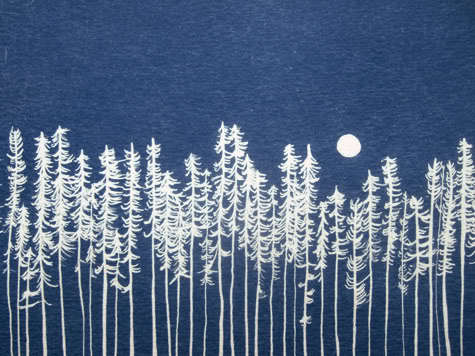
only the moon with no warmth of its own.

Remember, dear, the northern nights are cold.

when half-gods go

I remembered this past week a poem that used to matter a lot to me in college, especially for its ending lines.  I discovered it around a time of my life when I was clearing a particular boy out of my romantic life– a boy I was very close to, one I cared about a great deal, who was one of my best friends at the time.  He was marvelous and hilarious and gorgeous, but I knew he wasn’t the right one.  He was what Emerson refers to below as a “half-god.”  I couldn’t settle for a half-god.  Because when half-gods go, the gods arrive.

Give all to love;
Obey thy heart;
Friends, kindred, days,
Estate, good fame,
Plans, credit, and the muse;
Nothing refuse.

‘Tis a brave master,
Let it have scope,
Follow it utterly,
Hope beyond hope;
High and more high,
It dives into noon,
With wing unspent,
Untold intent;
But ’tis a god,
Knows its own path,
And the outlets of the sky.
‘Tis not for the mean,
It requireth courage stout,
Souls above doubt,
Valor unbending;
Such ’twill reward,
They shall return
More than they were,
And ever ascending.

Leave all for love;—
Yet, hear me, yet,
One word more thy heart behoved,
One pulse more of firm endeavor,
Keep thee to-day,
To-morrow, for ever,
Free as an Arab
Of thy beloved.
Cling with life to the maid;
But when the surprise,
Vague shadow of surmise,
Flits across her bosom young
Of a joy apart from thee,
Free be she, fancy-free,
Do not thou detain a hem,
Nor the palest rose she flung
From her summer diadem.

Though thou loved her as thyself,
As a self of purer clay,
Tho’ her parting dims the day,
Stealing grace from all alive,
Heartily know,
When half-gods go,
The gods arrive.

-Ralph Waldo Emerson

Still waiting for that Mr. Right!!!!


9 years later

… I finally finished the poem that I starting writing right around college graduation in May 2003.  I hope it makes sense to you.  Some people have gotten confused by it.  Hint: there are 3 characters in it, not 2.

THE CALL

When the sky burst like a balloon, the rain soaked the hikers
for ten wild minutes that shivered like forever.
It was like a gift, he said, or like a holy baptism.
Or it was like a scene in a story you would write.
And when the call was dropped, she phoned to tell me,
who pictured this boy or that on a cell phone in the mountains,
smelling clean like Appalachian rain and wanting me to know.

we can all do with a little more Billy Collins in our lives

Aristotle
by Billy Collins

This is the beginning.
Almost anything can happen.
This is where you find
the creation of light, a fish wriggling onto land,
the first word of Paradise Lost on an empty page.
Think of an egg, the letter A,
a woman ironing on a bare stage as the heavy curtain rises.
This is the very beginning.
The first-person narrator introduces himself,
tells us about his lineage.
The mezzo-soprano stands in the wings.
Here the climbers are studying a map
or pulling on their long woolen socks.
This is early on, years before the Ark, dawn.
The profile of an animal is being smeared
on the wall of a cave,
and you have not yet learned to crawl.
This is the opening, the gambit,
a pawn moving forward an inch.
This is your first night with her, your first night without her.
This is the first part
where the wheels begin to turn,
where the elevator begins its ascent,
before the doors lurch apart.

This is the middle.
Things have had time to get complicated,
messy, really. Nothing is simple anymore.
Cities have sprouted up along the rivers
teeming with people at cross-purposes –
a million schemes, a million wild looks.
Disappointment unsolders his knapsack
here and pitches his ragged tent.
This is the sticky part where the plot congeals,
where the action suddenly reverses
or swerves off in an outrageous direction.
Here the narrator devotes a long paragraph
to why Miriam does not want Edward’s child.
Someone hides a letter under a pillow.
Here the aria rises to a pitch,
a song of betrayal, salted with revenge.
And the climbing party is stuck on a ledge
halfway up the mountain.
This is the bridge, the painful modulation.
This is the thick of things.
So much is crowded into the middle –
the guitars of Spain, piles of ripe avocados,
Russian uniforms, noisy parties,
lakeside kisses, arguments heard through a wall
too much to name, too much to think about.

And this is the end,
the car running out of road,
the river losing its name in an ocean,
the long nose of the photographed horse
touching the white electronic line.
This is the colophon, the last elephant in the parade,
the empty wheelchair, and pigeons floating down in the evening.
Here the stage is littered with bodies,
the narrator leads the characters to their cells,
and the climbers are in their graves.
It is me hitting the period
and you closing the book.
It is Sylvia Plath in the kitchen
and St. Clement with an anchor around his neck.
This is the final bit
thinning away to nothing.
This is the end, according to Aristotle,
what we have all been waiting for,
what everything comes down to,
the destination we cannot help imagining,
a streak of light in the sky,
a hat on a peg, and outside the cabin, falling leaves.


another Narnia poem

… since I’m the biggest nerd you know.

SUSAN OF NARNIA

You cannot convince me that you have wholly erased
the lamp-post, the summer constellations, the Lion Himself.
You were there, saw the knife, heard the table crack like a giant’s plate.
When your great desire stood before you like a golden beacon,
how could you turn from joy to other invitations?
I refuse to believe that you have plucked from your deepest heart
righted wrong, vanished sorrows, the very death of winter.
You will awaken one day, I am sure, when pain claps your heart,
when British railways tear up your world of nylons and lipstick.
Grief will bring you back to solid ground, to your first love.
After all, once a queen, always a queen.

some more Billy

The First Dream
by Billy Collins, my favorite

The Wind is ghosting around the house tonight
and as I lean against the door of sleep
I begin to think about the first person to dream,
how quiet he must have seemed the next morning

as the others stood around the fire
draped in the skins of animals
talking to each other only in vowels,
for this was long before the invention of consonants.

He might have gone off by himself to sit
on a rock and look into the mist of a lake
as he tried to tell himself what had happened,
how he had gone somewhere without going,

how he had put his arms around the neck
of a beast that the others could touch
only after they had killed it with stones,
how he felt its breath on his bare neck.

Then again, the first dream could have come
to a woman, though she would behave,
I suppose, much the same way,
moving off by herself to be alone near water,

except that the curve of her young shoulders
and the tilt of her downcast head
would make her appear to be terribly alone,
and if you were there to notice this,

you might have gone down as the first person
to ever fall in love with the sadness of another.

Photo credit: Jane Pak Oh

Untitled

Say anything; I want to try on your life like a suit coat for the fit.
This works – bashfulness catching your tongue at my question
so that the air expects words that do not come,
leaving empty space to dangle like mistletoe, pregnant
with potential.  Keep your secrets, then – only don’t look away.
Your brown eyes are ripening grace and fever in me like sun on a vineyard.
Your intensity pitches a spreading fire in my chest, and I need no bolder story.


i ♥ Billy Collins

How to describe Collins?  He is a poetry rockstar.  A brilliant poet who is famous while he’s still alive.  A comedian with words.  The king of the killer last line.

Billy Collins is so popular that it’s almost a cliche to like this former U.S. Poet Laureate.

I don’t care.

Enjoy:

No Things
by Billy Collins

This love for the petty things,
part natural from the slow of childhood,
part a literary affectation,

this attention to the morning flower
and later in the day to a fly
strolling along the rim of a wineglass —

are we just avoiding the one true destiny,
when we do that? averting our eyes from
Philip Larkin who waits for us in an undertaker’s coat?

The leafless branches against the sky
will not save anyone form the infinity of death,
nor will the sugar bowl or the sugar spoon on the table.

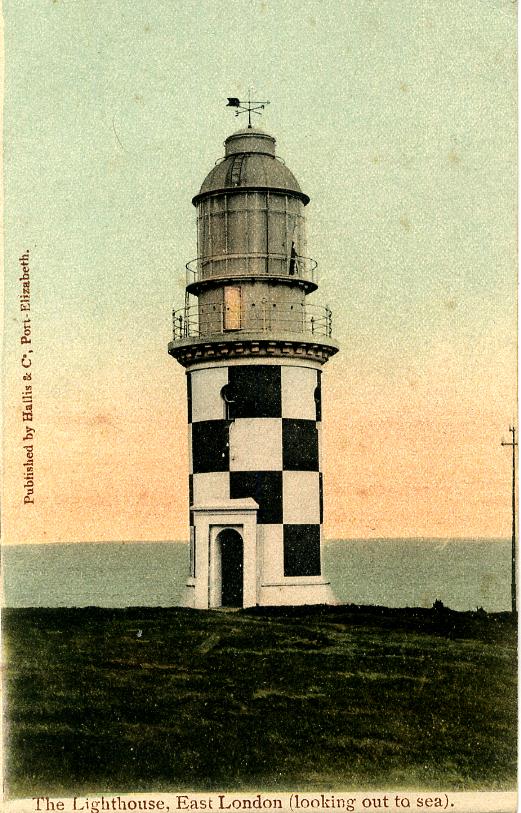
So why bother with the checkerboard lighthouse?
Why waste time on the sparrow,
or the wildflowers along the roadside

when we should all be alone in our rooms
throwing ourselves against the wall of life
and the opposite wall of death,

the door locked behind us
as we hurl ourselves at the question of meaning,
and the enigma of our origins?

What good is the firefly,
the droplet running along the green leaf,
or even the bar of soap spinning around the bathtub

when ultimately we are meant to be
banging away on the mystery
as hard as we can and to hell with the neighbors?

banging away on nothingness itself,
some with the foreheads,
others with the maul of sense, the raised jawbone of poetry.