When Writing = Death

Look, I’m not the first one to comment on this. Not even close.

You have an idea– a bright, beautiful, perfect idea– and then you start to write it down, and it dies on the page. It becomes imperfect. It gets messy.

Ann Patchett said her ideas are like beautiful butterflies that soar around in her mind, and then when she starts to write, she takes them and pins them to a board. Death.

Chuck Wendig blogged about it recently, saying, “Writing and storytelling is this… nasty task of taking the perfect idea that exists in your head and shellacking it all up by dragging it through some grease-slick fontanelle in order to make it real. You’re just shitting it all to hell, this idea. You have it in your mind: golden and unbreakable. And then in reality, ugh. You’ve created a herky-jerky simulacrum, a crude facsimile of your beautiful idea run through the copy machine again and again until what you started with is an incomprehensible spread of dong-doogle hieroglyphics.”

Sometimes it’s like I can see this perfect book; it’s shining like an angel at some perfect finish line. And when I sit down at my computer, I’m trying to run toward that finish line, but instead my running is sideways, disoriented, like the way my siblings and I used to spin until we were dizzy and then race each other. The whole time I could see the silo on the other side of the lawn– whoever reached it first would win– I could see it and was trying to run toward it, but my legs kept yanking me to the side like I was some drunken pre-teen.

It’s no wonder I sometimes avoid my manuscript.

Chuck’s blog post went on to say, essentially, write anyway: “Those who try to master perfection will always fall to those who iterate, and reiterate, and create, and recreate. Art is better than philosophy. Creation, however clumsy, is always better than sitting on your hands and fearing what damage they can do.”

Writing takes courage. Writing means walking in the shadow of death while still trusting in life. It means daring to wade into the mess in order to find that spark of life, of beauty, instead of being content to just daydream of perfection.

My prayer these days is “Help, God. In every way, help.”

Seeking Publisher Permissions, Part II

copyrightBack in early February, I wrote about my experience with seeking out permission from publishers to use various lines of poetry and lyrics in my novel, Truest.

By now, I’ve heard back from all the licensing departments, and I wanted to give you the final results:

One line of an E.E. Cummings poem: free. 

Two lines of a Billy Collins poem: $290 for the first run of 10,000 copies of Truest, after which I’ll need to reapply. I agreed.

One entire E.E. Cummings poem: $560. I eagerly agreed, as several scenes hinge on this poem.

Two lines of lyrics from a Pink Floyd song: $1000 for five years, after which I’d need to reapply. I declined. These lyrics were going to be the novel’s epigraph, and while they’re beautiful and fit the novel perfectly, I thought $1000 was too much to pay for two lines that don’t appear in the actual manuscript.

All told, I paid $850 for permission to use what I wanted in my novel. In a perfect world, I’d have also used a line from C.S. Lewis’s That Hideous Strength and the refrain from Chicka Chicka Boom Boom, but with frazzled nerves and empty pockets, I took them out without changing the story.

In the end, my advice is to use material from the public domain or else make it up yourself. I’m doing both in Mill City Heroes.

P.S. I read a YA book recently that used quotes like they were breadcrumbs. While I read, all I kept thinking was $$$$$$$$$$$$$$$$$$$$. This author’s eyes have been opened. 🙂

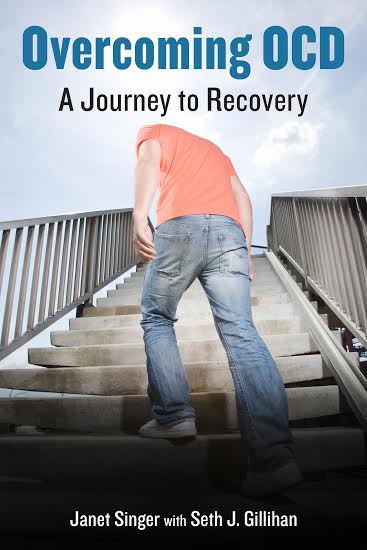
Review: Overcoming OCD: A Journey to Recovery by Janet Singer

overcoming OCDMy friend Janet over at the ocdtalk blog recently wrote a book detailing her family’s experience with her son’s OCD and the treatment of it. I was lucky enough to get a copy of it, and I’m happy to share a review of it here with you.

I was really fascinated to finally hear Dan’s entire story when I’d gotten bits and pieces of it over the years via Janet’s blog posts. I don’t know why I’d expected it to be similar to mine– except that I relate to much of what Janet writes on her blog– but his experience was vastly different from my own! I think that a huge part of that was because Dan was being treated at a younger age than I was. The first scene of this book takes place when Dan is just 19 years old and a freshman in college, whereas I wasn’t even diagnosed with OCD until over a year after I’d finished undergrad. Though my parents are incredibly supportive and tremendous cheerleaders, taking the lead in finding help was absolutely my job. For the Singers, Dan’s parents Janet and Gary were very, very involved in every step of the process.

What I loved about this book:

It realistically portrays the hell of OCD. Nothing is watered down in this book. Families are going to be able to recognize immediately that this family truly understands the torture of OCD.

It shows that the journey to recovery can be long and complicated. I am so happy for the families that discover the right treatment immediately, but for many of us, that’s simply not the case. In my own story, it took me fifteen years just to get diagnosed, then another five years of talk therapy (inappropriate for OCD treatment) and trial-and-error prescriptions before I finally started ERP, the correct treatment.

Janet’s heartbreaking narrative is balanced with Dr. Seth Gillihan’s forthright explanations. I like that readers are given both one family’s personal experience, but that the book still dials back and addresses things more clinically and more generally. While Dan’s medications made him less himself, mine make me more myself, so I thought that Dr. Gillihan’s interjections helped keep the book balanced.

The doubt is palpable– and relatable. As Janet and Gary and Dan struggled to make the best decisions for Dan and their family, they often doubted those choices– and that’s exactly what real life is like. Many times, in my own journey, I questioned whether I should continue with a certain medication, or with meeting a particular psychiatrist, or even with therapy. It’s a scary enterprise, and this book shows that so well.

The emphasis is on hope and on the means by which it comes: exposure and response prevention therapy. People familiar with Janet Singer would expect nothing less.

I hope you’ll read this important book. It’s available at the following links:

Rowman & Littlefield
Amazon
Barnes & Noble

Interview at Alison Dotson’s Blog!

Alison Dotson, the president of OCD Twin Cities, interviewed me on her blog today!

Here’s the intro:

Have I mentioned how lucky I am to know so many wonderful people in the OCD community? It wasn’t that long ago that I’d never even met one other person with OCD–let alone someone who had an experience so similar to mine.

Fate stepped in when the International OCD Foundation asked both me andJackie Lea Sommers to blog about our personal experiences with OCD. In Jackie’s first post she mentioned that she grew up in a small town in Minnesota–hey, me too! So I wrote a comment after her post telling her how great it was and that I’d love to connect sometime.

Click here to read the rest!

Green Things I Love

In honor of St. Patrick’s Day, I thought I’d share a list of green things I love.

John Green | I adore this man and am so happy to be a Nerdfighter. I love listening to his AFC Wimbleton Wimbly Womblys videos to learn more about him, his views, his life, etc. John is doing important things in our world, and I deeply admire him.

Anne of Green Gables | Oh Anne. Oh Gilbert.

Minnesota in summer | It’s been so long …

This scarf | Click here.

Billy Graham Community Life Commons | A LEED-certified building on my beloved Northwestern campus.

The Green Lady in PerelandraSuch innocence.

Green Lake, Minnesota | The fictional town where Truest takes place.

Green lights | Literal and metaphorical …

How about you? 

Typographic Design Greeting Card Template

5 Ways You Can Help Me Sell My Book

1. Purchase the book. Pre-orders are absolutely the best type of sales; the next best is to buy it within the first week or two after its release (September 1st– add it to your calendar now!). You can pre-order it through Barnes & NobleAmazon, or a host of other online retailers.

2. Read it and review it. I’d be so, so grateful for some great reviews on Goodreads, Amazon, etc.

3. Ask your local bookstore to carry the book.

4. Ask your local library to order it for its shelves.

5. Talk about it! With friends, family, teens you know, in person, on social media, etc. Word-of-mouth matters!

Truest 3d jpgThere are other ideas too (pinning my cover to Pinterest, tweeting your favorite lines, coming to launch parties and book signings, creating fan art [YES PLEASE]), but these five above are, in my opinion, the best and most important things you can do to help me become a successful author.

That said, I’m terribly grateful just to have the opportunity to write and be published. Thank you for anything you do– your kind words and encouragement, your excitement for me, your investment in my life– these all matter to me too. Deeply.

My ARC arrived in the mail!

Truest ARCLook at this beautiful thing.

It’s my book, all grown up and looking like a book.

Alas, it’s just an ARC (advance reader copy)– essentially, a paperback, uncorrected version of what will eventually be a hardcover thing of beauty without any errors (please, God!) and without that big red UNCORRECTED PROOF tag at the top of it.

But still. It’s my book.

I definitely cracked it open at work when I got it and read a couple scenes. They honestly FEEL different when they’re on book pages instead of Microsoft Word pages. You’re just going to have to trust me. Then, that night, I curled up in my bed and read some more of it. I wrote these things, I marveled.

No matter how ridiculous or self-indulgent it might be, you can’t help but marvel when you hold your ARC. Mine is the result of over three years of hard, hard work. It’s a dream that has become so true that I can literally touch it.

Uncompartmentalized Faith

I picture my faith as Who I Am, the core of my identity, the immovable part of my soul.

All other parts of my life– writing, friends and family, media, work, philanthropy, choices– are the parts of a beautiful and intricate mobile, of which my relationship with Jesus is the centerpiece.

cross

A blog reader told me, “I appreciate that your faith doesn’t happen in a vacuum and is not relegated to one part of your blog.”

It couldn’t be. My faith doesn’t fit in a compartment. It is the compartment.

For those of you who follow my blog because of OCD, writing, or otherwise– and who do not share my faith– thank you for never asking me to be only a part of who I am. I have the best blog readers, and I’m grateful.

More about my Christian faith at jackieleasommers.com/faith.


Image credit: Marcy Leigh


A Collaborative Poem about Truest

I wrote this with my friend Mary, who is a genius. She is going to change the world, and I’ll just say, “I knew that all along.”

Untitled
by Mary and Jackie

Friday.
There is rain falling on Green Lake, and how can you say
the words that hang between you
like a veil you cannot tear?

The swans are quiet now, a silence that digs and destroys,
and you marvel that he can believe the sun will ever rise.

Saturday.
There is rain falling on Green Lake, a liquid pit that
takes and takes and never gives.

Sunday.
There is rain falling on Green Lake, and this time, you see it:
the stark splendor of it all, and the echo of the swan’s lamentation,
which roots you to the earth like a promise.

swimming male mute swan 7882

Advice for New Writers

advice for new writers1. Write. The most important thing you can do as you start your journey as a writer is, in fact, to write. More specifically, write a lot. Most of it will probably be bad. That’s okay. Most writers have to expel a decent amount of junk onto the pages before they ever get to anything good. The more you write, the closer you’re getting to the real gems that are waiting.

2. Read. And be picky about what you read. Consuming massive amounts of poor literature is not going to be much help to you. Read the best of the best, the most brilliant pieces. At first, you might not know how to tell the good from the bad. In that case, start with award winners, ask people you trust for recommendations, delve into the classics that have stood the test of time. Eventually, you’ll be able to discern what is high quality yourself. Read these books. Read them again.

3. Quit worrying about publication. If you’re a new writer, dreaming about publication is only going to be a distraction. Besides, publication isn’t the point. Writing itself is the point. I see this all the time in new writers: they are so hungry to be published, when their hunger is misplaced: they really should be focusing on becoming the best writers they can be.

4. Solicit critical feedback. This is not the same as having your mom or dad or best friend read your work and tell you it’s amazing. It’s important to find people who understand what great literature looks like and have them pull your work to pieces. It will be very, very difficult (in fact, nearly impossible) for you to grow as a writer without this.

5. Keep going. Everyone wants to write a book, but only a small percentage of people do. Those are the people that keep going— the ones who struggle through writing poorly, sometimes for years; the ones who pour copious hours of their life into reading quality poetry and prose; the ones who let the journey of writing be the reward and who don’t get distracted from the goal of great writing by the goal of publication; the ones who ask what they could do better, graciously receive criticism, and revise with it in mind; the ones who do all these things day after day, month after month, year after year.

Best wishes!