where the music comes from

Early that next week, with my head still spinning, I sat with the Conner family for Ellen’s first jazz concert of the year—her three younger brothers sandwiched between their parents and me next to Mrs. Conner, feeling guilty that I’d been avoiding her daughter.  It was pretty obvious that, between the six of us, only Mrs. Conner and I actually wanted to be there, but Mr. Conner dutifully tried to keep the boys quiet and entertained.

“Ellen looks gorgeous,” I whispered to Mrs. Conner when the jazz band made its way onto the stage.  Ellen wore a knee-length black dress with long sleeves and a scooped neckline.  Her mom had forced her to take off the leather choker for the evening.

“She’s miserable,” Mrs. Conner whispered back.  “We go through concert dress woes every year.”  She rolled her eyes.  I smiled and looked back to the band members, who were tuning their instruments to Ellen, the lead saxophone.  They began with a few big band arrangements, followed by a swing tune, then a ballad.  “Ellen has a solo in this one,” whispered Mrs. Conner.

When the band fell into the background, Ellen stood up and a giant spotlight shone on her.  She played effortlessly, a beautiful, full tone, with perfect rhythm.  The concert band director had begged Ellen to join their group as well, but she just wasn’t interested.  “In jazz,” she’d told me, “you can actually lean into a wrong note and make it sound right.  It’s not like concert band, where you have to be perfect.”

“She’s got this down,” I commented to Mrs. Conner.

“It’s actually improv,” she offered back.

My eyes widened.  I could hardly believe that this picture-perfect sound being pushed along the ceiling by an alto sax was being invented on the fly.  I imagined myself standing in front of tonight’s crowd, looking not at a sheet of music but letting it flow out of me like rays of sunlight.  I shivered in the audience—not from any chill but from the fear conjured up by the brief imagination.

Dr. Foster is right, I thought.  I am definitely uncomfortable with uncertainty.  It upset me a little to see how far-reaching it went.

“Jazz and fantasy both push the limits,” Ellen had said to me once.  I’d had to think about it for awhile before it sat right with me.  Tonight I could see that Ellen was just a teenager who wanted no boundaries.  She needed improvisation, needed those grace notes.

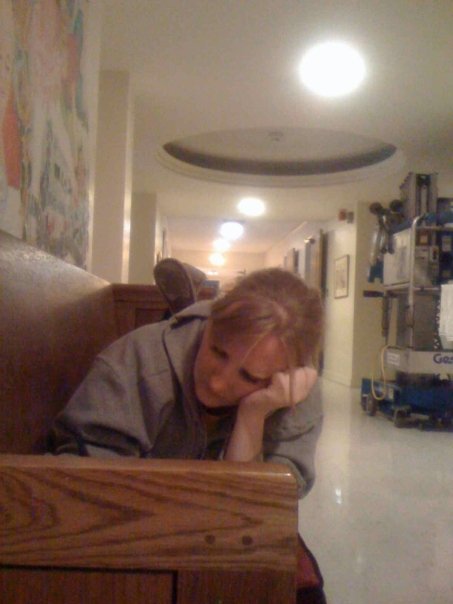
A dark stage, a young girl in a black dress.  The spotlight’s mouth circling her in a perfect O as she gazed straight ahead.  It reminded me of the stormy night that Matt played his keyboard for me, the way his eyes too had found that particular secret spot where the music comes from.

saxophone

my writing process

Having recently plowed through all three of Kristin Cashore’s books, I ventured over to her blog and found this fascinating post on her writing process.  I thought maybe I’d share the details of my own with whoever might be interested (all three of you, haha).

In general, I need the following things in order to write: time, a distraction-free zone, and my laptop.

Time: I am not one of those writers who is able to write for five minutes at the drop of a hat.  I need to have at least an hour of open time yawning in front of me … better yet, five or six hours.

No distractions: I can listen to music but sometimes only without lyrics.  I can write with friends, but only if they have their own projects.  I cannot write while there is a movie on.  It just isn’t going to happen.  This does not, somehow, apply to the internet.

Laptop: I can’t write freehand anymore.  My thoughts are too fast, and I edit so furiously that I would shred the paper with my pen.  Plus, the idea of having to transcribe it into the computer seems like a terrible waste of my limited time.  I like to keep everything in its place.  (I don’t even like to edit a copy on my work laptop during my lunch break because then I have to make sure to copy and paste it into the right document on my personal laptop.)  Such a hassle.  I just need to have my laptop.  If I am without it, I will journal thoughts here and there on pieces of scratch paper, but I won’t tackle actual novel work.

I have to have access to the internet.  I go absolutely insane without it.  I can have Facebook and Gmail and Words with Friends all open, and it just blends into my whole writing program.  I do a lot of in-the-moment research, so I need to have access to the web (for example, I will just NEED TO KNOW in that EXACT moment what that heavy bib is that you wear during an X-ray … lead apron.  Okay, lead apron.  Moving on.).

I start with characters.  In fact, I like to start with names.  And then I find a picture of that person.  (Sure, it’s some random picture from Google images, but I find a picture that matches the name and the image in my head.)  And then I write down a few thoughts about that person.  I keep this document with me the whole duration of the writing and refer to it often (mostly since I am terrible at descriptions and need to use the photos for inspiration).

With this last novel, I gave myself six months to write a first draft– and didn’t allow myself to rag on myself while I did so.  The first draft is just the bones (and probably weak ones) of the story– I still don’t know my characters super well until the first draft is done.  Only then can I go back and know them well enough to see how they really would react to the situations that took place.  (I know that seems backward … but it’s not.)

I trust my writing group and other creative friends to catch the glaring imperfections for me.  You’d be shocked at what things seem clearly obvious to the plot that would have never been included if a friend hadn’t said, Um, this needs to happen here.

I can write from my couch, but it’s better if I am at a coffeeshop or Barnes & Noble.  There’s no laundry waiting to be done there.  If I am particularly inspired, though, I can sit at my kitchen table for 10-15 hours.  I am not joking.

I am terrified of losing any edits I make, so I email myself my draft after every writing session, and if I am not at home, I email it to myself before I leave the coffeeshop, etc., just in case I get into a car accident or my laptop (or car my laptop is in) is stolen by bandits or the laptop has a total meltdown.  My latest draft is always safe and labelled in the right folder in my Gmail account.  I have been working on my current story for a year, and there are 176 emails in that folder.

When I decide to cut something that I kinda liked, I save it in a separate document called “extries.”  Over the months, this file grows ridiculously large itself.  Also, if I am completely re-doing a scene, I have to edit the scene in the extries file and then copy/paste it into the actual document file.  This seems to go against what I said earlier about keeping things in one place, but it doesn’t: same laptop counts.

I am always thinking about my story, particular scenes that are giving me trouble, my characters I don’t know how to help.  I pray when I get stuck.  I cry.  I ask close friends to discuss problems with me so that they can help me muddle my way through.  Whenever I get an idea and I’m not around my laptop, it goes into my phone.  Later, I dump all of those ideas into the extries file and work through them.  The ones I write down at 3 am sometimes make no sense.

I also keep a fake calendar of the time the story takes place and list out events on the calendar to make sure I’m keeping track of time right.  (There can’t be 6 weeks in June.)

And the whole time I am riding the world’s longest rollercoaster … I love what I wrote tonight! … I am a terrible writer who will never be published … people like this story … it’s not good enough.  The lows are hard, but the highs are fantastic.  And I love the process.  I love the act of creation.  LOVE IT.  My characters and I feel each other out, and they make some of the decisions, but I usually get the final say.  Usually.

Writing a book is kind of like volunteering to be crazy.  Not just to spent time in the loonybin … but to legitimately be crazy.  But then again, maybe that’s already a given if you’re a writer and writing a book is just your way of acknowledging it.

Gah, no laptop!!
Gah, no laptop!!


I fear mediocrity.

High school valedictorian.  Summa cum laude in college.  Overachiever to a fault.

And oh how I compare myself to others!

… and a writer.  What a devastating combination.

I love to write, and I have this burning desire in me to be an EXCELLENT writer.  There is a fire lit beneath me, and it keeps me writing and reaching and trying to hard to do something incredible with words.

But sometimes it feels so futile.

What if my best is not excellent?  What if my very best– all that I can possibly offer– is okay?  So-so?  Mediocre.

It drives me wild.  It makes me want to climb mountains for the answer, whatever that looks like.  Going back to school.  Getting more instruction.  Reading more books.  Reading the right books.  It makes me frantic.

No, I tell myself.  You are growing exponentially.  You’re 10 times better than you were in college, when you were 10 times better than you were in high school.  

But I still feel scared, frenzied, nervous.  Everyone seems to write better stories– funnier characters, better diction, cleverer plots, smarter concepts.  I want to somehow breathe in wisdom and then exhale with my fingertips on the keyboard, letting something beautiful happen.  Not just beautiful.  Exquisite.

Instead, it’s okay.  Even good.  But I want to be a great writer.

What if I give all that I have … and it’s only okay?

I don’t want my life to be a waste.  I don’t want to be mediocre.

mediocrity


Roses and Janie “mash-up”

Turn this song on and read the poem below it for the most deliciously melancholy experience.

(Am I weird for liking sad songs and poems?  I love them!)


Roses
by Billy Collins

In those weeks of midsummer
when the roses in gardens begin to give up,
the big red, white, and pink ones—
the inner, enfolded petals growing cankerous,
the ones at the edges turning brown
or fallen already, down on their girlish backs
in the rough beds of turned-over soil,

then how terrible the expressions on their faces,
a kind of was it all really worth it? look,
to die here slowly in front of everyone
in the garden of a bed-and-breakfast
in a provincial English market town,
to expire by degrees of corruption
in plain sight of all the neighbors passing by,

the thin mail carrier, the stocky butcher
(thank God the children pay no attention),
the swiveling faces in the windows of the buses,
and now this stranger staring over the wall,
his hair disheveled, a scarf loose around his neck,
writing in a notebook, writing about us no doubt,
about how terrible we look under the punishing sun.

looking back … and ahead

2012 was a good year.

In January, I had just aside my OCD manuscript and was 50 pages into writing adult fiction about a woman who was a late discovery adoptee when I read The Fault in Our Stars by John Green.  The book walloped me in the best way possible, inspiring me to drop the LDA story and try my hand at young adult literature.  12 months later, I am head-over-heels in love with writing for this demographic– not to mention deeply in love with the characters in my book.

In February, I posted one of my most frequented links, about how medication is scary.

In March, my friend Ashley encouraged me to get serious about my blogging, and the rest is history.  I started blogging with a lot more frequency after that, trying to refine and define what exactly Lights All Around was about.  In the end, it boils down to three things: faith, creativity, and OCD.

I believe it was in April that I wrote and submitted a post for the Rage Against the Minivan blog, never guessing that it would actually be chosen and posted months and months later.

In May, I left my job in management, moving into my old role as an admission counselor only.  At the time, it was devastating to me, but in the months since, I have come to realize it was a true blessing in disguise.  I had wondered if it might, but it was hard to see past the sadness.

In June, I spent a week tucked away in an apartment above a Wisconsin garage, writing like a maniac and finishing the first draft of Truest.  It was a bad draft, but that’s what first drafts are supposed to be.  At least it was in the computer.

July, I nursed my crush on the Olympian Michael Phelps and posted a mildly scandalous short story about Adam and Eve, one of my most-commented-on posts.

In August, I read The Night Circus by Erin Morgenstern, which, alongside The Fault in Our Stars, was one of the best books I read all year.  (I love that I can measure my months by the words I encountered.)

September marked the end of an era as I ventured to the University of Minnesota Medical Center to meet with my beloved psychiatrist for the final time before he retired.

In October, the International OCD Foundation flew me out to an event of theirs in Boston to read an excerpt from my OCD novel that had won an international creative expression contest.  There, I fell in love with the IOCDF.

November I decided to speak out even louder than usual about cognitive-behavioral therapy, explaining to blog readers what my life was like before and after CBT and also details of what my CBT experience was like.  I got emails from people after this, asking for even more details, even some fellow Minnesotans wondering specifically about my own therapist.

In December, I finished yet another draft of Truest while on an artist retreat I had been selected for.  I am committed to this story.  My writing group has helped and continues to help me SO MUCH with revisions, and I decided to purchase a short mentorship with a Minneapolis editor.

Which brings us to now.  And what’s ahead for me?

I have gotten into the habit of blogging, and I love it.  I will keep speaking loudly about OCD and CBT and ERP.  God has been so good and so faithful to me, and even today, when I was feeling very low, I was still able to be grateful that I have a permanent love in my savior.  I will keep reading as much as I possibly can and review the books here on my blog.  I will keep writing– because I love it, and because I crave it, and because I have to.  I will continue to meet with my brilliant writing group and start my online mentorship next month.

2012 was good.  Here’s to an amazing 2013.

20122013

Half-Mast, a brief story

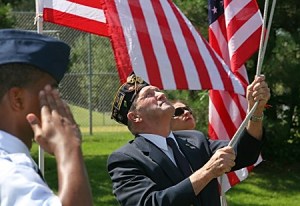
We were thrilled, the whole crowd, as we giggled and whispered and whistled outside the school that day.  It was quarter to noon on Memorial Day, one of the most exciting days of the year. The American flag, with its crowded square of 64 stars, looked as if it housed a universe on that patch of blue.  It flew at half-staff, as usual, though there was not a breath of wind to spread the banner.

Betty was the littlest of our crew.  At only five years old, she couldn’t remember why we celebrated this day—the morning or the afternoon, my favorite part.  She kept taking Mom’s face into her hands and staring into Mom’s eyes, asking wordless questions.

“C’mon, Bets,” Jakey said.  “I’m only nine, and I know why we’re here today.”

“The flag?” she asked, showing she knew more than she was saying.

“Mmm hmmm,” I said, prompting her to go on.  “What do you usually see when you look at the flag?”

“Stripes.  Stars.”

“Yes, and where does it sit on the pole?”

“Half,” she said.

“Do you know why?” I asked.

“Oh hush,” said Mom.  “We don’t need to think about that now—not now.  Not so close to noon.”

“Jakey?” I asked, ignoring her.  She was wrong—as a history buff, I knew this was the most important and best time to discuss it all.  “How well do you know your history, Jakester?  What happened on Christmas Day last year?”

He shuddered.  “That was when that man blew up the children’s hospital, right?”

“Uh huh.  And what had happened the summer before?”

Jake appeared to think for a moment.  “Was that when Los Angeles was burned to the ground by the terrorists?”

I nodded, pleased he was going to be a history guy just like his big sister.

“And what about the start of World War III?” he asked me.

“Well, that was a long time before that,” I said.  “That was way back in April of 3264.  Some of the reasons the flag flies at half-staff we can barely remember.  Supposedly, back in 2001, some terrorists attacked New York City.”

“What’s New York City again?” he asked.

Now even Mom joined in.  “Well, we’re not totally sure, but historians believe it was a large city on the east coast.  The rumor is that some planes flew into a couple towers there.  But things that far back are a little sketchy.  It’s mostly folklore by now.”

“Same with December 7th,” I admitted.  I believed the old stories about Pearl Harbor, even though most people thought it was an urban myth.

“What makes today so special?” I asked Betty.  “C’mon, you know this,” I said to her.

But then the trumpets sounded, and everyone in the crowd stood to his or her feet to watch the flag rise all the way to the top of the mast, where it would remain until midnight.  The only twelve hours of the year it stood at salute was always a fascinating event.  As it rose to the top, a wind appeared out of nowhere, unfurling the flag, and I watched it flare across the afternoon sky, feeling extremely patriotic and proud to be an American.

half mast

Reading is sexy.

So true, in my opinion.  Learning is sexy, and one of the best ways I can judge that is by whether a person reads.

I don’t care if he reads business journals, science fiction novels, textbooks, or biographies– or even if he listens to audiobooks to stick it to his dyslexia.  If he likes to read, he enjoys learning, and both are sexy.

It is honestly one of my number one questions when getting to a guy.  1) Does he love Jesus? 2) Does he love reading?

This has definitely influenced the creation of the characters in the YA novel I’m writing.

“My turn to ask the questions,” said Silas, unwrapping a sandwich.  “Tell me what books you like to read.”  He had a nice voice, I decided.  It was low and velvety … but with this sweetness to it, an animation that came from confidence.  And something else: delight?

“Oh, everything,” I said, my feet dragging lazily in the sand beneath them as I bit into my apple—Gala, sweet.  “Peter Beagle.  John Green.  C.S. Lewis.  Dr. Seuss.”

Silas grinned.  “C.S. Lewis.  Have you read his space trilogy?”

“Only a million times,” I said.

His eyes grew wide with a childlike excitement that made me want to laugh.  “I’m making Laurel read it this summer!  That Hideous Strength!” he said, then quoted: “‘It was all mixed up with Jane and fried eggs and soap and sunlight and the rooks cawing at Cure Hardy.’”  Silas sighed in delight.  “Rooks cawing at Cure Hardy … all those k sounds.”

I smiled at him, a little skeptically.

“Don’t you like the k sounds?” he asked, eyes wide and beatific, and I burst out laughing.

“I’ve just never heard a teenager talk affectionately about plosives.”

Am I short-sighted in this?

If anyone knows where I could buy this mug, I would die of delight.

If anyone knows where I could buy this mug, I would die of delight.


taking risks

Just the other day, I drove to downtown Minneapolis, parked outside of the Open Book, went up the stairs to the Loft Literary Center, and paid a LOT of money for a 15-hour online mentorship with a professional editor.

It’s a risk.  He might hate my manuscript and tell me to start over (probably not).  He might not catch my vision for it and suggest changes far beyond what I’m comfortable with (maybe).  He might read my novel with a critical and professional eye and give me valuable advice for polishing the manuscript into something beautiful (I hope).

Again, it’s a risk.

An investment.

I hope.

risk

Tall, Dark, and Handsome

He shakes my tidy box of labeled dreams
until its bows are undone, a timid musician
in designer jeans who explains the economy
in a way that makes sense.  He offers to drive,
steers with one hand while he seeks  a certain song,
redefining my ideal until it is far more important that
a man can talk finance, sing softly in the driver’s seat,
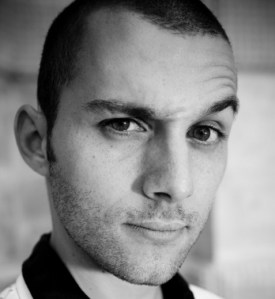
and delicately raise one eyebrow into a perfect arch
like a cartoon villain or a famous work of art.

eyebrow_520

This is just A boy, not THE boy the poem is about. 🙂

creative growth

body of work

I am still learning this, but oh, how I am learning this!  

I spent four years writing my first novel, finally putting my stamp of approval on it in January of 2012.  Next month will be one year since I put the manuscript away, and already it is so very clear to me how much I have grown as a writer.  History should have taught me that this would happen.  I remember loving my creative work in junior high, high school, and college– all of which I can now summarize as weak.  I didn’t know what I was doing!  I hadn’t read widely enough, experimented enough, or even lived life enough to create a truly brilliant body of work.

Sure, there were moments– beautiful lines here or there that spoke of depth– but I was and still am a learner.

I was so proud of my first novel.  I poured my entire self into the writing of it.  And already one year later, I’m a little ashamed of it.

But not too ashamed.

had to write it.  It was my next step.  It was what needed to happen.  It was my playground.  School was in session.

At least now I am more aware of the process, aware of the way I grow.  I was always in school, but now I’m aware of it.  I read as much as I can, and I re-read books that I love.  I marvel at imagery.  I work at my craft.  I write draft after draft after draft, knowing that it will take a mountain of them before I am truly happy with the finished product.  (Writing that word– finished— makes me smile a little bit.  I wonder if artists ever really feel as if something is completed?  I hope so– but I am going to wait and see.)

I know that twenty-some years of writing has been to build a solid foundation for me to stand on– and maybe leap from.  I needed to invent that Pononia family in elementary school and come up with stories about their lives, needed to write about Mariah and Kayy, the best-friends-turned-track-rivals, in seventh grade.  I needed to write that horror story where the best friend turned out to be a killer– her name was Chloe, and I definitely thought it was pronounced Sh-low.  And that soap opera– the one about Sunnyside High and teen pregnancy, AIDS, romance, running away, and finding a long-lost twin– needed to be written and circulated amongst friends in high school.

And college.  I had to vomit out those awful poems in college, had to learn how to take criticism, how to re-write, how to love a writing community.  I had to attempt  to not be jealous of great writers and then learn that it is pretty much impossible and that you can love those great writers even though you seethe with envy.

I turn 31 next month, but as a writer, I’m practically an infant still– maybe a toddler.  It’s hard to assess.  I still have a lot to learn, and I’m thrilled about that.  I am committed to the writing life for the long haul, even if I still have years ahead of stilted, awkward, gangly stories ahead of myself.

Someday they will shine so bright they will blind you.