books books books

Just finished …

Stupid Fast by Geoff Herbach | The subtitle on this novel is “The summer I went from a joke to a jock.”  Felton Reinstein has gotten tall and fast, and suddenly his high school football team wants to recruit him to play.  In the same summer, his best friend leaves to spend the summer in South America, a beautiful young pianist moves into town, and Felton’s mother ceases acting like a mother.  This is his story, and I rather enjoyed it, even though it felt more geared toward boys.  That said, I loved Herbach’s great VOICE in this story, and it was a lot deeper and more serious than I thought it was going to be (the back cover copy made it sound like it was all going to be about becoming a jock, but really it was more about his family issues and going through big changes).  Bravo!  And Herbach is from Minnesota– he teaches at MSU-Mankato!

Dr. Bird’s Advice for Sad Poets by Evan Roskos | James Whitman is not related to Walt Whitman, but he is obsessed with him.  He’s also depressed, thinks a lot about suicide, and is trying to piece together why his older sister Jorie was expelled from their high school and kicked out of their family home.  A very impressive debut by Evan Roskos!  Yawp!!

Attachments by Rainbow Rowell | After devouring Eleanor and Park last month, I was desperate to get my hands on anything else written by Rowell.  She has another new book in the works, but her only other publication is Attachments, an adult novel, which was a nice change of pace for me!  This book is set during the Y2K scare, when the internet was still a new commodity.  Lincoln’s job is to monitor the interoffice emails to make sure that people are following company policies.  But Beth and Jennifer’s emails are so hilarious that he doesn’t send out a warning … and instead, he keeps reading their emails, simultaneously falling in love with Beth through her emails.  This book was incredibly well-written and very funny.  I really enjoyed it and highly recommend it.  I was trying not to be too jealous of Rowell’s spot-on humor and description, as well as her incredible characterization.  It was definitely different to read a book where the main characters actually don’t interact throughout most of it; in fact, you don’t even know what Beth looks like for a lot of the book!  But quite fascinating.  Highly recommend.  And I will definitely be buying Rowell’s Fangirl, coming out September 2013.

The Last Unicorn by Peter Beagle | Brilliant and beautiful. Every. Single. Time.  (More on this tomorrow!)

Plus a bunch of Narnia (as always!) and Harry Potter & the Deathly Hallows.

Currently reading …

Quitter by Jon Acuff

The Knife of Never Letting Go by Patrick Ness

The Age of Miracles by Karen Thompson Walker

Bonus …

Found out Billy Collins is publishing Aimless Love: New and Collected Poems in October 2013!  So excited!

reading19

God’s Sovereignty, OCD, the Cross, and His Purposes

Just wanted to sort out some thoughts and spark conversation on my blog today.

A little while ago, I asked the question on my blog Did God give me OCD? and came to conclusion that yes, he did, to draw me to himself and so that I could use it to glorify him and help others.  A blog reader challenged me on that conclusion, and I thought her questions were valid.  She wrote:

Let me challenge this: Is God good or bad? Does God do bad things? I do not believe that God gives people sickness, disorders, etc. It is contrary to God’s character to do those things. I DO believe that God will use bad circumstances/disease/etc in order to bring Him glory and all the things you said. BUT the whole reason that Jesus died for us is to enter into relationship with the Father. There had to be a sacrifice to tear the veil and stand in the gap between the God of the Old Testament and the New Covenant. When we look at the OT, we have to look at it through the lens of the Cross…would the Cross change how a situation would look? Judgement in the New Testament is always correctional because final judgement doesn’t happen on this earth anymore (it did in the OT). When we look at sickness, we see that Jesus performed miracles to show God’s love. He never caused anyone sickness. I do not believe that God gave you OCD, but I 100% agree that God is good and uses your OCD to drive you to Him, so that you could glorify Him with it, and to help others who are suffering.

This comment has got me thinking deeply about this.  Right now, it’s still a pretty jarbled (that’s a mix of jumbled and garbled) blend of the doctrine of suffering (suffering in itself is not virtuous, but it does seem purposeful [Romans 8:28-29]), God’s sovereignty (is God in control of everything?  Even disease/disorder?  Sin and evil aren’t of his making, but if he gave humans the choice to opt for them, doesn’t that mean he is still master over it all?), and hindsight (now that OCD is not master of me, it’s easier to see the larger picture of OCD as a tool God used in my life).

I think that my position (for now) still stands with the belief that God did give me OCD for his glory and purposes.

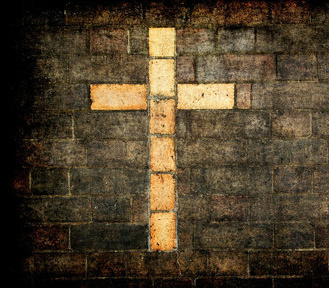
cross4To answer the commenter’s questions, I respond with my own questions: from one perspective, the CROSS was a “bad thing.”  In the moment, who would have guessed it would come to be known as GOOD Friday?  And we know it was planned. Redemption through the cross was the plan for forever.  “Yet it was the will of the LORD to crush him; he has put him to grief; when his soul makes an offering for guilt, he shall see his offspring; he shall prolong his days; the will of the LORD shall prosper in his hand” (Isaiah 53:10).  Think of this from a human perspective.  If we watched a father allow his son to be tortured, we would probably say that dad was doing a “bad thing.”

But, of course, we don’t see the cross from that angle anymore.  We know what happened on Sunday morning after Christ’s death.  And we now know that the cross is the most beautiful thing, the event that allows us freedom and life.  We look on the “bad thing” as a glorious thing.

So, could it be that way with OCD?  (I don’t think I’m ready to call it a “glorious thing” yet!)  But if suffering is predetermined (“Therefore let those who suffer according to God’s will entrust their souls to a faithful Creator while doing good” [1 Peter 4:19]), who predetermined it?  It’s hard for me to separate God from control over all things (I’m still sorting through some of this, including the fall of man).

What do you think?  Let’s dialogue.

Jackie’s Book Awards

Inspired by Tara, The Librarian Who Doesn’t Say Shhh, and her end-of-the-year Superlatives Awards.

I. Books

Book I’m always recommending: Jellicoe Road by Melina Marchetta

Best re-telling of a popular story: Tiger Lily by Jodi Lynn Anderson (it’s a fresh look at Peter Pan)

Best companion book: Fire by Kristin Cashore (companion to Graceling, but it works as a standalone)

Most original and imaginative: The Night Circus by Erin Morgenstern

Biggest tear-jerker: The Fault in Our Stars by John Green, followed closely by A Monster Calls by Patrick Ness

Like reading my own biography: Kissing Doorknobs by Terri Spencer Hesser

Most interesting premise: Every Day by David Levithan and Life of Pi by Yann Martel

Deepest meaning: The Chronicles of Narnia by C.S. Lewis

Best prose: three-way tie between The Sky is Everywhere by Jandy Nelson and Peace Like a River by Leif Enger and The Last Unicorn by Peter Beagle

Best story arc in a series: Harry Potter by J.K. Rowling

Everything-Falls-Into-Place Award: When You Reach Me by Rebecca Stead and HP & the Deathly Hallows by J.K. Rowling and Rebecca by Daphne du Maurier

Creepiest: This is Not a Test by Courtney Summers

Best book for boys: tie between Ender’s Game by Orson Scott Card and Wrestling Sturbridge by Rich Wallace

Hard book to get into but totally worth it: That Hideous Strength by C.S. Lewis

Best short stories: The Facts Behind the Helsinki Roccamatios by Yann Martel and The Things They Carried by Tim O’Brien

II. Characters

Most different character: tie between Stargirl Carraway of Stargirl by Jerry Spinelli and Quintana of Froi of the Exiles and Quintana of Charyn by Melina Marchetta

Best boyfriend: three-way tie between Augustus Waters (The Fault in Our Stars), Jonah Griggs (Jellicoe Road), and Will Trombal (Saving Francesca)

Most chilling: Mr. Loomis in Z for Zachariah

Best best friends: Taylor and Raffy in Jellicoe Road and Harry, Ron, and Hermione in Harry Potter

Best animal character: Charlotte A. Cavatica in Charlotte’s Web by E.B. White

Best narrator: Death in The Book Thief by Markus Zusak

Sweetest child: Eva in Uncle Tom’s Cabin by Harriet Beecher Stowe

Most changed character: Jean Valjean in Les Miserables by Victor Hugo

Character I want to be friends with: Rae in Rosie by Anne Lamott

Character I love to hate: Dolores Umbridge in HP & the Order of the Phoenix by J.K. Rowling

Character I just plain hate: Simon Price in The Casual Vacancy by J.K. Rowling

Character you want to live next door to: Sam Hamilton in East of Eden by John Steinbeck and Chaz Santangelo in Jellicoe Road by Melina Marchetta

III. Scenes

Best theological discussion in fiction: a large portion of Perelandra by C.S. Lewis and East of Eden by John Steinbeck

Most intense scene: Till We Have Faces by C.S. Lewis

Steamiest scene: Jace and Clary, all the time, but especially in City of Glass and City of Lost Souls by Cassandra Clare

Best sexual tension: Perry and Aria while he teaches her how to tell if berries are poisonous (yes, really!) in Under the Never Sky by Veronica Rossi

Sweetest: when Eleanor and Park hold hands for the first time in Eleanor and Park by Rainbow Rowell

Most disturbing: you’ll know it when you read it in Unwind by Neal Shusterman (I thought I was going to throw up)

Most fascinating conversation in the face of great danger: walking through the Red Bull’s lair in The Last Unicorn by Peter Beagle

Best opening line: “What can you say about a twenty-five-year-old girl who died?” in Love Story by Erich Segal

Biggest cliffhanger: Froi of the Exiles by Melina Marchetta

girl reading

My Mixed Feelings about Book Series

I have complicated feelings regarding book series.

On the one hand, I dislike them.  They seem like an opportunity to milk a cash cow, and they require such a huge investment on the reader’s behalf.  There is something unsatisfying about a to-be-continued ending.  I also wonder if the author wasn’t able to come up with any new, fresh ideas.

On the other hand, Harry Potter.  The Chronicles of Narnia.  The Lumatere Chronicles.

On a THIRD hand (I know, I know), it’s fun to be with beloved characters all over again.

On a fourth hand (get over it), if you really love-love-LOVED a book, it’s really hard for future books to compete.  Agree?

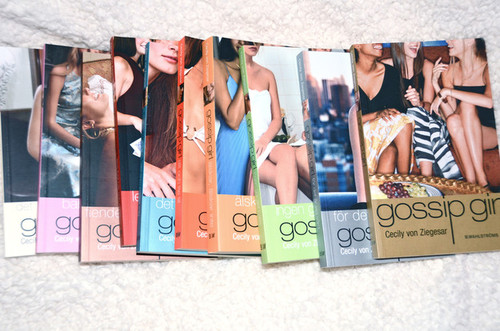
I don’t know.  If I see a book that looks good to me and then I see behind it “(Series Name, #1),” I think, Oh please no.  And I usually skip it.  I suppose that, in the end, it all comes down to the quality of writing, the belovedness of the characters, and the value of the story.  Which is why Narnia will last the test of time and– as a guess– the Pretty Little Liars series will not.

Do you like book series?  Why or why not?

a series I have NO desire to read

a series I have NO desire to read


books books books

Just finished …

Eleanor and Park by Rainbow Rowell | “It’s 1986 and two star-crossed teens are smart enough to know that first love almost never lasts, but brave and desperate enough to try.”  I loved this book, devoured it.  You will just adore the sweet characters of Eleanor and Park and their adorable little romance.  It started with such a slow burn that even holding hands was enough to about make them both pass out.  I loved Rowell’s writing so much and am definitely going to purchase her other books.  I thought the end of this story came a little too abruptly, but altogether, I really adored this YA book.  I think it might end up being a big name in the YA world.  You should probably read it.

Something Like Normal by Trish Doller | Travis is a Marine on leave, struggling with PTSD and learning how to sort through home life when his little brother has stolen his car and his girlfriend.  But there is this other girl in town– Harper– who makes Travis feel like things could be okay again, even after all he’s experienced in Afghanistan.  This book had so much potential— but it just fell flat.  The conflict was far too easily resolved (says the writer who always needs to add more conflict!), and even the climax was just too … anti-climactic.  I plowed through this book, and it had some great moments, but it fell short for me.

Under the Never Sky by Veronica Rossi | Aria lives in an enclosed biosphere; Perry lives on the outside like a “savage”; this is their story.  I got so sucked into this one, especially loving the characters and all the conflict (especially after just reading Something Like Normal).  This book has awesome tension!  However … I have read enough books to anticipate how the story arcs, and as it was nearing the end of the book, it wasn’t arcing.  I began to have a strong suspicion that this was a part of a series and that I wasn’t going to get my ending, and so I started resenting it.  (Ha!  I know that seems wrong: if I was enjoying it, shouldn’t I have wanted it to last longer?)  But no.  It started to feel too long, too drawn out.  I wanted a denoument and it just kept going.  And then the ending was like HUH?  I verbatim said, “What the BEEEEEP?” outloud after I finished it.  Then I looked it up, and yup, it’s the first book of a trilogy.  I was pissed.  (I don’t know what exactly is my beef with series; I love Potter and Narnia!)  So, this one is up to you.  They really are great characters.  And it’s a fascinating world– the “insiders” in the biosphere spend most of their lives in virtual realms, and it’s quite interesting to think about.  And the writing is pretty good– not exactly lyrical or anything.  But if you’re going to read it, you should commit to reading the others (which are not out yet), or the ending is going to be really unsatisfying.

Armageddon Summer by Jane Yolen and Bruce Coville | Jed’s father and Marina’s mother are Believers, members of a religious group that believes the world is ending on July 27th, 2000, and only the 144 Believers on Mount Weeupcut will be saved.  Jed and Marina aren’t quite sure what they think about the whole thing, but they’re up on the “the Cut” for the two weeks leading up to Armageddon, thinking that falling in love at the end of the world might not be the best timing.  I liked this book, but again, it didn’t blow my mind.  I do think it was intended for younger readers (maybe ages 11-14), and I do think it would be a fascinating read for them.  Not that I think anyone should ever “write down” to younger kids.  It just didn’t go as deep into Jed and Marina’s thoughts, fears, and sorrows as much as I’d have liked.  But it did bring up some great questions– I love books that make you think!

Up next …

Not sure yet.  I have SO MANY new books on my shelves, and I really think I want the next book I read to be just a regular-teenagers-in-this-universe book.  Maybe Stupid Fast by Geoff Herbach.

reading braid

Jackie’s Must-Read Books

1. The Chronicles of Narnia by C.S. Lewis
These are classics!  I seriously cannot get enough of them– I read them over and over and over and love them every single time.  I am just finishing up the series for the first time this year, and– no joke– after book 7 is over, I will start again on book 1.
Must-read: everyone, all ages

2. Jellicoe Road by Melina Marchetta
This book is seriously one of the best-written young adult books I have ever read.  In my life.  Period.  I love so many things about this book: the language, the characters, the structure, the humor.  It gets a 10 out of 10 from me.
Must-read: anyone who loves YA or a clever, quirky romance

3. The Book Thief by Markus Zusak
A Printz honor book narrated by Death himself, this is “just a small story really, about, among other things: a girl, some words, an accordionist, some fanatical Germans, a Jewish fist fighter, and quite a lot of thievery.”  I love books that are about the joy of words– and it’s even better when you mix in unforgettable characters and gorgeous writing full of incredible imagery.
Must-read: YA lovers, people who love words, anyone interested in Nazi Germany and the Holocaust

4. Peace Like a River by Leif Enger
The brilliance of this story is in the masterful writing.  Every single page will leave you in awe, plus the story is so real and deep, and it makes you think about things like miracles and family and loyalty and guilt.
Must-read: lovers of literary fiction, adults who want a great story, parents

5. The Night Circus by Erin Morgenstern
This book is richer than chocolate.  It has magic and competition and romance– and it avoids all cliches.  It is a sensory extravaganza.
Must-read: people who love Harry Potter and are ready for magic from a grown-up perspective, anyone who values great imagery

6. The Fault in Our Stars by John Green
TIME’s 2012 book of the year!  This YA book will make you laugh and cry and think.  It’s a cancer book– but not one of those cancer books.
Must-read: people who love YA, philosophy, and incredible characters

I’ll leave you with those six for now.  As I think through this list, I feel full.  They are that good.

reading girl

Do spoilers really spoil the story?

I was intrigued to discover that researchers at the University of California–San Diego had studied this idea from a scientific/psychological perspective.  Nicholas Christenfeld and Jonathan Leavitt ran experiments with twelve classic short stories, including mystery, ironic-twist, and literary stories.  The stories were presented in three ways: as-is (without a spoiler), prefaced with a spoiler paragraph, or with that same paragraph incorporated directly into the story.  “Subjects significantly preferred the spoiled versions” (Kiderra, “Spoiler Alert: Stories Are Not Spoiled by ‘Spoilers’”), although when the spoilers were incorporated into the story, they weren’t received as well as the stories prefaced by the spoilers. 

Although “the researchers are careful to note that they do not have a new recipe for writers to follow” (Kiderra, “Spoiler Alert: Stories Are Not Spoiled by ‘Spoilers’”), I think there is much to be learned from this study.  Christenfeld boldly states, “Plots are just excuses for great writing.  What the plot is is (almost) irrelevant.  The pleasure is in the writing” (Kiderra, “Spoiler Alert: Stories Are Not Spoiled by ‘Spoilers’”).  Another further article regarding this study states:

Perhaps, [Christenfeld] said, people enjoy a good story as much as a good twist at the end. Even if they know how it comes out, they’ll enjoy the journey as much as the destination.

“Writers use their artistry to make stories interesting, to engage readers, and to surprise them,” Leavitt and Christenfeld said in their paper, to be published in the journal Psychological Science (Potter, “Spoiler Alert: Stories Not Ruined If Ending Revealed”).

Leavitt and Christenfeld, though not writers themselves, are onto something, and Death, the narrator of The Book Thief,  explains this very well:

Of course, I’m being rude.  I’m spoiling the ending, not only of the entire book, but of this particular piece of it.  I have given you two events in advance, because I don’t have much interest in building mystery.  Mystery bores me.  It chores me.  I know what happens and so do you.  It’s the machinations that wheel us there that aggravate, perplex, interest, and astound me.

There are many things to think of.

There is much story (243).

And this, I believe, is the crux of the matter.  Readers—voracious readers who truly love story itself—want to know those “machinations that wheel us there.”  Readers want the details.  Death/Zusak is right.  There are many things to think of.  There is much story.

book thief2

Works Cited

Kiderra, Inga. “Spoiler Alert: Stories Are Not Spoiled by ‘Spoilers.'” UCSanDiego News Center, 10 Aug. 2011. Web. 07 Feb. 2013.

Potter, Ned. “Spoiler Alert: Stories Not Ruined If Ending Revealed.” ABC News. ABC News Network, 12 Aug. 2011. Web. 07 Feb. 2013.

Zusak, Markus. The Book Thief. New York: Alfred A. Knopf, 2006. Print.