some more Billy

The First Dream
by Billy Collins, my favorite

The Wind is ghosting around the house tonight
and as I lean against the door of sleep
I begin to think about the first person to dream,
how quiet he must have seemed the next morning

as the others stood around the fire
draped in the skins of animals
talking to each other only in vowels,
for this was long before the invention of consonants.

He might have gone off by himself to sit
on a rock and look into the mist of a lake
as he tried to tell himself what had happened,
how he had gone somewhere without going,

how he had put his arms around the neck
of a beast that the others could touch
only after they had killed it with stones,
how he felt its breath on his bare neck.

Then again, the first dream could have come
to a woman, though she would behave,
I suppose, much the same way,
moving off by herself to be alone near water,

except that the curve of her young shoulders
and the tilt of her downcast head
would make her appear to be terribly alone,
and if you were there to notice this,

you might have gone down as the first person
to ever fall in love with the sadness of another.

Photo credit: Jane Pak Oh

Untitled

Say anything; I want to try on your life like a suit coat for the fit.
This works – bashfulness catching your tongue at my question
so that the air expects words that do not come,
leaving empty space to dangle like mistletoe, pregnant
with potential.  Keep your secrets, then – only don’t look away.
Your brown eyes are ripening grace and fever in me like sun on a vineyard.
Your intensity pitches a spreading fire in my chest, and I need no bolder story.


i ♥ Billy Collins

How to describe Collins?  He is a poetry rockstar.  A brilliant poet who is famous while he’s still alive.  A comedian with words.  The king of the killer last line.

Billy Collins is so popular that it’s almost a cliche to like this former U.S. Poet Laureate.

I don’t care.

Enjoy:

No Things
by Billy Collins

This love for the petty things,
part natural from the slow of childhood,
part a literary affectation,

this attention to the morning flower
and later in the day to a fly
strolling along the rim of a wineglass —

are we just avoiding the one true destiny,
when we do that? averting our eyes from
Philip Larkin who waits for us in an undertaker’s coat?

The leafless branches against the sky
will not save anyone form the infinity of death,
nor will the sugar bowl or the sugar spoon on the table.

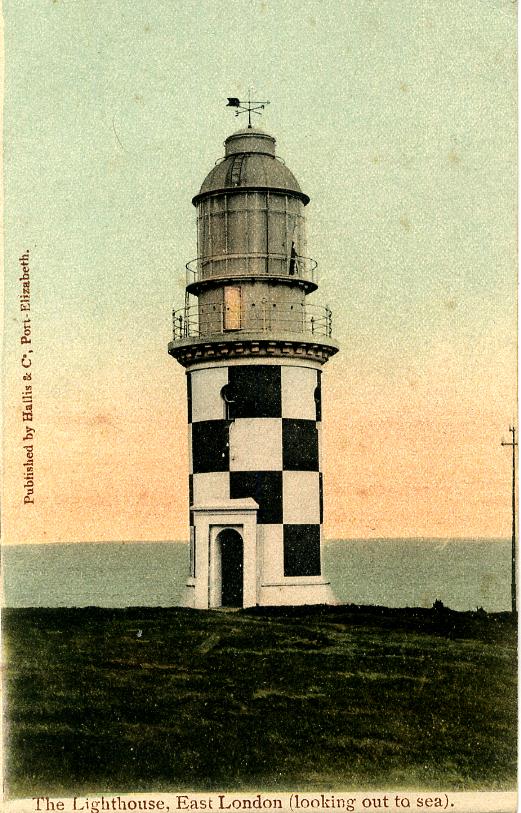
So why bother with the checkerboard lighthouse?
Why waste time on the sparrow,
or the wildflowers along the roadside

when we should all be alone in our rooms
throwing ourselves against the wall of life
and the opposite wall of death,

the door locked behind us
as we hurl ourselves at the question of meaning,
and the enigma of our origins?

What good is the firefly,
the droplet running along the green leaf,
or even the bar of soap spinning around the bathtub

when ultimately we are meant to be
banging away on the mystery
as hard as we can and to hell with the neighbors?

banging away on nothingness itself,
some with the foreheads,
others with the maul of sense, the raised jawbone of poetry.

Edmund Pevensie

Edmund Pevensie of The Chronicles of Narnia is one of my favorite characters in literature.  Jack Lewis sometimes writes small phrases about Edmund that have made me think far beyond the Narnia cannon.

***SPOILER ALERT***  If you have been living under a rock and have not read The Lion, the Witch, and the Wardrobe, then please stop reading this blog, get yourself to Barnes & Noble, and purchase and read the book already!!!

I am fascinated by Edmund’s transformation.

I love when (in Horse and His Boy), Edmund argues against killing Rabadash, saying, “Even a traitor may mend.  I have known one who did.”  In Dawn Treader, Edmund admits to Eustace, “You were only an ass, but I was a traitor.”  It has been so interesting to me that he became known as King Edmund the Just.  For years, I believed that his experiences ought to have led him to be called King Edmund the Merciful.  After all, justice had once demanded his own death, although Aslan took his place.  But then I realized that Aslan’s substitutionary death was also just– that is, it satisfied the debt and kept Narnia from perishing in fire and water.

I always wonder what it was like when Edmund first returned to England after growing up and becoming a king in Narnia.  In fact, I wrote a poem about it.

EDMUND

The wardrobe door was its own sort of holy baptism—
to push past fur coats with a spiteful heart of stone
then to reemerge moments—or years—later
with one of bold flesh that brimmed with nobility.
I like to think of you returned to boarding school,
a ten-year-old king and warrior, able and just,
your thoughts far from arithmetics as you plumb
the treasures in your core and find there grace—
grace overflowing, for you know as well as anyone
that even a traitor may mend.

I think this song by Kutless is actually about Edmund, and it asks some of my same questions.

What do you think: am I waaaaay too into Narnia?  What are your thoughts on Edmund Pevensie?

a poem

ON THE SHORE

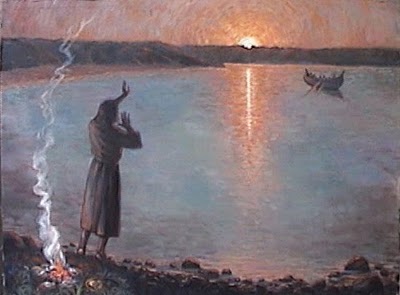
Jesus said to them, “Come and have breakfast.”  None of the disciples ventured to question Him, “Who are You?”  knowing that it was the Lord.  John 21:12

Galilee is in one of her moods.

The stubborn sea has refused our nets for hours, all night even,
the slight wind whispering a sharp ache into my ears,
the night air annoying my muscles into unyielding aggravation.

Fish bowels from more successful outings rot in quiet corners,
the soft staleness contrasting with the slick slime on the wooden sides.
This tiresome enterprise hurts my forearms and back.

As the sun rises, it brings with it that fusty morning-breath feeling,
a natural all-over reminder that a cycle has passed and I have ignored it.
One hundred yards away, a man watches my weakness from the shore.

He speaks: “Children, you do not have any fish, do you?”
The answer is decidedly no.
This time: Abracadabra.  “Cast the net on the right-hand side of the boat.”
And we cannot lift the net.  It is Him.

Like a moment when your own falling forward wakes you up suddenly,
my heart rate rockets.  Peter takes no time to consider wave-walking, only
jumps into the water like a lover in a hurry.

I hold the net, now wide-awake.  My heart burgeons; I feel my pulse in my arms,
my chest, my throat.  I wish my devotion was now a soaked outer garment,
but at the same time, my head has been snapped into alertness
too quickly, and I feel mute even while I yell to hold the net.

Stepping to the shore is like crossing a thick line into another land
where silence is king and stillness is queen.  Only God is over them both,
so He speaks: “Come and have breakfast.”

A charcoal fire cooks God’s catch, and we add some of ours to the fire.
My hands shake, not only with cold.  I look at the dead eyes of the fish
as they cook.  Their open eyes and open mouths make me their
breathing brother.  My mind spells peculiar out slowly:

To sit across a man who is more than a man, once dead but now
serving breakfast is too much.  All things collide:

prophecy, the Word become flesh, promises and wine, blessed are the poor in spirit, prayer and peace and psalms and palms, overturned tables and the look on His face, blessing the children, rebuking the demons, His offer of rest, all the metaphors, the stories, the quiet explanations away from the crowds, Truth for the first time, freedom, excitement, fervor, reality, wisdom, honor, purity, healing mud mixed by the King, that devastating dinner in the upper room, the washbin, the water, the way that He stooped, Gethsemane where I slept while He suffered, the crowds, the chants, Barabas unchained, the cheers, the jeers, the scorn, the blood,

the blood, the blood, the blood, the blood,

the walk, the tree, splintered wood on Calvary, the words, the orders, the dramatic curtain making a scene, the rushing terror, the torture, pain, emptiness, loss, the women, the tomb, the rock, the angels, the appearing, victory
and all
for my sake.

He offers me bread in the quiet on the shore.

Lord, forgive me! my heart pleads across the coals.
His wild eye meets mine: That was the whole point.

Genius by Billy Collins

This poem is strongly influencing the story I am writing right now.

Genius by Billy Collins

was what they called you in high school
if you tripped on a shoelace in the hall
and all your books went flying.

Or if you walked into an open locker door
you would be known as Einstein,
who imagined riding a streetcar into infinity.

Later, genius became someone
who could take a sliver of chalk and square pi
a hundred places out beyond the decimal point,

or someone painting on his back on a scaffold,
or a man drawing a waterwheel in a margin,
or spinning out a little night music.

But earlier this week on a wooded path,
I thought the swans afloat on the reservoir
were the true geniuses,

the ones who had figured out how to fly,
how to be both beautiful and brutal,
and how to mate for life.

Twenty-four geniuses in all,
for I numbered them as Yeats had done,
deployed upon the calm, crystalline surface–

forty-eight if we count their still reflections,
or an even fifty if you want to toss in me
and the dog running up ahead,

who were smart enough to be out
that morning–she sniffing the ground,
me with my head up in the light morning breeze.

Billy Collins poems animated!

Billy Collins is my favorite poet (and I was lucky enough/blessed enough to meet him in the fall of 2010!).  He is absolutely hilarious and a brilliant writer, both of which I would love to be.

Carve out fifteen minutes of your day to click this link here and view his TED talk and see five of his poems masterfully animated.  I promise you it will be worthwhile.

Pure-O Compulsions

Media usually presents obsessive-compulsives with very obvious compulsions: hand-washing is a favorite but also extreme organization and hoarding, as well as checking and counting.  But not all compulsions are so easy to see.

In fact, some compulsions are so difficult to recognize that it lead to a misnomer– Pure Obsessional OCD.  The name Pure-O leads some to believe that this type of OCD can essentially drop the “C” from its acronym.  But that would be a mistake.

Pure-O’s still have compulsions– they are just harder for the public to notice.  They include mental rituations like repetition, avoidance, and seeking reassurance.

For example:
I would have an intrusive, blasphemous thought– which would cause me to question my salvation.  I would repeat a particular prayer over and over in my head to ward off this thought, and I would ask everyone if they thought I was going to go to hell (sometimes this would be active– “Do you think I’m going to hell?”– and sometimes passive, as in “I’m scared I’m going to go to hell” and waiting for that person to reassure me … “Why would you think that?!  No way!”).  I would also avoid certain things (Matthew 12 and Mark 3, for example, or movies with profanity, which would trigger my blasphemous thoughts).

Sometimes it was hard to really focus on a conversation I was having because there was another entire conversation happening in my head at the same time.  It’s like listening to two tracks at once.

I wrote a poem to demonstrate it:

So … yeah.  There are compulsions you would never know are there, except for the strange look in my eyes, the odd shake of my head as if I were erasing something dark and secret.

diagnosis

Eve Ensler writes, “I believe in the power and mystery of naming things. Language has the capacity to transform our cells, rearrange our learned patterns of behavior and redirect our thinking. I believe in naming what’s right in front of us because that is often what is most invisible. I believe freedom begins with naming things. Humanity is preserved by it.”

And I agree.

To me, naming an enemy steals away some of that enemy’s power, and that is why I believe diagnosis is so important.

For years, I didn’t know what was wrong with me– only that I thought and worried more than anyone I knew– enough to think myself into panicked circles from which escape was nearly impossible. I couldn’t see this behavior in any of my friends, this dizzying chasing-of-my-own-tail beginning the moment I woke up. I was the odd man out, always stressed to the max, always teetering on the edge of something HUGE– heresy, atheism, a change in direction or pursuit, a redefining of my entire worldview.

But how can you fight against an invisible enemy? Since you can’t see the enemy standing between you and the mirror, instead you see yourself and the fight becomes personal. All the while, the real culprit is standing right there … only it is unnamed.

And then, the diagnosis arrives. OCD is named. There is a transfer of power, even if only minute. And the real war begins.

Anonymous, you feasted on me like a silent maggot,
until I was weary of the ugly business of waking up.
You fed on my tears, licking the salt off of
your fingertips in a greedy appetite for sorrow that
backed me into a boxy corner of paranoia
where I first learned your name.
My move.

another poem

PIMP THE GUILT

The smallest thing, a trigger,
a rooster.  Casual words
look like pointed fingers,
wagging in accusation,
and me, unable to process
advice for what it is,
feeling shame rip my heart
the way you’d tear a valentine.

(One time my friend Micah decided that we should each write a poem with the same name of his choosing– he chose “Pimp the Guilt”– I can’t remember why anymore!)