
Last night I finished Christian Wiman’s latest book, He Held Radical Light: the Art of Faith, the Faith of Art. It’s a thoughtful, deep, intellectually stimulating book that, in some ways, reminded me of the works I used to read in a writing theory and ethics course, the kind where you don’t understand every single thing but you get the thesis of the piece, and that’s usually enough.
The book is about what do we want when we can’t stop wanting? It’s a mix of theology around art, Wiman’s memories of conversations he’s had with profound writers, and plenty of poetry to back it all up. I loved it.
Wiman’s work always seems to have such a depth and urgency to it, which is due in large part to his living with incurable blood cancer. I happened to be reading his story about meeting Mary Oliver just as I was learning of her death (Mary passed away on my birthday, just 11 days ago). It was exceptionally striking to read this poem of hers in the Wiman’s book just after she passed from life into life:
White Owl Flies Into And Out Of The Field by Mary Oliver
Coming down out of the freezing sky
with its depths of light,
like an angel, or a Buddha with wings,
it was beautiful, and accurate,
striking the snow and whatever was there
with a force that left the imprint
of the tips of its wings—five feet apart—
and the grabbing thrust of its feet,
and the indentation of what had been running
through the white valleys of the snow—
and then it rose, gracefully,
and flew back to the frozen marshes
to lurk there, like a little lighthouse,
in the blue shadows—
so I thought:
maybe death isn’t darkness, after all,
but so much light wrapping itself around us—
as soft as feathers—
that we are instantly weary of looking, and looking,
and shut our eyes, not without amazement,
and let ourselves be carried,
as through the translucence of mica,
to the river that is without the least dapple or shadow,
that is nothing but light—scalding, aortal light—
in which we are washed and washed
out of our bones.
 We had such a great talk that night, the first of many great talks. Megan now goes the university where I work, and it’s my joy to watch her thrive in her majors and on the theatre stage, to see her with her friends, see her growth as the most lovely young lady.
 Last week, I read Rupi Kaur’s incredible collection of poetry, Milk and Honey. I read it in one sitting– just breezed through so many pages letting them administer to my heart– and when the book was over, I felt so much stronger because of it that I bought a second copy.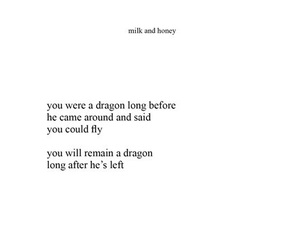
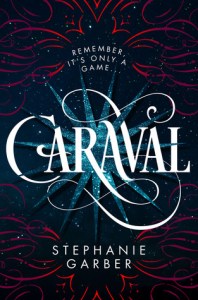 Caraval by Stephanie Garber | Scarlett’s grandmother has told her and her sister Tella stories about Caraval since they were young– an audience-participation game that is like a magical carnival. Scarlett has always longed to go, but getting tickets now— less than two weeks before her marriage to a mysterious count she has never met– is not the ideal timing. At Caraval, Tella goes missing, and the game revolves around the sisters. Julian, the young sailor who brought the girls to Caraval, is shrouded in mystery too, and Scarlett can’t tell who is friend or foe, or whether the game is really just a game.
 Harry Potter & the Cursed Child by J.K. Rowling, Jack Thorne, and John Tiffany | I think I went into this screenplay with reasonable expectations. I waited quite a while to read it because I knew that it was not going to be like “the 8th Harry Potter book,” as some stores touted. First, it’s a screenplay, not a novel; I knew I couldn’t expect the same thing. Because I went into it with realistic expectations, I loved it!
 The Poem She Didn’t Write and Other Poems by Olena Kalytiak Davis | This one was staggering. I absolutely adored it. It was like e.e. cummings had become a female spoken word artist. The rhythms were impossible to miss, even without hearing them, and I was exposed to a new vocabulary. I thought it the poem topics were really brave, and there were quite a few that she approached from such a stunningly unique perspective. The title poem, in particular, was mind-blowing. I will be purchasing her other books.
 Chinoiserie by Karen Rigby | This was the 2011 winner of the Sawtooth Poetry Award– and well deserved. Beautiful writing, rich imagery, the poems took me to other places, something I always love. I was happy to let this collection sink into my bones.

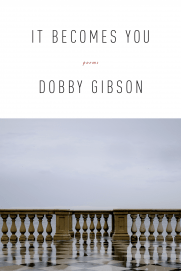 This was a re-read for me. I
 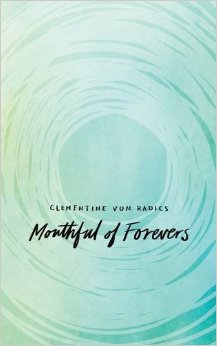 A Mouthful of Forevers was young, fresh, edgy, sexy. I read it in one sitting, to be honest, and thoroughly enjoyed it. If I had to summarize it, I might say something like “Looking for love in a time of modern scars.”
 JACKIE LEA SOMMERS