Truest vs. Yes Novel (untitled book #2)

unsplash36Someone asked how writing book #2 (as yet untitled but henceforth referred to as Yes Novel) is different from writing Truest. It’s a great question. I also want to pause and just say that several people (including friend and mentor Judy Hougen as well as author Ally Carter) have said to let the writing of each novel be its own thing and to not compare them. Ally said at the YA conference I was at, “Learn how to write the novel you’re writing NOW.”

Easier said than done, in some ways. In others, it’s already sort of hard for me to remember writing the initial drafts of Truest. It was nearly four years ago now!

That said, I can offer a few insights.

My first book (or anyone’s first book, for that matter) is typically not written under contract, so there’s generally no pressure, no deadline. It’s fine if it takes you two years or four or ten. You just have to get it as perfect as you can before you query. Then, when it sells, your editor sees the manuscript at a fairly well-done stage. By the time Jill saw my manuscript for Truest, I had worked on it for over a year and a half, including self-edits, multiple rounds of edits with Ben Barnhart, revision suggestions from the Big Sur Writing Workshop, and a round of revisions from my agent.

On the other hand, Jill saw a first draft of Yes Novel. That was scary but liberating to show her the messiest work of mine she’d ever seen at that point. Yes Novel is also under contract. I am working toward a deadline. There is added pressure due to both of those things.

With both Truest and Yes Novel, I didn’t know the ending when I started. I didn’t land on Truest’s ending until many, many drafts into it. I am veering toward an ending for Yes Novel now in draft two, but it still feels sort of unsatisfactory. I try to remind myself that Truest, at this stage, still lacked an ending. So, in that sense, I’m ahead of the game. Maybe.

Truest is written in first person (that is, “I thought”) from West’s point of view. Yes Novel is (currently) written in dual third (that is, some chapters are “Asa thought” and some are “Rowen thought”). I keep battling with myself if I should write it in dual first, but I just don’t think that the two voices are distinct enough to weather it. Yes Novel seems to be narrated by ME, not by Asa or Rowen. Can’t decide what I think of that yet … except that maybe I’m finally finding MY authorial voice, and there’s something exciting about that.

I can tell that I understand more about novel writing and the narrative arc as I write Yes Novel. I can tell that I’ve grown as a writer. So that’s a good thing.

Another thing is that, while Truest has some subtle religious themes, the characters in Yes Novel are not religious, so the content is different. (I mean, of course the content is different, but … you know what I mean, right?). Sometimes I worry about this a little bit … wondering if people who liked Truest will not like Yes Novel because they are so different, but then I remind myself:

  1. I’m writing a new story, not re-writing Truest.
  2. I’ve started with characters once again. People who liked Silas and West and Laurel will probably like Asa and Rowen too.
  3. I’m still writing about themes that are tremendously important to me (mental illness, uncertainty, freedom, family, friendship, art, mythology, thought experiments, love and romance).

In some ways, I seem to remember Truest just unrolling before me like a carpet. But that’s probably a tainted memory. I’ve been working on Yes Novel now for nearly one year, and it’s further along than where Truest was at that time. It felt like there was better flow to Truest and I *think* I wrote it in chronological order, though, to be honest, I really can’t recall. Yes Novel was written all out of order and thus still has a very episodic feel to the chapters, which I’m trying to erase through revisions and better transitions and more foreshadowing.

Yes Novel still is essentially a series of conversations that could be taking place almost anywhere. But I do remember that Truest was much the same until later drafts when I made special effort to correct it. I’m still not naturally good at description … but I am getting better. That feels obvious to me.

So. There you have it. Not sure if this is helpful or interesting or not. It was a great question (thank you!), and I’m so excited to share Yes Novel with you a year and a half from now (gosh, that feels so far away … until I look at my draft and realize that I need that time). Asa and Rowen have completely captured my heart, and I hope they’ll capture yours too.
Writing Feedback, Critiques, & Criticism

???????????????Writing feedback. I have a love/ hate/ love/ love/ hate/ appreciate/ dread relationship with it. I imagine most writers do.

Of course we dread it. Which artist wants to pour their heart and soul and energy into their creative work and then have someone tear it to pieces? Even though I know– a thousand times over– that my editor is on my team, I still have major moments of panic when I read her feedback.

Yet the love/appreciate part is very, very important. Without critique, my writing hits an early apex. I can’t push through to a higher, better, superior level of writing without the much-needed push from feedback.

This is what feedback looks like in my own life:

Writing group. Every month, I meet with three other novelists. Each of us are working on our own projects, and they’re all very different from one another. The week before we meet, we send each other what we’re working on– maybe a few pages, maybe a couple chapters, maybe a whole manuscript– and share what kind of feedback we need.

Last month, along with my submission, I asked:

What I’d like from you:
* to know what you like
* what you want more of
* what doesn’t work
* any prompts you might have

The four of us get together, eat some soup, chat about life for a little bit, then dive into each other’s work. We start with one person’s work, and each other person shares their thoughts on it. We agree, disagree, discuss, brainstorm, and support. Before we move on to the next person, the person whose work we’re discussing gets to ask any questions she might have. And so on.

This monthly meeting is so critical to me. It keeps me on track, keeps me accountable, keeps me motivated. It helps steer me down the right rabbit holes. When I leave, I can’t wait to get back to work.

I’m lucky, I know, to have three talented writers in my life whom I can meet with in person, and I know it doesn’t work out that way for everyone. But I think that committed writers need to fight for this opportunity, whether that means seeking out local writers (even if you don’t know them!) or finding critique partners online. I thought this article from The Write Life was great: 40 Places to Find a Critique Partner.

Beta readers. Yes, that’s right– in addition to my writing group, I also share my work in progress with a handful of other readers– some who are also writers, some who are not. I let them read my manuscript and tell me what tripped them up as they read. Obviously, it’s not fun to hear what trips your readers up– but it allows me to fix it.

I think it’s helpful to have beta readers from a variety of different backgrounds, people who are excited about your writing, willing to read it, and able to share their thoughts (when possible, I recommend buying their lunch in exchange for their feedback).

My editor. Ahhh, yes. Here I know I am privileged, of course, to have a genius editor at HarperCollins able to pour her brilliance into my work. But even before I was working with Jill, I still paid an editor in Minneapolis (Ben Barnhart, he’s great!) to read my work– for developmental, big-picture edits, and also for line edits.

Not to mention writing workshops (I highly recommend the Big Sur Writing Workshop!) and copy editors (they amaze me).

My point is simply this: if you want to be a good writer, write; if you want to be a great writer, seek out criticism, embrace it, and let it push you past your own limits.

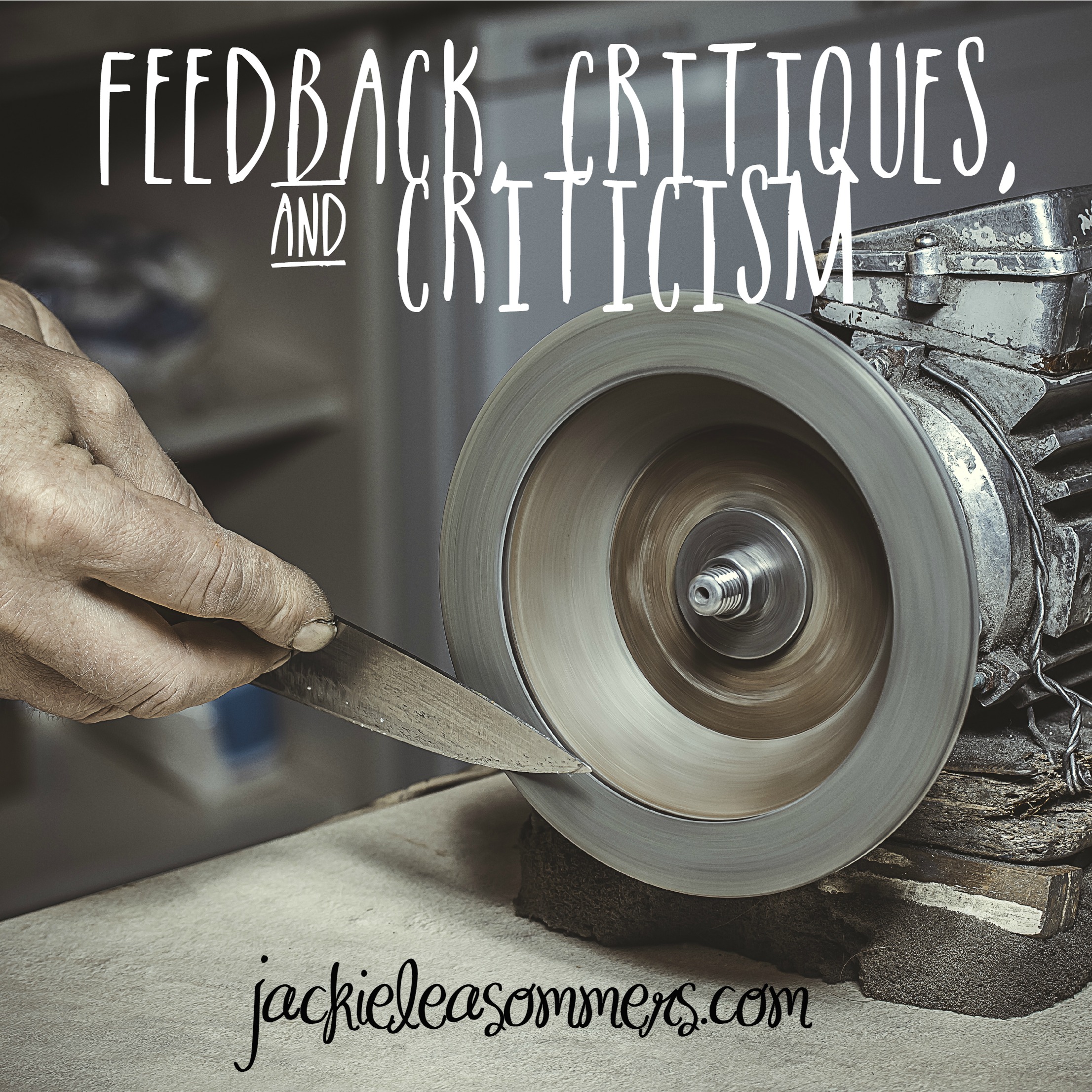
Criticism is not the knife; your writing is the knife. Criticism is the whetting stone against which you sharpen your stories.

Eight Themes

I wish I could remember where I read it– I’d have loved to link to the article!– but somewhere around the internet I read the suggestion to boil my novel down into 7-10 major themes and post them where I could easily see them.

As I write Mill City Heroes, these are the themes I keep on my radar in image form (my computer desktop’s background actually!):

themes mch

Clockwise from top left: poppies, winter, feline, slavery/freedom, red, Peter Pan, city (particularly Mill City, i.e. Minneapolis), ravens.

So, are you intrigued? Confused? A little of both?

I can’t wait to tell you more as this novel takes form!

When Writing = Death

Look, I’m not the first one to comment on this. Not even close.

You have an idea– a bright, beautiful, perfect idea– and then you start to write it down, and it dies on the page. It becomes imperfect. It gets messy.

Ann Patchett said her ideas are like beautiful butterflies that soar around in her mind, and then when she starts to write, she takes them and pins them to a board. Death.

Chuck Wendig blogged about it recently, saying, “Writing and storytelling is this… nasty task of taking the perfect idea that exists in your head and shellacking it all up by dragging it through some grease-slick fontanelle in order to make it real. You’re just shitting it all to hell, this idea. You have it in your mind: golden and unbreakable. And then in reality, ugh. You’ve created a herky-jerky simulacrum, a crude facsimile of your beautiful idea run through the copy machine again and again until what you started with is an incomprehensible spread of dong-doogle hieroglyphics.”

Sometimes it’s like I can see this perfect book; it’s shining like an angel at some perfect finish line. And when I sit down at my computer, I’m trying to run toward that finish line, but instead my running is sideways, disoriented, like the way my siblings and I used to spin until we were dizzy and then race each other. The whole time I could see the silo on the other side of the lawn– whoever reached it first would win– I could see it and was trying to run toward it, but my legs kept yanking me to the side like I was some drunken pre-teen.

It’s no wonder I sometimes avoid my manuscript.

Chuck’s blog post went on to say, essentially, write anyway: “Those who try to master perfection will always fall to those who iterate, and reiterate, and create, and recreate. Art is better than philosophy. Creation, however clumsy, is always better than sitting on your hands and fearing what damage they can do.”

Writing takes courage. Writing means walking in the shadow of death while still trusting in life. It means daring to wade into the mess in order to find that spark of life, of beauty, instead of being content to just daydream of perfection.

My prayer these days is “Help, God. In every way, help.”

Seeking Publisher Permissions, Part II

copyrightBack in early February, I wrote about my experience with seeking out permission from publishers to use various lines of poetry and lyrics in my novel, Truest.

By now, I’ve heard back from all the licensing departments, and I wanted to give you the final results:

One line of an E.E. Cummings poem: free. 

Two lines of a Billy Collins poem: $290 for the first run of 10,000 copies of Truest, after which I’ll need to reapply. I agreed.

One entire E.E. Cummings poem: $560. I eagerly agreed, as several scenes hinge on this poem.

Two lines of lyrics from a Pink Floyd song: $1000 for five years, after which I’d need to reapply. I declined. These lyrics were going to be the novel’s epigraph, and while they’re beautiful and fit the novel perfectly, I thought $1000 was too much to pay for two lines that don’t appear in the actual manuscript.

All told, I paid $850 for permission to use what I wanted in my novel. In a perfect world, I’d have also used a line from C.S. Lewis’s That Hideous Strength and the refrain from Chicka Chicka Boom Boom, but with frazzled nerves and empty pockets, I took them out without changing the story.

In the end, my advice is to use material from the public domain or else make it up yourself. I’m doing both in Mill City Heroes.

P.S. I read a YA book recently that used quotes like they were breadcrumbs. While I read, all I kept thinking was $$$$$$$$$$$$$$$$$$$$. This author’s eyes have been opened. 🙂

My ARC arrived in the mail!

Truest ARCLook at this beautiful thing.

It’s my book, all grown up and looking like a book.

Alas, it’s just an ARC (advance reader copy)– essentially, a paperback, uncorrected version of what will eventually be a hardcover thing of beauty without any errors (please, God!) and without that big red UNCORRECTED PROOF tag at the top of it.

But still. It’s my book.

I definitely cracked it open at work when I got it and read a couple scenes. They honestly FEEL different when they’re on book pages instead of Microsoft Word pages. You’re just going to have to trust me. Then, that night, I curled up in my bed and read some more of it. I wrote these things, I marveled.

No matter how ridiculous or self-indulgent it might be, you can’t help but marvel when you hold your ARC. Mine is the result of over three years of hard, hard work. It’s a dream that has become so true that I can literally touch it.

The Art of NOT Writing: Breaks, Blocks, & Boredom

A lot of blog readers have asked– in some form or another– how I deal with writer’s block, and also what I do when I simply don’t feel like writing.

First of all, I must admit to you that I wrote almost every single day from spring 2008 to winter 2013. In January of this year, my wunderkind writing guru Judy Hougen gave me permission to not write, and I started to take some much-needed breaks.

Secondly, you should know that I did not write from fall 2003 to fall 2006. I had just graduated from a creative writing program which had required me to put my heart through a meat grinder, and I was exhausted.

With those disclaimers out in the open, let’s dive in.

not writing2

BREAKS.

I think there’s a time and place for taking a break from writing. I have never regretted my three-year hiatus after finishing undergrad, but then again, it was still a creatively productive time. I used those three years to read like a maniac. Of course, I had read a lot of incredible work for my English major, but it was so good to start reading for pleasure again and not for homework. I devoured books during those three years, and I did it with purpose. I always felt like a writer during those three years; I merely viewed the time as a season where I was cultivating my creative soil for future planting and growth. And that’s exactly what it was.

These days, I take a purposeful writing sabbatical on Mondays: no writing allowed, and the time is devoted to reading. It’s been a good experience so far. As I said above, I have only recently (this year) allowed myself breaks from writing, and for me, it’s essentially a spiritual practice of trust. For so long, I was worried that if I took a break, I would “lose everything.” But that’s not true: taking purposeful breaks allows me to trust God that my gifts won’t fly out the window the moment I open my fist.

Middle-range breaks (staying away from my manuscript for 2-6 weeks) can be a little hard for me to bounce back from, but I’m learning it’s less about the talent disappearing and more about fear showing up.

All that to say, is it okay to take breaks from writing? Yes. For me, it’s best when they are purposeful and still used to intentionally foster creativity.

BLOCKS.

I have to be honest here: I don’t get the traditional writer’s block anymore– you know, where you sit down to write but nothing comes. I can remember that, though, from high school and even in college, and it’s a horrible feeling. These days, I have built such a strong writing routine that it’s quite rare for me to experience writer’s block the way many people think of it.

Of course, I still get stuck while I’m writing, but it’s different. At least, it feels different to me.

Regardless, the following are things that I do when I get stuck/blocked.

1. Pray/brainstorm. For me, this is sort of one thing. Parts of my prayer journal could easily be mistaken for a writer’s processing notebook. This all happens by hand (basically the only writing I do away from the computer anymore) and in my bed, and often involves scrawling HELP!!! in giant, frantic letters across my journal. Then God and I brainstorm. It’s honestly one of the most amazing and satisfying parts of my writing life because, well, I am imbued supernaturally with ideas. Truest’s byline really should read

written by God Almighty

with Jackie Lea Sommers

because it’s such a team effort, and he has the best ideas.

2. Freewrite. I take whatever topic/area is stumping me and I make myself write about it for ten minutes. Natalie Goldberg and her “Ten minutes. Go.” have given me a perpetual exercise in beating back blocks. In freewriting, I have to type and type and type without stopping for ten minutes. There’s almost always one or two gems that find their way onto the page when this happens.

(Freewrites are also what I do when I’m out of sync with writing and need to loosen up that writing muscle again. They work. They really do.)

3. Have conversations. I hope you’re as lucky as I am to have such selfless friends who are willing to have long, drawn-out conversations about fictional people and situations and choices. When I get stuck, I will ask my friends to dialogue with me about whatever is stumping me. These conversations help me push through barriers and also help me know and understand my friends more deeply. (I’m so grateful.)

4. Make a plan. What do I need to do before I can dive back into my project? Maybe I’ve realized that I don’t know enough about the history of my characters to write an honest scene about their friendship. I’ll put a sub-project onto my list: “Create history for X and Y.” Then I’ll take a time-out from the manuscript to write up a whole separate history for my characters, much of which will never make it into the novel but which needs to exist before I can move forward.

BOREDOM.

What if I just don’t feel like writing?

Well, you’re going to have to assess the situation. Are you in need of an intentional break (#1) or are you just being lazy?

Writers write.

When I get in these moods, I do the following:

1. Freewrite. See above. This is the answer to so many writing questions, I believe.

2. Research. And when I say “research,” I mean spend time learning about things that are fascinating to you. I will click the “random article” button on Wikipedia until I land on something that gnaws on my brain. I will read through incredible quotations. I’ll spend hours on the internet finding something that clobbers me and drives the boredom out of my life because it’s just so amazing that I have to know more and want to write about it. Ideas wake me up.

3. Get away. Get out of your house or apartment and hole up in a coffeeshop or the back corner of Panera. Sometimes I’m not bored by writing, but I’m distracted by everything else. If I can change my setting and eliminate distractions, it will help me get back into the zone.

4. Read. Something so incredible and delicious that the excitement (and envy) starts building in my gut. Something where the characters make me laugh and cry and fill me with questions of How can I do that in my own style

5. Switch projects. Not entirely. I just might need to set aside the novel for a while and do some blogging instead. Or maybe work on a poem or something completely different. Although, who am I to say? For some people, this might mean abandoning a project entirely. If it’s not keeping your attention, there’s a good chance it won’t keep others’.

But mostly …

6. Butt in chair, hands on keyboard. Sometimes I just need to put on my big-girl pants and fake it till I make it.

Image credit: Unsplash, modified by me

This blog post first appeared August 19, 2014.

16 Things I Wish I’d Known as a Beginner Novelist

16 things1. This journey is probably going to take longer than you think.
In fact, you might bust your butt on something that never sees the light of day.  It’s okay.  You become a better writer by writing.  I had to write a novel to prove I could write a novel before I could write a good novel, if you follow me.

2. Write because you love it, not because you want to be published.
You might never have your work published.  If you write because you have to write, because you’re a writer in your bones, then this won’t matter.  (Or at least it won’t matter enough to stop you!)

3. Write every day …
Establish a writing routine, even if some days you only get ten minutes to write.

4. … but don’t beat yourself up if you don’t.
I’m still learning this.  GRACE.

5. If you start a website, don’t waste time thinking of a clever blog title.  Just use your name.  
With WordPress and $18 a year, you can even buy your own domain so that you can just have www. [yourname] .com.  Trust me.  It’s going to be better for branding yourself as a writer someday. 

6. Learn blog etiquette.
Make a commitment to post on your blog at least once a week.  Also, don’t solicit readers by posting links to your content as a comment.  The best way to get readers is to read other blogs and leave thoughtful comments.  They’ll be much more likely to visit yours that way than if you use their comments section as your own personal ad space.

7. Join a writing group– or at least collect some beta readers.  Preferably both.  And take their advice.
Make sure they actually know what good literature is.  They should be good writers themselves or at least good readers.  And do take their advice or at the very least try it out.  No one said you have to keep your revisions.  Take their feedback, make revisions, and then decide whether to take it or leave it.  It goes without saying (I hope) that all this should be done without putting up a fuss.  You need feedback to make your writing sparkle.  Well, at least most writers do.

8. Genres have word count guidelines.
Debut authors should be especially aware of this.  Many literary agents won’t even bother with a manuscript that falls outside the genre word count guidelines.  (Not that it has never happened– but it’s the exception, not the rule).  There are detailed posts about this at Literary Rejections and Writer’s Digest.

9. Set aside some money to devote to your craft.
You can use this money to take a class, attend a workshop, or hire a professional editor.  Yes, a professional editor in addition to your writing group and beta readers.  The more [qualified, capable] eyes on your novel, the better!

10. Join Twitter.
I can hear some of you groaning.  I did too.  Who needs one more social media avenue?  You do.  It’s a great way to connect with other writers (amateur and professional!).  You can also start following literary agents and editors to learn more about the industry.

11.  You’ll need an agent.
I didn’t know this.  To be honest, I’d always thought that you sent off your completed manuscript directly to publishers.  But there’s a whole chain of command.  You’ll need to write a query letter (in some ways, this is harder than writing the novel itself!) that you’ll send to literary agents.  Once a lit agent signs you, it’s your agent’s job to sell your manuscript to an editor.  Novelists should wait to have a completed manuscript before beginning the querying process.

12. There are great resources out there for how to write a query letter and what agents are specifically looking for.
If you spend two hours on Rachelle Gardner’s blog, you’ll have the basics of querying down.  Best places to find what agents are looking for include Writer’s Digest’s Guide to Literary Agents, the author acknowledgements in the backs of your favorite books, and querytracker.net, especially the “backward” search that allows to look up an author and find out who reps him or her.  From time to time, literary agents on Twitter will hashtag things #mswl (manuscript wishlist), and this is super helpful and often gives you more specific, up-to-date information than their websites.  Remember that money you set aside (#9)?  Use it to attend a conference or workshop where literary agents will be in attendance.  Sometimes you can meet them and deliver your pitch in person.  (I’m not talking about stalking and cornering here; there are actual times and locations and events set up for this to occur!)

13. Rejection is inevitable, and it hurts.
I’m not sure if knowing this ahead of time helps things or not.

14. Read like crazy.
Everything [good] you can get your hands on, but especially in your genre.  And add a healthy dose of poetry for good measure.  Also: blogs, especially those of authors and literary agents and others in publishing, but also book blogs to keep your finger on the pulse of what is trending in your genre and what readers are looking for.  That said …

15. Write what you’re passionate about, not what’s trendy.
By the time you finish your novel about [insert trendy, current topic here], the topic will probably no longer be trendy or current.

16. The most important thing is that you write a great book. 
Ignore whatever you want on this list, but write an amazing book.  A writer who follows all the rules but writes a sub-par book probably has less of a chance at publication than one who bucked all the rules but wrote a masterpiece.

[I searched online, but could not figure out whom to credit for the original image of the white frame on the green wall.  If you know or find its original owner, let me know.]

Wishlist

Five things I want:

1. A book deal.
This one is the top of the list.

weird and sexy2. A boyfriend.
And I want him to be funny and handsome and strange.

3. Money to go to all the conferences I wanted!
I’d really love to attend BookExpo America, the OCD national conference, SCBWI, and VidCon.

4. A bigger platform.
In other words, I wish my blog had 10 million followers or that I was an internet celebrity.

5. To meet Melina Marchetta and John Green.
I would die.

Random 5 Friday is a weekly meme over at A Rural Journal.