Character Names I Love

bestnames

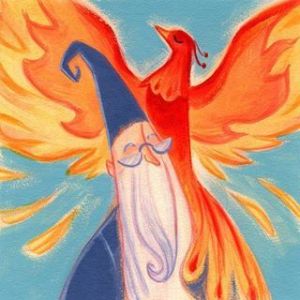
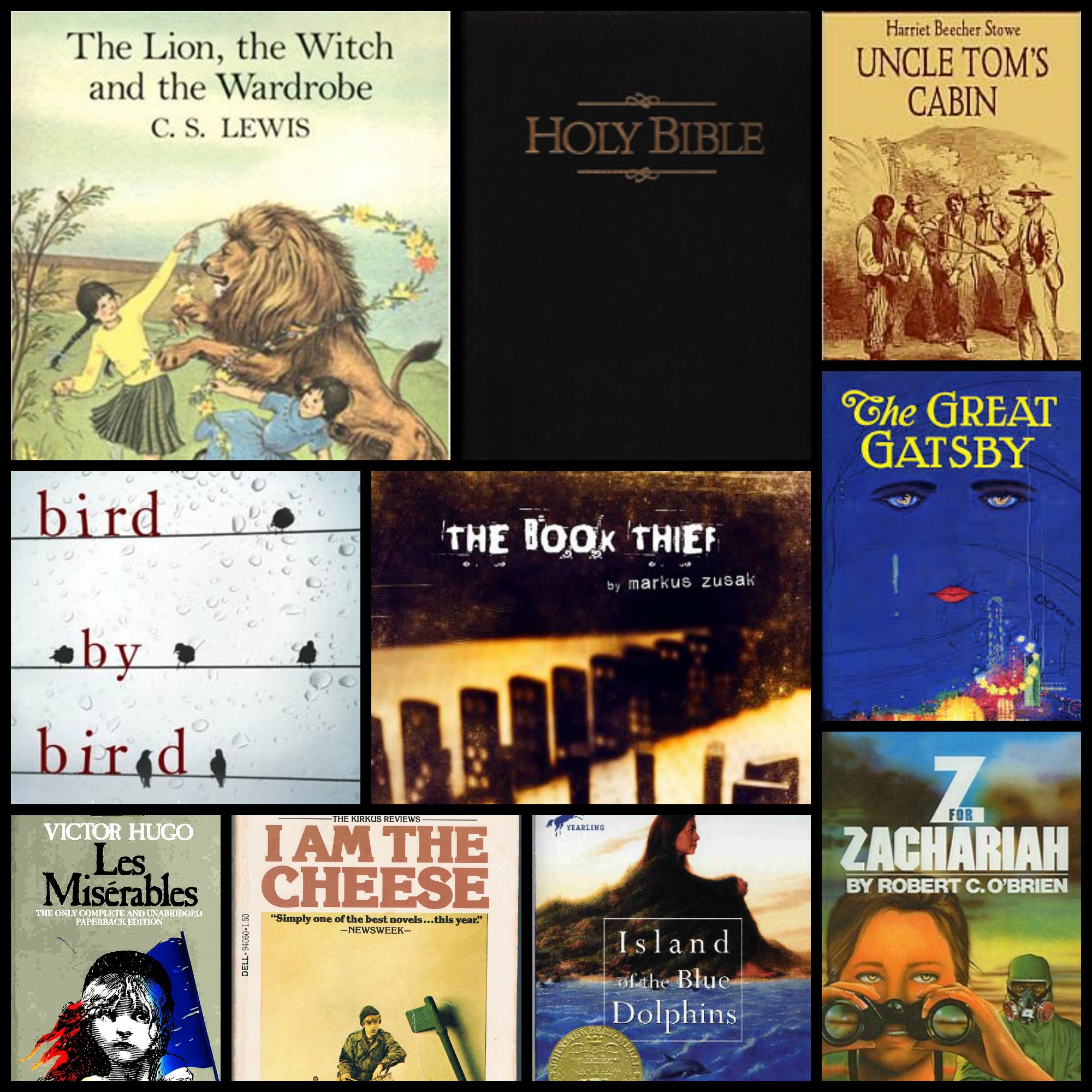
Albus Percival Wulfric Brian Dumbledore
Harry Potter series by Jo Rowling

Atticus Finch
To Kill a Mockingbird by Harper Lee

Eustace Clarence Scrubb
Chronicles of Narnia series by C.S. Lewis

Ponyboy & Sodapop Curtis
The Outsiders by S.E. Hinton

Stargirl Carraway
Stargirl by Jerry Spinelli

Augustus Waters
The Fault in Our Stars by John Green

Evanjalin of the Monts
Finnikin of the Rock by Melina Marchetta

Chaz Santangelo
Jellicoe Road by Melina Marchetta

Hester Prynne
The Scarlet Letter by Nathaniel Hawthorne

Soapbox Church
The Bluest Eye by Toni Morrison

Bonus:
Huckleberry Finn
Peregrine of the Tides
+ let’s all just acknowledge that this entire list
could have been names from Harry Potter
(Regulus Arcturus Black; Mundungus Fletcher;
Marvolo, Merope, & Morfin Gaunt;
Gellert Grindelwald; Wilhelmina Grubbly-Plank;
Bellatrix Lestrange; Xenophilius Lovegood;
Olympe Maxime; Kingsley Shacklebolt)

🙂


Interview with a Former HOCD Sufferer

interviewHey peeps!  Since I’ve been getting so much traffic on my blog in regard to HOCD (homosexual OCD), I thought I’d do another post on it.  This interview is with “Hannah,” who tells me she is ready to bare all (except for her real name, ha!) for the sake of helping others better understand HOCD, that obsessive-compulsive phenomenon where a straight person obsesses over being gay or a gay person obsesses over being straight.  

I think you’ll enjoy this interview.  Hannah said there was no question too personal, so I really went for it!  🙂  If you have additional questions, leave them in the comment section, and maybe we can force more truths out of Hannah.

Disclaimer: This post is not intended to make a statement on homosexuality itself.  It’s intended to open up our eyes to HOCD, which is a lie that both straight and homosexual obsessive-compulsive people battle with.  It’s not about the morality of homosexuality– it’s about people who believe lies about their sexuality at the hand of OCD.  My blog readers are ahhh-may-zing, so I doubt I even need to say this, but nevertheless: if comments get mean or stray away from the topic of HOCD, they will be deleted.  You’re a fool if you think I’ll let you bash any of my friends, gay or straight.

Jackie: Tell us a little about your history with HOCD.
Hannah: I was in junior high when I first started questioning if I was gay.  It came on really suddenly, like, in a MOMENT.  One minute I was this boy-crazy girl and the next I wondered if maybe I was gay.  But the thing was, I didn’t want to be gay … at all.  AT ALL.

Jackie: What triggered this sudden change?
Hannah: I found one of my (girl) friends attractive.  OCD doesn’t need something big to work with.  It will take whatever you’ll give it.

Jackie: What was your reaction?
Hannah: Cold dread.  I mean, I was terrified.  I didn’t want to be gay.  I wanted to like men– I DID like men– but suddenly it was all I could think about.  Every girl I would see, I would think, “Do I think she is pretty?” and then, of course, I had to take it a step farther: “Would I want to kiss her?”  Every girl, I’d start imagining myself kissing her.  It made me sick.

Jackie: It made you sick?  Readers will wonder how you didn’t realize then that you weren’t gay, you know!
Hannah:  Yes, I know.  Because it doesn’t FEEL obvious.  I kept focusing on what I was doing: thinking of kissing every girl.  That felt like evidence that I was gay.  The fact that it made me sick barely registered, for some reason.  I guess it’s just how OCD works.  It’s all very confusing.  Well, then of course, there was the fact that I DO think girls are beautiful.  Sometimes more beautiful than men.  Their bodies definitely are.  Most of us can agree to that, haha!

Jackie: So there was a part of you that found women attractive then?
Hannah: Yes.  There still is.  Women are hot!

Jackie: But you’re not gay?  Or maybe bisexual?  I know I already know these answers, but I think this will help my blog readers process things.
Hannah: No, your questions are fine.  I told you anything goes, right?  Haha!  No, I’m not gay, and I’m not bisexual either.  I know that now.  And the key to learning that was learning to be uncertain, as opposite as that sounds.

Jackie: Okay, we’ll dive into that more in a bit here.  But tell us more about what happened when you first started wondering about it.
Hannah: Well, I couldn’t STOP wondering about it.  Like I said, every girl I saw, I thought about kissing her.  I think it was like my way of “testing” myself– to see what my instincts would tell me, to see what I really wanted.  I hated doing this though.  This was the compulsion actually for me.  The “testing” was like what you talk about about seeking reassurance.  If I thought about kissing the girl and it still made me sick, then I was still okay, still not gay.  (Again, no offense to your gay readers!  This was just my experience.)  I thought about this so much that one night I had a DREAM where, in it, I kissed a girl.  When I woke up, I thought for sure I was gay.  I was having gay dreams!

Jackie: It carried over from real life!
Hannah: I know that now.  But it felt like this stamp of homosexuality.  I was so scared.  I didn’t want to tell my family that I was gay.  I still didn’t even WANT to be gay.  Oh, and this one thing.  I still liked boys.

Jackie: So, you didn’t want to like women, you felt sick about liking women, you ACTUALLY liked men, but you still thought you might be gay?
Hannah: It’s OCD.  It feels confusing.  You know what it’s like.

Jackie: I do.  I really do.  So, what changed?  You’re pretty confident now in your sexuality, yes?
Hannah: I am!  And it feels awesome!  I love knowing I’m straight– and get this, this is so good– I can even appreciate the female body now, and I am not joking, I could see a NAKED WOMAN today and I could GET TURNED ON BY HER and I would STILL know I am straight.  Because I am.

Jackie: And that came about how?
Hannah: Exposure and response prevention therapy.  You preach it.  I preach it.  Cue Hallelujah chorus.

Jackie: You could see a naked woman and get turned on by seeing a naked woman, and you still wouldn’t doubt your sexuality?
Hannah: Not for one second.  I’m as straight as they come.  I love men.  I want to be married to a man someday and have sex with a man and build my life with a man, and it doesn’t make me flinch to say that I think boobs are hot.  Like, super hot.

Jackie: You’re hilarious.  You’ve come so far!  I’m sure there are HOCD sufferers out there who can’t imagine admitting something like that.  And people who are probably thinking you must be bisexual if you feel that way.
Hannah: Haha!  People can think that all they want!  I am FREE from my HOCD and totally straight.

Jackie: You’ve come so far through ERP.  It’s amazing, right?
Hannah: Amazing, for sure.  And hard.  But good.  It made me able to think clear finally.  If I like men and want to be romantic with men and DON’T want to be that way with women, then I am not gay.  It’s obvious, like you said.  And the more I realized that I am in control of my own response to it, the more freedom I found.  That’s why I can say women are hot.  Doesn’t bother me anymore.

Jackie: So, your advice?
Hannah: ERP.  For sure.  Best treatment out there.  For the gay obsessive-compulsives too, the ones who obsess that they are straight and that causes them as much anxiety as the opposite thought caused me.  ERP is absolutely the best treatment for OCD.  I know you know that.

Jackie: I absolutely do.  Do you still struggle with OCD?  Not just HOCD, but other obsessions and compulsions?
Hannah: Rarely.  ERP kinda took care of OCD, you know?  Instead of just one issue, it went after OCD itself.  I know you know these things, but your readers need to know.  ERP is the solution.  A one-stop shop.

Jackie: And you think women are more attractive than men?
Hannah: I think the female body is more attractive, but I am attracted TO men.

Jackie: But you know you’re not gay?
Hannah: Yep.  But that certainty only came through embracing UNCERTAINTY, the whole point of ERP.

There you have it, folks.  

My thanks goes out big-time to Hannah for her willingness to be interviewed and her awesome vulnerability.  The bottom line is ERP is the best treatment for OCD.  

In other words, just what I’ve been saying on this blog for the last two years. 🙂

Related posts:
Another Interview with a Former HOCD Sufferer
No One Wants to Talk about HOCD
A Closer Look at HOCD
A Big Ol’ HOCD Post
A Third Interview with a Former HOCD Sufferer
When a Writer Reads

readerWhen a writer reads, a lot is happening.

If the book is good, there is one level of enjoyment, a second of envy, and a third of collecting style and ideas for future mimicry.  If the book is amazing, sometimes the envy hits like a punch in the gut.  If the book is flabbergasting, sometimes the enjoyment wins out and puts the envy on the backburner until the book is over.  Sometimes.

If I’m re-reading a book I love, my brain is whirring like a machine: pictures … could I introduce characters with pictures? The author started with a flood of memories … interesting way to get it all on the table.  Dual POV … is it working?  Structure, repetition, imagery, setting … 

Whirr …

Whirr …

Whirr …

I never regret being a writer, since it’s one of my truest joys, although it makes my life exponentially more difficult.  The closest I get to that regret though is probably when I’m reading.  It’s been a while since I’ve been able to just. simply. read.

It’s easier to read outside of my genre, which makes sense, since the envy lessens.  I don’t have aspirations to be an incredible fantasy writer, so it’s easier to give fantasy writers their due accolades and move on.  But then again, my favorite genre is contemporary, the genre in which I write, so of course I want to read those books.  And they’re often going to be the ones that will propel my writing the most.

What a strange tightrope writers walk!  There is almost nothing I love more than a good book– and yet, I’m doomed to have my enjoyment tainted simply because I’ve chosen that writing life for myself (or that life has chosen me).

I read a lot of book blogs, and I marvel at how differently a reader reads from the way a writer reads.

This sounds like a lament, and I suppose it is a little.  But then again, I get to be a writer, and for that it’s all worth it.

Profanity in Literature

pottymouthWhat do you think about profanity in literature?  Some people can’t stand it, think it reveals sloppy writing, insist that writers can still get their point across without using curse words.

Wendy Lawton, an agent at Books & Such Literary, recently blogged:

But for me the biggest reason to avoid questionable language in a book is that it is usually lazy writing. It’s like telling instead of showing. Rather than just put a cuss word in a character’s mouth, there are so many more powerful ways to get the attitude and language across.

(You can read her entire post here.)

My friend and fellow writer Addie Zierman, whose memoir was released this week, likewise blogged about why her Christian memoir has R-rated words, saying:

And yet maybe there’s that person who needs to hear it. The bad word, the foul word, the one that cuts into the hard reality of her life. Maybe she needs to know that God is big enough to go even there. That his grace makes beauty from what is hard and ugly and foul. That he loves her more than all that.

Grace Biskie, a Christian blogger, used some profanity in one of her posts and then later defended her swearing, saying this:

Jesus is my life.  Jesus is my everything.  Jesus is my all in all.  ALL MY EGGS are in the Jesus basket.  I have no other eggs, no other baskets.  Everything about me lives and breathes and moves and longs for Jesus.  I long to live life in the presence of God, faithful to the work that He’s given me.  What I want you to know about why I swear, in light of allegiance to my faith is this: I’m trying to fucking survive. That’s all I can say.  That’s all I can tell you.  …  If you are worried about me, don’t.  I have an inner circle.  I have a therapist.  I have Jesus.  And thankfully, antidepressants.

I’d like to hear your thoughts, readers– Christian and otherwise.  My young adult novel (on submission right now) has more than a handful of curse words, including a couple of the dreaded F-bombs.  When I was writing those scenes, though, it truly felt that no other word would capture the complete devastation of those moments.  They are sad, scary, heartbreaking scenes where the characters are broken, and no other word felt powerful enough to reach out and slap the reader’s heart in a way that they could realize the ruins my characters lay in.

I will lose some readers because of this, I imagine.  My own mother and sister don’t understand my “need” to use such harsh words in my writing.  I know that if my brother reads my story, he will be disappointed with my word choices.  But I don’t feel guilty, and I know that part of that is due to the spiritual freedom I’ve experienced since God and ERP broke my shackles four years ago.

Let’s start a discussion in the comments below, friends!  All opinions welcome!  Play nice.

When I Was on Fire

synchroblogToday is a GREAT day; do you know why?

My friend/critique partner Addie Zierman’s memoir  When We Were on Fire comes out!  I have already read and reviewed this book, and folks, let me just say that Addie is a tremendous writer, and you’re going to love this book.

Having grown up in the same 90’s Christian subculture as Addie, I can remember sporting the Christian t-shirts (the ones that annoyingly mimicked popular logos), listening to all the Christian bands, centering my week around youth group on Wednesday evenings.

Today, Addie is hosting a synchroblog on her site.  She’s asked us readers to write about our own “on fire” days.

Mine come loaded with embarrassment– and an apology.

Here is the truth: black and white exist– but so does gray.  I didn’t know that growing up amongst evangelicals.  I was quick to judge, and I thought I owned the market on truth.  In late high school and especially in college, I was a spiritual know-it-all.  After all, I went to a Christian school, studied the Bible as an academic subject, and learned theology from some of the major players in that field of academia.

In other words, I was kind of a jerk.  Maybe not even kind of.

As I am writing this, students from my alma mater (and Addie’s– we overlapped there for a couple years!) are clawing each other’s eyes out over Obamacare and politics and theology, still living in that black-and-whiteness of undergrad.

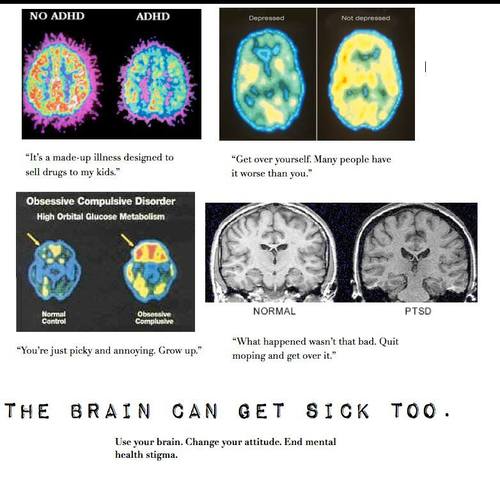
I graduated.  I lost touch with reality and suffered from paranoia.  I watched friends marry and divorce.  I faced the stigma of mental illness.  I underwent a therapy that some people would consider unholy.  All those beautiful and ugly and layered and confusing shades of gray started to paint my world.

I am on fire in a new way now.  On fire about grace.  And mercy.  About weakness and healing.

I am sorry for when I was on fire about being right and judgement and personal strength.

Addie’s book tells of her journey toward wholeness, of the ways that the evangelical subculture harmed her and others in the name of God and goodness, about her anger and spite when her eyes were opened to see this, and how she climbed out of the bitterness.

Buy her book.

Read the Prologue and First Chapter HERE

Available for Pre-Order in the Following Places

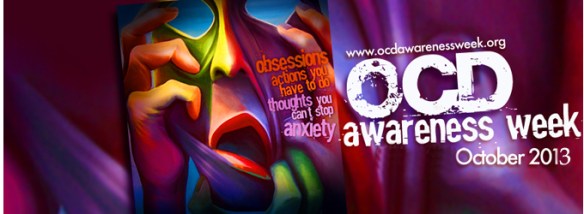
OCD Awareness Week 2013

awareness week

Welcome to OCD Awareness Week 2013!

Here’s what I’ve got planned:

Monday, October 14, 11am CST
Coming Out with OCD
#OCDchat
Details here!

Tuesday, October 15, 7pm CST
The Loft/Open Book, Minneapolis
Alison Dotson Publication Party
Alison and I will both be reading book excerpts about OCD: non-fiction for her, fiction for me!
Details here!

Wednesday, October 16
I’ll be sharing my OCD journey with two Abnormal Psychology classes at the University of Northwestern in St. Paul.

So excited!