CASTLE
I am a child, rebirthed into ruin,
remembering thrills and thrones
which whisper your once-glorious name.
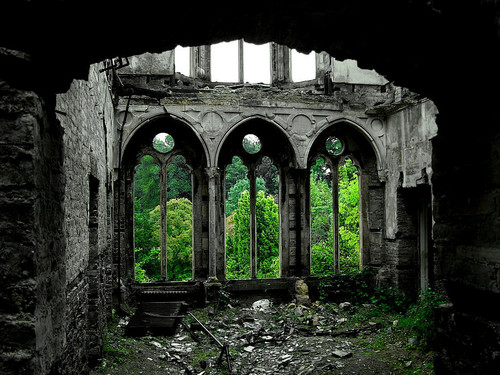

CASTLE
I am a child, rebirthed into ruin,
remembering thrills and thrones
which whisper your once-glorious name.
“Neely, have you ever been to a tenebrae service?”
“Like for Good Friday, you mean? Yeah, we have one at my church most years. We had one a couple months ago.”
“What was your service like?”
I leaned my head against the back of the couch, thinking. “Um … there were seven votives lit on the stage. Different people went up to the microphone; each one read one of the seven last things Christ said on the cross and then extinguished one of the candles. So, after all seven people had read, we were in the dark in the sanctuary.” I could picture Ellen, on my left, growing uncomfortable as the light had diminished. On my right had sat Sophie, her big brown eyes taking in the scene.
“Tenebrae is Latin for ‘shadows’ or ‘darkness,’” said Ruth. “Can you imagine the darkness of that original Good Friday?” she asked. “Think about it. Imagine being a follower of Christ and standing there beneath the cross on the very day he died. You had believed all His promises, but now he is nailed to a tree, dead. I probably would have cried until I went into shock. I’d be staring at that limp body thinking, should I go home? Should I stay? What is the use of anything now? How will I readjust to life without purpose?”
“As if you’d lived a day too long, and now there was nothing for you,” I said, identifying as I knew Ruth wanted but not sure of her point.
“Exactly,” said Ruth. “I bet those early Christians—in the interim darkness between the cross and the resurrection—could understand your misery.”
I waited, still not grasping where …
“On Sunday morning, Christ rose from the dead and conquered death!” she said. “Victory was just around the corner.”

My best friend Erica is four years younger than me, so I was already done with college before she even started it– and when the time came, she headed off to school in Chicago, leaving me behind in the Twin Cities to carve my way without her. Our friendship had never been tested by distance before– who were we to know if it could withstand all those miles?
About a month into the school year, I drove out to Chicago to spend the weekend with her, and one night, we ended up sitting alone in a lounge, share our hearts and secrets and fears, our prayer requests, our tears. And that’s when I knew our friendship was a lasting one.
I wrote a poem about it, about three years after college graduation. It was actually a big deal because– surprise, surprise– I actually didn’t write for the first three years after I got my writing degree. My creativity was sapped, my OCD was out of control, and I hadn’t experienced enough of life yet to really have much to say.
So this poem was important. Not only did it get my creative juices flowing again, but when I stumbled upon a girl from my writing program in a stairwell one day, I mentioned to her that I had been working on this poem and asked if she’d take a look. Anna and I started to meet together to talk about writing and soon decided to invite others to join us. That is the start of my writing group, which is still going strong in our seventh year.
All that to say, the following is not the best work I have ever produced– but it is one of the most important poems I have written because of all that transpired after. Seven years later, I am working hard on my second manuscript, maintain a daily blog, and Can. Not. Stop. Writing.
Enjoy!
KNIT
for eir
This September day is costumed in summer’s silly charm,
and wonder itself walks the streets of Chicago, a gentleman
bidding good day to friends drunk on the festive flavor of reunion.
Distance, an unfamiliar bully, tests their untried alliance but
is curbed by a charming exchange in a dormitory lounge; Chicago lights
and dirty street sounds don’t breach the quiet dark of this room
to bother best friends who sit and weep together
for the near or distant future.
With juvenile delight, they grasp hands (and their friendship)
and hold tight. A wild disclosure of laughter, tears, and stories,
all exposed to the eavesdropping couch that’s received them
and to the mural on the far wall featuring an old hymn’s lyrics:
“Come, Ye Sinners,” and they do. Come.
To the throne of their able King, whose steady hands,
cupped and strong, award solid and abundant support.
Rallied in aggressive prayer, the girls are shored for survival
while joy rises and falls: offering and receipt.
Their celebrated plans could not conceive this conversation
and the beautiful crux: forever exists for them,
but it seems more important that
now they are here.
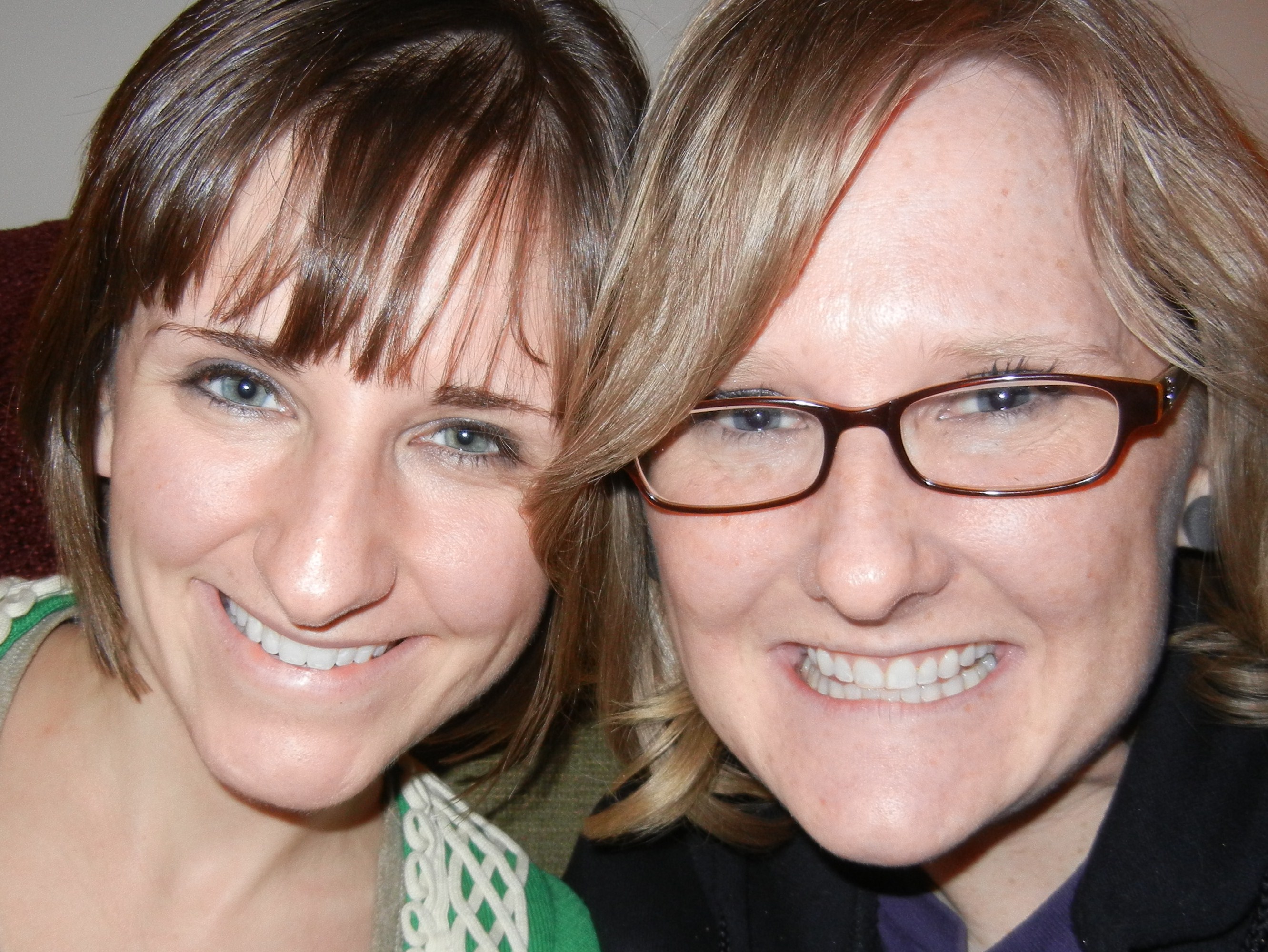
eir and me!
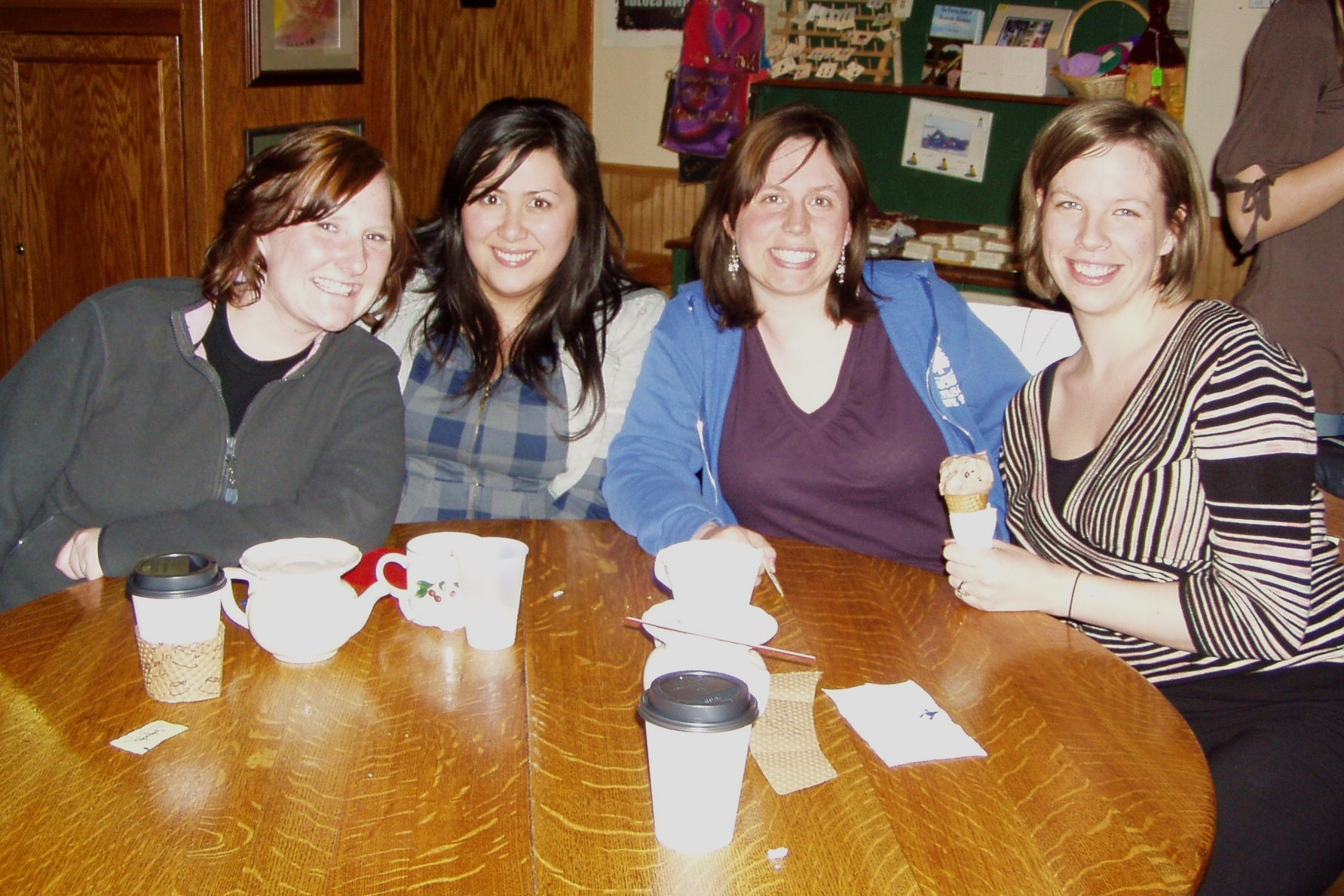
four of the early writing group members … all four are still in it!
1. The Chronicles of Narnia by C.S. Lewis
These are classics! I seriously cannot get enough of them– I read them over and over and over and love them every single time. I am just finishing up the series for the first time this year, and– no joke– after book 7 is over, I will start again on book 1.
Must-read: everyone, all ages
2. Jellicoe Road by Melina Marchetta
This book is seriously one of the best-written young adult books I have ever read. In my life. Period. I love so many things about this book: the language, the characters, the structure, the humor. It gets a 10 out of 10 from me.
Must-read: anyone who loves YA or a clever, quirky romance
3. The Book Thief by Markus Zusak
A Printz honor book narrated by Death himself, this is “just a small story really, about, among other things: a girl, some words, an accordionist, some fanatical Germans, a Jewish fist fighter, and quite a lot of thievery.” I love books that are about the joy of words– and it’s even better when you mix in unforgettable characters and gorgeous writing full of incredible imagery.
Must-read: YA lovers, people who love words, anyone interested in Nazi Germany and the Holocaust
4. Peace Like a River by Leif Enger
The brilliance of this story is in the masterful writing. Every single page will leave you in awe, plus the story is so real and deep, and it makes you think about things like miracles and family and loyalty and guilt.
Must-read: lovers of literary fiction, adults who want a great story, parents
5. The Night Circus by Erin Morgenstern
This book is richer than chocolate. It has magic and competition and romance– and it avoids all cliches. It is a sensory extravaganza.
Must-read: people who love Harry Potter and are ready for magic from a grown-up perspective, anyone who values great imagery
6. The Fault in Our Stars by John Green
TIME’s 2012 book of the year! This YA book will make you laugh and cry and think. It’s a cancer book– but not one of those cancer books.
Must-read: people who love YA, philosophy, and incredible characters
I’ll leave you with those six for now. As I think through this list, I feel full. They are that good.

Silas’s college visit had gone great. “Their creative writing program is fantastic, West,” he said to me up on his roof that evening before the August Arms episode, this week’s theme being “August August” since the calendar had flipped once again. Last night’s story had been centered on Caesar Augustus, for whom the month was named, and his rise to power that incited Mark Antony and Cleopatra to each commit suicide.
“Yeah?”
“Yeah. Most of the English professors there have published books, and they have this really cool literary magazine run by the students. And the campus is gorgeous—brick buildings a hundred years old, and they’re crawling with ivy. It’s on a lake—well, I guess pretty much everything in Minnesota is—but anyway, it has seven miles of lakeshore and its own island with a community garden. You really should check it out too. We … we could … go together.”
By the way he was stammering, I knew that he meant we could go to college together and not just we could go visit the campus together. I liked that he was thinking of me so far in the future. Then again, college really wasn’t that far away—senior year was starting in a month, and I’d turn eighteen in just a few days.
“Did you get any info for Laurel?” I asked. Please say yes.
He nodded. “They have a BFA in dance there. Mom and I asked the recruiter lots of questions, and it seems perfect for Laurel.” When Silas paused, I could hear the words he didn’t say: “if only she were healthy again.”
I told Silas about my conversation with Laurel while he was gone, the conversation about all her strange ideas about God, not the one about Whit. He sighed. “I knew that sometimes she doubted God’s existence, but I didn’t know she had all those alternative theories of spiritual reality. Dammit,” he said, “just listen to that phrase—‘alternative theories of spiritual reality.’ It’s more Descartes, that bastard. Is she really only seventeen? She drags those few years around like they are a backpack full of bricks.”
The story on the radio that night was about seven Rwandan children—six girls and one boy—who, in August of 1982, had visions of the Virgin Mary showing them a river of blood, people killing each other, decapitated corpses. Twelve years later, civil war broke out in Rwanda between the majority and minority tribes, including 100 days when about 800,000 people were killed, many beheaded by machetes and dumped into the Kagea River.
“It was the vision, come true,” the voice on the radio said. “A river of blood, bodies without heads.” It told how the Kagea carried the bodies to Lake Victoria, creating a health hazard in Uganda.
“… Our Lady of Kibeho apparations were later declared authentic by a local bishop …”
“Do you really think so?” I asked Silas.
He shrugged, the flickering bonfire casting light and shadows across his face. “Maybe. These days, we’re so removed from the burning bush and the pillar of fire that they somehow seem tamer than a vision of Mary. But God speaks softly sometimes too.”
“To you?”
“Maybe.”
“What does he say?”
Silas leaned backward and looked at me with furrowed eyes and a crooked grin. “I can’t tell if you’re making fun of me,” he said. “Are you?”
Was I? I thought of the stories he was referring to—God speaking to Moses from a bush blazing with fire that did not burn it up, God leading the Israelites to the Promised Land as a pillar of cloud by day, a pillar of fire by night. I’d heard the stories a hundred times in Sunday school as a child. Did I believe them? I hadn’t really thought that—what do I believe?—for so long. I’d just been limping along from Sunday to boring Sunday, doing my best to avoid encountering it all. Had I been creeping around corners to hide from Dad—or from God?
“No,” I said. “I’m not making fun of you. What does he say?”
Silas was quiet for a moment, an odd, lingering moment that made me wonder if I’d been too forward in asking a question like this so flippantly.
But then that moment was over, and Silas looked at me. “He says to abide.”
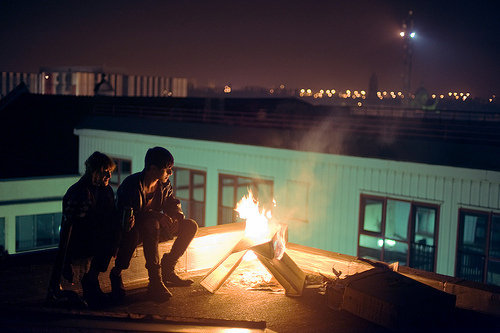
She was four years old and gone, her parents frantic as they searched the farm: the hay loft where the kittens played, the bicycle garage, the chicken coop where she liked to search for eggs. Her mother made her husband check the pond, couldn’t bear the image of a preschooler face-down in the reedy water.
She wasn’t there.
They took the four-wheeler around the fields, stopping every few hundred yards to shut off the roaring motor and shout, “Ruby!! Ruuuuuuuuby!!”
And finally, they thought they heard something. Just soft. It could have been a bird.
But as they neared the maple tree, its leaves shocked into the blood-red of autumn, they heard her up in the treehouse. She was singing Simon & Garfunkel and drumming on the treehouse floor with stunning percussive accuracy for someone so young.
I think it’s gonna be all right
Yeah, the worst is over now
“Ruby?” her mother called from the base of the tree. “What are you doing up there?” She was starting to cry—a little angry, but mostly relieved.
Her tiny face peered over the edge. “I had to be in the sky of red stars,” she said, as if it were obvious.
Who was this this little priestess, at home in her own temple?

I was intrigued to discover that researchers at the University of California–San Diego had studied this idea from a scientific/psychological perspective. Nicholas Christenfeld and Jonathan Leavitt ran experiments with twelve classic short stories, including mystery, ironic-twist, and literary stories. The stories were presented in three ways: as-is (without a spoiler), prefaced with a spoiler paragraph, or with that same paragraph incorporated directly into the story. “Subjects significantly preferred the spoiled versions” (Kiderra, “Spoiler Alert: Stories Are Not Spoiled by ‘Spoilers’”), although when the spoilers were incorporated into the story, they weren’t received as well as the stories prefaced by the spoilers.
Although “the researchers are careful to note that they do not have a new recipe for writers to follow” (Kiderra, “Spoiler Alert: Stories Are Not Spoiled by ‘Spoilers’”), I think there is much to be learned from this study. Christenfeld boldly states, “Plots are just excuses for great writing. What the plot is is (almost) irrelevant. The pleasure is in the writing” (Kiderra, “Spoiler Alert: Stories Are Not Spoiled by ‘Spoilers’”). Another further article regarding this study states:
Perhaps, [Christenfeld] said, people enjoy a good story as much as a good twist at the end. Even if they know how it comes out, they’ll enjoy the journey as much as the destination.
“Writers use their artistry to make stories interesting, to engage readers, and to surprise them,” Leavitt and Christenfeld said in their paper, to be published in the journal Psychological Science (Potter, “Spoiler Alert: Stories Not Ruined If Ending Revealed”).
Leavitt and Christenfeld, though not writers themselves, are onto something, and Death, the narrator of The Book Thief, explains this very well:
Of course, I’m being rude. I’m spoiling the ending, not only of the entire book, but of this particular piece of it. I have given you two events in advance, because I don’t have much interest in building mystery. Mystery bores me. It chores me. I know what happens and so do you. It’s the machinations that wheel us there that aggravate, perplex, interest, and astound me.
There are many things to think of.
There is much story (243).
And this, I believe, is the crux of the matter. Readers—voracious readers who truly love story itself—want to know those “machinations that wheel us there.” Readers want the details. Death/Zusak is right. There are many things to think of. There is much story.

Works Cited
Kiderra, Inga. “Spoiler Alert: Stories Are Not Spoiled by ‘Spoilers.'” UCSanDiego News Center, 10 Aug. 2011. Web. 07 Feb. 2013.
Potter, Ned. “Spoiler Alert: Stories Not Ruined If Ending Revealed.” ABC News. ABC News Network, 12 Aug. 2011. Web. 07 Feb. 2013.
Zusak, Markus. The Book Thief. New York: Alfred A. Knopf, 2006. Print.

SCENERY MATTERS
Loneliness would seem more agreeable
in hill country so green that it snaps,
or beneath a canopy
of pink that bites your eyes.


I love being a YA writer!
 JACKIE LEA SOMMERS