
Thoughts on Writing: 14 Steps to Getting Started

Blog readers repeatedly tell me they want to know more about the creative process, the road to publishing … and through publishing … and life on the other side of publishing, especially in regard to working on a second book. They ask where I get my ideas, how I plan, how I execute, how I get over writer’s block.

And here’s the thing: I don’t feel like an expert, by any stretch of the imagination. So sometimes it feels pretentious to me to offer advice when I’m such a novice myself. With that caveat, I am always happy to talk about creativity, so let’s dive in.

thoughts on writing 1.png

MINDSET

1. Do you have to write? Is it in your blood? Is writing a part of your identity and calling?

If it’s not, why start? Writing is deeply meaningful, yes– but it’s also hard and painful, it’s slow work that is very unlikely to make you rich, and true creativity requires you give so much of yourself to the task.

George Orwell said: “Writing a book is a horrible, exhausting struggle, like a long bout with some painful illness. One would never undertake such a thing if one were not driven on by some demon whom one can neither resist nor understand.

2. The journey is probably going to be longer and slower than you think. 

You might never have your work published. If you write because you have to write, because you’re a writer in your bones, then this won’t matter. (Or at least it won’t matter enough to stop you!)

3. Don’t quit your day job. Yet. 

If you are a talented communicator, you will be able to find work, work that puts food on the table, pays the rent, renews your prescription meds (you think I’m joking, but I’m not). Having your basic needs met will allow you to pour more of your energy into your creative pursuits. In that sense, you may not even want your day job to be especially creative– many of us have a limit to our daily creative energy; for us, it’s better to use a different part of our brains during the work day and save that creative energy for writing.

GETTING STARTED

4. Read extensively. 

I knew a man who wanted to be a novelist, but he claimed he didn’t have enough time to read. This is like someone saying they want to be an Olympic athlete but don’t have time to use the weight room.

Read like crazy: everything [good] you can get your hands on, but especially in your genre. Poetry too; it will improve your prose.

Stephen King makes it clear: “If you don’t have time to read, you don’t have the time (or the tools) to write. Simple as that.”

Annie Proulx says: “You should write because you love the shape of stories and sentences and the creation of different words on a page. Writing comes from reading, and reading is the finest teacher of how to write.”

5. Write extensively, even when you’re not inspired.

As many have noted before, amateurs wait for inspiration; everyone else just gets up and goes to work. Might as well. You need to put 10,000 hours of practice into something to become an expert. Better get started.

6. You don’t need anything fancy: just a word processor or a pen and paper. 

I know people who swear by Scrivener and others who use something like WriteRoom or DarkRoom to limit distractions, but ultimately, all you need is a way to record your story. Some people choose to write by hand first, then transfer it into an electronic document later, and there are studies that say writing by hand does slow a writer down, which can have many benefits. As for me, I use a computer for that exact reason– I don’t want to slow down while I’m writing. But later, when I need to solve issues, figure out plot holes, brainstorm new scenes, I sit down with a notebook and pen too.

7. Do your research, but don’t let it become procrastination. 

I have friends who are brilliant writers– but who will spend so much time plotting and planning and world-building and researching that they never really get around to writing their stories. I admit everyone is different here (some writers plot extensively a la J.K. Rowling, some writers write by the seat of their pants a la Ray Bradbury)– and research and details are important— but don’t let anything keep you from actually writing. The research should propel your project forward, not stall it out.

8. Learn the craft. 

I know that some of the greatest writers had no formal education in it, but as for me? Well, I needed a bachelor’s degree in writing to give me roots and wings. Set aside some money to take a course or attend a writer’s workshop. Read books about craft (my favorites: The Emotional Craft of Fiction by Donald Maass and The Anatomy of Story by John Truby) and the writing life (my favorites: Bird by Bird by Anne Lamott and The War of Art by Stephen Pressfield).

9. Solicit feedback and revise.

Join a writing group or find some beta writers. Better yet, do both. Make sure they actually know what good literature is. They should be good writers themselves or at least good readers. And do take their advice or at the very least try it out.  No one said you have to keep your revisions. Take their feedback, make revisions, and then decide whether to take it or leave it. It goes without saying (I hope) that all this should be done without putting up a fuss. You need feedback to make your writing sparkle. Well, at least most writers do.

Jeanette LeBlanc says: “Never get too attached to the first draft of anything – this includes writing, art, homes, love. You will revise and revise and revise. We are always in the midst of our own becoming.”

THINGS TO REMEMBER

10. Genres have word count guidelines. 

Debut authors should be especially aware of this. Many literary agents won’t even bother with a manuscript that falls outside the genre word count guidelines. (Not that it has never happened– but it’s the exception, not the rule). There’s an excellent, detailed post about this Writer’s Digest.

11. Screw trends.

Write what you’re passionate about, not whatever is trendy in your genre. By the time you finish your novel about [insert trendy, current topic here], the topic will probably no longer be trendy or current.

12. The only true practice for writing a novel-length book is to write a novel-length book. 

Short stories are their own separate beast, in my mind, so if you want to write a book, you have to DO IT. Does that mean your first book has a high chance of being not-so-great? Well, yes. I and most of the writers I’m friends with did not publish the very first novel that we wrote. I always say I had to write a book to learn I could do it before I could then write a good one.

13. You have all the permission in the world to write an awful first draft. 

In fact, in the writing community, we commonly refer to these as “shitty first drafts.”

Hemingway said: “The first draft of anything is shit.”

Anne Lamott spends an entire chapter of Bird by Bird discussing “shitty first drafts”: “Almost all good writing begins with terrible first efforts. You need to start somewhere. Start by getting something—anything—down on paper. What I’ve learned to do when I sit down to work on a shitty first draft is to quiet the voices in my head.”

If it helps you to look at the flip-side, consider Jane Smiley’s take: “Every first draft is perfect, because all a first draft has to do is exist.”

Whatever way you look at it, remember that you have permission to write something that will not be the final something.

14. Perseverance and talent are both important in writing; if you want to publish, perseverance is more important than talent. 

Maybe that’s a bold thing to say, but I really believe it. The writer-friends of mine who are published who wrote a first terrible-to-semi-awful first book? After they did that, they set it aside and wrote a second book. A third. A fourth. They didn’t stop after being rejected once or twice, and– say what you will– to spend years on a manuscript that never sees the light of day, then turn around and do that all over again without any guarantees? That’s gutsy. That’s driven. That’s why I said what I said in the first point of this post.

Thanks for reading, folks! In my upcoming posts, I’ll talk more about querying literary agents, getting a book deal, and what comes after. Stay tuned.

And please do leave a comment! I would love to have a discussion here; I’m not interested in being the only voice.

 

Survey Says …

results

65% said keep posting as you are.
33% said it would be nice to know when to expect to hear from you.

Primary content of interest:
41% literature-related content
33% OCD-related content
22% updates on my life
4% faith-related content
But as one reader added, “I like it when you balance everything.”

75% want off-the-cuff posts
25% want polished posts
However, ten people made the same comment that they can’t tell the difference! 🙂

The rest of the questions asked for what sort of content you’d like to see on the blog in 2018, and I’m so grateful for all your input!

Thanks to your feedback, this is what I’m gonna try this year:
Posting polished, high-value content every Sunday and chiming in with any random personal updates whenever I feel like I have something to say! 🙂 The first series of the year begins tomorrow– “Thoughts on Writing”! I’m excited!

When Parents Don’t Believe You Have OCD …

Wow, is this article by Dr. Fred Penzel ever relevant! I hear similar stories to this all the time from teen readers.

It begins:

Living with OCD is never easy, and this can be especially true if you are a teenager. At a time when you’re trying hard to learn about who you are and how to find a place for yourself in the world, having a disorder like OCD can make you feel so different from everyone else.  And the thought of having to talk about the disorder with anyone, let alone your friends and classmates, can be very scary. School is a small world, and things have a way of getting around pretty quickly, or so it can seem.

But talking to people and asking for help are the best ways to improve your situation. Your schoolmates may surprise you with their capacity for understanding. We often fear what we don’t understand. And your parents can help you to get the help and resources you need to succeed in school and beyond.

But what happens when your parents, the very people who should be most concerned about your well-being, don’t understand OCD and don’t know how to help you? Or worse yet, don’t believe that you are suffering from a disorder at all?

To read the entire post, click over the article on the IOCDF website here.

My One Word: Abide

At myoneword.org, readers are encouraged to ditch the long list of new year’s resolutions and instead choose one word to focus on all year long, one word to inspire you, one word that encapsulates the character you want to have.

I’ve chosen abide.

abide2

Some people might think I take this whole “one word thing” a little too seriously, but I’ve found over the last couple of years (see: sacrifice and grace) that it is so powerful to let a word– a word that really represents a lifestyle– stay near to my heart as I make big choices.

That’s why I’ve been thinking of what my 2018 word would be for quite some time, even praying about what it should be.

I kept coming back to abide.

Abide in me, and I in you. As the branch cannot bear fruit by itself, unless it abides in the vine, neither can you, unless you abide in me. I am the vine; you are the branches. Whoever abides in me and I in him, he it is that bears much fruit, for apart from me you can do nothing.
John 15:4-5, ESV

In that day you will know that I am in my Father, and you in me, and I in you.
John 14:20, ESV

I remember a class I once taught at my summer camp about a believer’s identity in Christ. I took that verse above– John 14:20– and made it an object lesson.

“Jesus,” I wrote on a slip of paper, then tucked it into a business envelope labelled “Jackie.”

“Christ in me,” I said, then put that envelope into a larger cardboard-sleeve mailer, which was also labelled “Jesus.”

“Christ in me, and I in him.” I put that whole collection into a larger bubble mailer, on which was written “GOD.”

“Christ in God, and I in him, and Christ in me,” I said, holding the whole package up, a sort of Russian nesting doll illustration with me and divinity. “Do you see how safe I am?”

This year I want to remind myself of that truth. To stay connected to the vine, and to bear much fruit. To be safe– but maybe not how you might think: to be so safe in Jesus that I can freely risk myself on others. It’s not about comfort. It’s about identity, an identity that fuels radical love and justice. 

Here’s to 2018!


Photo by Jesse Belleque on Unsplash, edited by me

Celebrating Life AND Death at Christmas

christmas celebrateIt’s not a traditional Christmas carol, but this– my favorite modern Christmas hymn– stirs my soul like no other. While most people I know have Christmas as their favorite holiday, mine will always be Easter. But, of course, they are connected.

We begin in the dark: a humble stable, a pregnant girl whose faithfulness means giving birth in a barn, a baby king with no cradle but a manger.

And it gets darker still: abuse and blood and death, a broken body in a sealed-up tomb.

But it ends (or is this actually a new beginning?) in the light: LIFE LIFE LIFE LIFE LIFE.

That’s why “I Celebrate the Day” by Relient K is a holiday gem. Because it celebrates it all: light and dark, life and death and life again, the entire plan.

Listen below.


Lyrics:

And with this Christmas wish is missed
The point I could covey
If only I could find the words to say to let You know how much You’ve touched my life
Because here is where You’re finding me, in the exact same place as New Years Eve
And from the lack of my persistancy
We’re less than half as close as I want to be

And the first time
That You opened Your eyes did You realize that You would be my Savior
And the first breath that left Your lips
Did You know that it would change this world forever

And so this Christmas I’ll compare the things I felt in prior years
To what this midnight made so clear
That You have come to meet me here

And the first time
That You opened Your eyes did You realize that You would be my Savior
And the first breath that left Your lips
Did You know that it would change this world forever

To look back and think that
This baby would one day save me
In the hope that what You did
That You were born so I might live
To look back and think that
This baby would one day save me

And I, I celebrate the day
That You were born to die
So I could one day pray for You to save my life

Merry Christmas, friends!

For Whitney & Sam: a Tribute

think tankToday, my whole “Think Tank” gang was reunited for the first time in a year and a half. It was exactly what my heart needed.

Sam stopped by campus before picking up Whitney from the airport, so Steve and I went along, and when she hopped in the car, the four of us started talking and laughing and joking and ripping on each other before she had a chance to buckle her seatbelt.

Just a much-needed heart-healing afternoon. These people changed my life, and it was like having Christmas come early to be with all of them again.

Jackie Lea Sommers's avatarJACKIE LEA SOMMERS

I’ve worked in the admissions office at my university since September 2003, so I’m coming up on thirteen years there. The average “lifespan” of an admission counselor is about 18 months. I’ve had a lot of co-workers. A lot of amazing ones. Too many to even list, though I will say the prize for Kept Me Laughing Too Hard to Work goes to Kyle and Josh and The Only Person I’d Let Steal My Roomie goes to Matt.

For the past while, my office mates have been Whitney and Sam. I’ve mentioned them a lot recently, since both are leaving the university to pursue their dreams. On Tuesday, Whitney will hop a plane for Vienna, Austria. Shortly after, Sam will head to grad school in Illinois.

It’s been a tumultuous, incredible journey with these two (and our honorary office-mate Steve too!). I have shared so much of my heart and my…

View original post 95 more words

Christmas: Rescue Plan GO

sadchristmasThere is an image of me on Christmas Eve that we still have somewhere at my parents’ house– me, hovering somewhere around 17-20 years old, with this look at the camera.  I can remember exactly what I was thinking in it.  I was looking at the camera and asking my future self, Are you okay yet?  I hope you don’t feel this way still.

I am SO happy I can tell that girl: I am okay. I haven’t felt that way in almost ten years now. Hold on. Help is coming. 

Tonight I’m thinking about people who spend their holidays the way I did– filled with doubt (laced with the tiniest bit of hope), depression, confusion, and sickness– and all while feeling that instead, they really ought to be happy.

This prayer is for you:

Jesus, I celebrate You– I celebrate Your marvelous incarnation, the Word becoming flesh.  Tonight, Lord, I lift up to You all those who are burdened with heavy, laboring hearts this season– whether from depression, anxiety, mental illness, or internal crisis.  YOU ARE STRONG ENOUGH TO HOLD US ALL.  Just as that first Christmas was the initiation of Your inexplicably great rescue plan, I pray that this Christmas will be the start of Your new rescue mission in the lives of these sufferers.  You are Love.  You are Truth.  You are the mighty redeemer.  I entrust my heart to You and ask that You would hold those for whom I’m praying– in a way that is felt.  Amen.

Writing Questions from Blog Readers!

Here a few questions blog readers asked me about writing:

What writing resource books you recommend?

emotional craft

Oh man, I have read so many great books about writing, both about the craft and the writing life. Here are some of my FAVORITES:

Bird by Bird by Anne Lamott *
The Emotional Craft of Fiction by Donald Maass *
Writing Down the Bones by Natalie Goldberg
The Art of Slow Writing by Louise deSalvo
The Anatomy of Story by John Truby
The War of Art by Steven Pressfield
The Forest for the Trees by Betsy Lerner
The Writing Life by Annie Dillard

* my favorites of my favorites

When did you decide you wanted to be a writer? How did you develop your skills during your earlier years (such as during high school)?

I’m not sure I made a conscious decision about being a writer; writing (like wands) feels like something that chooses you. That said, I have always loved telling stories. I first decided I wanted to write a book when I was in 2nd grade. I tried my hand at fiction in 3rd grade (oh man, it is sooooo funny and dramatic!). In junior high, I wrote a soap opera in a notebook that I passed around to my friends, and in high school and college, I focused on poetry.

There are two things that writers have to do to develop their skills, no matter what age or writing-level they are at:

  1. Read. Fiction, non-fiction, in your genre and outside of it, with a healthy dose of poetry. Read like it’s your job. No, read like it’s your air.
  2. Write. It sounds silly, but just like with anything, practice is how we improve. This is true in sports and art and public speaking, in how to be a good listener, how to perform illusions, and how to train for a marathon. You have to write, write, write– and you will likely have to write a lot of crappy stuff first. But do it. Expel it. Get that time in on your training-wheels first.

Now, that doesn’t mean that there aren’t other ways to develop one’s writing! Advice/critique/feedback/workshopping (whatever you want to call it) is critical. And you can learn about techniques like metaphor and what sounds are most satisfying to the human ear and how to manipulate your readers’ emotions (manipulate is such a harsh-sounding word, but most fiction readers go into a book hoping for this!). Two of the books I listed above– The Emotional Craft of Fiction and The Anatomy of Story– are craft books that get into the nitty-gritty details.

But at any (and every) stage? Read and write.

What do you do (or tell yourself) when you are unmotivated to write? Are you ever overwhelmed with how much work it takes to write a book?

First of all, YES, I often get overwhelmed with how much time and energy goes into writing a full-length work of fiction. In fact, in college, I focused on poetry partly because a poem can be so short, whereas fiction is such a big undertaking. But that’s why I have to take a novel one word at a time, one day at a time, and why I have to split it up into about one trillion smaller tasks or, as Anne Lamott would call them, “short assignments.” (I actually do call them short assignments on my to-do list!)

When I am unmotivated to write, I go back to my lists. I either choose one small assignment I am excited about or, sometimes, I might not even be excited about it, but I tell myself, “Just 20 minutes. See what happens in 20 minutes.” In both of these cases, my wheels usually get spinning and three hours later I am sad to put the manuscript away for the evening.

How much of writing is intuitive?

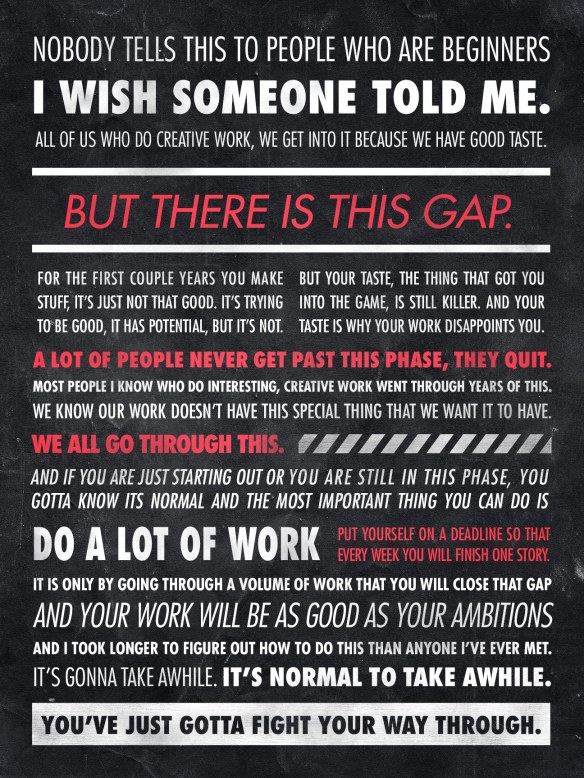
10000 hoursGosh, I don’t know. Sometimes the things that feel so intuitive to me are the things my writing group and editor hate the most. Sometimes, though, those things are a stroke of brilliance– and not even a brilliance I can attribute to myself. When ideas like that come from nowhere, it truly does not feel like I deserve credit. For someone like me, whose spiritual life encompasses all other parts of my life, I can see God at work in my writing. I think, if one has read a lot of great literature and one has put in hours upon hours of writing practice (Malcolm Gladwell says you need to practice 10,000 hours to gain expertise in any field), that intuition is going to be built in you. And if you add an outside influence into that? Mmm.
What’s the most important part(s) of preparing a book for querying?

Every part.

If we are talking fiction here, the manuscript must be as polished and perfect as it can be prior to querying. Along with that, you have to write a query letter that is intriguing, plays by the rules of the agent, and ends up in the right agent’s inbox.

Have any inspiration for young writers or those just getting started?

Yes! I love this:

iraglass-sawyerhollenshead

Have other writing-related questions for me? Click here to ask me anything! 🙂

My Slow Journey to Woke

Note: I wrote this in the days after the horrid events in Charlottesville, and I didn’t post it before because I wanted some friends to read over it first and give me the green light. So … here I go. Please know that I share my story with a humble heart. If I offend, or if you need clarification, I invite you to please contact me. Here’s my story.

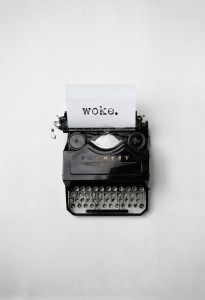
wokeI grew up very conservative in a small town where I can recall nine students of color in our local schools. I was born in 1982, so I lived my teen years smack-dab in the nineties evangelical subculture (think: Joshua Harris and cheesy t-shirts and conferences meant to generate intense spiritual experiences). Oh, and I had undiagnosed OCD with the flavor of religious scrupulosity, which magnified everything times a thousand.

I went to college. I met Christians who truly, deeply loved Jesus and yet had different theological beliefs than I did. I had friends from other cultures, friends with skin that doesn’t glow in the dark like my own pasty self. I read Transformed into Firewhich sowed seeds in my heart that would grow into a full-blown embrace of my truest self. I was finally diagnosed with OCD and underwent exposure therapy, which broke my chains of perfectionism. I watched friends get married, sometimes separate, sometimes divorce, sometimes lose their faith. I learned about all the myriad shades of gray in between the black and white ideas I’d grown up with.

I started this blog, which helped keep me vulnerable and transparent in an Instagram world that usually only shows the smiles and laughter. And as I did so, I found that it created a safe space for other people to share too– and my friends actually liked me more for showing my imperfections. And I liked myself more too.

It was as if all of that was preparing me to become Who I Really Am. I had to get out of my small town and out from under the thumb of OCD and out of my own way first.

After that, God ushered people into my life– people who did life with me, who sat with me, talked with me, cried with me; people who– yet again– loved Jesus so deeply and yet approached things from a different angle than I ever had. And those people would passionately share their thoughts with me over and over again until one day–

something clicked.

I read this article. All of my experiences, and most especially the friends who had spoken into my life, were like one trillion pounds on me, a girl built to “withstand” one trillion pounds, and then this article was a bird that landed on my shoulder, and bam: my whole LIFE changed.

It was like having my eyes opened for the first time ever. I guess that’s why people say “woke.”

These simple truths suddenly made sense to me, suddenly seemed simple, seemed obvious.

  • Just because something is not my experience doesn’t mean it’s not someone else’s.
  • White people are uncomfortable talking about racism, so they dismiss it. This is part of what we call privilege. Victims of racism don’t have the option to dismiss it.
  • My first steps toward becoming an ally are/were to admit that, as a white person, I have some sort of internalized racism. To realize that, to acknowledge that, did not destroy my awakening. It propelled my awakening.

Every meaningful change in my life has been accompanied by humility. 

I am trying to listen, to ask good questions, to come alongside (and not to speak over) my sisters and brothers. I am not even close to doing this perfectly, but I will spend my life in pursuit of these goals, and maybe over the years, I’ll inch a tiny bit closer.

On Saturday morning after the horrid events in Charlottesville, I woke up to news of what happened, and all those old hypotheticals we white kids would ask ourselves when reading books about the Underground Railroad, the Holocaust, etc. — what would I have done if I was there? — they were not hypothetical anymore.

Listen, I will not be found on the wrong side of history.

So, in case it wasn’t clear: I denounce racism and hate speech and hate crimes. I denounce white supremacy. I am proud to stand alongside my sisters and brothers of color. I humbly admit that there is almost certainly institutionalized racism in my heart, and I pledge to spend my life eliminating it. I declare these things in the name of Jesus, the Middle-Eastern Jewish man who saved my soul.