Anxiety Disorders and Social Security Disability Benefits, Guest Post by Molly Clarke

Molly Clarke is a writer for the Social Security Disability Help blog, and she approached me about writing an article for my readers who are suffering from severe anxiety disorders that prevent them from working.  Knowing how difficult the application process can be, Molly offered her expertise, which you can read below.

Thanks, Molly!
JLS

Anxiety Disorders and Social Security Disability Benefits

Although people tend to think of the term “disability” as a physical impairment, mental and emotional disorders can be just as debilitating.  According to the National Institute of Mental Health, one in four Americans suffers from a diagnosable mental disorder.

Anxiety disorders are among the most prevalent of these mental health conditions and can affect a person in a variety of ways.  While some individuals with anxiety disorders can live and function normally, others are severely limited by their condition.

If you have an anxiety disorder that prevents you from working and earning a living, you may be eligible for Social Security Disability benefits. Disability benefits can be used to offset lost income, day-to-day expenses, and even medical costs.  The following article will provide you with a general understanding of Social Security Disability and will prepare you to begin the disability benefit application process.

SSDI and SSI Technical Eligibility Requirements

The Social Security Administration (SSA) offers two separate types of disability benefits—Social Security Disability Insurance (SSDI) and Supplemental Security Income (SSI). Each program offers benefits to different groups of people and each has different technical eligibility requirements.

SSDI benefits are intended to assist disabled workers and their families. Because SSDI is funded by Social Security Disability taxes, eligibility for this program is dependent on applicants’ employment history and previous tax contributions.  In many circumstances, applicants are required to have worked and paid taxes for five of the past ten years.  However, this changes depending on a person’s age at the time they become disabled. For more information regarding SSDI technical eligibility, click here: http://www.disability-benefits-help.org/ssdi/qualify-for-ssdi.

SSI, on the other hand, is offered to disabled individuals of all ages who earn very little income. Eligibility for SSI is based solely on strict financial limitations put in place by the SSA.  SSI benefits are typically the best option for young adults as there are no work history requirements for this program.  For more information regarding SSI technical eligibility, visit the following page:  http://www.disability-benefits-help.org/ssi/qualify-for-ssi.

Medical Eligibility Requirements

In addition to meeting the Social Security Disability technical requirements, applicants must also meet specific medical requirements.  These requirements are published in the SSA’s official manual of disabling conditions—commonly referred to as the blue book.  The blue book contains information and medical criteria for many potentially disabling conditions.

Anxiety disorders are covered under section 12.06 of the SSA’s blue book.  To qualify under this listing, applicants must provide medical proof that they experience the following symptoms:

  • Persistent anxiety
  • Irrational fear of a particular object, activity, or situation
  • Severe, recurrent panic attacks
  • Recurrent obsessions and/or compulsions
  • Intrusive reoccurring memories of traumatic experiences

It is important to note that experiencing the previously mentioned symptoms will not be enough to qualify a person for disability benefits. To qualify for disability benefits, an applicant must experience these symptoms to such an extent that they render the person unable to function in a work setting.

To view this complete blue book listing, visit the following page: http://www.ssa.gov/disability/professionals/bluebook/12.00-MentalDisorders-Adult.htm#12_06

Social Security Disability Application Process

If you meet the technical and medical requirements for Social Security Disability benefits, you can begin the application process online or in person at your local Social Security office.  Before doing so, it is in your best interest to collect all required medical and non-medical documents. You can access a list of all required documents on the SSA’s Adult Disability Checklist. (http://www.socialsecurity.gov/disability/Documents/Checklist%20-%20Adult.pdf)

As previously mentioned, once you are ready to apply for benefits, you can completely the application on the SSA’s website or schedule an appointment to complete the application in person at your local Social Security office.

The actual application for benefits consists of several different forms. It is important that you take your time completing these. Provide as much detail as possible when answering questions or submitting information. Doing so will give the SSA insight into how your condition affects your daily life and will prevent delays in the processing of your claim.

Receiving a Decision

After you have submitted your application for disability benefits, it may take several months to receive a decision.  While you wait, it is important that you continue with any prescribed medical treatments. You should also save any new or updated medical records that you receive during this time period. Doing so will help you during the appeals process in the event that your claim is denied.

If your application is in fact denied, you will have 60 days in which to appeal this decision.  Initially, facing the appeal process may be overwhelming and confusing. However it is important to note that many more applicants are approved during the appeals processes than during the initial application. For this reason, it is important that you do not give up and remain persistent in your efforts.

For more information about Social Security Disability benefits and anxiety disorders, visit Social Security Disability Help (http://www.disability-benefits-help.org/disabling-conditions/anxiety-disorders-and-social-security-disability) or contact Molly Clarke at mac@ssd-help.org.

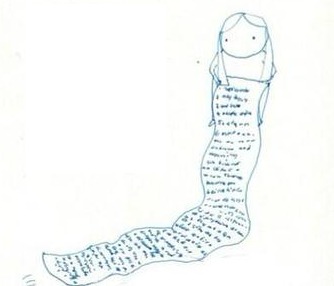
I think and think and think and …

overthinking


And no, for an obsessive-compulsive, it’s not pretty.

Related posts:
When Thinking Hurts
OCD Torture
A Metaphor for Obsessive-Compulsives

In the Moment: the Flipside

I have blogged before about talking to people when they’re in the midst of an obsession.  Other people.  In their obsessions.

Tonight, that’s me.

It feels surreal, friends.  I am reading over my own words of hope and trying to take comfort in the fact that I have tasted freedom and that, while it has slipped from my hands tonight, it has not left the room.  I feel (mostly) confident that I’ll corner it soon and snatch it back.

My OCD has been so well-controlled for the past four years that I’ve almost forgotten what these moments feel like.  It is different to remember the trench from the ledge above.  It is strange and sad and scary to remember the trench from inside it.

I hate it.

I had some intrusive thoughts tonight– blasphemous thoughts.  They don’t come very often anymore, and when they do, I am usually able to use the tools I’ve learned in ERP to walk myself calmly back out of the storm.  But tonight, there was a hitch, a pause, this tiny moment that started to grow.  I wonder if I’m going to hell.

Stop, I tell myself.  You can’t know.  You might go to hell, but it’s not likely.  Not when you love Christ the way that you do, not when you’ve devoted your entire life to him.

But maybe, I think.

I also think, No way.  Can. Not. Go. Back.  I won’t.  I can’t live that way anymore.

Talked to Mom on the phone.  She said, “You sound like you’re somewhere else.  Your mind is occupied.”  It is.

I feel this weird disconnect from reality.  I haven’t let myself slip into hysteria or full-on terror yet.  Just trying to tiptoe past it.

If I was smart, I’d put in a load of laundry and go listen to my ugly old ERP recording.

I think I will.  Wish me luck.

P.S. I’m glad I can be honest on this blog.  And with four years of freedom under my belt, I have such high hopes that it will be back in the morning.  I’m sorry for those of you who can hardly imagine such an easy out.

Over at The Redeeming Things

Today, I am blogging over at The Redeeming Things, the blog of Trinity City Church, where I am blessed to worship and fellowship here in the Twin Cities.  I’m blogging about the intersection of my faith and my mental illness.

Here’s the beginning:

RedeemingThingsJLSLast week, while listening to an audiobook by Anne Lamott, she mentioned a line she tries to live by: “And may the free make others free.”

I had to rewind a few seconds and listen to it over again. And again, amazed at the stark and beautiful way these few words summarize the last four years of my life.

I have obsessive-compulsive disorder, an anxiety disorder that preyed on all I most value: faith, friendships, vocation. Forget all media has ever taught you about OCD—it is not a funny, quirky, bothersome nuisance. Instead, it is a hellish, tormenting thief and tyrant. It caused me to question whether God was real, if he loved me, if I loved him, if I was going to hell, if writing fiction was sinful, if people were demons, if real life was real life– but not in the normal way that all or most people question such things. With “normal” minds, thoughts come and go freely, but with OCD, the gate is broken, and the thoughts get trapped inside the head, never making progress or finding resolution. Without the resolution, an obsessive-compulsive becomes lodged in a perpetual state of panic and terror. OCD is slavery, and I was in bondage to it for over twenty years. I was a tormented pot that complained to the Potter, “Why-why-why did you make me this way?”

To read the rest, jump on over here.
photo credit: izarbeltza via photopin cc

Will Treatment Change Me?

I recently had coffee with a lovely young college graduate, a writer who has been dealing with intense anxiety, anxiety that has latched onto her faith and forced her into a position of crisis.  We talked about medication and therapy, about how there is nothing to be ashamed of, about how even scripture can be twisted and used against us.

Then she said, “The way my mind goes so quickly?  That’s why I think I can write.  I’m scared that if I start taking medication, I’ll lose that.”

That’s a fear I could definitely relate to!

I told her, “I think just as quickly now as I did before treatment– only now, it’s productive.  Before, my brain was spinning its wheels.  I was thinking in circles, thinking all the time but never really getting anywhere.  Now I can think productively.  I can focus on things that are important.

“I still think deeply– in fact, more deeply in some areas, since I’m no longer terrified of thoughts.”

So, did treatment change me?

Yes, but for the better.

arms

Unashamed

I have OCD!  I have OCD, and I don’t care who knows it!  (Can you picture me spinning around like Buddy the Elf?)

dontcarewhoknowsit

No, but really, I’m not ashamed of my mental illness.  Why should I be?

Illness is not shameful.

I didn’t choose it.

It gives me a platform to help others.

unashamedcollage

Can OCD Ever Be Good?

A couple people asked me this question recently, and it really made me think.  We need to be very careful how we word this.

OCD is definitely not good, but good things can still come of it.

Obsessive-compulsive disorder is an anxiety disorder.  It’s not just bothersome; it’s tormenting.  It’s hellish.  It’s a thief, and it is slavery.  There is nothing lovely about OCD.

And yet …

OCD made me more desperate for God because of the way it made me think and struggle through my beliefs.

It has produced in me a deep compassion for others.

It has given me perspective on life– what is important, what is not.  What is petty, what is deep.

It has opened up opportunities in my life to speak and share and connect with others.

OCD is a monster, feeding on tears, doubts, and anxiety.  Any benefit it gives is unintentional.

That’s why any thanks we give it is like a slap across its face.  So … thanks, OCD.

slap


List-Making as a Compulsion

lists2A compulsion I haven’t talked about very often on this blog was list-making.  Since it was never something I worked on in CBT/ERP, sometimes I forget about all the lists.

Mine would be numbered (though the numbers didn’t mean much), and they were an attempt to bring some sort of order back into my messy thoughts.  They were an attempt to nail down a position or a stance or anything I could stand on.

This was mostly in high school and in college, before I was even diagnosed with OCD.  All I knew was that my doubts were eating away at me.

For example, in college, I didn’t know if I liked one boy (who liked me back) or his roommate (whom I fought with).  I was in turmoil over this (since OCD can’t just play it by ear– let alone see that I didn’t like the roommate, who annoyed me), so I’d go down by the lake with a notebook and start making a list:

1) I think I like James, not Toby.
2) I don’t want to like Toby.
3) I can decide that, right?
4) Maybe I can’t.
5) But I should be able to– right?  That’s my decision, isn’t it?
6) James is so kind.  And cute.
7) Toby pisses me off.
8) I would break James’s heart if I liked Toby.
9) I don’t want to like Toby.
10) Then why do I think I do?
11) I don’t want to hurt James.
12) If I don’t want to hurt James, then I must really care for him.
13) Do I care about hurting Toby?
14) Not as much.
15) I must like James then.

Satisfied that I was now certain I liked James, I’d stash my notebook back into my backpack and head to class with a smile.

Except that the next time I saw Toby and James, I’d be confused again.  Time for another list.

List-making was a mix of confession and seeking reassurance, to and from myself.

Did/does anyone make lists as a compulsion?